
General News
Insecurity, Socioeconomic Challenges Driving Voter’s Apathy- Report


A new report on “Addressing Voter Apathy in Nigeria” has identified insecurity and socioeconomic challenges as key drivers of low voter turnout during elections.
Prof. Freedom Onouha, Department of Political Science, University of Nigeria, Nsukka, while presenting the report findings on Friday in Abuja, said the study aimed to address voters’ apathy in Nigeria.
Research was conducted by Friedrich Ebert Stiftung (FES) and Institute of Peace and Conflict Resolution (IPCR).
Onouha identified electoral violence, distrust in electoral process and voters suspicion as key drivers of apathy that stifle electoral process in Nigeria,
He called for the implementation of reforms to restore citizens’ trust in the electoral process.
“There are structural as well as systemic factors that are responsible for voter apathy, but the most important ones is the issue of growing distrust in the electoral system.
“People are beginning to feel that the electoral body is not conducting elections that enable their votes to count.
“The loss of faith in those electoral bodies and electoral process is the number one reason why we are having low voter turnout,” he said.
He said that insecurity was also a major cause of voters’ apathy.
“Increasingly, we are seeing our politicians mobilise violence in a large scale, on a disposed scale, in order to win an election.
“That, in itself, is causing a lot of discomfort. People are not really prepared to risk their lives to vote for election.
“There is always this conclusion that the outcome of the election tends not to reflect in terms of the outcome,” Onouha said.
According to him, there is also the issue of bad governance.
He said that those who eventually win election failed to run the kind of governance that delivered on basic services.
“These tend to make them lose hope or disengage from the electoral process and from the government of the nation, and that in itself, is a major problem for the country,” he said.
He said that addressing these challenges was crucial to restoring the integrity of the electoral system and ensuring that citizens’ voices were heard.
He said that meaningful reforms were essential to restoring public trust and ensuring the integrity of future elections.
“The current administration needs to raise the bar in terms of security, not just now, but also during the elections, because insecurity is the major disincentive why people do not vote.
“The second point is that we need to have a clear-eyed approach to reforming our electoral processes and our electoral institutions,” he said.
“In this regard, if we say we want to transition to electronic voting and we are going to transmit results, we need to do it in such a way that it is seamless, smooth so that people will have confidence on the government.
Also, Dr Fatima Adamu, Executive Director, Nana Girls and Women Empowermen Initiative, an NGO, stressed the need to tackle insecurity, which has affected women’s participation in electoral processes.
“Women really complain bitterly about the violence during campaigns, the same thing during election. So that needs to be addressed.
“Another issue that women raise is lack of voter education and representation of quality leaders, and especially women.
” They feel that they are not giving quality women to contest, and they want the political parties to do so,” she said.
Mr Lennart Oestergaard, Resident Representative of FES, said: “if people do not make use of their right to vote, then that is a challenge, and it has to be addressed.
“This research findings is open to everyone who is interested, civil society, actors, academia and also the government, to take a look at it, and maybe if it’s helpful, take some learnings.”
Dr Joseph Ochogwu, Director-General, IPCR, represented by Dr Ayuba Caleb, said that the institute remained committed to supporting efforts that deepen democratic values and foster a culture of active peaceful citizenship.” (NAN)
From Ene Asuquo, Calabar
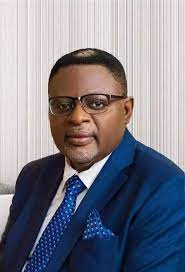
The Cross River State Government has recorded a major breakthrough in its quest to transform the state into a maritime hub with the official presentation of the Hydrographic, Geotechnical, geophysical Report and New Navigational Chart for the proposed Bakassi Deep Seaport project.
Out, who spoke at a formal ceremony held in the State Executive Council Chamber in Calabar, described the event as a “historic milestone” that not only affirms Nigeria’s maritime boundaries but also sets the stage for an economic revolution across the Gulf of Guinea.
“This is truly a historic day, not just for Cross River State but for the entire country,” Governor Otu said.
“What we have achieved today replaces charts dating back to 1903 and settles long-standing debates about Cross River’s status as a littoral state. This chart clearly affirms our coastal status.”Otu emphasized that the updated maritime chart now aligns with S-100 international standards, positioning Cross River for deepwater commerce and international shipping operations.
“When we connect this with the ongoing coastal highway, we’re looking at a completely different city,” he said. “The economic potential is enormous.”
Otu acknowledged the foundational work of former NDDC Chairman Professor Eyo Etim Nyong, describing the seaport project as a dream revived and revitalized.
“We picked up this dream where the former governor, Professor Ben Ayade left off. Public funds had been committed, and we could not allow it to die. Today is another giant step toward its full realization,” he said.
With the technical phase complete and the report formally presented, Governor Otu disclosed that the project now awaits a final seal of approval from the Federal Executive Council (FEC).
“Once we get that FEC seal, work starts almost immediately,” he assured. “Cross River is ready, and this project is not just for us, it is for Nigeria and for West Africa.”
The presentation was led by Rear Admiral Ayo Olugbode, Hydrographer of the Federation and CEO of the National Hydrographic Agency of Nigeria, alongside senior naval officers including the Chief of Naval Staff, Vice Admiral Emmanuel Ogalla, and Rear Admiral Anyo Olokunle.
Rear Admiral Olugbode described the report as the culmination of an intensive multi-year effort, beginning with a formal flag-off on December 21, 2024, and followed by rigorous data acquisition starting January 6, 2025. The survey, he said, covered hydrographic, geophysical, and geotechnical dimensions, all aimed at ensuring safety, precision, and international compliance.
“This is more than just a technical report. It is the bedrock for constructing and operating the Bakassi Deep Seaport,” he said. “It provides essential data for engineering design, dredging, breakwater construction, and navigation safety.”
He added that the data would boost investor confidence, enable effective ocean governance, and contribute to global initiatives such as Seabed 2030, a project that aims to map the entire seafloor of the world by 2030.
Olugbode also praised the Cross River State Government for its unwavering support.
“Your Excellency, your administration’s commitment and facilitation of logistics created an enabling environment for the success of this complex operation,” he noted.
The Bakassi Deep Seaport is expected to catalyze investments in shipping, logistics, trade and tourism, while creating jobs and strengthening Nigeria’s position in the global blue economy.
By David Torough, Abuja
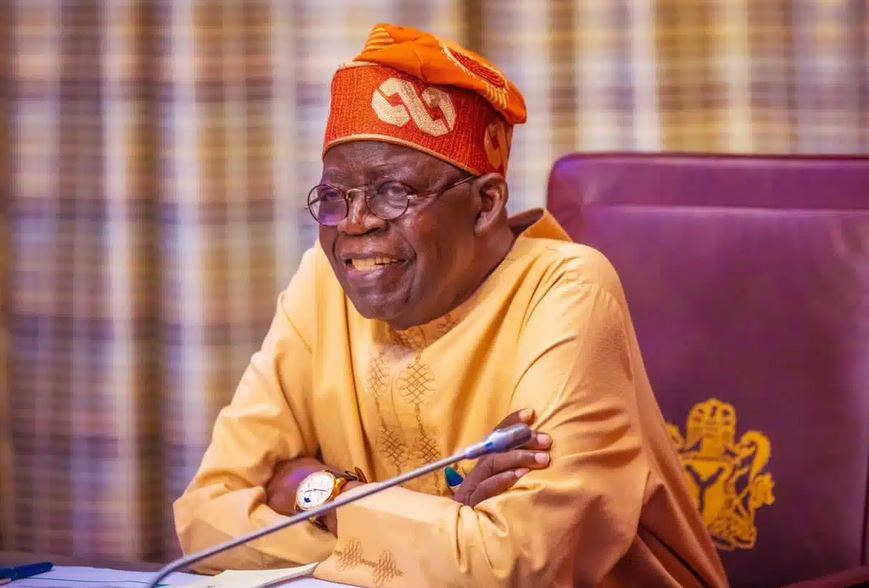
President Bola Tinubu yesterday announced the establishment of diplomatic relations with Saint Lucia, describing it as a “symbolic bridge that will provide a gateway in fostering closer ties between us.”
Tinubu stated this while addressing a special joint session of the Senate and House of Assembly of Saint Lucia at the William Jefferson Clinton Ballroom, Sandals Grande, Gros Islet, Saint Lucia.
The President proposed creating a Joint Commission or Political Consultation Agreement as a mechanism for structured cooperation between Nigeria and the Organisation of Eastern Caribbean States (OECS).
Tinubu also announced that he would offer full scholarships to students from the OECS to promote cultural understanding, further strengthening the bond between Nigeria and the Eastern Caribbean states.
The Nigerian leader, who delivered his address in the presence of leaders from the OECS, emphasised the deep historical and cultural bonds between Nigeria and the OECS and called for greater people-to-people engagement.
The leaders of Grenada, Antigua and Barbuda, St Kitts and Nevis, Dominica, the Premier of Montserrat, Saint Martin and Saint Vincent were in the audience.
Tinubu declared Nigeria’s openness to visa waivers for OECS diplomatic and official passport holders and urged reciprocal gestures to facilitate smoother official travel and closer institutional cooperation.
Tinubu in a statement by his spokesman was quoted as saying: “I respectfully urge a reciprocal gesture to enable smoother movement of officials and foster closer institutional cooperation.”
He reaffirmed Nigeria’s commitment to deepening ties with OECS and Caribbean nations, anchored in shared African heritage and Pan-African ideals.
On economic diplomacy and trade, President Tinubu offered OECS access to Africa’s largest market and called for joint ventures and deeper commercial ties.
He advocated enhanced trade and investment partnerships, especially in agriculture, manufacturing, and services that would position Nigeria as a supplier and destination for OECS exports.
Tinubu proposed a maritime university collaboration and extended Nigeria’s Technical Aid Corps (TAC) programme to OECS countries.
He emphasised Nigeria’s readiness to provide skilled education, healthcare, and engineering professionals to support regional capacity-building.
Recognising the existential climate threats facing small island states, Tinubu called for joint research on adaptation strategies, sustainable agriculture, disaster preparedness, and climate-induced migration.
Reiterating Nigeria’s Afrocentric foreign policy, Tinubu emphasised the cultural and historical ties between Nigeria and the diaspora, as well as its enduring role in global Black solidarity.
While calling for unity, Tinubu quoted Marcus Garvey and an African proverb.
“Likewise, an African proverb teaches us: ‘If you want to go fast, go alone. If you want to go far, go together.’ Let us journey together, united in purpose and fortified by our common heritage,” he said.
By David Torough, Abuja
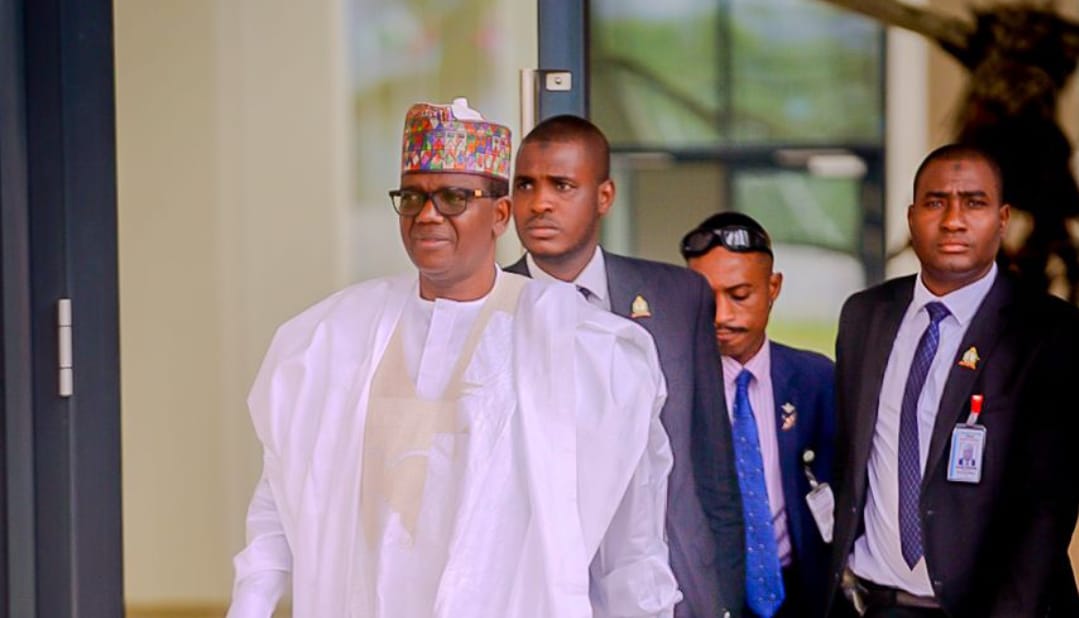
A Zamfara-based civil society group has hailed the former Governor and current Minister of State for Defence, Dr Bello Matawalle, for his foresight in initiating the Zamfara Cargo Airport project.
The Zamfara Good Governance Group (ZGG), in a statement issued on Monday, praised Matawalle’s leadership, describing the cargo airport as a “strategic and transformative initiative” aimed at unlocking the state’s economic potential.
Chairman of the group, Aminu Kabiru Tsafe, said the airport project was designed to attract foreign direct investment into critical sectors such as mining, agriculture, tourism, and hospitality.
“Dr Matawalle awarded the project at N11.8 billion, with N7 billion already paid,and the construction has reached 60 percent completion before he left office, showcasing his fiscal discipline and developmental drive,” Tsafe said.
He noted that the former governor’s broader vision was to position Zamfara as an economic hub, capable of creating job opportunities and lifting residents out of poverty.
ZGG also commended Matawalle’s security achievements, stating that his administration rescued over 1,200 kidnapped victims and recovered significant weaponry, all with limited resources.
However, the group expressed concern over the revocation and re-award of the cargo airport contract by the current administration under Governor Dauda Lawal.
Tsafe accused Governor Lawal of inflating the project cost to N62.9 billion, and further to N90 billion in a revised budget, calling the move “unjustifiable and wasteful.
“It is important to remind the people of Zamfara and Nigerians that this is the same Dauda who, when coming into office, promised the people heaven and earth. He vowed not to touch the government’s coffers.
“But how come he inflated a project that was initially awarded at the cost of ₦11.8 billion to ₦60 billion? And that wasn’t enough—another variation of ₦30 billion has now brought the total to ₦90 billion.
“It is now left for the people to judge between Dr Matawalle and Dauda Lawal—who truly has the people’s interest at heart? Even an international airport would not require such a huge budget.
“Dauda clearly does not have the interest of Zamfara people at heart. We must tell ourselves the truth.”
He also remind the public that Lawal had promised the airport would be used for Hajj in 2023, a pledge that was never fulfilled.
ZGG criticised what it called Governor Lawal’s failure to build on the foundation laid by Matawalle, despite receiving significantly higher monthly allocations than his predecessor.
“Zamfara deserves better. We call for transparency and accountability in the management of public resources,” the group said.
The statement concluded by urging citizens to recognise and uphold the legacy of Dr Matawalle while demanding better performance from the current government.



Street Named After Business Mogul, Sam Maduka Onyishi Unveiled in Asokoro
ShareBy David Torough, Abuja Authorities in the Federal Capital Territory on Saturday honoured renowned entrepreneur and philanthropist, Chief Dr. Sam...

Experts Task Government on Increase in Domestic Funding
ShareBy Laide Akinboade, Abuja Experts in the health sector, at the weekend agreed that even though foreign grants and aid...
BBNaija’s Queen Mercy Confirms crash of Her One-year Marriage
ShareBig Brother Naija reality show star, Queen Mercy Atang, has finally confirmed the crash of her one-year marriage. The single...
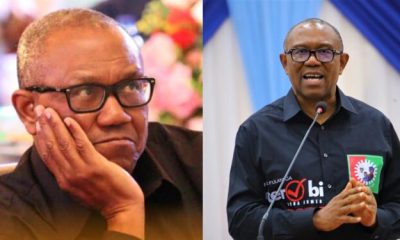

Obi, TCM Condemn Tinubu’s Distribution of Vehicles to Renewed Hope Ambassadors
ShareBy Mike Odiakose Abuja Presidential Candidate of the Labour Party, Peter Obi and a socio-political organisation, The Collective Movement (TCM),...


Bayelsa Urges NDDC to Complete Abandoned Akenfa Bridge Project
ShareFrom Mike Tayese, Yenagoa The Bayelsa State Government has called on the Niger Delta Development Commission (NDDC) to resume and...


Road Accident Claims Six Lives in Kogi
ShareFrom Joseph Amedu, Lokoja The Kogi State Government has expressed sadness over a tragic accident involving a bus conveying some...
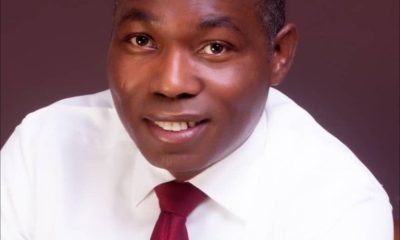

Adebayo at 53 Young Enough to Lead Nigeria – Ighodalo
ShareBy Mike Odiakose, Abuja Pastor in charge of Trinity House, a non-denominational, Christian fellowship centre and founder, African Leadership Group...
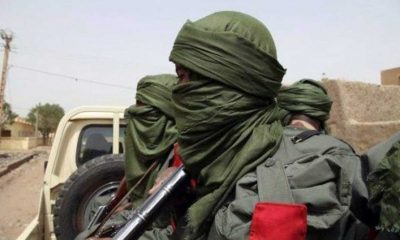

Four Dies as Bandits Launches Attack in Kogi Community
ShareFrom Joseph Amedu, Lokoja Four persons were reportedly dead on Wednesday when suspected bandits launched an attack on Irunda Ile...
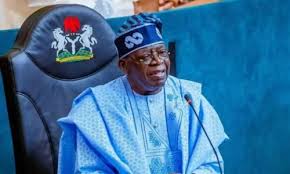

Musa Takes Oath, Vows United Front against Insecurity
ShareBy David Torough, Abuja President Bola Tinubu yesterday swore in former Chief of Defense Staff, General Christopher Musa (rtd), as...


OPay Secures Double Honors at Tech Innovation Awards
ShareIn a major recognition of its innovation and security leadership, OPay, Nigeria’s premier financial technology company, has been named Fintech...