
Business News
IMF Approves $50m Disbursement for Liberia to Stem COVID-19

By Mathew Dadiya, Abuja
The Executive Board of the International Monetary Fund (IMF), has approved the disbursement of SDR36.17 million (US$50 million; 1.7 percent of GDP) to be drawn under the Rapid Credit Facility (RCF).
According to the IMF, the approval together with debt relief approved in April 13, will help meet Liberia’s urgent balance of payment needs, mostly stemming from fiscal needs necessary to respond to the pandemic.
The pandemic is hitting Liberia at a time, when economic activity was already declining.
The IMF approved the disbursement of US$50 million (1.7 percent of GDP) under the Rapid Credit Facility to support the authorities’ response to the COVID-19 pandemic.
The economic impact of the pandemic is hitting the poorest with little social safety net, and food security of those relying on uncertain daily income is a pressing concern.
The authorities have responded by taking revenue and expenditure measures to support emergency food aid for the poor; improving monitoring and control of spending; and safeguarding scarce foreign exchange reserves.
Real GDP growth for 2019 is estimated at -2.5 percent as private sector confidence remained weak, while inflation remains high. In addition, vulnerability to exogenous shocks remained high as both fiscal and external buffers were low. The full extent of the impact of COVID-19 is not known, but growth is now projected at -2.5 percent for 2020, largely due to lockdown at home and abroad which are negatively impacting domestic demand, net remittances, capital inflows, and the banking sector. In the absence of support, the poorest will feel the impact the most as there is little social safety net, and the food security of those relying on uncertain daily income is a pressing concern.
The pandemic opens a balance of payment need of US$150 million (5.1 percent of GDP) in 2020, which largely arises from a domestic revenue shortfall projected at US$119 million.
Preliminary data suggest that performance under the Extended Credit Facility (ECF)-supported program has been weak, though the authorities are fully committed to address the weaknesses.
Most of the end-December fiscal targets and structural benchmarks were met but the monetary program went off track by a large margin mainly for two reasons: an acute shortage of Liberian dollar banknotes at a period of high cash demand resulting in higher foreign exchange intervention than programmed; and acute shortages of U.S. dollar liquidity in the banking sector.
The authorities are addressing these weaknesses—aiming to bring the program back on track in time to complete the first review—but are faced with the challenging task of managing the COVID-19 crisis at the same time.
Following the Executive Board’s discussion of Liberia, Mr. Tao Zhang, Deputy Managing Director and Acting Chair, issued the following statement:
“The COVID-19 pandemic came at a time when a consensus on the need for broad-based reform in Liberia had finally emerged, but when macroeconomic conditions remained challenging.
The pandemic is expected to hit Liberia hard, and will likely disproportionately affect the most vulnerable as social safety nets are rudimentary, food insecurity is rising, and the healthcare system is underdeveloped.
“The authorities remain committed to protecting the most vulnerable amidst a significant revenue shortfall. The initial response to the pandemic, including the emergency food aid program, is welcome, but more remains to be done.
Specifically. the passage of the agreed FY2021 budget with high-quality revenue measures is key to addressing the COVID-19 crisis. It is also important to expeditiously finalize the comprehensive off-budget COVID-19 response plan with development partners. The authorities have taken measures to raise domestic revenue, including legislative approval of an excise tax on fuel and adoption of a resolution to channel all revenues acquired by two large state-owned entities to the government’s consolidated account.
They have also made significant improvements in the monitoring, control, and transparency of expenditure, including by tabulating and publishing detailed weekly reconciled spending reports, by requiring all budgetary entities to utilize the centralized financial management system, and by committing to the timely publication of an audit of crisis spending.
“To address the shortage of Liberian dollars and the growing need for more U.S. dollar liquidity, the authorities have contracted the printing of additional Liberian dollar bank notes and are formulating measures for inclusion in the FY2021 budget to augment US dollar liquidity.
“The authorities have also made steady progress in reaching benchmarks set under the Extended Credit Facility arrangement and remain committed to reforms under the arrangement to stabilize macroeconomic conditions and lay the foundation for inclusive and durable growth once the crisis subsides.’’



By Tony Obiechina, Abuja
The African Export-Import Bank (Afreximbank) has announced the successful completion of a first-of-its-kind India-focussed club deal for US$282.00 million.
Initiated for the exclusive participation of Indian lenders, and arranged by Bank of Africa UK PLC, the primary syndicated club deal saw participation from Indian lenders through their overseas branches and subsidiaries in the Dubai International Financial Centre in the United Arab Emirates, Singapore and Mauritius.
The facility, which was backed by six participating banks and financial institutions, including five that joined as first-time lenders to Afreximbank, helping the Bank achieve its objective of diversifying its funding sources, carries a three-year tenor.
At a commemorative event held in Dubai, U.A.E., to mark the conclusion of the deal, Haytham ElMaayergi, Executive Vice President at Afreximbank, said that the conclusion of the initiative represented a major milestone for the Bank as it sought to fulfil the key objectives of its funding programme.
Highlighting the importance of investing in, and for, Africa, Mr. ElMaayergi said: “this facility will help Afreximbank to continue to play a major role in the development of intra-African trade and trade between Africa and the rest of the world, particularly with India.
It is a testament to the rapid growth in Africa’s economic relationship with India and is evidence of Afreximbank’s growing ability to harness resources into Africa and to fund trade finance related investments that would have a positive impact on trade between Africa and India.”
Chandi Mwenebungu, Director and Group Treasurer of Afreximbank, reviewing the Bank’s vision for Africa, said that its funding objectives included achieving the diversification of its liability book by geography, investor type and tenor.
Also addressing guests at the event were Said Adren, CEO of Bank of Africa UK PLC, who thanked the lenders for their participation, and Zineb Tamtaoui, General Manager of Bank of Africa, Dubai Branch, who expressed appreciation for the opportunity to put together “a landmark deal that would be a stepping stone to many India-focused club deals going forward.”
By Tony Obiechina, Abuja
Geregu Power Plc has generated N50.4bn on electricity sales and capacity charges to Nigerians in the first quarter of 2024.
The power company which is the first listed power company of the Nigerian Exchange Ltd disclosed the performance in its Q1, 2024 financial statement.
The company grew its Q1 revenue by 225 per cent from N14.
2bn in 2023 to N50. 4bn in 2023.A breakdown reveals that Geregu Power sold energy worth N31bn and received N19bn as revenue from capacity charge.
Recall that the power company posted an annual revenue of N82.9bn in the full year of 2023 but it has covered half of the amount in Q1.
The revenue was above the company’s forecast for Q1 2024 when it projected its revenue to rise to N31.24bn.
Geregu Power recorded a profit before tax of N21.9bn up from the N5.3bn recorded in Q1 of last year, reflecting 307.8 per cent growth.
During the period underreview, the company saw its profit after tax rose by 307.3 per cent to N14.46bn from N3.54bn recorded in Q1 of last year. In the full year 2023, the company made N16.1bn net profit.
The net profit was above the company projection of N5.5bn.
Geregu Power took an income tax charge of N7.43bn, up from the N1.8bn in Q1 2023. The tax charges were higher than the N2.7bn projected for Q1 2024.
The company also spent N21.5bn on the cost of sales involving gas supply and transportation, up from the N6.6bn spent on gas supply and transportation in Q1 2023.
By Ademola Oyetunji
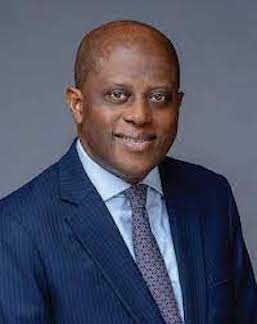
In a surprising turn of events on Wednesday, the Central Bank of Nigeria (CBN) dissolved the boards of three prominent commercial banks – Keystone, Polaris, and Union Bank. This move, although unanticipated, transpired despite the Central Bank’s recent endorsement of these banks’ financial soundness.
Governor Olayemi Cardoso, at his inaugural address during the Chartered Institute of Bankers of Nigeria (CIBN) annual dinner last year, had lauded Nigeria’s financial sector’s resilience in 2023.
Stress tests conducted on the banking industry indicated its strength under various economic scenarios. However, Cardoso highlighted the need for banks to reassess their responsible banking framework, a sentiment echoed by President Tinubu.President Tinubu’s evident discontent with the Godwin Emefiele-led CBN triggered a comprehensive review of the financial system. A special investigator, Jim Obazee, was appointed to conduct a forensic investigation into Emefiele’s tenure, with damning revelations emerging. Recent developments suggest the initiation of a full-blown financial system reform.
The CBN’s dissolution announcement and the subsequent appointment of new executives for the affected banks, including Yetunde Oni, Mannir U. Ringim, Hassan Imam, Chioma A. Mang, Lawal M. Omokayode, and Chris Onyeka Ofikulu, might mark the beginning of implementing the investigation’s recommendations – a significant cleanup of the financial sector.
Allegations surfaced during the investigation, suggesting non-cooperation from some bank executives and Emefiele’s questionable acquisitions through proxies and cronies. Cardoso may have secured presidential approval for the CBN’s decisive action.
The CBN cited various infractions by the banks, including regulatory non-compliance, corporate governance failures, and activities threatening financial stability. Despite the challenges, the CBN assured the public of depositors’ fund safety and its commitment to upholding a safe, sound, and robust financial system.
The Special Investigator’s report revealed documents pointing to Emefiele’s involvement in Titan Trust Bank and Union Banks’ acquisitions with ill-gotten wealth. The CBN’s swift replacement of the ousted chief executives received widespread commendation, especially from high-net-worth stakeholders aiming to avert a crisis of confidence within the affected banks.
Adewale Aderounmu, an industrialist, applauded the CBN for implementing effective policies under Olayemi Cardoso’s leadership, despite detractors’ actions against the Naira. Ayomide Deepak, an Abuja-based stockbroker, welcomed the action but emphasized the need for caution in handling revelations from the investigation to prevent further economic challenges.
As the CBN wields its regulatory hammer on these banks, the hope is that other bank executives and investors will learn valuable lessons for the sake of the economy. The CBN’s action is perceived as a strategic move aimed at revitalizing the economy and financial system, not a mere vendetta.
*Ademola Oyetunji writes from Ibadan.


Disability Act: Stakeholders Worry Over Delayed Domestication in Benue
ShareBy David Torough, Abuja Stakeholders have expressed concern over delay in the domestication of Disability Act in Benue state and...


Enugu Embarks on Inspection of Smart Schools, Healthcare Projects Across State
ShareFrom Sylvia Udegbunam, Enugu Governor of Enugu State, Peter Mbah has charged contractors and the site engineers handling construction of...

Benue Govt Abandoned Foreign Exchange Programme Due to N3mn Bursary – DG BEQA
ShareFrom Attah Ede, Makurdi The Director-General, Benue State Education Quality Assurance Agency, BEQA, Dr. Terna Francis, on Thursday, said the...

Tinubu Establishes National Education Data System
SharePresident Bola Tinubu has approved system-wide policies to comprehensively overhaul the education sector to improve learning and skill development, increase...
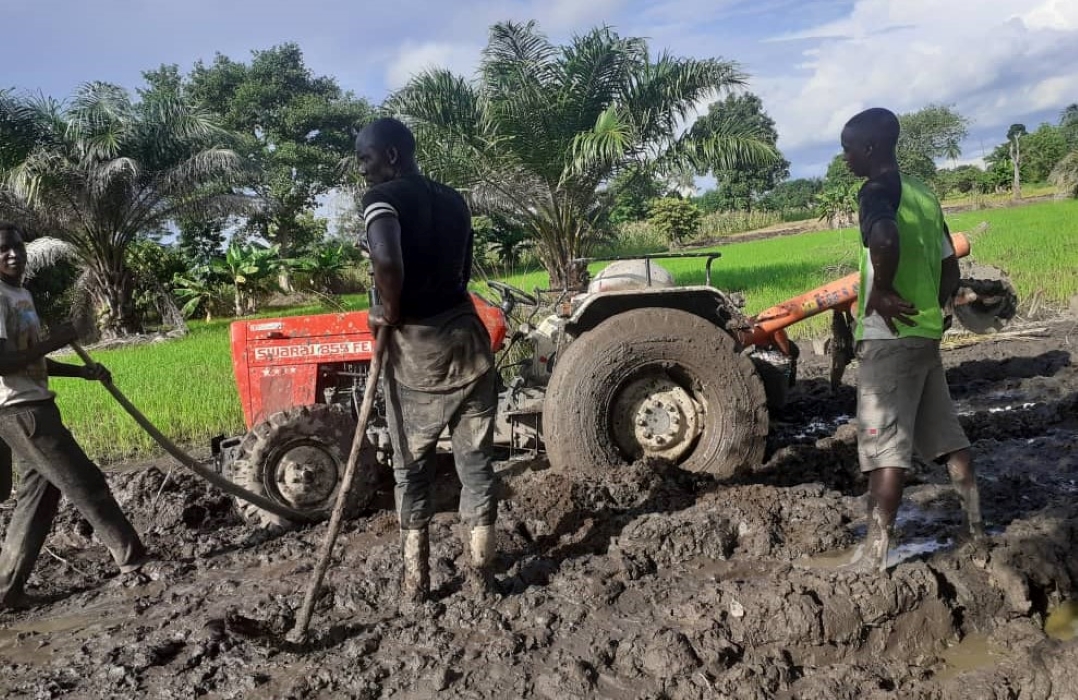
ADAS Programmes Set to Establish Digital Structure, Database for Farmers, Farmlands
ShareFrom Yagana Ali, Yola The Adamawa State Agribusiness Support Programme ADAS-P has concluded arrangements to establish standard & digital structure/database...
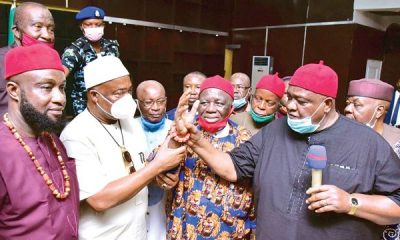

Absence of Diplomacy Responsible for Secessionist Agitations in Nigeria – INM
ShareFrom Marcel Duru, Owerri Igbo National Movement, a sociopolitical pressure group, has said that absence of diplomacy is responsible for...


N20m Bounty on Kidnappers: Wike Fulfills Promise to FCT Police Command
ShareBy Laide Akinboade, Abuja The Commissioner of Police, FCT, CP Benneth C. Igweh, expresses heartfelt gratitude on behalf of the...

Presidential Amnesty: Bank Accepts Responsibility for Stipends Delay
ShareFrom Mike Tayese, Yenagoa One of the Bank offering services to the Presidential Amnesty Programme (PAP) has explained the reason...


Enugu State Justice Reform Team Commends Mbah, Calls for Enhance Justice System
ShareFrom Sylvia Udegbunam, Enugu The Enugu State Justice Reform Team (ESJRT) has commended the administration of Dr. Peter Ndubuisi Mbah...

I Didn’t Abandon Mandate – LP Candidate
ShareFrom Marcel Duru, Owerri The Labour Party Candidate in the 2023 general elections for Mbaitoli-Ikeduru Federal Constituency, Rt Hon Uche...