
CRIME
Securing West Africa and the Sahel

By Adeoye O. Akinola
On October 6, the Economic Community of West African States (ECOWAS) lifted the sanctions on Mali, to the relief of Malians and the leadership of the conflict-ravaged country. Despite the traditional pessimism about ECOWAS, it successfully mobilised against the military incursion into power in Mali.
The ECOWAS mediation team to Mali, led by the former president of Nigeria, Goodluck Jonathan, had no time to celebrate as his country, Nigeria, soon became embroiled in protests against the administration of his successor, President Muhammadu Buhari.
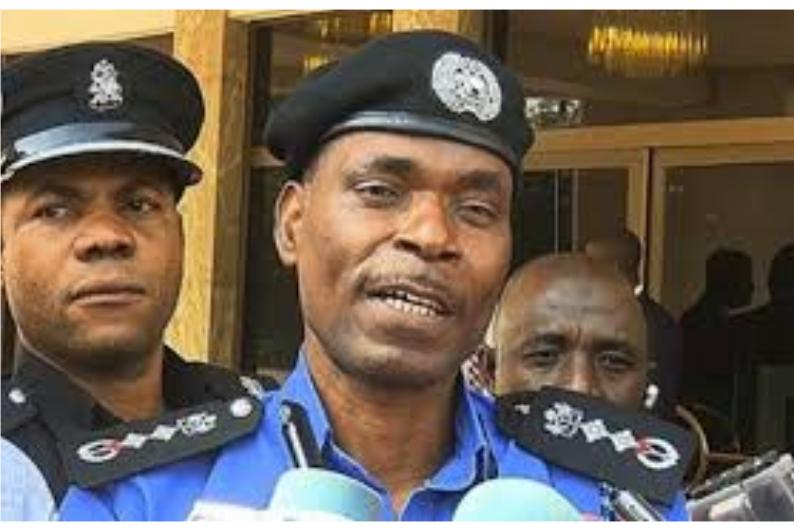
After days of protests – tagged #EndSARS – in Nigeria’s major cities, calling for the scrapping of the Special Anti-Robbery Squad (SARS) due to its extreme brutality and lawlessness, Nigeria’s inspector-general of Police, Mohammed Adamu, announced the dissolution of this notorious police unit on October 11.
Yet, the protests persist. In Côte d’Ivoire, the opposition leader, Seth Koko, prevailed on ECOWAS to appeal to the incumbent president, Alassane Quattara, from contesting the October 31 election.
Thus, ECOWAS’s attention – and that of the global community – have turned to Nigeria and Côte d’Ivoire, while also keeping an eye on Mali.
In Mali, the National Committee for the Salvation of the People (CNSP), controlled by the putschists, has appointed a former defence minister, Bah N’Daw, as a civilian president; the coup leader, Colonel Assimi Goïta, as vice president; and Moctar Ouane as the prime minister.
The CNSP has also removed a clause that gave the vice president the authority to replace the president of the transition, if the office is deemed vacant.
This was a partial victory for ECOWAS. However, experience has shown that any civilian transition headed by military personnel is a red flag. Furthermore, the decision to exclude the civil society coalition, the M5-RFP, from the transitional government may live back to haunt the transitional team.
West Africa and the Sahel have become the theatres of violent conflicts. The number of violent Fulani herdsmen in the Sahel are undocumented, but Boko Haram and Al Qaeda boast of about 15,000 and 5,000 members, respectively.
In the Sahel, four countries are currently experiencing armed conflict: Nigeria is battling to contain Boko Haram’s terrorism, which has threatened the territorial integrity of the country, killed more than 50,000 and internally-displaced 2.1 million people; security is being challenged by pastoral conflict in Chad; Sudan is engrossed in violent protest and, concurrently, combating armed conflict; and Mali is struggling to contain violent extremism and a military putsch.
The Sahel has experienced other threats from the Movement for the Salvation of Azawad, the Group to Support Muslims and Islam (linked to Al-Qaeda), the Tuareg/Fulani herdsmen, pastoral warlords, Boko Haram, and oil militancy.
Despite the interventions of the 15,209-strong United Nations (UN) peacekeeping mission and the 5,000 French troops in the Sahel, the joint-force of the G5 Sahel, the UN Integrated Transition Assistance Mission in Sudan, the West African Multinational Joint Task Force, the efforts of the UN office for West Africa, the ECOWAS’s mediation team and the national security forces of member-states, the region is still under a siege and sitting on a time bomb.
While the African Union and other sub-regional bodies such as ECOWAS and Intergovernmental Authority on Development (IGAD) are committed to “Silencing the Gun in Africa by 2020”, the guns keep blasting – loud and louder – in the Sahel.
Why is the region confronted by armed conflict? The Sahel is one of the wealthiest regions in the world, with abundant human and mineral resources. Despite the opulence demonstrated by many of its political elites, the World Economic Forum (WEF) reports that about 33 million citizens are confronted with food insecurity and inequality. Marginalised pastoralists are thus easy triggers of conflicts.
The region also hosts one of the world’s most youthful populations, with 64.5 per cent of the inhabitants being under 25 years old. Human development has declined.
The youth are hungry and angry: about 30 per cent of 349 million West Africans live on less than $1.90 per day. Violence – a lucrative means of livelihood for many – has become the “legitimate” response to irresponsive political leadership and hostile economic policies.
The former president of South Africa, Thabo Mbeki, shocked the global community when he publicly asserted that the battle against the human immunodeficiency virus (HIV) was one of extreme poverty.
Indeed, at the root of the militarisation of the Sahel region is socio-economic and political inequality. In Africa, violence is often informed by the “crisis of the belly”, and no sophisticated military force – neither a multilateral unit nor a unilateral force – can subdue poverty-inclined armed conflict.
The COVID-19 pandemic has presented another dilemma: It has exacerbated structural violence, as well as existing fragilities in the region. States – both in the global North and South – have become more nationalistic and protectionist. Foreign aid and humanitarian assistance are expected to decline systematically.
Thus, West African states and those in the Sahel must show more financial and logistical commitments to regional efforts at security and development.
It is easy to mobilise people against deposed government, as witnessed in Mali, where massive jubilations occasioned the overthrow of President Ibrahim Keïta in August.
The hostility between Malians and their president was apparent. A more vibrant and well-funded ECOWAS should be the rallying point for ensuring the security of the Sahel region.
ECOWAS should intensify efforts at not just the integration of trade and borders, but also of all West Africans who are so disconnected from the regional body.
The Sahel lacks responsive and effective governance. Stakeholders should invest more in intelligence-gathering and early warning systems. It is easier to prevent a violent conflict than to resolve one.
Crime and violent conflict have become the mainstay of many trigger-happy youth who are forced to provide basic infrastructures for their families and communities due to governance failures.
Thus, a call for disarmament must be matched with human development programmes and improved public service delivery. The security–development nexus is very real across the Sahel region. Without security, attempts at development will remain an illusion; and without development, it is impossible to attain sustainable security.
Adeoye O. Akinola is a Senior Researcher at the University of Johannesburg’s Institute for Pan-African Thought and Conversation.




By David Torough, Abuja
The Future Platform, a Nigeria-based organization headquartered in the United States, has expressed deep concern over the increasing attacks and killings of Christians in various parts of Nigeria.
In a statement signed by its President, Mr.
Austine Dafe, the group condemned the ongoing violence and called on the Nigerian government to take decisive steps to ensure the safety of all citizens.The organization cited recent incidents in Plateau, Benue, Kwara, Jigawa, Anambra, and Kaduna States, where Christian communities have come under repeated attacks, leading to loss of lives, destruction of properties, and displacement of families.
It described the situation as deeply troubling and urged authorities to act swiftly to bring perpetrators to justice.“The government must address the root causes of these violent attacks and prioritize the protection of human life,” the statement said. “Every Nigerian, irrespective of religion, deserves to live in peace and worship freely without fear.”
The group further noted that the persistent killings have drawn international attention, with calls from the United States and Canada for urgent intervention to halt the violence.
The Future Platform appealed to Federal and State Governments, as well as religious and community leaders, to speak out against hate and intolerance while working together to promote peace, unity, and justice.
“This is a time for leadership and moral courage,” Mr. Dafe stated. “The killings must stop, and the lives of innocent Nigerians must be protected.”
From Dan Amasingha, Minna
Following the killing of a 300 level Student of the Ibrahim Badamasi Babangida University, Lapai (IBBUL), Abdulwahab Jafar that led to a massive protest, the State Police Command has arrested seven persons linked to the crime.
The Niger State Police Command in a Statement on Tuesday by the police public Relations officer, Wasiu Abiodun said a total of 19 persons were initially arrested, but after screening 7 were detained.
He said the breakthrough is coming almost four months after the 23yrs old was killed from wounds he sustained while been stabbed at his lodge.
“It could be recalled that on June 23, 2025 at about 3am, there was a report of an unfortunate attack on a student of the IBBUL identified as Abdulwahab Jafar 23yrs of Paiko at his lodge in the school, among other attacks leading to loss of life of the said student”
He recalled that, the incident led to other crises in Lapai community and Police tactical teams were deployed to the town through which normalcy was restored.
“However, in a follow up investigative effort of the Command, jointly carried out by TST and FID STS, a total of 19 persons were arrested in Lapai and other locations in the State based on intelligence and other information at the disposal of the Police Command
“The investigation activities were narrowed down to seven suspects for criminal conspiracy, robbery, unlawful society, internet fraud, having in possession of dangerous weapons and suspected culpable homicide “
The Command named the seven suspects as ; Idris Hamza 27yrs of Maikunkele, Suleiman Damilare 27yrs of Maikunkele, Abdulsemiu Bashir 23yrs of Lapai,Bawa Aliyu 27yrs of Suleja and Yakubu Musa – Pypa 24yrs of Maikunkele .
Others are Samson Abbah, Small 28yrs Rafin /Yanshi, Solomon Musa – Cabella 28yrs of Maitumbi.
Acvording to SP Wasiu Abiodun, based on credible intelligence, Idris Hamza and Suleiman Damilare were arrested on June 27 at Fadikpe with cannabis, charms, and local black soaps with a Toyota Corolla vehicle at one Abdullahi Ahmed a.k.a catch-up residence.
The suspects confessed to members of Neo Black Movement of Africa (NBM) and further confessed to having carried out a series of cultist activities in IBBUL such as initiation of members’ e.g Jolijoli and other members.
“Their confessions led to the arrest of Abdulsemiu Basir, who is reasonably suspected to be a rival member of the group known as VIKINGS.”
He explained that, upon his arrest in Lapai at a motor park on June 29, a spot search was carried out on him, he was found in possession of 16 SIM cards, POS machine and sum of seventy-seven thousand naira.
“He claimed that he bought the SIM cards from one Audu, another member of VIKINGS presently at large, and the SIM cards were confirmed to be from stolen/robbed phones of victims”.
Bawa Aliyu, before his arrest, was said to have admitted that he was a butcher with axe in NBM Lapai while Yakubu Musa a.k.a PYPA (protect your peace) was arrested on August 14, also a member of NBM, they confirmed to have carried out several attacks and robberies in students lodges to finance their dues, with internet fraud.
Samson Abbah a.k.a Small of Rafin-Yanshi was a student of Federal Polytechnic Bida, graduated in 2017, but joined NBM in 2015, he was also mentioned as the group Admin officer of their WhatsApp platform for Minna zone.
The platform was named as “Men that matters” before he changed it to “Football News”, where they discussed their nefarious activities. Solomon Musa known as Cabella, a close friend of Bawa and Yakubu, the three of them with others attempted to attack another student in the school in August, but met his absence and destroyed the student’s apartment over an alleged rude attitude of the student to them as they claimed.
The Command said investigation is still ongoing and effort to identify either VIKINGS or NBM members responsible for the attack of the deceased is intensified, as it was established that the attack was cultists related.
By Laide Akinboade, Abuja
The Federal Capital Territory (FCT) Police Command, at the weekend confirmed suspected suicide of one Ik Ojo (male, 30) who was found hanging in his residence at Kagini, Dei-Dei area of the FCT.
This was contained in a statement issued by FCT Police command and signed by SP Josephine Adeh, Police Public Relations Officer,FCT Police Command,Abuja.
.
She said the command received a distress call on the 5th of August , 2025 reporting the suspected suicide of one Ik Ojo (male, 30).
The statement reads, “Responding promptly, police operatives from Dei-Dei Division visited the scene and evacuated the victim to Kubwa General Hospital, where he was confirmed dead by a medical doctor.
The body has since been deposited at the hospital mortuary for autopsy.“The Commissioner of Police, FCT Command, has ordered a thorough and discreet investigation to establish the circumstances surrounding the incident. Further details will be communicated as the investigation progresses”.
 | ReplyReply allForwardAdd reaction |



Group Backs Tinubu, Urges Sule to Run for Senate
ShareFrom Abel Zwanke, Lafia The Chief Executive Officer of the Community Initiative for Character Moulding and Entrepreneurship Development (CiCMED) and...
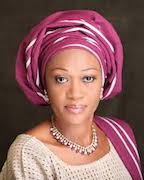
Ooni Installs Oluremi Tinubu as Yeye Asiwaju Ile Oodua
ShareFrom Ayinde Akintade, Osogbo The Permanent Chairman, Southern Nigeria Traditional Rulers Council (SNTRC), Arole Oodua Olofin Adimula and Ooni of...


NYSC Presidential Honor Award Winner Returns to Benue, Shows Appreciations
ShareFrom Attah Ede, Makurdi An ex- corps member and a recipient of Presidential Honour Award, Udokpo Abasi, at the weekend...


NGO Launches Climate Project Steering Committee in Benue
ShareFrom Attah Ede, Makurdi A global Non-Governmental Organisation (NGO), International Alert has inaugurated Climate Project Steering Committee in Benue State,...
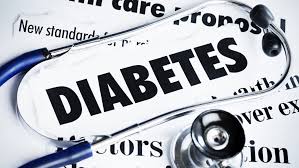

A silent Emergency: Soaring Costs of Diabetes Care Spark Alarm
ShareBy Folasade Akpan For Mrs Schola Effiong, a 58-year-old confidential secretary in Calabar, managing diabetes in today’s economy feels like...

World Bank, Partners Record Progress Toward 1.5bn Healthcare Goal
ShareThe World Bank Group, global partners and countries on Saturday announced continued progress toward the goal of delivering affordable and...


UN Commits to Strengthening Nigeria’s Policy Framework, Enhancing Digital Safety
ShareThe UN Women has reaffirmed its commitment to strengthening policy frameworks, enhancing digital safety, and promoting accountability for online harms...

Nightclub Fire in India’s Goa Kills 25 People
ShareA fire at a popular nightclub in India’s coastal region of Goa has killed 25 people, local officials say. Police...

Hong Kong votes in Election as City Mourns Deadly Fire
ShareHongkongers are voting in an election seen as a test of public sentiment following a deadly fire that angered some...


PDP Crisis: Wike Camp Moves to Conduct Fresh Congresses, Convention
ShareBy Laide Akinboade, Abuja The factional Board of Trustees (BoT) of the Nyesom Wike tendency in the Peoples Democratic Party...