
Economy
2020 BUDGET SPEECH: Budget of Sustaining Growth and Job Creation

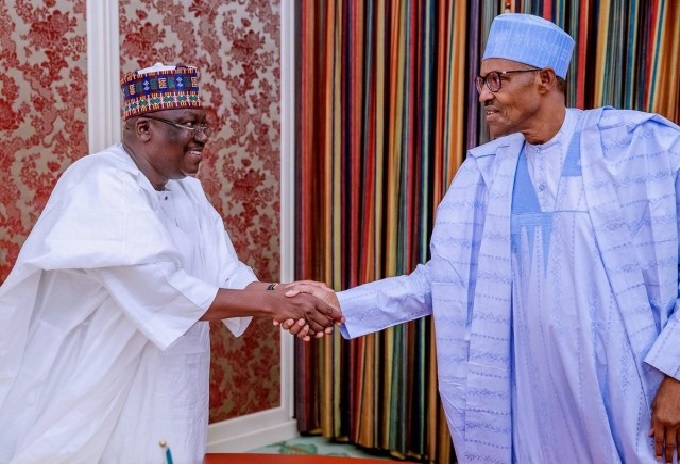
Delivered By:
His Excellency, Muhammadu Buhari
President, Federal Republic of Nigeria
At the Joint Session of the National Assembly, Abuja
Tuesday, October 8, 2019
PROTOCOLS
1.
I will start by asking you to pardon my voice. As you can hear, I have a cold as a result of working hard to meet your deadline!2.
I am delighted to present the 2020 Federal Budget Proposals to this Joint Session of the National Assembly, being my first budget presentation to this 9th National Assembly.3. Before presenting the Budget, let me thank all of you Distinguished and Honourable Members of the National Assembly, for your avowed commitment to cooperate with the Executive to accelerate the pace of our socio-economic development and enhance the welfare of our people.
4. I will also once again thank all Nigerians, who have demonstrated confidence in our ability to deliver on our socio-economic development agenda, by re-electing this Administration with a mandate to Continue the Change. We remain resolutely committed to the actualization of our vision of a bright and prosperous future for all Nigerians.
5. During this address, I will present highlights of our budget proposals for the next fiscal year. The Honourable Minister of Finance, Budget and National Planning will provide full details of these proposals, subsequently.
OVERVIEW OF ECONOMIC DEVELOPMENTS IN 2019
6. The economic environment remains very challenging, globally. The International Monetary Fund expects global economic recovery to slow down from 3.6 percent in 2018 to 3.5 percent in 2020. This reflects uncertainties arising from security and trade tensions with attendant implications on commodity price volatility.
7. Nearer to home, however, Sub-Saharan Africa is projected to continue to grow from 3.1 percent in 2018 to 3.6 percent in 2020. This is driven by investor confidence, oil production recovery in key exporting countries, sustained strong agricultural production as well as public investment in non-dependent economies.
8. Mr. Senate President; Right Honourable Speaker; I am pleased to report that the Nigerian economy thus far has recorded nine consecutive quarters of GDP growth. Annual growth increased from 0.82 percent in 2017 to 1.93 percent in 2018, and 2.02 percent in the first half of 2019. The continuous recovery reflects our economy’s resilience and gives credence to the effectiveness of our economic policies thus far.
9. We also succeeded in significantly reducing inflation from a peak of 18.72 percent in January 2017, to 11.02 percent by August 2019. This was achieved through effective fiscal and monetary policy coordination, exchange rate stability and sensible management of our foreign exchange.
10. We have sustained accretion to our external reserves, which have risen from US$23 billion in October 2016 to about US$42.5 billion by August 2019. The increase is largely due to favourable prices of crude oil in the international market, minimal disruption of crude oil production given the stable security situation in the Niger Delta region and our import substitution drive, especially in key commodities.
11. The foreign exchange market has also remained stable due to the effective implementation of the Central Bank’s interventions to restore liquidity, improve access and discourage currency speculation. Special windows were created that enabled small businesses, investors and importers in priority economic sectors to have timely access to foreign exchange.
12. Furthermore, as a sign of increased investor confidence in our economy, there were remarkable inflows of foreign capital in the second quarter of 2019. The total value of capital imported into Nigeria increased from US$12 billion in the first half year of 2018 to US$14 billion for the same period in 2019.
PERFORMANCE OF THE 2019 BUDGET
13. Distinguished and Honourable Members of the National Assembly, you will recall that the 2019 ‘Budget of Continuity’ was based on a benchmark oil price of US$60 per barrel, oil production of 2.3 mbpd, and an exchange rate of N305 to the United States Dollar. Based on these parameters, we projected a deficit of N1.918 trillion or 1.37 percent of Gross Domestic Product.
14. As at June 2019, Federal Government’s actual aggregate revenue (excluding Government-Owned Enterprises) was N2.04 trillion. This revenue performance is only 58 percent of the 2019 Budget’s target due to the underperformance of both oil and non-oil revenue sources. Specifically, oil revenues were below target by 49 percent as at June 2019. This reflects the lower-than-projected oil production, deductions for cost under-recovery on supply of premium motor spirit (PMS), as well as higher expenditures on pipeline security/maintenance and Frontier exploration.
15. Daily oil production averaged 1.86 mbpd as at June 2019, as against the estimated 2.3 mbpd that was assumed. This shortfall was partly offset as the market price of Bonny Light crude oil averaged US$67.20 per barrel which was higher than the benchmark price of US$60.
16. Additionally, revenue projections from restructuring of Joint Venture Oil and Gas assets and enactment of new fiscal terms for Production Sharing Contracts did not materialize, as the enabling legislation for these reforms is yet to be passed into law.
17. The performance of non-oil taxes and independent revenues such as internally generated revenues were N614.57 billion and N217.84 billion, respectively.
18. Receipts from Value Added Tax were below expectations due to lower levels of activities in certain economic sectors, in the aftermath of national elections. Corporate taxes were affected by the seasonality of collections, which tend to peak in the second half of the calendar year.
19. On the expenditure side, 2019 Budget implementation was also hindered by the combination of delay in its approval and the underperformance of revenue collections. As such, only recurrent expenditure items have been implemented substantially. Of the prorated expenditure of N4.46 trillion budgeted, N3.39 trillion had been spent by June 30, 2019.
20. In compliance with the provisions of the 2018 Appropriation Act, we implemented the 2018 capital budget till June 2019. Capital releases under the 2019 Budget commenced in the third quarter. As at 30th September 2019, a total of about N294.63 billion had been released for capital projects. I have directed the Ministry of Finance, Budget and National Planning to release an additional N600 billion of the 2019 capital budget by the end of the year.
21. Despite the delay in capital releases, a deficit of N1.35 trillion was recorded at end of June 2019. This represents 70 percent of the budgeted deficit for the full year.
22. Despite these anomalies, I am happy to report that we met our debt service obligations, we are current on staff salaries and overhead costs have also been largely covered.
2020 BUDGET PRIORITIES
23. Distinguished Senators, Honourable Members, let me now turn to the 2020 Appropriation, which is designed to be a budget of:
a. Fiscal consolidation, to strengthen our macroeconomic environment;
b. Investing in critical infrastructure, human capital development and enabling institutions, especially in key job creating sectors;
c. Incentivising private sector investment essential to complement the Government’s development plans, policies and programmes; and
d. Enhancing our social investment programs to further deepen their impact on those marginalised and most vulnerable Nigerians.
PARAMETERS & FISCAL ASSUMPTIONS UNDERPINNING THE APPROPRIATION BILL AND THE FINANCE BILL
24. Distinguished and Honourable Members of the National Assembly, the 2020-2022 Medium Term Expenditure Framework (MTEF) and Fiscal Strategy Paper (FSP) set out the parameters for the 2020 Budget. We have adopted a conservative oil price benchmark of US$57 per barrel, daily oil production estimate of 2.18 mbpd and an exchange rate of N305 per US Dollar for 2020.
25. We expect enhanced real GDP growth of 2.93% in 2020, driven largely by non-oil output, as economic diversification accelerates, and the enabling business environment improves. However, inflation is expected to remain slightly above single digits in 2020.
26. Accompanying the 2020 Budget Proposal is a Finance Bill for your kind consideration and passage into law. This Finance Bill has five strategic objectives, in terms of achieving incremental, but necessary, changes to our fiscal laws. These objectives are:
a. Promoting fiscal equity by mitigating instances of regressive taxation;
b. Reforming domestic tax laws to align with global best practices;
c. Introducing tax incentives for investments in infrastructure and capital markets;
d. Supporting Micro, Small and Medium-sized businesses in line with our Ease of Doing Business Reforms; and
e. Raising Revenues for Government.
27. The draft Finance Bill proposes an increase of the VAT rate from 5% to 7.5%. As such, the 2020 Appropriation Bill is based on this new VAT rate. The additional revenues will be used to fund health, education and infrastructure programmes. As the States and Local Governments are allocated 85% of all VAT revenues, we expect to see greater quality and efficiency in their spending in these areas as well.
28. The VAT Act already exempts pharmaceuticals, educational items, and basic commodities, which exemptions we are expanding under the Finance Bill, 2019. Specifically, Section 46 of the Finance Bill, 2019 expands the exempt items to include the following:
a. Brown and white bread;
b. Cereals including maize, rice, wheat, millet, barley and sorghum;
c. Fish of all kinds;
d. Flour and starch meals;
e. Fruits, nuts, pulses and vegetables of various kinds;
f. Roots such as yam, cocoyam, sweet and Irish potatoes;
g. Meat and poultry products including eggs;
h. Milk;
i. Salt and herbs of various kinds; and
j. Natural water and table water.
29. Additionally, our proposals also raise the threshold for VAT registration to N25 million in turnover per annum, such that the revenue authorities can focus their compliance efforts on larger businesses thereby bringing relief for our Micro, Small and Medium-sized businesses.
30. It is absolutely essential to intensify our revenue generation efforts. That said, this Administration remains committed to ensuring that the inconvenience associated with any fiscal policy adjustments, is moderated, such that the poor and the vulnerable, who are most at risk, do not bear the brunt of these reforms.
FEDERAL GOVERNMENT REVENUE ESTIMATES
31. The sum of N8.155 trillion is estimated as the total Federal Government revenue in 2020 and comprises oil revenue N2.64 trillion, non-oil tax revenues of N1.81 trillion and other revenues of N3.7 trillion. This is 7 percent higher than the 2019 comparative estimate of N7.594 trillion inclusive of the Government Owned Enterprises.
32. The increasing share of non-oil revenues underscores our confidence in our revenue diversification strategies, going forward. Furthermore, in our efforts to enhance transparency and accountability, we shall continue our strict implementation of Treasury Single Account (TSA) to capture the domiciliary accounts in our foreign missions and those linked to Government Owned Enterprises.
PLANNED 2020 EXPENDITURE
33. An aggregate expenditure of N10.33 trillion is proposed for the Federal Government in 2020. The expenditure estimate includes statutory transfers of N556.7 billion, non-debt recurrent expenditure of N4.88 trillion and N2.14 trillion ofcapital expenditure (excluding the capital component of statutory transfers). Debt service is estimated at N2.45 trillion, and provision for Sinking Fund to retire maturing bonds issued to local contractors is N296 billion.
STATUTORY TRANSFERS
34. The sum of N556.7 billion is provided for Statutory Transfers in the 2020 Budget and includes:
a. N125 billion for the National Assembly;
b. N110 billion for the Judiciary;
c. N37.83 billion for the North East Development Commission (NEDC);
d. N44.5 billion for the Basic Health Care Provision Fund (BHCPF);
e. N111.79 billion for the Universal Basic Education Commission (UBEC); and
f. N80.88 billion for the Niger Delta Development Commission (NDDC), which is now supervised by the Ministry of Niger Delta Affairs.
35. We have increased the budgetary allocation to the National Human Rights Commission from N1.5 billion to N2.5 billion. This 67 percent increase in funding is done to enable the Commission to perform its functions more effectively.
RECURRENT EXPENDITURE
36. The non-debt recurrent expenditure includes N3.6 trillion for personnel and pension costs, an increase of N620.28 billion over 2019. This increase reflects the new minimum wage as well as our proposals to improve remuneration and welfare of our Police and Armed Forces. You will all agree that Good Governance, Inclusive Growth and Collective Prosperity can only be sustained in an environment of peace and security.
37. Our fiscal reforms shall introduce new performance management frameworks to regulate the cost to revenue ratios for Government Owned Enterprises, which shall come under significant scrutiny. We will reward exceptional revenue and cost management performance, while severe consequences will attend failures to achieve agreed revenue targets.
38. We shall also sustain our efforts in managing personnel costs. Accordingly, I have directed the stoppage of the salary of any Federal Government staff that is not captured on the Integrated Payroll and Personnel Information System (IPPIS) platform by the end of October 2019. All agencies must obtain the necessary approvals before embarking on any fresh recruitment and any contraventions of these directives shall attract severe sanctions.
39. Overhead costs are projected at N426.6 billion in 2020. Additional provisions were made only for the newly created Ministries. I am confident that the benefits of these new Ministries as it relates to efficient and effective service delivery to our citizens significantly outweighs their budgeted costs.
40. That said, the respective Heads of MDAs must ensure strict adherence to government regulations regarding expenditure control measures. The proliferation of Zonal, State and Liaison Offices by Federal Ministries, Departments and Agencies (‘MDAs’), with attendant avoidable increase in public expenditure, will no longer be tolerated.
CAPITAL EXPENDITURE
41. As I mentioned earlier, investing in critical infrastructure is a key component of our fiscal strategy under the 2020 Budget Proposals. Accordingly, an aggregate sum of N2.46 trillion (inclusive of N318.06 billion in statutory transfers) is proposed for capital projects in 2020.
.
42. Although the 2020 capital budget is N721.33 billion (or 23 percent) lower than the 2019 budget provision of N3.18 trillion, it is still higher than the actual and projected capital expenditure outturns for both the 2018 and 2019 fiscal years, respectively. However, at 24 percent of aggregate projected expenditure, the 2020 provision falls significantly short of the 30 percent target in the Economic Recovery and Growth Plan (ERGP) 2017-2020.
43. The main emphasis will be the completion of as many ongoing projects as possible, rather than commencing new ones. MDAs have not been allowed to admit new projects into their capital budget for 2020, unless adequate provision has been made for the completion of ALL ongoing projects.
44. Accordingly, we have rolled over capital projects that are not likely to be fully funded by the end of 2019 into the 2020 Budget. We are aware that the National Assembly shares our view that these projects should be prioritised and given adequate funding in the 2020 Appropriation Act.
45. Therefore, I will once again commend the 9th National Assembly’s firm commitment to stop the unnecessary cycle of delayed annual budgets. I am confident that with our renewed partnership, the deliberations on the 2020 Budget shall be completed before the end of 2019 so that the Appropriation Act will come into effect by the 1st of January.
46. Some of the key capital spending allocations in the 2020 Budget include:
a. Works and Housing: N262 billion;
b. Power: N127 billion;
c. Transportation: N123 billion;
d. Universal Basic Education Commission: N112 billion;
e. Defence: N100 billion;
f. Zonal Intervention Projects: N100 billion;
g. Agriculture and Rural Development: N83 billion;
h. Water Resources: N82 billion;
i. Niger Delta Development Commission: N81 billion;
j. Education: N48 billion;
k. Health: N46 billion;
l. Industry, Trade and Investment: N40 billion;
m. North East Development Commission: N38 billion;
n. Interior: N35 billion;
o. Social Investment Programmes: N30 billion;
p. Federal Capital Territory: N28 billion; and
q. Niger Delta Affairs Ministry: N24 billion.
47. Although Government’s actual spending has reduced, our plans to leverage private sector funding through our tax credit schemes will ensure our capital programmes are sustained.
48. For example, we launched the Road Infrastructure Tax Credit Scheme, pursuant to which I have approved the construction and rehabilitation of 19 Nigerian roads and bridges of 794.4km across 11 States. Indeed, the Scheme has attracted private investment of over N205 billion and the first set of tax credits are being processed by the Federal Ministry of Finance, Budget and National Planning.
49. As I mentioned during my Independence Day Speech, under the Presidential Power Initiative, we will modernise the National Grid in 3 phases; starting from 5 Gigawatts to 7 Gigawatts, then to 11 Gigawatts by 2023, and finally 25 Gigawatts afterwards in collaboration with the German Government and Siemens.
BUDGET DEFICIT
50. Budget deficit is projected to be N2.18 trillion in 2020. This includes drawdowns on project-tied loans and the related capital expenditure.
51. This represents 1.52 percent of estimated GDP, well below the 3 percent threshold set by the Fiscal Responsibility Act of 2007, and in line with the ERGP target of 1.96 percent.
52. The deficit will be financed by new foreign and domestic borrowings, Privatization Proceeds, signature bonuses and drawdowns on the loans secured for specific development projects.
DEBT SERVICE
53. Nigeria remains committed to meeting its debt service obligations. Accordingly, we provided the sum of N2.45 trillion for debt service. Of this amount, 71 percent is to service domestic debt which accounts for about 68 percent of the total debt. The sum of N296 billion is provided for the Sinking Fund to retire maturing bonds issued to local contractors.
54. I am confident that our aggressive and re-energised revenue drive will maintain debt-revenue ratio at acceptable and manageable levels. We will also continue to be innovative in our borrowings by using instruments such as Sukuk, Green Bonds and Diaspora Bonds.
SOCIAL INVESTMENT PROGRAMME
55. Our government remains committed to ensuring the equitable sharing of economic prosperity. Our focus on inclusive growth and shared prosperity underscores our keen interest in catering for the poor and most vulnerable. Accordingly, we are revamping and improving the implementation of the National Social Investment Programme through the newly created Ministry of Humanitarian Affairs, Disaster Management and Social Development.
56. The National Social Investment Programme is already creating jobs and economic opportunity for local farmers and cooks, providing funding to artisans, traders, youths, and supporting small businesses with business education and mentoring.
57. The provision of N65 billion for the Presidential Amnesty Programme has been retained in the 2020 Budget. Furthermore, to fast track the rebuilding efforts in the North East region, a provision of N37.83 billion has been made for the North East Development Commission.
OTHER STRATEGIC PRIORITIES IN 2020
58. The 2020 Budget is expected to accelerate the pace of our economic recovery, promote economic diversification, enhance competitiveness and ensure social inclusion. We are optimistic of attaining higher and more inclusive GDP growth in order to achieve our objective of massive job creation and lifting many of our citizens out of poverty.
59. The efficiency of port operations will also be enhanced by implementing a single customs window, speeding up vessel and cargo handling and issuing more licenses to build modern terminals in existing ports, especially outside Lagos.
60. Furthermore, completing the reforms to the governance and fiscal terms of the Petroleum Industry will provide certainty and attract further investments into the sector. A consequence of this will be increase in jobs and in government’s take. I therefore seek your support in passing into law two Petroleum Industry Executive Bills I will be forwarding to you shortly.
61. In addition, we need to quickly review the fiscal terms for deep offshore oil fields to reflect the current realities and for more revenue to accrue to the government. The Deep Offshore and Inland Basin Production Sharing Contract (Amendment) Bill 2018, was submitted to the 8th National Assembly in June 2018 but was unfortunately not passed into law.
62. I will be re-forwarding the Bill to this Assembly very shortly and therefore urge you to pass it. We estimate that this effort can generate at least 500 million US dollars additional revenue for the Federal Government in 2020, and over one billion dollars from 2021.
63. Whilst the Budget is our principal fiscal tool to achieve these socio-economic development targets, we remain committed to prudently planning for our future economic prosperity. In this regard, I have directed the reconstituted Ministry of Finance, Budget and National Planning to commence preparations towards the development of successor medium – and long-term economic development plans, particularly as the Nigeria Vision 20-2020 and the ERGP expire next year.
CONCLUSION
64. Mr. Senate President, Mr. Speaker, Distinguished and Honourable Members of the National Assembly, this speech would be incomplete without, once again, commending the patriotic resolve of the 9th National Assembly to collaborate with the Executive in the effort to deliver inclusive growth and enhance the welfare our people. I assure you of the strong commitment of the Executive to deepen the relationship with the National Assembly.
65. As you review the 2020-2022 Medium Term Expenditure Framework (MTEF) and Fiscal Strategy Paper (FSP), as well as the 2020 Budget estimates, we believe that the legislative process will be quick, so as to restore the country to the January-December financial year.
66. It is with great pleasure therefore, that I lay before this Distinguished Joint Session of the National Assembly, the 2020 Budget Proposals of the Federal Government of Nigeria.
67. I thank you most sincerely for your attention.
68. May God bless the Federal Republic of Nigeria.






The Nigerian Export Promotion Council (NEPC) says exporters in Imo generated a total of 1,244,095 dollars as proceeds from export trade in 2025.
The Imo Coordinator of the council, Mr Anthony Ajuruchi, disclosed this during a follow-up engagement with cocoa farmers in the state on Thursday in Owerri.
50 cocoa farmers and exporters in Imo received 30 cocoa seedlings each in 2025 as part of interventions to boost production for export.
Ajuruchi said the amount was derived from proceeds of both formal and informal export transactions carried out by the farmers within the 2025 fiscal year.
He commended the Executive Director of NEPC, Mrs Nonye Ayeni, and the management team for their support and commitment to the growth of the export market in Imo and across the country.
According to him, the council recorded notable achievements in 2025, including the organisation of capacity-building programmes on non-oil export, product packaging and labelling.
“In addition to our interventions for cashew farmers, we conducted trainings on product development and adaptation, export contracts, market penetration, product certification and export documentation procedures.
“We also trained about 600 exporters and small and medium-scale enterprises,” he said.
Ajuruchi said the engagement with the cocoa farmers was aimed at obtaining feedback and brainstorming on strategies to increase production and export volume in 2026.
One of the beneficiaries, Mrs Sophia Orji, said the cocoa seedlings she received were doing well and had started fruiting after 17 months.
Another farmer, Mrs Mary Okeke, said her cocoa plants were thriving and appealed to NEPC to extend similar support to farmers during the rainy season.
Also speaking, Mr Canice Nze, Director of Produce in the Imo Ministry of Trade, Commerce and Investment, urged the farmers to register with the ministry to enable them benefit from cooperative structures and access possible government grants. (NAN)

By David Torough, Abuja
In line with the consumer-focused objectives of the Nigerian Communications Commission (NCC) and the Central Bank of Nigeria (CBN), the two regulators have drawn up a framework to address consumer complaints arising from unsuccessful airtime and data transactions during network downtimes, system glitches, or human input errors.
The framework is the outcome of several months of engagements involving the NCC, the CBN, Mobile Network Operators (MNOs), Value Added Service (VAS) providers, Deposit Money Banks (DMBs), and other relevant stakeholders.
According to the NCC, these engagements were prompted by a rising incidence of failed airtime and data purchases, where subscribers were debited without receiving value and experienced delays in resolution.
“The Framework represents a unified position by both the telecommunications and financial sectors on addressing such complaints. It identifies and tackles the root causes of failed airtime and data transactions, including instances where bank accounts are debited without successful delivery of services. It also prescribes an enforceable Service Level Agreement (SLA) for MNOs and DMBs, clearly outlining the roles and responsibilities of each stakeholder in the transaction and resolution process,” a statement by Head of Public Affairs of NCC, Nnen Ukoha said.
Under the new framework, where a purchaser is debited but fails to receive value for airtime or data—whether the failure occurs at the bank level or with an NCC licensee—the purchaser is entitled to a refund within 30 seconds, except in circumstances where the transaction remains pending, of which the refund can take up to 24 hours.
The framework further mandates operators to notify consumers via SMS of the success or failure of every transaction. It also addresses erroneous recharges to ported lines, incorrect airtime or data purchases, and instances where transactions are made to the wrong phone number.
Director of Consumer Affairs at the NCC, Mrs. Freda Bruce-Bennett in a comment on the development said the framework also establishes a Central Monitoring Dashboard to be jointly hosted by the NCC and the CBN. According to her, the dashboard will enable both regulators to monitor failures, the responsible party, refunds, and track SLA breaches in real time.
“Failed top-ups rank among the top three consumer complaints, and in line with our commitment to addressing these priority issues, we were determined to resolve it within the shortest possible time,” she said.
“We are grateful to all stakeholders—particularly the Central Bank of Nigeria and its leadership—for their tireless commitment to resolving this issue and arriving at this framework, and for ensuring that consumers of telecommunications services receive full value for their purchases.
“So far, pending the approval of management of both regulators on the framework, MNOs and banks have collectively made refunds of over N10 billion to customers for failed transactions” she explained .
Mrs. Bruce-Bennett further noted that implementation of the framework is expected to commence on March 1, 2026, once the two regulators have made final approvals, and technical integration by all MNOs, VAS providers and DMBs is concluded.

By Tony Obiechina, Abuja
The Budget Office of the Federation has reaffirmed the integrity of Nigeria’s newly enacted Tax Reform Acts, cautioning against what it described as governance by speculation and unverified claims following allegations of post-passage alterations.
In a statement on Wednesday, the Budget Office said it had taken note of concerns raised by the Minority Caucus of the House of Representatives, stressing that the sanctity of the law is central to constitutional democracy and not a mere procedural formality.
According to the Office, any suggestion that a law could be altered after debate, passage, authentication, and presidential assent without due process would strike at the core of the Republic and undermine citizens’ right to be governed by transparent and stable laws.
However, it warned that democratic integrity is also endangered by the careless amplification of unverified claims. “A nation cannot be governed by insinuation or sustained on circulating documents of uncertain origin,” the statement noted, adding that public confidence, once shaken by speculation, is often difficult to restore.
The Budget Office emphasized that both government and citizens share a common interest in truth, clarity, and due process, noting that public finance depends heavily on trust in the legality and clarity of fiscal laws. It welcomed the decision of the National Assembly to investigate the allegations, describing institutional inquiry, not conjecture as the appropriate response to claims of illegality.
On public access to the law, the Office agreed that Nigerians and the business community are entitled to clear and authoritative texts of all laws they are required to obey. It clarified, however, that the authenticity of legislation is determined by certified legislative records and official publication processes, not by informal or viral reproductions.
The statement also underscored the importance of separation of powers, warning that claims suggesting Nigeria is being governed by “fake laws,” if not backed by established facts, risk eroding confidence in democratic institutions.
At the same time, it stressed that legislative scrutiny should not be dismissed by the executive, noting that oversight is a constitutional duty, not an act of hostility.
From a fiscal perspective, the Budget Office said legal certainty is essential for revenue projections, macroeconomic stability, budget credibility, and investor confidence. While it is not the custodian of legislative records, it maintained that uncertainty around operative tax provisions directly affects economic planning.
To restore confidence, the Office proposed a set of measures, including the publication of verified reference texts in a single public repository, orderly access to Certified True Copies for stakeholders, clear public explanations where discrepancies are alleged, and strict alignment of all implementing regulations with authenticated legal texts.
Addressing calls for suspension of the tax reforms, the Budget Office cautioned against allowing prudence to slide into paralysis. It argued that properly implemented tax reform is necessary to reduce dependence on borrowing and inflationary financing, while easing indirect burdens on vulnerable citizens.
“Where clarification is required, it must be provided; where correction is required, it must be effected; where investigation is required, it must proceed,” the statement said, adding that governance and reform should not be stalled by unresolved conjecture.
The Office concluded by describing taxation as a democratic covenant that binds citizens and the state, insisting that compliance depends on transparency and trust. It called on political actors to protect institutions as much as positions, urging citizens and businesses to rely on verified sources and resist the spread of unauthenticated information.
The statement was signed by Tanimu Yakubu, Director-General of the Budget Office of the Federation, who reaffirmed the agency’s commitment to fiscal transparency, institutional integrity, and reforms that advance national prosperity while safeguarding citizens’ rights.


UN Secretary General Visits Benue Condemns Incessant Attacks On Communities, Killings.
ShareFrom Attah Ede Makurdi United Nations Deputy Secretary-General Dr. Amina Mohammed, on Friday condemned the incessant conflicts killings in Nigeria,...


President Tinubu commissions 60 megawatts gas turbine, other projects in bayelsa
ShareFrom Mike Tayese, Yenagoa The much awaited 60 megawatts Gas Turbine embarked upon by the administration of Governor Douye Diri...


Ijaw Traditional Rulers, elders suspend INC elections
Share The National Conference of Ijaw Traditional Rulers and Elders (N-CITRE-INC) has suspended the Ijaw National Congress (INC) elections till...

Experts Advocate Digital Economy, Governance Reforms as Pathway to Inclusive Growth
ShareBy David Torough, Abuja Stakeholders at the 2026 Academic Staff Union of Polytechnics (ASUP) International Conference in Bida have called...


Digital Economy, Good Governance Key to Unlocking Inclusive Growth in Developing Nations — Expert
ShareBy David Torough, Abuja At the 2026 Academic Staff Union of Polytechnics (ASUP) National Conference held at the Federal Polytechnic...


UNILAG Alumni awards scholarship to 28 indigent students
ShareBy Laide Akinboade, Abuja The University of Lagos Alumni Association, Federal Capital Territory (FCT), chapter on Thursday, awarded scholarship to...


JAMB Releases 2026 UTME Examination Slips for Candidates
ShareThe Joint Admissions and Matriculation Board (JAMB) has announced that candidates who registered for the 2026 Unified Tertiary Matriculation Examination (UTME) can now print...
Lobi Stars Target Promotion to NPFL in 2026/2027 Season
ShareThe Chairman of Lobi Stars Football Club of Makurdi, Simon Ikya, said the club’s sole target is to gain promotion...


Gambia Appoints British Barrister to Prosecute Gruesome Jammeh-era Crimes
ShareBritish barrister Martin Hackett has been appointed as The Gambia’s first special prosecutor to try those responsible for human rights abuses carried out...


Court Frees Terror Victim, Jails another 10 Years
ShareJustice Peter Lifu of the Federal High Court, Abuja, on Thursday, sentenced a Boko Haram victim, Ali Kolo, to nine years’ imprisonment...