
Economy
2022 Budget: FG Borrowings Still Within Legal Framework- FRC


The Chairman, Fiscal Responsibility Commission (FRC), Mr Victor Muruako, says the Federal Government is still within the legal framework of fiscal borrowings and budget deficit threshold.
He said this on Friday, in Abuja at the signing of a Memorandum of Understanding (MoU) with the Nigerian Institute of Quantity Surveyors (NIQS).
Muruako said that the Fiscal Responsibility Act (FRA) 2007, gave room for exceptions when there was need for it and that the 2022 Appropriation Bill was still within the three per cent fiscal borrowing threshold.
“The FRA clearly defines what the borrowing threshold should be, but it also makes room for exceptions.
“The government and the parliament have taken the bold step to amend the FRA through the Finance Act 2020 and the Finance Act is reviewed annually and as the budget is coming the National Assembly will also take a look at the Finance Act.
“The government is still acting within the legal framework of it and for every law there must be an exception.
“While we continue to push to ensure that the deficit level does not exceed what it should be, we should also appreciate some of the obvious challenges that the government has found itself like COVID-19 which almost crippled the world economy.”
President Muhammadu Buhari presented the N16.39 trillion 2022 Appropriation Bill to a joint session of the National Assembly on Oct. 7, in Abuja.
According to Buhari, total revenue available to fund the 2022 Federal Budget is estimated at N10.13 trillion, including grants and aid of N63.38 billion, as well as the revenues of 63 Government-Owned Enterprises (GOEs).
Of the N16.39 trillion proposed to be spent in 2022, N10.132 trillion was projected to be generated as revenue and N6.26 trillion, being 3.39 per cent of GDP as deficit would be financed majorly by borrowings.
To fund the deficit, N2.51 trillion would come from domestic sources, another N2.51 trillion from foreign borrowings, N1.16 trillion from multi- and bi-lateral loan drawdowns and N90.7 billion from privatization proceeds.
Speaking on the MoU with NIQS, Muruako said that it would help in the evaluation of capital projects as having seasoned professionals on the commission’s team would enhance the quality of its verification of Federal Government projects.
Muruako also said that the FRC was organising a two-day sensitisation workshop on Transparency, Accountability and Prudence (TAP) in the North-West and South-West geo-political zones of the country.
Themed “Fiscal Transparency and Sustainable Development at the Sub-Nationals”, it is part of a series of zonal sensitisation campaigns on TAP in public finance management.
“The core objectives of the events is to expand and deepen the frontiers of fiscal responsibility, transparencty and accountability to the sub-national levels of government in Nigeria.
“The target is to reach government and citizens at all levels, down to the grassroots to enthrone a culture of fiscal responsibility, transparent and prudence and thereby advance the macro-economic stability and sustainability of our dear nation.”
The workshops are scheduled to hold in Kano for the North-West on Oct. 25 and 26 and in Lagos for the South-West on Nov. 1 and 2.
The president of NIQS, Mr Mohammed Abba-Tor, said that NIQS members across the country were willing to support the efforts of the commission in having the FRA amended, while also giving technical support in the fight against corruption.
He said that the impact of the MoU on the commission were the values quantity surveyors lived by which include transparency, value for money and accountability.
“So, we are going to make ourselves available in areas of managing and evaluation monitoring, evaluation of projects, looking at post contract auditing and so on.
“We have templates and frameworks for evaluating whether the process has been diligently followed or not, if they are not followed, there should be some repercussions for those defaulting government agencies.
“In addition to the monetary evaluation is post contract audit, we are also going to make available a kind of technical advice and support in various sectors as we keep on monitoring and partnering with this very important commission.”
Abba-Tor said that the collaboration between the public sector and private sector, demonstrated by the institute’s willingness to partner with FRC was first of its kind and very important for national support.
He added that the private sector was supporting the efforts of the Federal Governments in ensuring value for money as so much money should not be spent on getting so little in terms of project delivery.
According to him, there must be a match between the concept, plan and then the actual achievement of goals.
FRA which came into existence in 2007, is an Act that provides for prudent management of the nation’s resources and ensure long-term macro-economic stability of the national economy.
It also seeks to secure greater accountability and transparency in fiscal operations within a medium-term fiscal policy framework. (NAN)








By Tony Obiechina, Abuja
The Securities and Exchange Commission (SEC) has stressed the need for Nigeria to harness its demographic dividend to advance financial inclusion through investments by 2030 for national survival or face deepening inequality.
The Director-General of the SEC, Dr Emomotimi Agama said this at the United Capital Asset Management Investment forum on Wednesday in Lagos.
Agama, in his keynote address titled: “Advancing Financial Inclusion through Investments: Bridging
Nigeria’s Knowledge and Wealth Gap,” said Nigeria must harness its demographic dividend to boost investment.
“Our theme, Advancing Financial Inclusion through Investments, is not aspirational; it is foundational to national survival.
“We stand at a pivotal moment. By 2030, Nigeria can either harness its demographic dividend or face deepening inequality. The knowledge-wealth gap is not merely an economic challenge; it is a moral imperative,” Agama said.
He said the term inclusion should be reframed as active financial involvement, where access meets empowerment, and capital becomes a tool for transformation.
Agama said that closing the financial inclusion gender gap could lift 700,000 Nigerians from poverty.
He said, “Nigeria has a great population yet we have a tiny drop of this number of persons involved in the capital market.
“That one reason for poverty, because we are running from money. We have to do something. Our market capitalisation is an opportunity to do something,
We all have
“We need to change the narrative and move the market forward. We must reach out to make the difference. We are committed to protecting investors and developing the market. Our goal is to do the right thing no matter whose ox is gored. We will work by the principles of fairness and equity to change the market. We will provide a fair ground for everyone to aspire.
He noted that MTN Nigeria’s share offering drew 150,000 new investors – 75 per cent women, 85 per cent under 40.
Agama recommended a four-pillar strategy for bridging the gaps.
He listed the four-pillar strategy as democratisation of financial knowledge, catalyse MSME Investment Channels, blended Finance Vehicles: Partner with Bank of Industry (BOI) to de-risk loans for women-led SMEs.
“We need to educate people about finances. As we drive this market, we do so for a purpose, I enjoin everyone to be the disciple and the apostles. Getting this market to move is a deliberate action,” he added.
 | ReplyReply allForwardAdd reaction |

By Ubong Ukpong, Abuja
The Nigerian Ports Authority (NPA) on Monday assured that it would take into the coffers massive revenue of over N1.27 trillion in 2025, representing a 40 percent increase from the N894.86 billion it realized in 2024.
This ambitious target, the Authority said, was anchored on sweeping modernization efforts, the full activation of the Dangote Refinery’s marine operations, and the deployment of cutting-edge technology to enhance port efficiency.
Managing Director of the NPA, Abubakar Dantsoho, disclosed this in a presentation during his agency’s budget defence session wih the House of Representatives Committee on Ports and Harbours, where he defended the agency’s 2025 budget estimates and provided insights into its 2024 performance.
“Our 2025 budget proposal is more than figures, it reflects our aspirations for a more efficient, globally competitive port system,” Dantsoho told lawmakers, adding that over 70% of the proposed expenditure will go into capital projects.
For 2024, the Authority surpassed its revenue target of N865.39 billion, posting an actual realization of N894.86 billion.
However, Dantsoho revealed that only N417.86 billion, less than half of the approved N850.92 billion expenditure, had been spent as of the time of reporting.
Despite this, NPA made a record contribution of N400.8 billion to the Consolidated Revenue Fund (CRF) in 2024, nearly double the N213.23 billion remitted in 2023. Of this amount, a staggering N344.7 billion was deducted at source.
“This shows our unwavering commitment to national revenue generation, even when our own operational liquidity is affected,” the NPA boss stressed.
Dantsoho said the projected revenue increase is premised on several key assumptions and developments, including: The full operation of the Dangote Refinery, which alone is expected to draw in over 600 vessels annually through its Single Point Mooring (SPM) system; the commissioning of upgraded terminals at WACT and OMT, which will enhance container traffic; the implementation of automation tools such as the National Single Window, Port Community System (PCS), and Vessel Traffic Management System (VTMS); and increased cargo volumes stemming from global disruptions, including the Russia-Ukraine conflict, which has affected global trade routes.
He said the 2025 revenue is expected to come from the following key sources: Ship Dues, N544.06 billion; Cargo Dues, N413.06 billion; Concession Fees, N249.69 billion; and Administrative Revenue, N73.07 billion
Of the proposed N1.14 trillion total expenditure for 2025, N778.46 billion is earmarked for capital projects.
This investment, he said, will target the revitalization of critical infrastructure, including the Calabar, Warri, and Burutu ports and channels, and enhance towage services, channel depth, and compliance with international security conventions.
“Investments in infrastructure and technology are non-negotiable if we are to stay competitive regionally and globally,” Dantsoho emphasized.
He cited increasing competition from neighboring ports and aging assets across Nigeria’s coastal corridors.
The NPA also intends to address technology gaps by upgrading legacy systems and bolstering cybersecurity, ensuring Nigerian ports meet global standards for digital operations.
“We can say that with timely access to internally generated revenue and capital funds NPA would deliver the kind of impact Nigeria expects,” he said.
Chairman of the Committee, Hon. Nnolim Nnaji, urged the NPA to ramp up performance, improve port infrastructure, and play a greater role in addressing Nigeria’s revenue and unemployment challenges.
Nnaji said the ports remain a critical pillar of Nigeria’s economy, and urged the agency to meet rising expectations despite operational challenges.
“No country can thrive economically without high-performing ports. They are the economic heartbeat of every nation, determining how buoyant a country is through the flow of imports and exports,” Hon Nnaji said.
The committee praised NPA for its performance.
Nnaji stressed that the NPA’s performance has implications beyond maritime activity, noting that increased port output can significantly boost job creation across several sectors.
“The Nigerian Ports Authority is not just a revenue-generating agency, it is a national asset in terms of employment and economic impact.
“We expect to see detailed strategies on how to improve revenue generation and expand employment opportunities through your 2025 budget,” he said.
The lawmaker also pointed to growing interest in the development of new ports across the country but cautioned against neglecting existing port infrastructure.
“As we welcome investment in new ports, we must not abandon the old ones. Maintaining and upgrading our existing ports, both in the Eastern Corridor and the Western axis, is essential to long-term sustainability,” he added.
The Committee called for a clear outline from the NPA on how its 2025 financial plan will address pressing national concerns and reaffirm Nigeria’s competitiveness in regional and global maritime trade.

By Eze Okechukwu, Abuja
The Senate, through its Committee on Customs has set a revenue target of N10 trillion for the Nigeria Customs Service for the 2025 fiscal year, instead of the initial N6.584 trillion given to her earlier on while urging the agency to clamp down on smuggling and Illicit drugs.
The Chairman of the Committee, Senator Isah Jibrin (Kogi East), who gave the agency the marching order yesterday in Abuja during the budget defence of the revenue driving agency however commended her for exceeding its 2024 revenue target of N5.
079 trillion.The NCS team led by Deputy Comptroller General, Jibo Bello who represented the Comptroller General presented the 2024 budget performance with a revenue target of N5.
079 trillion, stressing that the proposal was exceeded by over a trillion naira.The Committee, obviously impressed by the performance commended NCS before asking them to go ahead and present the 2025 budget proposal, which the agency tied at N6.584 trillion revenue target with an expenditure of N1.132 trillion.
Following their presentation, members of the Senate Committee on Customs unanimously approved the recommendation of the revenue target of N6.584 trillion and the expenditure of N1.132 trillion for the 2025 financial year.
The Committee will subsequently present the budget proposal to the Senate at plenary most likely this week as the red chamber resumes today after a long recess tied to Eid celebration.
In his final remarks, Senator Jibrin emphasised the need for the NCS to rise up in terms of its surveillance with respect to illicit drugs and smuggling “to ensure that, as much as possible, you should be on top of your game”.
He said there are so many illicit drugs flowing all over the place, which according to him “is contributing to the issue of banditry in Nigeria because most of these guys are on drugs. What I’m saying is that, in addition to your revenue drives, you should also be mindful of some of these other functions.

Ooni Installs Oluremi Tinubu as Yeye Asiwaju Ile Oodua
ShareFrom Ayinde Akintade, Osogbo The Permanent Chairman, Southern Nigeria Traditional Rulers Council (SNTRC), Arole Oodua Olofin Adimula and Ooni of...


NYSC Presidential Honor Award Winner Returns to Benue, Shows Appreciations
ShareFrom Attah Ede, Makurdi An ex- corps member and a recipient of Presidential Honour Award, Udokpo Abasi, at the weekend...


NGO Launches Climate Project Steering Committee in Benue
ShareFrom Attah Ede, Makurdi A global Non-Governmental Organisation (NGO), International Alert has inaugurated Climate Project Steering Committee in Benue State,...


A silent Emergency: Soaring Costs of Diabetes Care Spark Alarm
ShareBy Folasade Akpan For Mrs Schola Effiong, a 58-year-old confidential secretary in Calabar, managing diabetes in today’s economy feels like...

World Bank, Partners Record Progress Toward 1.5bn Healthcare Goal
ShareThe World Bank Group, global partners and countries on Saturday announced continued progress toward the goal of delivering affordable and...


UN Commits to Strengthening Nigeria’s Policy Framework, Enhancing Digital Safety
ShareThe UN Women has reaffirmed its commitment to strengthening policy frameworks, enhancing digital safety, and promoting accountability for online harms...

Nightclub Fire in India’s Goa Kills 25 People
ShareA fire at a popular nightclub in India’s coastal region of Goa has killed 25 people, local officials say. Police...
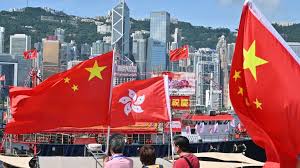

Hong Kong votes in Election as City Mourns Deadly Fire
ShareHongkongers are voting in an election seen as a test of public sentiment following a deadly fire that angered some...


PDP Crisis: Wike Camp Moves to Conduct Fresh Congresses, Convention
ShareBy Laide Akinboade, Abuja The factional Board of Trustees (BoT) of the Nyesom Wike tendency in the Peoples Democratic Party...

Is Community Parenting Still Relevant?
ShareBy Dorcas Jonah In the Nigerian culture, extended families and communities play a crucial role in care-giving, instilling values, and...