
view point
2023 Elections and The Fiscal Responsibility Act

By Victor Emejuiwe
As Nigeria prepares for the 2023 general elections, the tendency for responsible agents of government to shift focus from governance to politics is a possibility. Currently, the political tempo of who becomes the next president and the process of selecting the candidates have taken over the discourse.
Little attention is being paid to the implementation of the 2022 Budget and the state of the economy.From the guideline of INEC, the parties have up till the second quarter of the year to conclude the process of selecting their respective candidates. Thereafter, parties are expected to commence high politicking, including amassing of funds for campaign activities.
Historically, pre-election years have been mismanaged by presiding governments to the point of affecting governance and service delivery. During this period, provisions of the Fiscal Responsibility Act are also prone to violation. The Fiscal Responsibility Act, which sets the pace for prudent management of the nation’s resources, ensure long term macro-economic stability of the national economy, secure greater accountability and transparency in fiscal operations within the Medium Term Fiscal Policy Framework, and the establishment of the Fiscal Responsibility Commission to ensure the promotion and enforcement of the nation’s economic objectives; and for related matters can be subject to abuse. For instance, there are usual delays in the implementation of the budget during this period.
The budget was signed by the president early January 2022, the early signing should have been a good reason to attain the macro-economic targets set for the first quarter implementation of the budget. The Fiscal Responsibility Act, in S. 30 provides that the Minister of Finance, through the Budget Office of the Federation, monitors and evaluates the implementation of the annual budget, assesses the attainment of fiscal targets and reports thereon on a quarterly basis to the Fiscal Responsibility Council and the Joint Finance Committee of the national Assembly.
Sub section (2) also states that the Minister of Finance shall, cause the report prepared pursuant to subsection (1) of this section to be published in the mass and electronic media and on the Ministry of Finance’s website, not later than 30 days after the end of each quarter. However, as at the time of writing this article, there is no evidence from the website of the budget office or ministry of finance on the budget implementation.
The BoF does not have a budget implementation report for the last quarter of 2021 and the first quarter of 2022. This could imply a possible delay in budget performance for the last two quarters. Another disruption that might be occasioned by electioneering activities is the late preparation of the Medium Term Expenditure Framework and the passage of the 2023 budget. S. 14 of the FRA provides the time limit for presentation of Medium Term Expenditure Framework to Federal Executive Council, S.14 (1) states that; The Minister shall before the end of the second quarter of each financial year, present the Medium-Term Expenditure Framework to the Federal Executive Council for consideration and endorsement. (2) The Medium-term Expenditure Framework as endorsed by the Federal Executive Council shall take effect upon approval by a resolution of each of the National Assembly. From the provision, the timeline for the preparation of the MTEF is June, this is also the period parties are expected to conclude and submit names of their presidential candidates to INEC. With the refusal of current serving ministers vying for political offices to resign their positions to avoid interference with their duties, the MTEF might experience delay or may not receive qualitative input from the affected ministries.
On borrowing, the federal government plans to borrow to finance the N6.258 trillion 2022 budget deficit. The FRA makes it mandatory for borrowing to be utilised only for capital projects, but with the spate of political activities ongoing and little attention to governance, borrowed sums might be diverted for political purposes thereby increasing the inflation figure which is already at 15 per cent. In the same vein, it has been previously observed that most MDAs channel their unspent funds to the campaign activities of their preferred political parties and candidates. This is in violation of the Fiscal Responsibility Act which mandates the MDAs to return such funds to the Consolidated Revenue Fund. Also most members of the legislature, who are meant to play an oversight role on the implementation of the budget, are also gearing up to return to the legislative chambers and may not dedicate time for such an important role.
Thus, the Fiscal Responsibility Commission takes note of the red flags highlighted and works with necessary agencies of government to forestall the violations of the Act. The Fiscal Responsibility Commission should scrutinise the financial inflows and activities of government owned enterprises to ensure that they do not divert the remittances of their operating surpluses to the CRF for political activities. The exercise of the powers and functions of the Fiscal Responsibility Commission is mostly required at this stage so as to protect the interest of the masses and avert the possibility of economic sabotage in the wake of elections.
Victor Emejuiwe wrote from Abuja




view point
Can the Defense Minister‑Designate Gen. Musa Be Nigeria’s Last Hope for Security Renewal?

By Abba Dukawa
Nigeria stands at a tipping point, where insecurity threatens the very foundations of national stability and erodes public confidence in government authority. Last month, the country experienced some of its bloodiest days as terrorists and bandits unleashed violence on defenseless citizens across the Northeast, Northwest and North‑Central regions.
During this period, terrorists abducted and publicly executed Brigadier General Uba and three of his men in Borno State.In response to this urgent reality, President Bola Tinubu declared a nationwide security emergency, authorising the police and army to recruit additional personnel. The President also ordered the withdrawal of officers from VIP protection units for redeployment to conflict zones and urged Nigerians to remain calm, vigilant, and supportive of security efforts, emphasizing that “we are in this fight together, and together we shall win.
”This move is aimed at addressing the country’s security challenges, including recent mass kidnappings of schoolchildren and attacks on places of worship. The President also nominated retired General Christopher Gwabin Musa—the immediate past Chief of Defence Staff—as the new Minister of Defence. This nomination is far more than a routine political transition; it signals the government’s intent to confront insecurity with competence, clarity, and unwavering resolve.
General CG.Musa enters the role with a field‑tested reputation. His understanding of Nigeria’s security architecture is shaped by years of direct engagement in the country’s most volatile conflict zones. Before rising to Chief of Defence Staff, he played pivotal roles in the fight against Boko Haram and the Islamic State West Africa Province (ISWAP), commanding key formations in the northeast. His leadership in Operation Hadin Kai earned widespread recognition for improving operational discipline, strengthening inter‑agency collaboration, and weakening insurgent networks that once operated with near impunity. Under his command, the operation liberated over 1,500 hostages and reclaimed strategic territories in Borno and Yobe.
He oversaw the acquisition of advanced weaponry—from T‑129 ATAK helicopters to Bayraktar TB2 drones—and launched community‑engagement programmes that constructed 50 schools and 30 health‑care centres in conflict‑affected regions. He also initiated the National Youth Security Summit and scholarship schemes supporting 1,000 students annually.
As Chief of Defence Staff, Musa became known for his bluntness—a quality Nigerians often say they desire but rarely see in security leadership. He repeatedly warned that Nigeria must cut off the financial lifelines fuelling insurgency, stressing that terrorism thrives not only on ideology but also on steady funding streams, illicit supply routes, and porous borders. He frequently advocated for securing Nigeria’s borders through modern surveillance technology and reinforced patrol systems, insisting that no nation can defeat crime if its territorial boundaries remain exposed.
Throughout his tenure as Chief of Defence Staff, General Musa actively promoted the welfare and recognition of officers and troops as a strategy to boost morale and operational effectiveness. He consistently tasked senior officers to prioritize the welfare of their personnel, emphasizing that proper working conditions are essential. He instituted a system for rewarding exceptional service and acts of bravery, sometimes offering monetary rewards or commendation awards. During visits to operational areas, he frequently expressed appreciation for the troops’ conduct, making it clear that their efforts in maintaining national security were observed and valued by army leadership and the government.
Musa also championed a moral and professional revival within the Armed Forces, emphasizing discipline, dignity, and service. Under his watch, coordination among the Army, Navy, and Air Force improved significantly, accompanied by a renewed insistence that troops in harm’s way deserve better welfare, equipment, and institutional respect. Many officers privately acknowledged that morale rose under him because he led with clarity and made personal visits to crisis zones—often without fanfare or media coverage.
While some critics argue that Musa’s approach is too tough or uncompromising, supporters counter that his firmness reflects the reality Nigerians face daily: communities under siege, unsafe highways, and families mourning needless deaths caused by armed criminals emboldened by years of leniency. “Peace cannot be negotiated with those who reject peace,” he once said—a statement that resonated strongly with citizens tired of dialogue that produces no meaningful results.
As Defence Minister‑designate, expectations are high. Nigeria stands to benefit from Musa’s mastery of counter‑insurgency operations, his experience managing joint military commands, and his insistence on accountability within the security system. If granted the political backing and operational freedom required, his leadership could strengthen the armed forces, close critical security gaps, and intensify pressure on insurgents, bandits, and violent criminals across the country.
At the same time, Nigerians expect him to balance force with reform—addressing longstanding issues such as troop welfare, inter‑agency rivalry, equipment deficits, intelligence lapses, and the need to rebuild community trust in the security forces. Strengthening intelligence‑gathering and surveillance systems is essential to combat terrorism and banditry, while partnerships with regional and global security agencies must be reinforced. Emphasizing innovation and technology—such as advanced surveillance, AI‑driven threat analysis, and regional cooperation—will be crucial, as these measures can make guerrilla warfare more predictable and hold attackers more accountable.
A Defence Minister must not only direct battles but also create a strategic environment where peace can endure long after the fighting has stopped. General Musa now faces one of the most consequential assignments of his career. The nation hopes his appointment ushers in a new era where courage meets strategy, firmness meets accountability, and leadership meets the urgent need for national renewal. In a time of deep insecurity, he carries the weight of public expectation and perhaps the last credible chance for a decisive turnaround.
May God guide General Christopher Gwabin Musa as he steps into a role that demands strength, wisdom, and unwavering commitment to Nigeria’s peace and unity.
Dukawa writes from Abuja and can be reached at abbahydukawa@gmail.com.
 | ReplyReply allForwardAdd reaction |
By Isaac Asabor
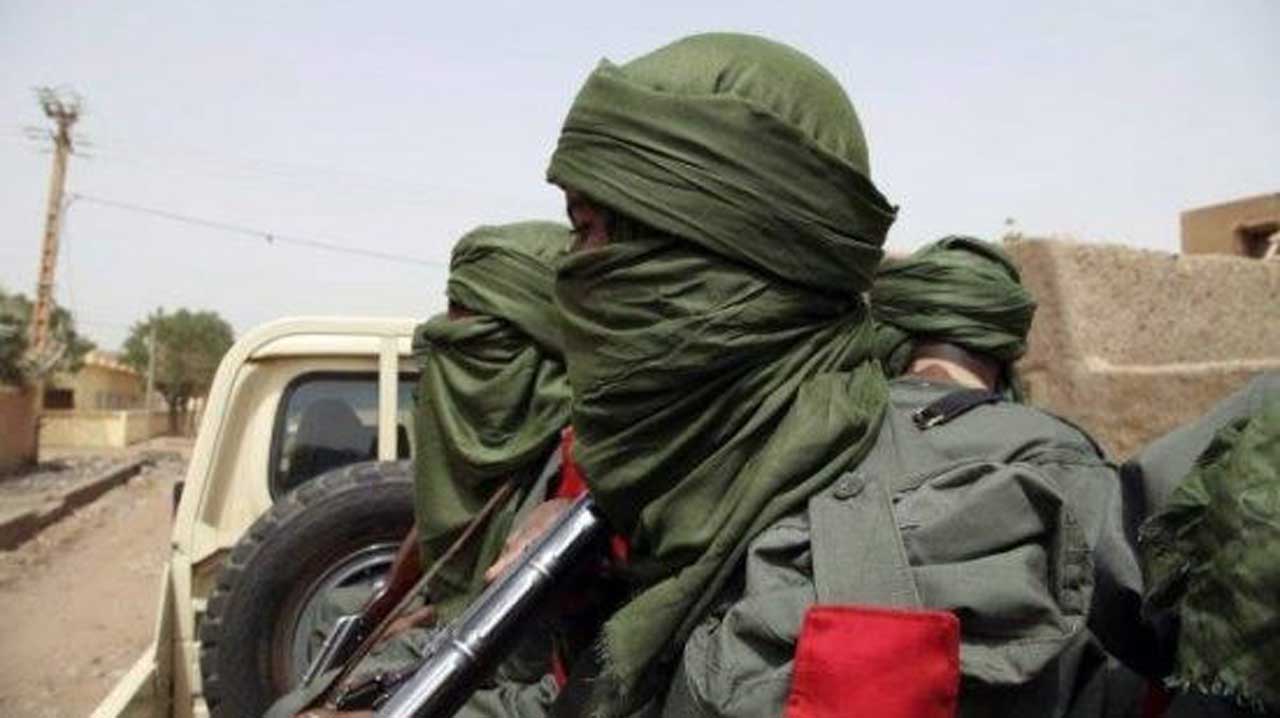
There is no denying the fact that Nigeria is trapped in a security crisis that has humiliated the state, mocked its institutions, and exposed the glaring rot in its political and military architecture. Every week, the headlines read like a national obituary as villages were torched, schoolchildren snatched, farmers slaughtered, buses hijacked, soldiers ambushed, whole communities turned into tributaries of terror.
Yet one truth stands firm: these terrorists and bandits are not ghosts. They are known.So why is Nigeria acting like it is battling shadows? Why does the government behave as if the criminals are invisible spirits roaming the forests? Why has the Nigerian state, once one of the fiercest military forces in Africa, suddenly become a timid observer in its own territory?
There is only one honest explanation: Nigeria’s insecurity persists not because the terrorists are unknown, but because too many powerful people benefit from pretending not to know them.
If anybody embodies the absurdity of Nigeria’s fight against terrorism, it is Sheikh Ahmad Gumi. While security agencies claim that locating bandits is a strategic challenge, Gumi casually strolls into their camps with cameras, journalists, and commentary. He emerges unscathed. Always! His visits are not covert missions. They are televised. Publicized. Discussed nationwide.
Yet, somehow, the same country that pretends not to know the location of these terrorists allows a cleric to maintain friendly relations with them. And the state nods silently.
Let us put it plainly: When a private citizen has more access to terrorists than the Nigerian military, something is fundamentally rotten. Gumi’s activities have raised questions the government does not dare answer: Who grants him these safe passages?, How does he guarantee his own safety among “dangerous criminals”?, and Why does the military suddenly lose its nerves whenever he heads into the bush?
The brutal truth is that Gumi is not an anomaly; he is a symptom of a security structure that has outsourced its spine.
For years, the Nigerian government has treated terrorists like wayward cousins who simply need talking-to. Officials deny it publicly, but everyone knows negotiations have happened, behind closed doors, through “middle men,” and through community leaders coerced into diplomacy.
We have heard about ransom payments being disguised as “security logistics”, even as prisoner swaps that strengthened enemy ranks, and bandits granted unofficial amnesty as if they were rebel freedom fighters.
Yet, every negotiation only fertilized the soil for more bloodshed. Terrorists who should be hunted down have become political stakeholders, calculating their next ransom the way a businessman drafts a quarterly budget.
This is why they grow bolder. This is why the kidnappers of today are richer than the civil servants who pay taxes to fund the military. This is why Nigeria has become a playground for criminals who know the state will never truly confront them. Surprisingly, farmers pay taxes to terrorists, the ultimate insult.
In fact, in the North-West today, farmers do not fear drought, pests, or poor harvests. They fear terrorists. To avoid being killed, kidnapped, or raped, they pay bandits “levies”, gate fees to access their own ancestral lands. Communities negotiate prices like they are bargaining in a market. Terrorists issue receipts in bullets and death.
Everyone in these local communities knows who the leaders are. They know the boys who collect the payments. They know their names, their families, their camps. Yet the Nigerian government claims it cannot find them. This is not ignorance. This is complicity.
The Nigerian military has a glorious record. It has restored governments in neighboring countries. It has crushed well-organized rebel armies. It has fought in global peacekeeping missions with distinction. So why is it suddenly helpless before ragtag criminals armed with AK-47s and stolen motorcycles?
Because when the political class lacks backbone, the military cannot grow one. Nigeria’s leaders want peace without confrontation, victory without sacrifice, and security without accountability. They want to arrest insecurity while protecting the people who profit from it.
Bluntly put at this juncture, the country is bleeding, and too many hands are in the cookie jar. Given the foregoing, Let us stop pretending as it is embarrassing to see banditry flourishing at this scale, and signaling the danger that someone in power must be benefiting. To opinionate from the context of the foregoing view, it can be deduced that corrupt officers are benefiting from prolonged deployment of soldiers. This is as it is factual that politicians benefit from fear that shapes elections, informants benefit from feeding criminals intelligence, middlemen benefit from ransom transactions and some northern elites benefit from the chaos that gives them power over desperate communities.
It is annoying to watch and understand that Insecurity is now an industry; a billion-naira marketplace of death and protection rackets.
This is why Nigeria cannot win. Too many people at the top do not want this war to end.
| ReplyReply allForwardAdd reaction |

By Bola Sobola
Marriage, traditionally referred to as a sacred and lifelong union, is under increasing strain in contemporary Nigerian society. Once seen as a bedrock for family stability and societal cohesion, the institution of marriage now finds itself vulnerable to a growing trend: divorce.
Events from within and outside Nigeria reveal that the rate of marital breakdown is rising at an alarming pace, prompting an urgent question: What is going wrong?During courtship, couples often project themselves as generous, loving, and attentive.
The love feels endless, and the commitment unwavering. Yet not long after tying the knot, many discover a different reality. The very individuals who once could not go a day without speaking to each other suddenly become emotionally distant, sometimes even hostile. Is marriage really then an ‘eye-opener’, as the popular saying goes? Or are societal, psychological, and cultural forces silently undermining relationships from within?While Nigeria lacks a centralised, up-to-date national database, anecdotal evidence, court filings, and media reports suggest a marked increase in divorce rates, particularly in urban areas.
In Ogun State, data from the High Court divisions between 2017 and 2020 shows a sharp rise in divorce petitions, from 535 in 2017 to 1,016 in 2019.
Furthermore, the Hill Deep Dive report estimates that there are about 15,000 formal and informal divorce or separation disputes annually in the state, suggesting that most separations occur outside formal courts, with many families choosing informal resolutions or simply walking away.
Such breakdowns are not without consequence, as findings have shown that children from broken homes often suffer academically and emotionally, with higher levels of psychological distress and lower academic performance.
Beyond infidelity and financial stress, many marriages suffer due to a lack of preparation. Too many couples focus on planning a glamorous wedding but spend little time evaluating emotional compatibility or receiving premarital counselling. According to marriage therapists, many divorces could be prevented with better pre-marital education.
Changing gender roles has also been identified as a major contributory factor. As more Nigerian women attain higher education and financial independence, they are less willing to endure disrespect, abuse, or irresponsibility from partners.
Cultural and religious pressures also complicate matters. Many marry to fulfil family or religious expectations, only to find themselves ill-equipped to navigate the complexities of shared life. Add to this the widespread stigma around seeking therapy or help, and it is no surprise that unresolved issues fester into full-blown crises.
Social media, though a viable tool of change, has also emerged as a powerful destabiliser. A 2022 study in Ota, Ogun State, found a strong correlation between social media use and family discord, noting that online behaviours often fuelled suspicion, emotional withdrawal, and infidelity.
The consequences are clear: emotionally unstable children, fractured family units, and increased social tension. In response, Ogun State is strengthening its family courts to better manage domestic disputes and also support affected individuals. What then can be done?
First, pre-marital education must be prioritised. Government and religious institutions should provide structured programmes that help couples understand communication, finances, conflict, resolution, and emotional readiness.
Therapy and mediation services must be normalised and made accessible, as this can significantly reduce court cases and support healthier conflict resolution. Employers and religious bodies can offer relationship wellness programmes as part of their outreach.
In addition to the above, public campaigns are needed to destigmatise divorce and counselling. Education campaigns should also teach the responsible use of social media in relationships.
There should also be school programmes targeted towards supporting children. Children affected by divorce with access to counselling and academic support. Let us not derail the future of the generations that can move the nation to great heights.
Faith still plays a central role in Nigerian marriages. While religious institutions should encourage unity and endurance, they must also support justice and safety. As Malachi 2:16 reminds us, “For I hate divorce, says the Lord.” But even within this context, silence and suffering must never be glorified.
Marriage is still worth defending, but not blindly. It requires wisdom, emotional intelligence, open communication, and mutual respect. If we are to reverse the rising trend of divorce, it will take the collective efforts of society, individuals, families, communities, governments, and spiritual leaders to rebuild faith in this vital institution.
Sobola of the Ogun State Ministry of Information & Strategy writes via bolasobola065@gmail.com
| ReplyReply allForwardAdd reaction |

Group Backs Tinubu, Urges Sule to Run for Senate
ShareFrom Abel Zwanke, Lafia The Chief Executive Officer of the Community Initiative for Character Moulding and Entrepreneurship Development (CiCMED) and...
Ooni Installs Oluremi Tinubu as Yeye Asiwaju Ile Oodua
ShareFrom Ayinde Akintade, Osogbo The Permanent Chairman, Southern Nigeria Traditional Rulers Council (SNTRC), Arole Oodua Olofin Adimula and Ooni of...

NYSC Presidential Honor Award Winner Returns to Benue, Shows Appreciations
ShareFrom Attah Ede, Makurdi An ex- corps member and a recipient of Presidential Honour Award, Udokpo Abasi, at the weekend...


NGO Launches Climate Project Steering Committee in Benue
ShareFrom Attah Ede, Makurdi A global Non-Governmental Organisation (NGO), International Alert has inaugurated Climate Project Steering Committee in Benue State,...


A silent Emergency: Soaring Costs of Diabetes Care Spark Alarm
ShareBy Folasade Akpan For Mrs Schola Effiong, a 58-year-old confidential secretary in Calabar, managing diabetes in today’s economy feels like...


World Bank, Partners Record Progress Toward 1.5bn Healthcare Goal
ShareThe World Bank Group, global partners and countries on Saturday announced continued progress toward the goal of delivering affordable and...


UN Commits to Strengthening Nigeria’s Policy Framework, Enhancing Digital Safety
ShareThe UN Women has reaffirmed its commitment to strengthening policy frameworks, enhancing digital safety, and promoting accountability for online harms...

Nightclub Fire in India’s Goa Kills 25 People
ShareA fire at a popular nightclub in India’s coastal region of Goa has killed 25 people, local officials say. Police...

Hong Kong votes in Election as City Mourns Deadly Fire
ShareHongkongers are voting in an election seen as a test of public sentiment following a deadly fire that angered some...


PDP Crisis: Wike Camp Moves to Conduct Fresh Congresses, Convention
ShareBy Laide Akinboade, Abuja The factional Board of Trustees (BoT) of the Nyesom Wike tendency in the Peoples Democratic Party...