
POLITICS
2025 Budget: Oyetola Seeks Adequate Funding for Marine, Blue Economy Sector


Mr Adegboyega Oyetola, the Minister of Marine and Blue Economy, has presented N11.77 billion capital budget proposal and N453,856 for overhead to the National Assembly for appropriation.
Oyetola made the presentation on Tuesday in Abuja to a joint committee of the National Assembly.
The committees concerned were the Senate Committee on Marine Transport, and the House of Representatives Committee on Harbour, Maritime and Safety Education and Administration, Inland waterways and Shippings.
The minister, however, appealed to the joint committee for greater budgetary provision, stating that quantum investment through the capital budget was necessary for it to deliver on its lofty mandate and potential.
“Today’s budget defense is in respect of the Federal Ministry of Marine and Blue Economy and the laying of the Government Owned Enterprises (GOEs) budget.
“This includes the Nigerian Ports Authority (NPA), Nigerian Maritime Administration and Safety Agency (NIMASA), and National Inland Waterways Authority (NIWA).
“Others are the Nigerian Shippers Council (NSC), Maritime Academy of Nigeria, Oron, and the Council for the Regulation of Freight Forwarding in Nigeria (CRFFN).
“As a newly created ministry, our initial focus is to set up enduring structures and systems for the effective management of the blue economy sector,” he said.
He said that their were notable deficiencies in the sector, such as general infrastructure decay, silted river courses, inadequate fish production and inadequate river crafts require major attention.
He said that the ministry was, therefore, initiating several projects and programmes aimed at addressing these challenges.
“We are reinforcing the ministry’s oversight and monitoring mandate over its agencies, and all of these require greater budgetary provisions,” Oyetola said.
He said that major projects had been outlined, including replacing of rickety wooden boats used for commercial transport with standardised crafts, and provision of life jackets to riverine communities to boost safe water transportation.
He also disclosed plans for capital dredging on selected locations at major rivers, which required huge budget.
He said that all projects were deliberately tied to governments capital budgets to quarantee fast tracked delivery and assured food security.
The minister said that the ministry and its agencies, under the 2025 budget, sought to consolidate and sustain on the achievements and performances recorded in the immediate past year.
He said that the NPA, NIMASA, and NSC were fully self-funding and made significant remittances to the Consolidated Revenue Fund.
He, however, said that NIWA and Maritime Academy of Nigeria, Oron derived their funding from both the federal budget and Internally Generated Revenue.
According to him, based on passionate plea, CRFFN has been readmitted into the budget for funding, but erroneously under the Federal Ministry of Transport, which needs to be rectified.
Oyetola also said that the five agencies under the Fisheries and Aquaculture sector, which included Institutes and Colleges were expected to come fully under the ministry in the 2025 Budqet.
He said that the ministry was set to focus on ports infrastructural development, increase fish production, maritime safety and security and Information technology deployment to improve operation and revenue generation.
He said that it would also address human capacity building and the effective technical and economic regulation to ensure the strengthening of blue economy in Nigeria.
Oyetola appreciated the National Assembly for its unflinching support and cooperation, and urged it to consider the propositions based on the compelling needs of the ministry.
The Chairman, Senate Committee on Marine Transport, Mr Wasiu Eshinlokun, said that the budget proposal seemed inadequate to carry out certain projects, such as dredging, which according to him is capital intensive.
Eshinlokun said that the budget proposal would be reviewed by the appropriation committee, and the ministry would be allocated appropriate funding.
He aadvised he minister to ensure that capital intensive projects reflected in its 2026 budget proposal in order to ensure adequate appropriation. (NAN)

The Independent National Electoral Commission (INEC) on Tuesday unveiled the draft 2026 Regulations and Guidelines for Political Parties, ahead of the 2027 general elections.
The INEC Chairman, Prof. Joash Amupitan, did the unveiling at the consultative meeting with leaders of political parties on the review of INEC Regulations and Guidelines for Political Parties in Abuja.
Amupitan said that the review became necessary following the enactment of the Electoral Act 2026.
According to him, Nigeria cannot navigate a 2027 horizon using a 2022 map.
Amupitan called on political parties to take special note of Clause 40(4) & (5) of the draft regulation dealing with election expenses of political parties for the management of party primaries and for the conduct of elections.
He said that INEC had concluded a clause-by-clause realignment of its guidelines to ensure that they were not only legally air-tight but operationally in sync with the new Act.
“Our review has been guided by empirical data; specifically, findings from the Political Party Performance Index (PPPI).
“This diagnostic tool, developed with the support of the Westminster Foundation for Democracy (WFD), highlighted a disturbing gap between party constitutions and grassroots realities.
“The newly drafted regulations encompass crucial areas that are central to the operations of political parties in our democratic framework, including registration and merger of political parties.
“We have streamlined the process to ensure that it is more accessible, while maintaining a robust framework that upholds democratic principles,” he said.
On political party operations, Amupitan said that clear guidelines had been instituted to govern the day-to-day functioning of political parties, ensuring compliance with the country’s laws and promoting accountability.
“This aims to sanitise party primaries, which intends to end the era of opaque processes that impose unpopular candidates, fueling voter apathy and a deluge of avoidable litigation.
“We recognise the critical role of primary elections in our political system. Thus, we have outlined procedures that uphold fairness and transparency within political parties,” he said.
Amupitan added that regulations had also been put in place to ensure that campaign activities were conducted peacefully and respect the rights and dignity of all citizens.
“We have established clear standards regarding the financing of political activities, emphasising the need for transparency and accountability in managing party funds and campaign expenses.
“We have also included provisions that define the circumstances under which a political party may be deregistered, ensuring that the process is just and equitable.
“We have also embedded measurable benchmarks for the participation of women, youth, and persons with disabilities (PWDs),” he said.
The INEC chairman urged political parties not to see the draft regulations as a restriction, but as a safeguard.
In his remarks, the National Chairman of IPAC, Yusuf Dantalle, called on the National Assembly to urgently amend the 2026 Electoral Act to prevent it from jeopardising the 2027 polls.
Dantalle argued that while Nigerians participated in public hearings with high expectations, the final Act represented a regression that inadvertently placed immense pressure on political parties, especially those outside government.
“IPAC firmly demands that the National Assembly, as a matter of urgency, revisit and amend the Electoral Act 2026.
“Specifically, the provision mandating direct primaries must be reconsidered, and the option of indirect primaries restored.
“The choice of candidate selection methods remains an internal affair of political parties,” he said.
The IPAC chairman also described the requirement for parties to submit membership registers including National Identification Numbers (NIN) between April 1 and April 21 as “impractical and exclusionary.”
He warned that the provision risked disenfranchising millions of Nigerians who lacked access to NIN registration facilities.
Dantalle also demanded the restoration of mandatory electronic transmission of results to the INEC Results Viewing (IReV) portal immediately after polling unit announcements, without any provisos.
“It is also deeply troubling that the new Electoral Act appears to weaken penalties for vote buying.
“IPAC reiterates its call for the establishment of an Electoral Offences Commission to ensure violators are held accountable,” he added.
Dantalle stated that the council had already appealed to the National Assembly to repeal the Act in the interest of a credible and transparent electoral process.
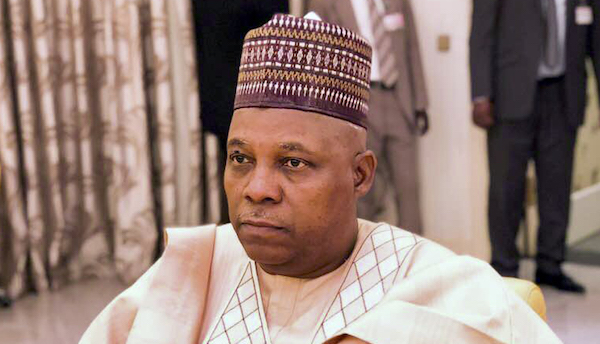
From Yagana Ali, Yola
Thousands filled Mahmud Ribadu Square Monday evening for the official reception of Governor Ahmadu Umaru Fintiri into the All Progressives Congress (APC).
Vice-President Kashim Shettima, standing in for President Bola Tinubu, presented Fintiri with the party flag and broom and said outright that the governor “automatically” becomes APC leader in Adamawa, settling weeks of quiet debate over whether that role still belonged to National Security Adviser Nuhu Ribadu.
“As we arrived in Yola, we were welcomed not only by the people but also by the worthy projects you have put in place,” Shettima told Fintiri, praising roads and schools visible along the route.
He compared Adamawa’s arrangement to Borno’s, where governors lead their state chapters even as national figures serve in Abuja. APC National Chairman Prof. Nentawe Yilwatda added that Fintiri should “sweep” remaining oppositions into the APC fold.
Fintiri, praised Tinubu’s macro-economic program and the Renewed Hope Agenda, saying the reforms are beginning to bite in useful ways. He argued that Adamawa belongs in the same tent as Abuja if roads, classrooms and small traders are to move faster. “This isn’t about winning for one man,” he told the crowd. “It’s about having a direct line to the centre.”
Adamawa APC chairman Shuaibu Idris embraced him at the podium’s edge, calling Fintiri a political force whose projects—new township roads, a remodeled hospital, a stretched electricity line—are visible to commuters who once bumped through potholes.
Hope Uzodinma, Imo’s governor and chair of the Progressive Governors’ Forum, reminded people that the APC now runs most states, but said the point is delivery, not numbers.
Deputy Senate President Barau Jibrin and national chairman Nentawe Yilwatda added quick congratulations and promises of party support.
Fintiri, who moved from the PDP in February with his cabinet and local structures, thanked Tinubu and Ribadu for their support and promised to run a “partnership, not a takeover.”
He said his first recruitment success was bringing former ADC candidate Senator Abdulazeez Nyako back into APC on Sunday and pledged to keep reaching out.
The audience included five APC governors led by Hope Uzodinma, deputies, ministers, and local youths.
For now, Fintiri’s defection has given the Square a rare night of unity, and his new colleagues say the harder work—keeping that feeling out past city limits—starts tomorrow.
The All Progressives Congress (APC) says it has fixed Tuesday, March 24, for the screening of aspirants for its national offices ahead of its March 27 National Convention.
A notice issued by the Secretary of the party’s Aspirants’ Screening Committee, Alhaji Isa Yuguda, on Sunday in Abuja, stated that the exercise would be held at the Transcorp Hilton Hotel.
Yuguda, a former Governor of Bauchi State, said all aspirants who had purchased and submitted their Expression of Interest and Nomination Forms were required to appear in person.
He added that candidates were expected to arrive early at the venue with all relevant supporting documents to facilitate the verification process.

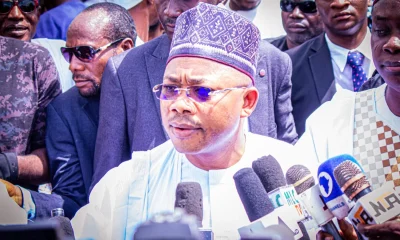

Ododo Inaugurates Ultra-Modern Hospital in Kabba, Bunu
ShareFrom Joseph Amedu, Lokoja Kogi State Governor, Usman Ododo on Tuesday inaugurated privately built Southward Hospital and Diagnostic Centre in Edumo, Kabba/Bunu Local Government...

Sri Lanka Issues Fuel, Energy Conservation Guidelines amid Mideast Tensions
ShareSri Lanka has issued guidelines to government institutions on the prudent use of fuel and energy amid possible disruptions to fuel imports caused by escalating...

FG Seeks Partnership to Relocate Urban Custodial Centres
ShareThe Minister of Interior, Dr. Olubunmi Tunji-Ojo, has urged all levels of government to collaborate in relocating custodial centres overtaken by urbanisation....

2027: INEC Unveils Draft Guidelines for Political Parties
ShareThe Independent National Electoral Commission (INEC) on Tuesday unveiled the draft 2026 Regulations and Guidelines for Political Parties, ahead of the...
Prosperity Cup 2026: Correctional Centre Team Secures Ticket to Next Round
ShareFrom Mike Tayese, Yenagoa The Okaka Correctional Centre team, Liberty FC have qualified for the next round of Nigeria’s biggest...

Zenith Bank Appoints Okwudili Executive Director
ShareZenith Bank Plc has announced the appointment of Kennedy Okwudili as an Executive Director of the bank, effective May 1....


EFCC, ICPC Bare Fangs on Political Heavyweights Ahead 2027 Polls
ShareBy David Torough, Abuja Nigeria’s anti-corruption landscape intensified yesterday as coordinated actions by key enforcement agencies placed two prominent political...


FG Tenders Apology over Nationwide Power Outages, Pledges Stable Supply
ShareBy David Torough, Abuja The Minister of Power, Adebayo Adelabu, has said that the current power outages across Nigeria are...


Troops Uncover Terrorists’ Burial Ground, Nab High-profile Collaborators in North-East
ShareTroops of Operation Hadin Kai have uncovered a suspected terrorist burial ground and apprehended high-profile collaborators in sustained operations across...

Expert Cautions Students against Over-reliance on AI
ShareAn Information and Communication Technology (ICT) expert, Abiona Solomon, has cautioned students against over-reliance on Artificial Intelligence (AI), urging them...