
NEWS
40 Per cent of Nigerian Youths Jobless — Adesina

By Joseph Amah, Abuja
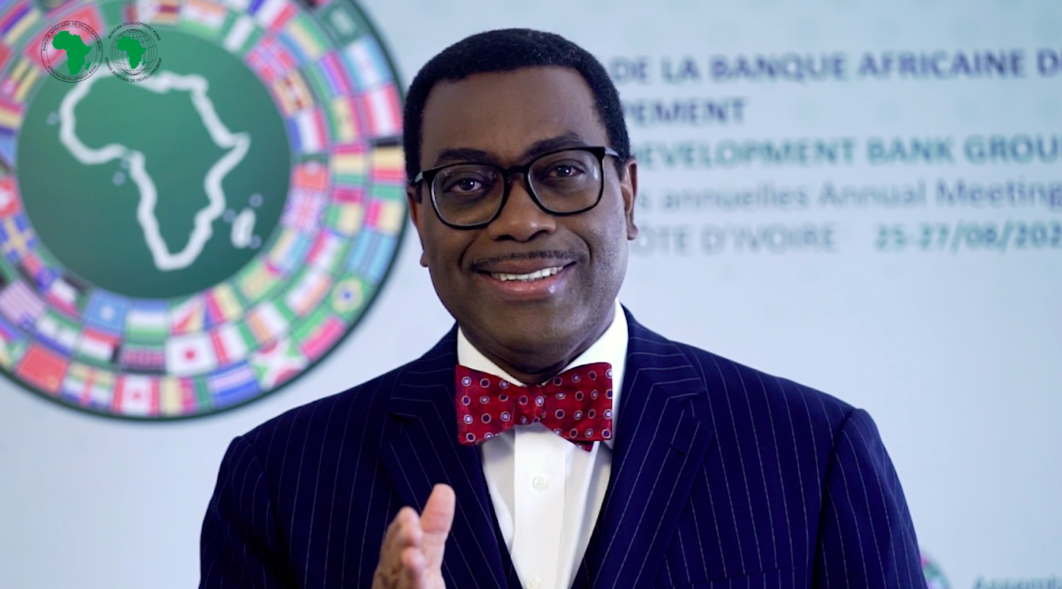
President of African Development Bank (AfDB), Dr. Akinwumi Adesina says that over 40 per cent of Nigerian youths are jobless.
Adesina, disclosed this while delivering a lecture during the 80th birthday celebration of General Overseer of the Redeemed Christian Church of God, Pastor Enoch Adeboye.
He said the youths are discouraged, angry and restless, as they look at a future that does not give them hope.
In the lecture titled, “Nigeria – a country of many nations: a quest for national integration”, Dr. Adesina , however said all hope is not lost as youths have a vital role to play if the country should arrive on its destined destination.
Speaking further, Dr. Adesina noted that, “For Nigeria to be all that it can be, the youth of Nigeria must be all they can be. “
He said, “The future of Nigeria depends on what it does today with its dynamic youth population. This demographic advantage must be turned into a first-rate and well-trained workforce, for Nigeria, for the region, and for the world.
“We should prioritize investments in the youth: in up skilling them for the jobs of the future, not the jobs of the past; by moving away from so-called youth empowerment to youth investment; to opening up the social and political space to the youth to air their views and become a positive force for national development; and for ensuring that that we create youth-based wealth.
“From the East to the West, from the North to the South, there must be a sea change in economic, financial, and business opportunities for young Nigerians.
“The old must give way to the new. And there must be a corresponding generational transfer of power and wealth to the youth. The popular folk talk should no longer be “the young shall grow,” it should, rather, be: “the young have arrived.”
“The young shoots are springing up in Nigeria. Today, Nigeria’s youth are leading in the FinTech Industry. two companies – PayPal Interswitch are both valued at $1 billion.
“A third company, Flutterwave more than tripled its valuation in less than a year to over $3 billion what does this tell us? The future is here and young entrepreneurs are central to it.”
Adesina recalled that, “The African Development Bank approved $170 million in December of last year for Nigeria to support its program to expand digital and creative industries, by unleashing the incredible entrepreneurship of Nigeria’s youth.
“The African Development Bank is also exploring the establishment of Youth Entrepreneurship Investment Banks — financial institutions for young people, run by first-rate young bankers and financial experts, to drive youth-wealth creation. “
“Nigerians deserve wealth, not poverty. There cannot and should not be a Nigeria for the rich, and another Nigeria for the poor.
“We must build one Nigeria, where every citizen has the right to a decent life. We must build a better nation. We must start building again, not splintering again.
“We must re-build trust, equity, and social justice, to propel strong cohesiveness as a nation.
“The tides are high, I know, and our boat rocks from time to time. Yet, I have hope. Hope for a better Nigeria … a renewed nation. Hope for a nation that is helped and healed by God. A nation, where the sacrifices of Nigerians past and present shall not be in vain.
“I pray and long for a better Nigeria. For a nation, built not on the division of its past, or the foundations of ethnicity, but on a new foundation, the foundation of equity, fairness, justice, and unity, one Nigerian to the other.
“For a new Nigeria, where one from the north shall be at home in the east; where one from the east shall break bread with one in the north; one where the one in the west shall eat from the same plate with one in the north; and wash hands in the same basin as one in the east. “
He said for Nigeria to realize its dream, “The constituent States in Nigeria must be more financially autonomous through greater fiscal prudence. If States focus on unlocking the huge resources they have, based on areas of comparative advantage, they will rapidly expand wealth for their people.
“With their increased wealth they will be able to access capital markets to secure long-term financing to fast-track their growth and development.
“States that adopt this strategy would have less of a need for monthly trips to Abuja for grants. Instead, part of their federal revenue allocations can be saved as internal ‘state sovereign wealth funds’.
“This can then be used as guarantees against borrowings from capital markets. They would be free from needing to exclusively rely on the federal government.
“As a way out of the economic quagmire, much has been said about the need for restructuring. I know the discussions are often emotive. Restructuring should not be driven by political expediency, but by economic and financial viability – the necessary and sufficient conditions for political viability.
“Surgeries are tough. They are better done well, the first time. The resources found in each state or state groupings should belong to them. The constituent entities should pay federal taxes or royalties for those resources.
“The achievement of economically viable entities and the viability of the national entity requires constitutional changes to devolve more economic and fiscal powers to the states or regions.
“The stronger the states, or regions, the stronger the federated units. In the process, our union would be renewed. Our union would be stronger. Our union would be equitable. Our union would be fully participatory. “

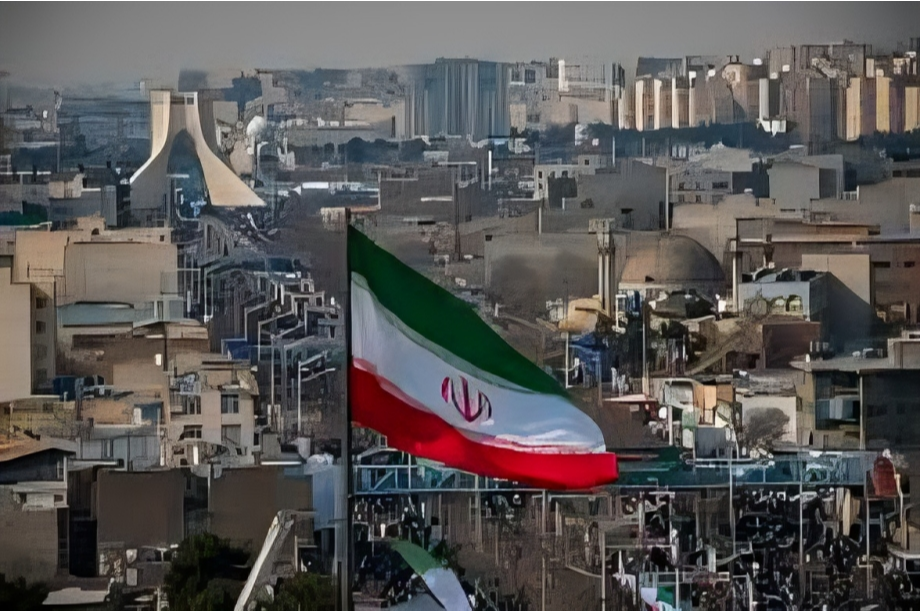
Iran has received a 15-point plan from the United States to end the Middle East war, Pakistani officials said Wednesday, raising hopes for a diplomatic solution even as Iran said it has fired a volley of cruise missiles at a US aircraft carrier.
A conflict that began on February 28 with a US-Israeli bombing campaign on Iran has rapidly engulfed the entire region, sending oil prices skyrocketing and threatening to derail the global economy.
US President Donald Trump has repeatedly claimed progress in talks with Iran in recent days, even though Tehran has denied any negotiations were taking place.
But fledgling diplomatic activity appeared to be gaining momentum after two senior officials in Islamabad said that American proposals to stop the fighting had been “conveyed to Iran” through Pakistani intermediaries.
Pakistan is being touted as a possible mediator given its longstanding ties with both neighbouring Iran and the United States, as well as close contacts in the region.
Even so, there was no let-up in the military activity, with targets in Iran, Israel, Lebanon, Bahrain, Kuwait, Jordan and Saudi Arabia all coming under fire.
Iran’s military said its cruise missiles fired at the USS Abraham Lincoln carrier group had “forced it to change its position”, warning of “powerful strikes” when the “hostile fleet” comes into range.
US ally Israel, meanwhile, said it had struck targets in Tehran as well as a submarine development facility in the central city of Isfahan.
From the Iranian capital, 40-year-old Shayan said: “There is gasoline, water and electricity. But there is a sense of helplessness in all of us. We don’t know what to do, and there’s really nothing we can do.”
On another front, Israeli warplanes pounded the southern suburbs of Beirut, a stronghold of Iran-backed militant group Hezbollah.
Lebanon was pulled into the war when Hezbollah began firing rockets into Israel on March 2 to avenge the killing of Iran’s supreme leader, Ayatollah Ali Khamenei.
According to Lebanese authorities, more than 1,000 people have been killed in over three weeks of Israeli strikes and upwards of one million people displaced.
In the southern Lebanese city of Tyre, almost cut off from the rest of the country by bombs, Khalil, a man in his 30s, voiced his defiance.
“They’ll have to take us by force,” he said.
Despite Israeli ground operations and the spectre of a full-blown invasion, “we don’t want to leave our land… our heart is here”, said Khalil, sheltering with his young family in a theatre.
Diplomatically, the two sides offered conflicting accounts, even though mediators in the region said work was ongoing behind the scenes to relay messages.
“There is hope but it’s too early to be optimistic,” said a diplomatic source in the region, who requested anonymity to discuss sensitive issues.
Both sides need to be able to climb down without losing face, the source noted.
In public, Iran kept up its belligerent rhetoric, with the speaker of Iran’s parliament, Mohammad Bagher Ghalibaf, warning the US: “Do not test our resolve to defend our land.
According to Israel’s Channel 12, Trump’s proposals include a ceasefire during which the sides would discuss a 15-point agreement that would include a ban on Iran enriching uranium on its soil and the reopening of the vital Strait of Hormuz oil route.
Iran in turn would see sanctions relief, according to the report. The Trump administration similarly offered a 15-point plan before a shorter Israeli and US bombing campaign against Iran in June.
Iran had agreed in 2015 to broad restraints on its contested nuclear program in a deal that Trump ripped up during his first term as he joined Israel in applying pressure to the cleric-run state.
Stocks rose and oil prices tumbled on signs of a possible de-escalation, but focus remained on the Strait of Hormuz, through which one-fifth of the world’s oil passes.
Trump told reporters in the Oval Office on Tuesday that Iran had given him “a very big present worth a tremendous amount of money”, which he said demonstrated that “we’re dealing with the right people”.
The US president did not elaborate further but said it was related to the Strait of Hormuz, which Iran has largely blockaded in retaliation for US and Israeli strikes.
Tehran, in a message circulated by the International Maritime Organisation, assured safe passage through the strait to “non-hostile vessels”.
However, the IMO also cited a statement from Iran’s foreign ministry as saying no passage would be granted to vessels belonging to “the aggressor parties — namely the United States and the Israeli regime”.
On a visit to Tokyo, the head of the International Energy Agency said he was ready to approve the release of more oil reserves if needed to cushion the war’s impact on global supplies.
But the effects are already visible around the world, with Sri Lanka ordering an extra day off work to conserve energy and the price of diesel doubling in Vietnam.
Hanoi resident Nguyen Van Chi said on Wednesday he had not driven his truck in the past two weeks, instead opting to cycle.
“With this unbelievable price of diesel, I cannot even sell my truck as no one is going to use it,” the 54-year-old businessman said.
Slavery was the “most horrendous crime that took place in the history of mankind”, Ghana’s foreign minister said ahead of a landmark vote at the UN General Assembly.
Member states are set to vote on a resolution led by Ghana to recognise the transatlantic slave trade as “the gravest crime against humanity”.
The proposal urges UN member states to consider apologising for the slave trade and contributing to a reparations fund.
The resolution is likely to face resistance, as states like the UK have long rejected paying reparations, saying today’s institutions cannot be held responsible for past wrongs.
But the proposal’s advocates, which include the African Union, said it is a step towards healing and justice.
Samuel Okudzeto Ablakwa, Ghana’s foreign minister, said: “We are demanding compensation and let us be clear, African leaders are not asking for money for themselves.
“We want justice for the victims and causes to be supported, educational and endowment funds, skills training funds.”
Ablakwa also said that, with the resolution, Ghana was not ranking its pain above anyone else’s, but simply documenting a historical fact.
Between 1500 and 1800, around 12-15 million people were captured in Africa and taken to the Americas where they were forced to work as slaves. It is estimated that over two million people died on the journey.
Ablakwa said that the “structures” and “inequalities” created by slavery still persist.
“Many generations continue to suffer the exclusion, the racism because of the transatlantic slave trade which has left millions separated from the continent and impoverished,” he said.
Ghana, one of the main gateways for the trade, has long been a leading advocate for reparations.
Forts, where tens of thousands of enslaved Africans were once held under inhuman conditions, remain standing along the West African country’s coast.
The resolution also calls for cultural artefacts stolen during the colonial era to be returned to their countries of origin.
“We want a return of all those looted artefacts, which represent our heritage, our culture and our spiritual significance. All those artefacts looted for many centuries into the colonial era ought to be returned,” Ablakwa said.
Ghana’s President John Dramani Mahama has called the resolution “historic” and S“safeguard against forgetting”.
Tragedy struck in Ridawa village in Ghari Local Government Area of Kano State when an unspecified number of brick workers were reportedly buried after a pit collapsed in the village.
The incident was said to have occurred in the early hours of Wednesday, while the victims were engaged in digging earth for brick-making.
It was gathered that the victims were inside the pit when it suddenly caved in, trapping many of them underground.
There are growing fears that several of the trapped workers may have died, while others sustained varying degrees of injuries in the collapsed pit.
According to reports from the area, rescue efforts have since commenced, as locals and emergency responders struggled to reach those still buried beneath the rubble.
As of the time of filing this report, some of the victims had yet to be rescued, raising concerns over their chances of survival.
The member representing Ghari/ Tsanyawa Federal Constituency in the House of Representatives, Sani Bala, confirmed the incident, saying about 10 persons were believed to be trapped underground.
He called for the government’s urgent intervention in rescuing the victims and preventing further loss of lives.
However, when contacted, the Public Relations Officer of Kano State Fire Service, Saminu Abdullahi, said the service has yet to receive a report on the incident.
“We have not received any report on the incident. The Ghari office has not received a report on the incident, adding that as soon as we get details on the incident, we shall let you know,” Abdullahi said.



Iran Receives US 15-point Plan to End Mideast War
ShareIran has received a 15-point plan from the United States to end the Middle East war, Pakistani officials said Wednesday,...

Tinubu Returns to Abuja after Eid in Lagos
SharePresident Bola Tinubu on Wednesday departed Lagos for Abuja after marking the Eid-el-Fitr celebrations. The presidential aircraft took off from the Presidential Wing of the Murtala Muhammed International...
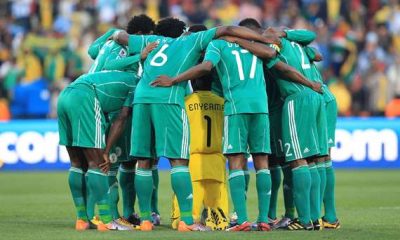

Super Eagles Unveil New Nike Kits
ShareNigeria’s Super Eagles have revealed their new jerseys on their official X page ahead of upcoming international fixtures, with sportswear giant Nike confirming that the designs...


Ghana Demands Compensation for Slavery in Landmark UN Vote
ShareSlavery was the “most horrendous crime that took place in the history of mankind”, Ghana’s foreign minister said ahead of...
Pit Collapses, Kills Scores in Kano
ShareTragedy struck in Ridawa village in Ghari Local Government Area of Kano State when an unspecified number of brick workers were reportedly...
Frozen Food Sellers Decry Poor Electricity Supply, Fuel Price Hike
ShareUnstable electricity supply and rising fuel prices are placing significant strain on frozen food businesses in Lagos, as traders struggle to cope with higher...


ShareCBN Strengthens Diaspora Remittances, Unveils New Framework By Tony Obiechina, Abuja The Central Bank of Nigeria (CBN) has introduced a new...
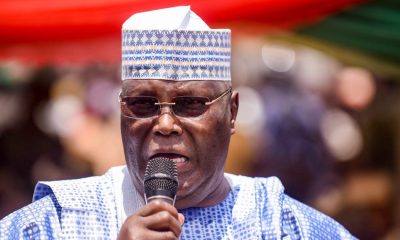

FG Defends OPL 245 Settlement, Counters Opposition Criticism
ShareBy David Torough, Abuja The Federal Government has dismissed claims by former Vice-President, Atiku Abubakar, over the resolution of disputes...

APC Elects Zonal Officers By Consensus Ahead National Convention
ShareBy David Torough, Abuja The All Progressives Congress (APC) has moved decisively towards a consensus-driven leadership structure ahead of its...
MainPower Launches Quick Response System in Enugu
ShareFrom Sylvia Udegbunam, Enugu The MainPower Electricity Distribution Limited (MEDL) has launched a customer-focused service called Quick Response System (QRS),...