
NEWS
Nigeria Needs to Construct more Dams to Control Flooding- FG Committee

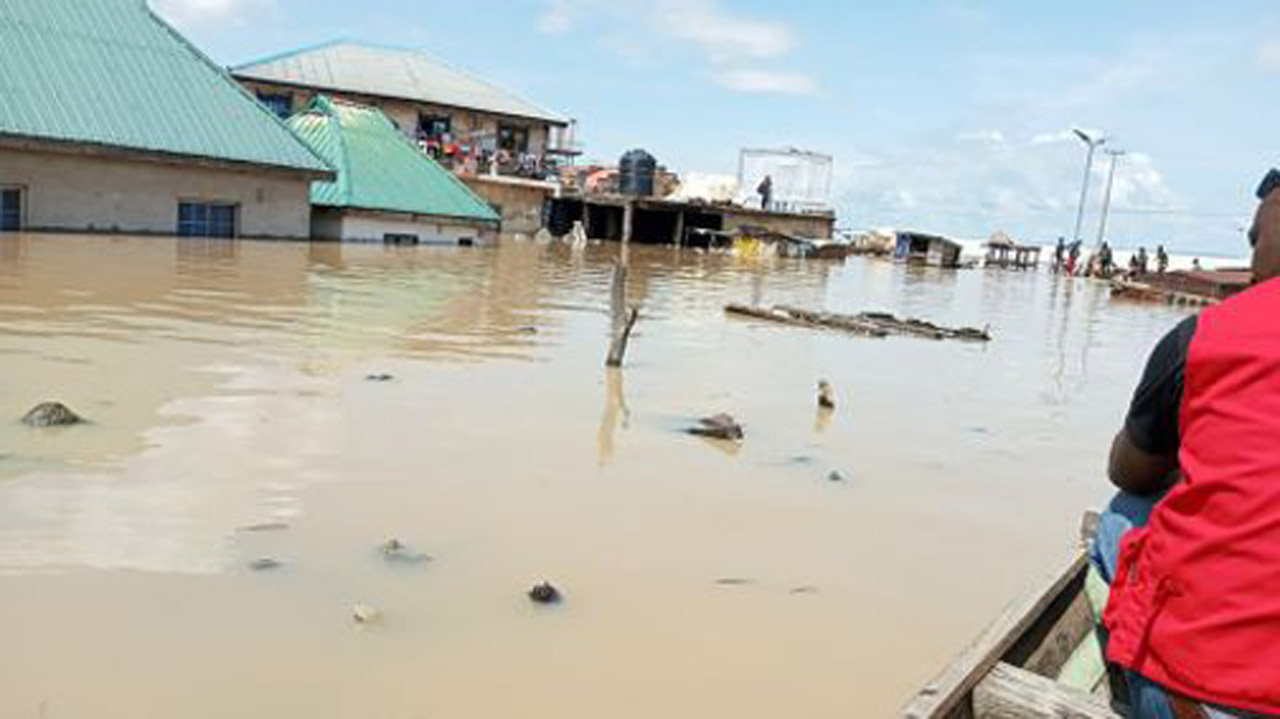
The Director of Dams and Reservoirs Operations in the Federal Ministry of Water Resources, Ali Dala, has called for the construction of more dams to mitigate flood risks.
Dala made the call when he led a team of the Inter-ministerial Technical Committee on Evaluation of Dams in Nigeria to the Oyan Dam in Abeokuta on Saturday.
Dala said the visit to various dams across the country is to access their conditions and evaluate their safety status for potential flood control.
While observing that many dams in Nigeria are aging and require maintenance and upgrades, Dala stressed the need for increased investment in dam construction and maintenance.
He also called for regular dredging of rivers to remove debris and improve their capacity to handle excess water.
“I have said it, and even the Minister of Water Resources and Sanitation has mentioned it a number of times, that for us to control floods adequately in Nigeria, we need more dams.
“Nigeria currently lacks the necessary number of dams to effectively control flooding.
“Sediment builds up in reservoirs can reduce their storage capacity, hindering their ability to control floods.
“By increasing the number of dams and improving their maintenance, we can significantly reduce the impact of floods in Nigeria.
“Country like the US have at the moment 92,000 dams, China has about 98,000 dams while in Nigeria we have only 408 registered dams.
“So, I believe that by the time we also improve on the number of dams in the country, flooding would be a thing of the past or will be drastically reduced to the barest minimum,” he said.
The team’s evaluation is expected to provide valuable insights into the current state of Nigeria’s dam infrastructure as well as help in informing future policy decisions related to flood control and water resource management. (NAN)
By Tambaya Julius, Abuja
The Nigeria Customs Service (NCS) has dismissed a purported recruitment update circulating on social media, describing it as false and not originating from the Service.
The Service, in a statement, urged members of the public to disregard the misleading information and refrain from sharing unverified content capable of misleading prospective applicants and the general public.
The NCS advised Nigerians to rely solely on information published through its official communication channels for accurate updates on recruitment exercises and other activities of the Service.
It reiterated that its verified social media platforms remain the authentic sources of information and urged the public to always verify recruitment-related announcements before acting on them or sharing them with others.
By Tambaya Julius, Abuja
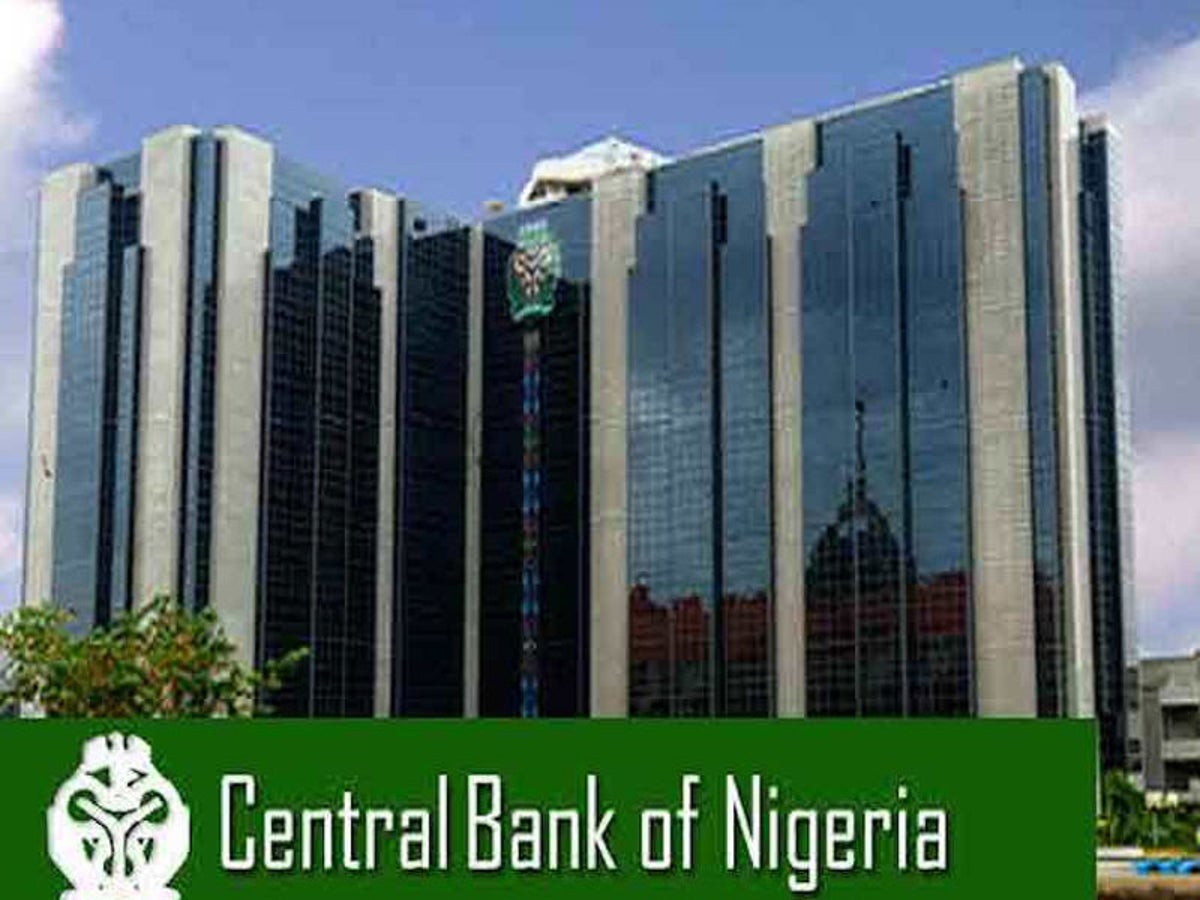
Nigeria’s broad money supply (M3) increased for the second consecutive month, rising to N133.25 trillion in June 2026 from N129.21 trillion recorded in May, according to the latest Money and Credit Statistics released by the Central Bank of Nigeria (CBN).
The latest data showed that money supply expanded by N4.
04 trillion month-on-month, despite the apex bank’s decision to maintain its benchmark Monetary Policy Rate (MPR) at 26.5 per cent.The increase reflects the continued growth in liquidity within the economy, even as the CBN maintains a cautious approach aimed at controlling inflation, managing liquidity and sustaining macroeconomic stability.
Broad money supply, also known as M3, includes currency in circulation outside banks, demand deposits, savings and time deposits, as well as foreign currency deposits.
CBN figures also revealed a significant year-on-year growth in money supply, with M3 rising from N117.25 trillion in June 2025 to N133.25 trillion in June 2026.
This represents an increase of approximately N16 trillion, or 13.59 per cent, over the one-year period.
A breakdown of the statistics showed that M2, which comprises narrow money (M1), quasi-money, demand deposits and currency outside banks, rose to N133.24 trillion in June from N129.20 trillion in May.
The expansion in liquidity was largely driven by growth in quasi-money and domestic assets during the period under review.
Quasi-money increased from N84.58 trillion in May to N88.54 trillion in June, while demand deposits recorded a marginal rise from N39.43 trillion to N39.78 trillion.
However, currency held outside the banking system declined from N5.19 trillion in May to N4.92 trillion in June, indicating that more funds remained within the formal banking system.
Further analysis of the CBN data showed that net domestic assets grew by 4.37 per cent, rising from N102.26 trillion in May to N106.73 trillion in June.
Net foreign assets recorded a slight decline of 1.56 per cent, falling from N26.95 trillion to N26.53 trillion during the same period.
Overall, broad money supply expanded by 3.11 per cent month-on-month, highlighting sustained liquidity growth despite the CBN’s restrictive monetary policy measures.
The money supply figures came days after the apex bank retained the Monetary Policy Rate at 26.5 per cent at the conclusion of its 305th Monetary Policy Committee (MPC) meeting.
The committee also kept all other monetary policy parameters unchanged, signalling its commitment to sustaining the disinflation process while protecting macroeconomic stability.
Analysts noted that the continued rise in money supply presents a challenge for the CBN as it seeks to strike a balance between supporting economic activities, managing liquidity and preventing renewed inflationary pressures.
By Tambaya Julius, Abuja
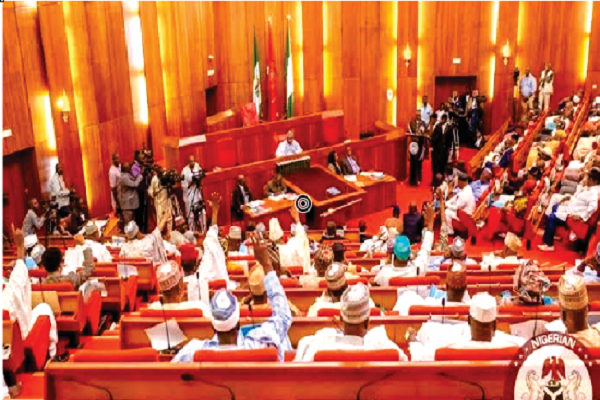
The Senate Committee on Sports Development has criticised the National Sports Commission (NSC) and the Nigeria Football Federation (NFF) for failure to honour invitations to appear before it, warning that continued disregard for legislative oversight could attract disciplinary action.
The committee, chaired by Senator Abdul Ningi (Bauchi Central), expressed its displeasure during a meeting on Wednesday, describing the absence of officials from both organisations as unacceptable and an impediment to the committee’s constitutional oversight functions.
Ningi revealed that separate invitation letters were sent to the Chairman of the NSC, Mallam Shehu Dikko, and the Commission’s Director-General, Bukola Olopade, to remove any ambiguity over who should represent the agency before the committee.
He dismissed the explanations submitted by the Commission for its absence, insisting that they were unsatisfactory.
“The committee will not tolerate attempts to frustrate its constitutional oversight responsibilities,” Ningi said.
He warned that the repeated absence of senior officials was preventing the committee from effectively carrying out its legislative mandate, adding that such conduct could warrant disciplinary action by the Senate.
“It is becoming a practice that requires Senate disciplinary action against these agents of government,” he said, stressing that accountability must be upheld.
Committee members unanimously backed the chairman’s position, insisting that the leadership of both the NSC and the NFF must appear before the panel to explain issues relating to their finances and operations.
As part of its ongoing investigation, the committee directed the NSC to submit evidence of its approved budgets for 2023, 2024, 2025 and 2026, along with details of budget releases for the same period.
It also requested records of funds released to all sporting federations, including basketball, volleyball, boxing, judo and hockey, as well as evidence of statutory federal government subventions to the federations.
To verify the records, Sen. Ningi instructed the Clerk of the Committee to write to the Accountant-General of the Federation requesting comprehensive details of all funds released to the NSC from 2023 to date.
The committee further directed the NFF to provide detailed appropriations and releases for Nigeria’s participation in the 2025 Africa Cup of Nations (AFCON), as well as comprehensive expenditure records for the 2026 FIFA World Cup qualifying campaign and the Women’s Africa Cup of Nations (WAFCON).
Ningi said a new date would be communicated to the NSC and NFF for their appearance before the committee.
Addressing National Assembly correspondents after the meeting, the senator maintained that the attitude of both organisations was unacceptable.
He reiterated that the Constitution of the Federal Republic of Nigeria empowers the National Assembly to exercise oversight over all Ministries, Departments and Agencies of government, including the National Sports Commission and the Nigeria Football Federation.




Customs Debunks Viral Recruitment Update, Warns Public Against Fake Information
ShareBy Tambaya Julius, Abuja The Nigeria Customs Service (NCS) has dismissed a purported recruitment update circulating on social media, describing...
Tinubu Expands Nigerian Army Structure, Mounts 12 Divisions
ShareBy Elijah Oguche, Abuja President Bola Ahmed Tinubu has approved the expansion of the Nigerian Army’s command structure from eight...


Money Supply Hits N133.25trn as CBN Maintains Tight Monetary Stance
ShareBy Tambaya Julius, Abuja Nigeria’s broad money supply (M3) increased for the second consecutive month, rising to N133.25 trillion in...


Senate Committee Summons NSC, NFF Over Snub of Oversight Invitation
ShareBy Tambaya Julius, Abuja The Senate Committee on Sports Development has criticised the National Sports Commission (NSC) and the Nigeria...


Police Arrest Four Suspected Kidnappers, Rescue Abducted Woman in Rivers
ShareThe Police Commander in Rivers has arrested four suspected members of a kidnapping syndicate and rescued a woman abducted from...

Yusuf Hails FG Suspension of NECO Fee Hike
ShareFrom Rabiu Sanusi Kano Kano State Governor, Alhaji Abba Kabir Yusuf, has applauded the Federal Government for suspending the proposed...


Mbah Advocates Experiential learning, Unveils Human Development Model
ShareFrom Sylvia Udegbunam, Enugu Enugu State Governor, Peter Mbah has called for a fundamental overhaul of Nigeria’s education system, urging...


Woman Bags One year Imprisonment for Trafficking 45.6kg Cannabis
ShareA Federal High Court in Ibadan on Thursday sentenced a 40-year-old woman, Omodunmami Ayantola to one year in the correctional...


Oborevwori Approves Financial Support for Delta Law School Graduates
ShareFrom Francis Sadhere, Delta Delta State Governor, Rt. Hon. Sheriff Oborevwori, has approved the payment of financial assistance to 533...
The State of Humanities Education in Nigeria
ShareBy Kenny Ola The reality that recently dawns on Nigerian education arrives not with noise, but with poise, a gospel...