
NEWS
Tinubu to Swear in New Ministers Today

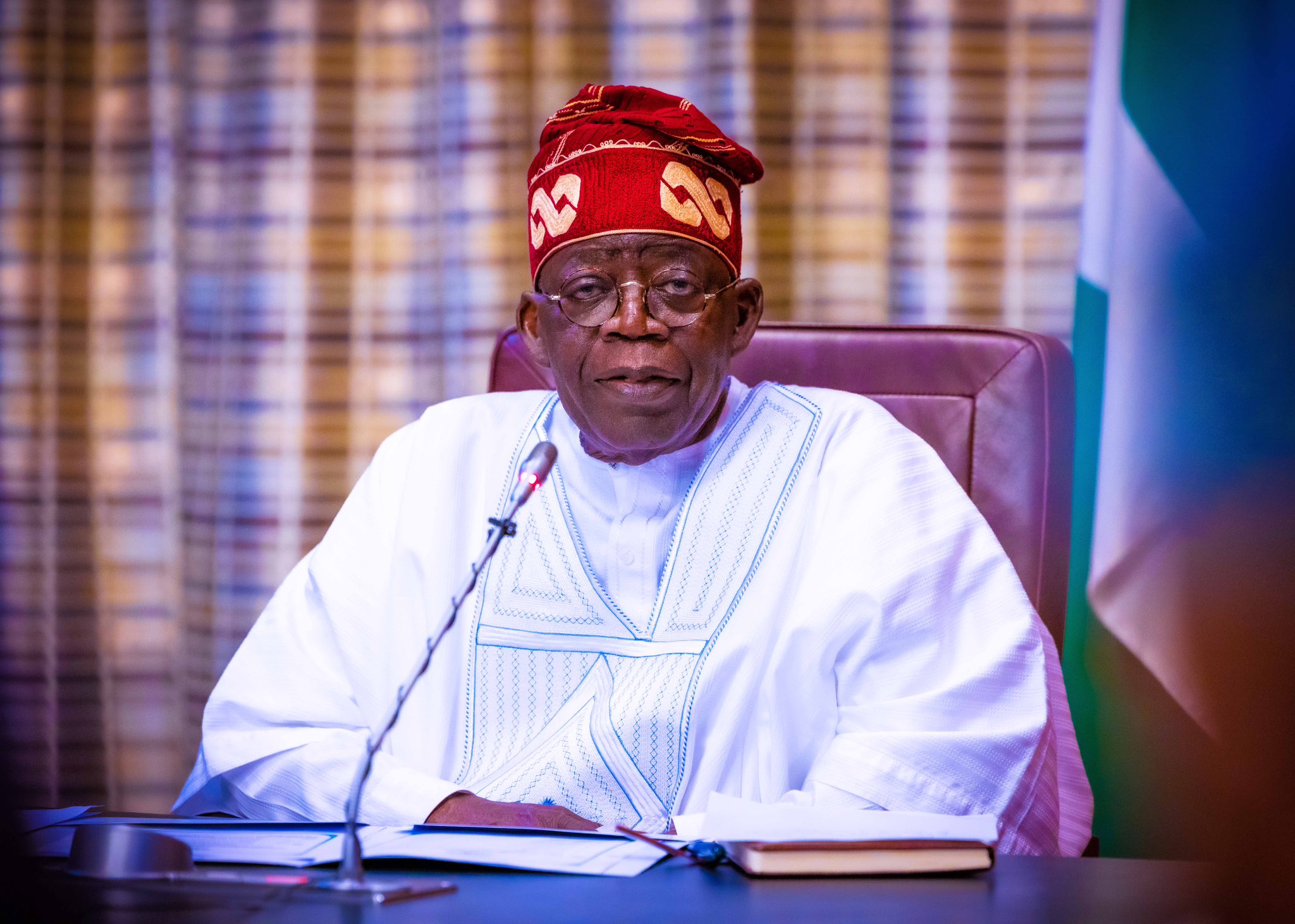
President Bola Tinubu will swear in the seven newly appointed ministers on Monday.
Mr Bayo Onanuga, Special Adviser to the President, Information and Strategy, said this on his X handle on Sunday.
The new ministers to be sworn in are Dr Nentawe Yilwatda as Minister of Humanitarian Affairs and Poverty Reduction, Muhammadu Maigari Dingyadi as Minister of Labour & Employment, and Bianca Odumegwu-Ojukwu as Minister of State for Foreign Affairs.
Others are Jumoke Oduwole as Minister of Industry, Trade, and Investment (Trade and Investment); Idi Mukhtar Maiha as Minister of Livestock Development; Yusuf Ata as Minister of State for Housing and Urban Development; and Dr Suwaiba Ahmad as Minister of State for Education.
The newly appointed ministers will be sworn-in at the Council Chambers, Presidential Villa. (NAN)

The Joint Admissions and Matriculation Board has announced a slight adjustment to the arrival time for candidates sitting the 2026 Unified Tertiary Matriculation Examination, particularly those scheduled for the first session.
In a notice issued via its official X handle on Monday, the board stated that candidates for the first session are now expected to arrive at their examination centres by 7:00 a.
m. , instead of the earlier scheduled 6:30 a.m.JAMB added that the examination will commence at 8:30 a.m. and end at 10:30 a.m.
“Attention 2026 UTME Candidates: This is to notify you of a slight adjustment to the arrival scheduled time, particularly for the first session, which is now 7:00am as against the earlier published 6:30am, while the scheduled start time for the session is now 8:30 am and end time 10:30 am,” the notice read.
The board also clarified that candidates are not required to reprint their examination slips following the adjustment.
The full daily timetable, as shared by JAMB, includes four sessions running from Monday to Friday, with adjusted timings across all batches to ensure smoother operations at Computer-Based Test (CBT) centres nationwide.
This adjustment comes in response to long-standing feedback from candidates and parents regarding the challenges of very early morning travel, including safety concerns on roads before dawn and logistical difficulties for those coming from distant locations.
The UTME is scheduled to be held from Thursday, April 16, to Saturday, April 25, 2026.
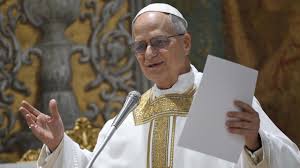
Pope Leo XIV wants to “turn the world’s attention to Africa”, according to a senior Vatican official, as he embarks on a significant tour of the continent addressing themes of peace, migration and dialogue between religions.
The 11-day trip, which starts on Monday, is Pope Leo’s second major foreign visit since being elected to the papacy in May last year, and is a reflection of Africa’s increasing importance to Catholicism.
More than a fifth of the world’s Catholics are in Africa, some 288 million people, according to figures from 2024. It is one of the fastest-growing regions for the Church.
The Vatican said its latest survey shows a “remarkable increase” in the number of baptised Catholics on the continent.
Little wonder then that the trip is regarded as a personal priority for Pope Leo.
The wide-ranging tour will include stop-offs in 11 cities in four countries: Algeria, Cameroon, Angola and Equatorial Guinea. In all, the Pope will travel nearly 18,000 km (11,185 miles), clocking up most of the distance on 18 flights.
All but one of the countries have large Catholic populations, but he has chosen a non-Catholic country – Algeria – as his first stop, as it holds deep significance for him.
It is the birthplace of St Augustine, and Pope Leo XIV is the first pontiff from the order that follows his teachings.
The ideas of the 4th Century North African theologian, such as community and humility, have helped shape the current leader of the Catholic Church.
The Pope will go to the region where St Augustine was a bishop – formerly known as Hippo, now called Annaba – where he will celebrate Mass.
This marks the first visit by any pope to Algeria. After arriving in the capital city Algiers, Pope Leo visited the Martyrs’ Memorial, where he paid tribute to the victims of Algeria’s independence war against France.
He also used his speech to call for “forgiveness”, saying it was the only way that peace can be achieved.
Dialogue with the Islamic world is also expected to be a key focus, with a visit to the Great Mosque of Algiers being an important moment.
So too will a stop at a place of pilgrimage and prayer for both Muslims and Christians – the Basilica of our Lady of Africa – also in Algeria’s capital.
Behind the statue depicting a black Virgin Mary – venerated in both religions – are the words “pray for us and pray for the Muslims”.
The Rector of the Basilica, Father Peter Claver Kogh, said that he expected Pope Leo would “encourage us in our faith and in our mission to build a new world.
“A world where there is peace and where people live together in harmony.”
But the trip comes as rights groups express their concern over Algeria’s treatment of religious minorities.
Algeria has a predominantly Sunni Muslim population. In the past, courts in the North Africa nation have imprisoned Christians and Ahmadi Muslims for what had been described as “unauthorised worship” or offence to Islam.
After Algeria, Pope Leo will go on to Cameroon, where the conflict in its two anglophone regions will provide a backdrop.
The UN estimates at least 6,000 people have been killed and over half a million forced from their homes in the violence that has spanned nearly a decade, sparked by tensions between English-speaking separatists and the francophone-dominated government.
Bamenda, the capital of Cameroon’s North-West region, has been at the centre of the conflict.
It is here that the Pope will hold a Mass for peace and justice at the airport. Local residents hope it might act as a catalyst for reconciliation.
Ernestine Afanwi, a 45-year-old woman who fled Bamenda after her house and shop were destroyed, said that because the Pope was God’s representative on earth, “I know that everything will be solved”.
For the last three years, she and her six children have been living with other internally displaced people at a ramshackle old feed processing plant in the capital, Yaoundé.
“If I was face-to-face with the Pope, I would tell him all my problems [and ask] him to anoint the land,” she said.
The impact of conflict will also be a focus of the stop in Angola, a country which experienced decades of bloody civil war between the mid-1970s and 2002. A key theme will be peace and reconstruction.
In addition to meeting bishops, the pontiff will celebrate Mass with some 200,000 faithful, in a country where between 40% and 55% of the population identify as Catholic.
The presence of the Catholic Church in Angola dates back to the late 15th Century, when Portuguese explorers and missionaries arrived along the Angolan coast.
In Equatorial Guinea, the last country on the tour, more than 70% of people identify as Catholic.
Social justice is among the issues that the Pope is expected to address in a country whose president has been in power for almost 50 years, making him one of the world’s longest-serving heads of state.
Critics say President Teodoro Obiang Nguema’s government is one of the most oppressive in the region, and accuse the regime of human rights abuses – allegations which the government denies.
In addition to meeting authorities, Pope Leo is expected to visit a psychiatric hospital and a prison, as well as meeting young people.
While this will be his first pastoral visit to Africa since assuming the leadership of the Catholic Church last year, the Pope is no stranger to the continent.
As Cardinal Robert Prevost, he visited several countries including Kenya and Tanzania.
The 70-year-old pontiff will deliver around 25 speeches, as well as meeting political leaders, local Catholic communities and holding interfaith events.
The intensity of the tour is an indication of how the Vatican is prioritising its broader engagement with the continent.
By selecting Africa for this extensive itinerary, says the Vatican, Pope Leo will reinforce the continent’s role in global Catholic life, showcasing it as a place of faith, resilience and future growth.
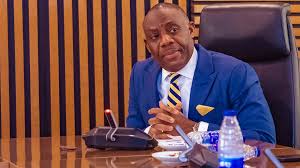
By Tony Obiechina, Abuja
The Federal Ministry of Education has announced the commencement of applications for the second cohort of the National Technical and Vocational Education and Training (TVET) Programme.
The ministry said the programme is part of efforts to boost skills acquisition and tackle unemployment among Nigerian youth.
In a statement issued by the ministry’s Director of Press and Public Relations, Boriowo Folasade on Monday, the ministry said the applications will open on Monday, April 13, 2026, at 4 pm.
It further invited interested Nigerians to participate in the nationwide initiative aimed at strengthening technical capacity, promoting entrepreneurship, and enhancing job creation.
The Minister of Education, Maruf Alausa, described the programme as a key strategy for human capital development.
She said the initiative is designed to equip young Nigerians with industry-relevant skills needed to succeed in a rapidly evolving economy.
Alausa said the programme aligns with the Renewed Hope Agenda of President Bola Tinubu, adding that it reflects the administration’s commitment to expanding access to skills-based education and fostering sustainable livelihoods.
He also said the Federal Government is investing in the productive capacity of young people through practical training and recognised certification, creating pathways for self-employment, innovation, and long-term economic growth.
“In strengthening this programme, the Federal Government is investing in the productive capacity of our youth. By providing practical training and recognised certification, we are creating pathways for self-employment, innovation, and long-term economic growth,” the Minister said.
The statement noted that as part of efforts to expand opportunities in emerging sectors, the Ministry is collaborating with the Federal Ministry of Arts, Culture and Tourism to strengthen training in creative and cultural industries, with a view to unlocking the potential of Nigeria’s creative economy.
According to the statement the TVET Programme will provide intensive six-month and one-year hands-on training in accredited centres across the 36 states and the Federal Capital Territory. He added that participants will receive a monthly stipend of N22,500 and a nationally recognised certificate upon successful completion.
Boriowo added the training areas include construction, ICT, automotive technology, creative media, agriculture, fashion and garment production, cosmetology, tourism and hospitality, catering services, and leather works.
The Ministry further stated that applicants are required to demonstrate commitment to the programme and must be available for full participation throughout the training period, adding that attendance will be monitored using biometric verification systems, with stipends tied to compliance.



JAMB Adjusts Arrival Time for 2026 UTME
ShareThe Joint Admissions and Matriculation Board has announced a slight adjustment to the arrival time for candidates sitting the 2026 Unified Tertiary Matriculation Examination, particularly...


Frimpong Dies after Robbery Attack on Team Bus
ShareGhanaian footballer Dominic Frimpong has been killed during an armed robbery on his club side Berekum Chelsea’s team bus as they returned from an away...

Leo Becomes First Pope to Visit Algeria at Start of Major Africa Tour
SharePope Leo XIV wants to “turn the world’s attention to Africa”, according to a senior Vatican official, as he embarks on a...

FG Opens Applications for Second Cohort of TVET
ShareBy Tony Obiechina, Abuja The Federal Ministry of Education has announced the commencement of applications for the second cohort of...


Customs Deploys AI Training to Boost Revenue Drive
ShareBy Tambaya Julius, Abuja The Comptroller-General of the Nigeria Customs Service, Adewale Adeniyi, has called for deeper collaboration between the Service and...

Insurance Gross Claims Rise to N724.5bn in Q4 2025
Share The Insurance Market Performance Report says the insurance industry recorded a spike in its gross claims hitting N725 billion...
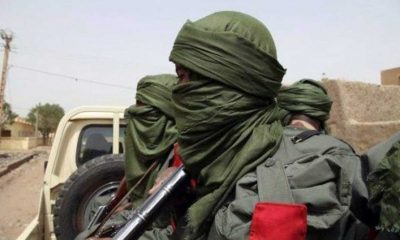

Again, Suspected Herdsmen Invade Benue Communities, Kill 14
ShareFrom Attah Ede, Makurdi No fewer than 14 persons, including a mobile police officer, have been killed in renewed attacks...
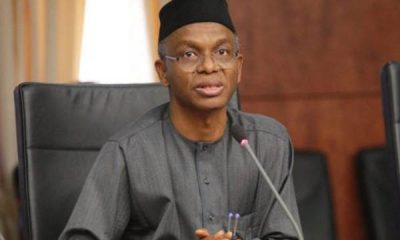

ICPC Slams Fresh Nine-count Corruption Charge on El- Rufai
ShareBy David Torough, Abuja The Independent Corrupt Practices and Other Related Offences Commission has filed an amended nine-count charge against...


Justin Bieber Headlines Coachella with Nostalgia-fuelled Set
ShareJustin Bieber made a nostalgia-fuelled return to the major stage as Coachella’s much-anticipated headline act. The 32-year-old spent much of...
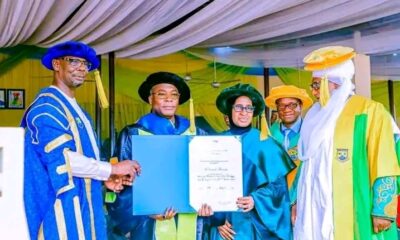

Sule Rewards First-Class Graduates, Honours Tanzania’s President at NSUK 8th Convocation
ShareBy Tambaya Julius, Abuja The Nasarawa State University, Keffi over the weekend celebrated its 25th silver jubilee anniversary and combined...