
NEWS
Expert Advocates IT, BVN Deployment to Fast-track Offer Verification

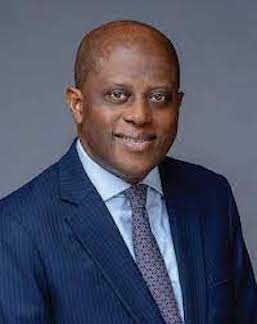
An economist, Mr Johnson Chukwu, has urged the Central Bank of Nigeria (CBN) to leverage existing infrastructure and Bank Verification Numbers (BVN) to address delays in verifying bank transactions.
Chukwu, the Chief Executive Officer of Cowry Asset Management Ltd.
, raised the concern at the annual workshop of the Capital Market Correspondents Association of Nigeria (CAMAN) in Lagos.The theme of the workshop is: “Banks’ Recapitalisation: Bridging the Gap Between Investors and Issuers in the Nigerian Capital Market”.
He noted that leverage existing infrastructure and BVN was to ensure speedy conclusion of the verification process.
According to him, the delay in the apex bank’s verification process, four months after the closure of some offers, has continued to raise concerns among investors.
Chukwu said the deployment of high level of IT available at the CBN and the use of the BVN would fastrack the process of accepting or rejecting the offers.
He added that this would enable investors get their allotment or deploy their funds in other profitable economic activities.
He noted that while the apex bank’s role in verifying the source of the capital invested was important, the longer period for completion of the verification process was dampening investor confidence.
Chukwu said that this was particularly worrisome for investors whose funds may be returned where the offers may be oversubscribed, as they would miss reinvestment opportunities.
He also stated that the current CBN requirements for investors investing in banks shares were seen by many as overly stringent and creating barriers for both issuers and investors.
Chukwu cited the provision of three-year audited financial statements, board resolution authoring the investment and tax clearance certificates for the past three years for corporate investors.
He noted that these requirements were disincentive to investment in the capital market.
According to him, while regulation is necessary for maintaining the stability and integrity of the financial system in ensuring that unqualified capital is not invested in the banks.
He added that there was need to leverage on existing customer information in the banking system to avoid imposing onerous conditions on investors.
Chukwu described banks’ recapitalisation as a key strategy for strengthening the Nigerian banking sector and fostering economic growth.
He, however, argued that the success of these efforts would hinges on effectively bridging the gap between investors and issuers in the capital market.
Chukwu said banks capital raise through successful IPOs, rights issues and bonds strengthens investor confidence and sends a positive signal to the broader financial market on the role of the capital market.
He said: “A well-capitalised bank is perceived as financially stable, reducing risk for investors and enhancing market confidence.
” This encourages further investment in the banking sector, which is essential for the sustainable growth of the industry.
He, however, called for concerted efforts from both banks and investors, supported by regulators in ensuring that the Nigerian banking sector remains resilient, competitive, and capable of driving the country’s economic growth for the future.
Chukwu also urged the CBN and other regulatory bodies to work together in creating a more predictable regulatory environment for banks and investors.
“The frequency of regulatory policy changes need to be moderated to allow for better planning for both banks and the investing public, as well as reduce the regulatory and operational risks associated with these frequent changes.
“Banks must commit to improving their transparency and disclosure standards. This includes the publication of detailed and accurate financial statements, risk disclosures, and forward-looking guidance,” he said.(NAN)

US Secretary of State Marco Rubio has said Rwanda’s actions in eastern Democratic Republic of Congo are “a clear violation of” the peace deal brokered by Donald Trump last week.
In a post on X, he said the US would “take action to ensure promises made to the President are kept”, without going into details.
Trump hailed the deal signed with great fanfare in Washington between DR Congo’s President Félix Tshisekedi and Rwanda’s President Paul Kagame as “historic” and “a great day for Africa, great day for the world”.
But the M23 rebel group said it has “fully liberated” the key city of Uvira in an offensive the US and European powers say is backed by Rwanda.
UN experts have previously accused it of having “de facto control” of the rebel force’s operations.Rwanda denies the allegations, however, its presence in Washington was a tacit acknowledgment of its influence over the M23.
The rebels were not signatories to Trump’s deal – and have been taking part in a parallel peace process led by Qatar, a US ally.
The latest fighting risks further escalating an already deeply complex conflict.
Prof Jason Stearns, a Canada-based political scientist who specialises in the region, said that the view in M23 circles was that “they need more leverage in the negotiations”, while the feeling in the Rwandan government is that Tshisekedi cannot be trusted.
He added that the assault on Uvira, in South Kivu province, “flies in the face of all the negotiations that are under way”.
The M23’s new offensive in South Kivu started a few days before Kagame and Tshisekedi flew to Washington last week to ratify the agreement first hammered out in June.
Bram Verelst, a Burundi-based researcher with the Institute for Security Studies (ISS) think-tank, said the assault appeared to be an attempt to force Burundi to withdraw the troops it had in eastern DR Congo backing the army against the rebel forces and Rwanda.
He pointed out that Uvira – which lies just 27km (17 miles) from Burundi’s capital, Bujumbura, on the northern tip of Lake Tanganyika – was of strategic importance because of the presence of at least 10,000 Burundian troops in South Kivu.
Yale Ford, an Africa Analyst for the Critical Threats Project at the American Enterprise Institute, pointed out that Uvira, which had a population of about 700,000, was the DR Congo government’s last major foothold and military hub in South Kivu.
He added that the M23 was now likely to establish a parallel administration in the city, and use its military gains “as a bargaining chip in peace talks”.
As for the DR Congo government, it has not acknowledged its latest military setback, but says that the “gravity of the situation is compounded by the now proven risk of regional conflagration”.
Burundi has been a natural ally of DR Congo for years because of its enmity with Rwanda.
Both accuse the other of backing rebel groups seeking to overthrow their respective governments.
The neighbours share a similar language and ethnic make-up – with Tutsi and Hutu communities often vying for power – and both have suffered terrible ethnic-based massacres.
But unlike Rwanda, which is headed by a Tutsi president, the majority Hutus are in power in Burundi.
Burundi’s government fears that if the M23 cements its presence in South Kivu, it would strengthen a Burundian rebel group called Red Tabara.
Based in South Kivu, it is mainly made up of Tutsis – and has attacked Burundi in the past.
In an apparent attempt to placate Burundi’s fears, the M23 said it had “no sights beyond our national borders”.
Burundi has shut its border with DR Congo, but, according to Mr Verelst, it is still allowing people to cross into its territory after carrying out security checks.
Aid agencies say that about 50,000 people have fled into Burundi in the past week.
Burundian troops – along with the Congolese army and allied militias – fought to block the rebel advance towards Uvira, but the city itself fell “without much fighting”, Verelst said.
The fall of Uvira would hit Burundi’s already struggling economy as the country has been suffering from a severe shortage of foreign currency and fuel, and had been heavily dependent on eastern DR Congo for both, he said.
The M23 began a major advance earlier this year when it captured Goma, the capital of North Kivu province, on the border with Rwanda.
At the time, South African troops were deployed to help DR Congo’s army, but they were forced to withdraw after the M23 seized the city in January.
Shortly afterwards the rebels captured the next big city in eastern DR Congo, Bukavu, capital of South Kivu.
The move on Uvira came after the rebels broke the defence lines of the DR Congo army, militias allied with it and Burundian troops.
Prof Stearns said the M23 was estimated to have more than 10,000 fighters, but there was likely to have been an “Influx” of Rwandan troops for the recent offensive to capture Uvira.
The US lays the blame for the recent fighting squarely on Rwanda.

Five men have been arrested in Germany suspected of being involved in a plot to drive a vehicle into people at a Christmas market.
Three Moroccans, an Egyptian and a Syrian were detained on Friday over the plan to target a market in the southern Bavarian state. Authorities said they suspected an “Islamist motive”.
Prosecutors said the Egyptian – a 56-year-old – was alleged to have “called for a vehicle attack… with the aim of killing or injuring as many people as possible”.
The Moroccans allegedly agreed to carry out the attack.Officials in Germany have been on high alert after previous attacks at Christmas markets, including in Magdeburg last December that killed six people.
Authorities did not say when the planned attack was supposed to take place or which market was the target, though said they believed it to be one in the Dingolfing-Landau area, north east of Munich.
German newspaper Bild reported the Egyptian man was an imam at a mosque in the area.
Police said the Moroccan men – aged 30, 28 and 22 – were arrested accused of having agreed to commit murder, while the Syrian man, a 37-year-old, was accused of encouraging the suspects “in their decision to commit the crime”.
The five suspects appeared before a magistrate on Saturday and remain in custody.
Joachim Herrmann, Bavaria’s state interior minister, told Bild the “excellent cooperation between our security services” had helped to prevent “a potentially Islamist-motivated attack”.
Christmas markets are popular festive attractions throughout Germany, frequently attracting large crowds and significant tourism.
Security at events has been increased in recent years, since an attack in Berlin in 2016 when a man drove a lorry into a market crowd, killing 12 people.

No fewer than 20,000 applicants nationwide are participating in the Nigerian Air Force (NAF) Zonal General Aptitude Test for the 2025 Basic Military Training Course (BMTC) 46 recruitment exercise.
The Director, Public Relations and Information of NAF, Air Commodore Ehimen Ejodame, in a statement on Sunday, said the aptitude test began on Saturday across the country.
Ejodame, who described the test as a key stage of the recruitment process, said, it was being conducted simultaneously at 15 zonal centres located in Sokoto, Minna, Kaduna, Kano, Bauchi, Maiduguri, Yola, Makurdi, Jos, Ilorin, Ipetu-Ijesa, Enugu, Benin, Port Harcourt and Ikeja.
He said the nationwide spread of the centres reflected NAF’s commitment to inclusiveness, equal opportunity and a transparent, merit-based recruitment system that allows qualified Nigerians from all parts of the country to compete fairly.
According to him, the large turnout underscores the sustained confidence of Nigerian youths in the Air Force as a disciplined, professional and patriotic institution, as well as its resolve to attract capable, motivated and resilient personnel to strengthen national defence and internal security operations.
Speaking on the exercise, the Chief of the Air Staff (CAS), Air Marshal Sunday Aneke, said the recruitment process was guided by fairness, integrity and strict adherence to established standards.
According to CAS, the NAF remains firmly committed to recruiting the best candidates by merit, “as the quality of our personnel is fundamental to operational effectiveness and the successful execution of our constitutional mandate.”
He added that the aptitude test was a critical step toward building a motivated and mission-ready force, assuring Nigerians of the NAF’s continued support to internal security operations and the protection of lives and property.

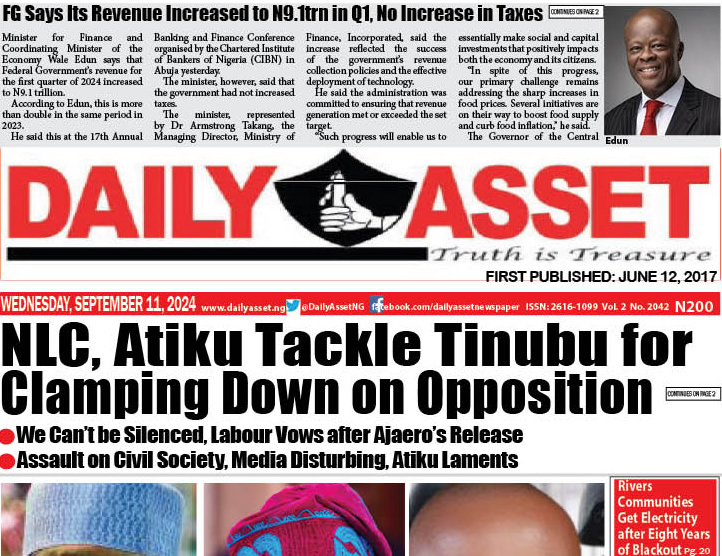


World Human Rights Day: NGO Takes Medical Outreach to Okaka Correctional Center
ShareFrom Mike Tayese, Yenagoa The 8th edition of Prof. Seiyefa Brisibe Outreach has celebrated the 2025 World Human Rights Day...

Coup in Guinea-Bissau and the Dilemma of ECOWAS
ShareBy Hakeem Jamiu In his seminal work, Political Order in Changing Societies (1968), Professor Samuel P Huntington argues that political...


Chelsea End Winless Run with Comfortable Brighton Victory
ShareChelsea ended their four-game winless streak in the Women’s Super League with a comfortable 3-0 away victory against Brighton. A...

Liverpool ‘United as One’ after Salah Return – Van Dijk
ShareCaptain Virgil van Dijk said Liverpool “are absolutely united and go forward as one” after Mohamed Salah returned to the...
Mikaelian Beats Jack to Regain WBC Title
ShareNoel Mikaelian beat Badou Jack by a unanimous points decision in Los Angeles to regain the WBC cruiserweight title. Mikaelian...

Mobile Phone Association Pillar of Modern Commerce, Driving communication, Says Mamas
ShareFrom Ayinde Akintade, Osogbo The National President of Association of Mobile Phone and Allied Products Traders of Nigeria (AMPAT), Hon....


Nigeria’s Merchandise Trade Grows to N38.9trn in Q3 2025
ShareBy Tony Obiechina, Abuja Nigeria’s total merchandise trade increased to N38.9 trillion in the third quarter of 2025, reflecting positive...


Trump’s Historic Peace Deal for DR Congo Shattered after Rebels Seize Key City
ShareUS Secretary of State Marco Rubio has said Rwanda’s actions in eastern Democratic Republic of Congo are “a clear violation...


Nwabali Arrives Super Eagles Camp in Egypt
ShareStanley Nwabali has arrived the Super Eagles’ Renaissance Hotels, Cairo, Egypt ahead of the 2025 Africa Cup of Nations in...
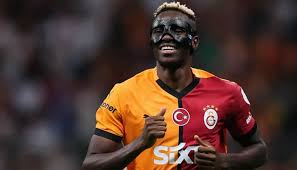

Osimhen, Fulham Trio Dazzle in Final Club Games before AFCON
ShareSuper Eagles stars Victor Osimhen, Calvin Bassey, Samuel Chukwueze, and Alex Iwobi all impressed in their final club appearances before...