
Uncategorized
Association Wants Budgetary Allocation for Education Materials for Visually Impaired Increased


The Nigeria Association of the Blind (NAB) has called for increased budgetary allocation to improve
access to information and education materials for visually-impaired persons, in line with the Marakesh Treaty.
The association made the call on Thursday in Abuja at a two-day stakeholders’ meeting on the status of the implementation of the Marakesh Treaty
in Nigeria.
Report says that the Marrakesh Treaty was adopted on June 27, 2013 in Marrakesh, Morocco, to form part
of the international copyright treaties administered by the World Intellectual Property Organisation (WIPO).
The goal of the treaty is to create a set of mandatory limitations and exceptions for the benefit of the blind, visually impaired, and otherwise print
disabled (VIPs).
It is also to ensure that books are made available globally in accessible formats, such as Braille, audio and large print, and DAISY1 formats, as well as
facilitate access to published works for persons who are blind, visually impaired, or otherwise print disabled.
The former President of NAB, Dr Ishaku Adamu, therefore, explained that the treaty is an agreement signed by the Federal Government
to improve access to published works for people with print disabilities.
Adamu added that the treaty seeks to remove all legislative barriers that prevent access to those materials, whether across national and
international borders, which Nigeria has domesticated and ratified.
He, however, said that less than one per cent of national budget was allocated for the provision of accessible education materials for visually impaired students.
According to him, poor implementation of the treaty has further affected access to education, level of participation and exclusion from information for visually impaired persons.
He said “we should be able to engage these agencies to set aside certain percentage of their budget, Federal Ministry of Education and other key ministries to ensure that those books are being provided in accessible format.
“Less than one per cent of such materials is accessible to our people, affecting the level of our education, the level of our participation and other things.
“So, it is very critical for us to engage because we know that government is budgeting, but we want to know what they can do to ensure our people have access to these materials.”
He said the stakeholders meeting was to strategise on improved access to information not only in braille, but also in soft copy, audio, large print and other version, media space, as well as employment opportunities for visually impaired persons.
Earlier, the NAB President, Mr Stanley Onyebuchi, said the engagement would enable stakeholders to review the implementation of the Marakesh treaty and proffer action plans that would enhance implementation.
Onyebuchi said “this treaty is key to those of us that are print disabled, that is those of us that are blind to access publications that will enhance our education, research and others.”
On the implementation of the treaty, he said “I don’t think Nigeria has gone far in implementing this treaty because some of the websites of many organisations, even the government agencies, are not even accessible.
“Although the Nigerian Copyright Commission has done a lot and has been part of this struggle for the domestication of this treaty in Nigeria, other government agencies have not done much
in that regard.”
Also, Mr Abdrahman Auwal, the National PRO of NBA, stressed the need to create awareness about the importance of the treaty.
He said “a lot of people don’t even know about it, so, a lot of publishers are there and still stick to their previous copyright law, not knowing that it has been amended.
“We need the media to propagate this in the news to stimulate questions and people will learn about it, which will all be transformed.”
Dr David Okon, a resource person and Consultant, said the meeting was to ensure full implementation of the treaty for the benefit of persons with reading disabilities.
Okon, who is the Executive Director, Total Inclusion, an NGO said “knowledge is acquired through information. And if we are not going to be informed, we are deprived of information, then it means we are deprived of knowledge.
“It also means that we are deprived of literacy and the power to make wealth, power to recreate ourselves and other things.”
Report says that in attendance at the stakeholders meeting were representatives of various disability groups, NGOs, CSOs, among others, to suggest ways toward
full implementation of the Marakesh Treaty.(NAN)

By David Torough, Abuja
The Federal Ministry of Water Resources and Sanitation has reaffirmed its commitment to the successful implementation of the Agro-Climate Resilience in Semi-Arid Landscapes (ACReSAL) project, as stakeholders convened for a mid-term review meeting in Kaduna.
Speaking at the meeting on Thursday, the Minister of Water Resources and Sanitation, Joseph Terlumun Utsev, emphasized the ministry’s continued dedication to advancing the project’s objectives.
Utsev, who also serves as Co-Chairman of the ACReSAL Steering Committee, highlighted the ministry’s role in watershed management, flood forecasting, and the development of sustainable water infrastructure.He noted that agencies under the ministry, including River Basin Development Authorities and Hydrological Services, would remain central to strengthening early warning systems and ensuring water resource sustainability for both present and future generations.
The minister described the mid-term review as a critical milestone, providing stakeholders with an opportunity to evaluate progress, assess the effectiveness of interventions, and identify operational challenges that may be limiting the project’s impact.
He added that the meeting would also help deepen collaboration across sectors and institutions, a key factor in achieving the project’s long-term goals.
Utsev outlined priority areas for the project moving forward, including integrated water and landscape management, improved access to reliable hydrological and climate data, and the sustainability and scalability of ongoing interventions.
Also speaking at the event, the Minister of Environment, Balarabe Abbas Lawal, acknowledged the positive impact of ACReSAL on communities nationwide.
He urged state governments to enact supportive legislation to sustain the project’s gains beyond its lifecycle.
The meeting featured presentations from representatives of the Kaduna State Government, including those representing Uba Sani, as well as the Minister of State for Agriculture and Food Security, Aliyu Sabi Abdullahi, and the World Bank’s ACReSAL Technical Team Leader, Joy Agene.
The ACReSAL project is a multi-sectoral initiative aimed at building climate resilience in Nigeria’s semi-arid regions through sustainable land and water management practices.

From Ene Asuquo, Calabar
The Governor of Cross River State, Prince Bassey Otu, has been conferred with an honorary doctorate degree (Honoris Causa) in Political Science by the University of Calabar (Unical).
In the same vein, Rear Admiral Garba Sadeeq Abubakar (Rtd) was also conferred with an honorary doctorate degree in Peace and Conflict Resolution.
They received the awards at the Godswill Akpabio International Conference Centre, UNICAL, during the 38th Convocation Ceremony for the award of Postgraduate and Honorary Degrees.
The Chancellor of Unical, His Highness, Sarkin Kano, Alhaji Ado Bayero, described the award as deserving, citing the invaluable contributions of the duo to national development.
He eulogized Governor Otu for his transformative leadership in Cross River State and Rear Admiral Abubakar for his distinguished service in the Nigerian Navy, emphasizing their commitment to public service and nation-building.
The Chancellor noted that the honorary degrees recognize not just their achievements, but their dedication to uplifting communities and promoting peace, making them exemplary role models for the graduating class.
He stated that UNICAL is proud to confer these awards on such outstanding individuals.
Speaking shortly after being robbed in an academic regalia, Otu said he feels honoured to receive the award, describing it as a testament to the character, discipline, and excellence Unical instilled in him as a student.
He pledged to continue partnering with tertiary institutions, especially Unical, to drive development and foster academic excellence.
Governor Otu charged graduands to dream big, stay focused, and get prepared to lead, urging them to make meaningful contributions to the society.

By Laide Akinboade, Abuja
The Federal Capital Territory (FCT), Mandate Secretary, of women Affairs secretariat, Dr. Adedayo Benjamins-Laniyi on Monday said the registration of every child born in Abuja would give them the important legal identity they deserve.
The Mandate Secretary Women Affairs Secretariats stated this at the mobilisation of residents for birth registration, through the traditional rulers in Abuja Municipal Area Council (AMAC).
At the Palace of Sapeyi (Chief) of Garki, Alh. Usman Nga-Kupi, in Abuja, said the exercise is meant for all children from Zero to five years.
Benjamins-Laniyi, said the social mobilisation was to ensure all children between the ages of zero to five years were registered and issued a birth certificate as a legal means of identification.
She stressed that the move is to ensure that no child is left behind in the efforts to ensure absolute protection of all children.
She said that the birth registration campaign was being coordinated by First Lady Oluremi Tinubu across the country.
She said that the mobilisation of the traditional leaders and community members began on March 28 in Abaji Area Council and extended to the remaining five area councils of the FCT.
The mandate secretary said that the women affairs secretariat and its partners had received the blessing and cooperation of the royal fathers in the 17 Chiefdoms of the FCT.
According to her, “Through this partnership, we have taken the message of birth registration into palaces, homes, and communities across the FCT.
“Together, under the watch of our royal fathers, we are restoring the dignity of our children by ensuring that every child in the FCT is seen, counted, registered and protected.
“When a child is registered, the child is recognised; and when a child is recognised, the child can thrive,” she said.
She said that the mobilisation was being implemented with support from the United Nations Children’s Fund (UNICEF) in collaboration with the National Population Commission (NPC) and National Orientation Agency.
She identified other partners as the National Identity Management Commission, FCT Primary Healthcare Board, FCT Area Council Secretariat and the Association of Local Government Employees of Nigeria.
The Director, Child Development in the secretariat, Dr. Idris Attah, explained that the mobilisation was to scale up birth registration in all the nukes and crannies of the FCT.
Attah added that the move was to ensure immediate issuance of the new digital birth certificates to children between ages zero to one year and ages between ages one to five years.
According to him, the registration is free to all children under five years in the FCT.
Child Protection Officer, UNICEF, Charlse Awuna said that the social mobilization for the birth registration would ensure that every child in the FCT has a legal identity.
According to Awuna, without a birth certificate, the child is not counted as a member of the community and as a citizen of the country.
“This is in line with the Renewed Hope Initiative of the First Lady Oluremi Tinubu, and this is why we are partnering with FCT women affairs secretariat to ensure that all children are captured in the population database.”
Also, Alh. Sulaiman Gada, NPC Director, FCT, noted that FCT was left behind in the birth registration of children under five years and commended FCT Administration for the efforts.
Gada stressed the need to effectively use traditional structures in every community “to ensure that every child is reached, registered and issued with a birth certificate.
He advised caregivers against laminating the certificate to prevent loss of data when uploading the document but preserve and protect the legal document.
Giving his royal blessings, Nga-Kupi welcomed the development and promised to mobilise all ward, village and district heads to ensure that all children in their domain were registered.
The success of the mobilization was highlighted by the immediate registration of King David Agazor, a three-month-old infant. His mother, Uchechukwu Ikechukwu, expressed her delight at the ease of the process.
“I’ve been trying since the first day that I gave birth… but my husband has been procrastinating about it.
“When my neighbor told me that they are giving it for free, I rushed here—even without bathing the baby—and it was just easy. I’m very happy”, she shared



Grant Pardon to Henry Okah, Niger Delta Activists Tells Tinubu
ShareBy Raphael Atuu, Abuja Popular Niger Delta activist Nengi James OON, alongside other youths under the aegis of Advocates for...


NCoS Places Facility on Red Alert over Alleged Attack Threats in Niger
ShareFrom Dan Amasingha, Minna The Nigerian Correctional Service (NCoS) in Niger State has placed all custodial centres across the state on red...


FIBA WWC: D’Tigress Land in Tough Group B with France, Hungary, Korea
ShareNigeria’s D’Tigress will face France, Hungary, and Korea in Group B at the 2026 FIBA Women’s World Cup. The draw set up the D’Tigress for...


Pope Decries Wealth Inequality as He Roundup African Tour
SharePope Leo on Wednesday spoke out against wealth inequality in Africa urging believers to work to bridge the gap between rich and poor as he traversed oil-rich...
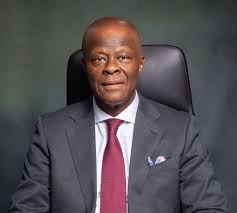

Edun, Dangiwa Resigned, not Sacked, Says Presidency
ShareThe Presidency on Wednesday said former Minister of Finance and Coordinating Minister of the Economy, Wale Edun, resigned from office and was not removed. It...
Cocoa, Coffee Farmers Seek Support amid Price Volatility
ShareAfrican Cocoa and coffee farmers are calling for urgent support from global stakeholders to mitigate the impact of price volatility, despite a promising outlook for the commodities on...

FAAC Shares N2.036trn March Revenue to FG, States, LGCs
ShareBy Tony Obiechina, Abuja A total sum of N2.036 trillion, being March 2026 Federation Account Revenue, has been shared to...


FG Unveils Aviation Sector Emergency Rescue Plan
ShareBy David Torough, Abuja The Federal Government has unveiled a set of emergency and long-term measures aimed at stabilising Nigeria’s...


CAN Denies Split, Says No Relief Funds Missing, Warns Against False Claims
ShareBy Laide Akinboade, Abuja The Christian Association of Nigeria (CAN) on Wednesday, denied alleged division within the Association along Northern...


NBA Makurdi Condemns Detention of Lawyer, Demands Immediate Action
ShareBy David Torough, Abuja The Nigerian Bar Association (NBA), Makurdi Branch, has strongly condemned the arrest and continued detention of...