
Economy
Stockbrokers Propose Strategies to Grow $1trn Economy


Nigerian Stockbrokers have proposed strategies by which the Federal Government can deepen the capital market to achieve its proposed one trillion dollar economy.
They made the proposal in a communique signed by Mr Oluropo Dada, President/Chairman of Council of Chartered Institute of Stockbrokers (CIS), and the Registrar/Chief Executive of CIS, Dr Josiah Akerewusi.
The communique was from the 28th Annual Conference of CIS held in Ibadan with the theme: “Capital Market as Catalyst for The One Trillion Dollar Economy’’.
Dada said that, if adhered to, the proposed strategies would help the government to achieve its goal without increasing borrowing.
He urged the Federal Government to list Nigerian National Petroleum Company Ltd. and moribund state enterprises on the secondary markets.
According to him, this is to deepen the markets, enhance the companies’ ability to make profit and generate revenue for the government through tax.
The CIS president also said that there was the need to rebase Nigeria’s Gross Domestic Product (GDP) to reclaim the country’s status as Africa’s largest economy to create opportunities to achieve the one trillion dollar target.
Dada urged policies that would incentivise indigenous and privatised companies as well as Small and Meduim Enterprises (SMEs) to list on the Nigerian capital market.
He said that the informal economy constituted a significant portion of Nigeria’s GDP but remained largely untapped by the capital market.
“Government should conclude the ongoing review of Investment and Securities Act while capital market regulators should review relevant rules and laws in line with global best practices,’’ he said.
According to him, this will boost investor confidence, create a favourable business environment for listed companies and remove restrictions hindering liquidity access for stockbrokers.
“The Nigerian capital market should be integrated into Fintech solutions, blockchain technology and other digital innovations to enhance accessibility, efficiency, transparency and attraction of Millennials, Gen Z, Gen Alpha, among others.
“Market operators should also develop products that attract investment appetite of the technology-savvy youths,” he said.
According to him, the government should address foreign exchange challenges and other inhibitions to participation of foreign investors in Nigeria.
“This will also enhance Foreign Direct Investment.’’
Dada said there was a huge knowledge gap among investors, urging that financial literacy programmes should be pursued with renewed vigour.
He said that financial literacy should cut across all segments of investors and would require collaboration of market regulators with all stakeholders.
He said: “The Nigerian capital market should reflect the key sectors such as agriculture, oil and gas to better align with GDP composition and provide opportunities for capital formation and mobilisation.
“Government at all tiers in Nigeria should leverage more on the capital market to raise long-term funds for infrastructure development,’’ he said.
Dada said that this should be done by issuing project-tied bonds with irrevocable standing payment order which would remove the risk of default.
“In order to relieve itself of perennial debt overhang, Nigeria should opt for debt restructuring and extension of maturity period to enable it to manage its resources for the overall development of the economy.
“On the monetary side, the Central Bank of Nigeria should intensify tight monetary policy to control inflation.
“Government should exploit opportunities in the commodities ecosystem to grow the GDP. Commodities Ecosystem remains a niche market in Nigeria.
“Government should implement the policies enunciated to strengthen commodity trading and commodity exchanges to enhance export trades, generate forex, boost external reserve and strengthen the Naira.’’
According to him, government should also implement structural reforms, including deregulation, debt management and public awareness campaigns by collaborating with the market stakeholders to unlock Nigeria’s economic potential.
Dada said that the government should put in place policies to attract private equity, venture capitalists and angel investors, adding that at all tiers of the government should leverage tariff policies to support local industries.
This, he said, would pave way for participation of private equity, venture capitalists and angel investors to support the growth of SMEs. (NAN)
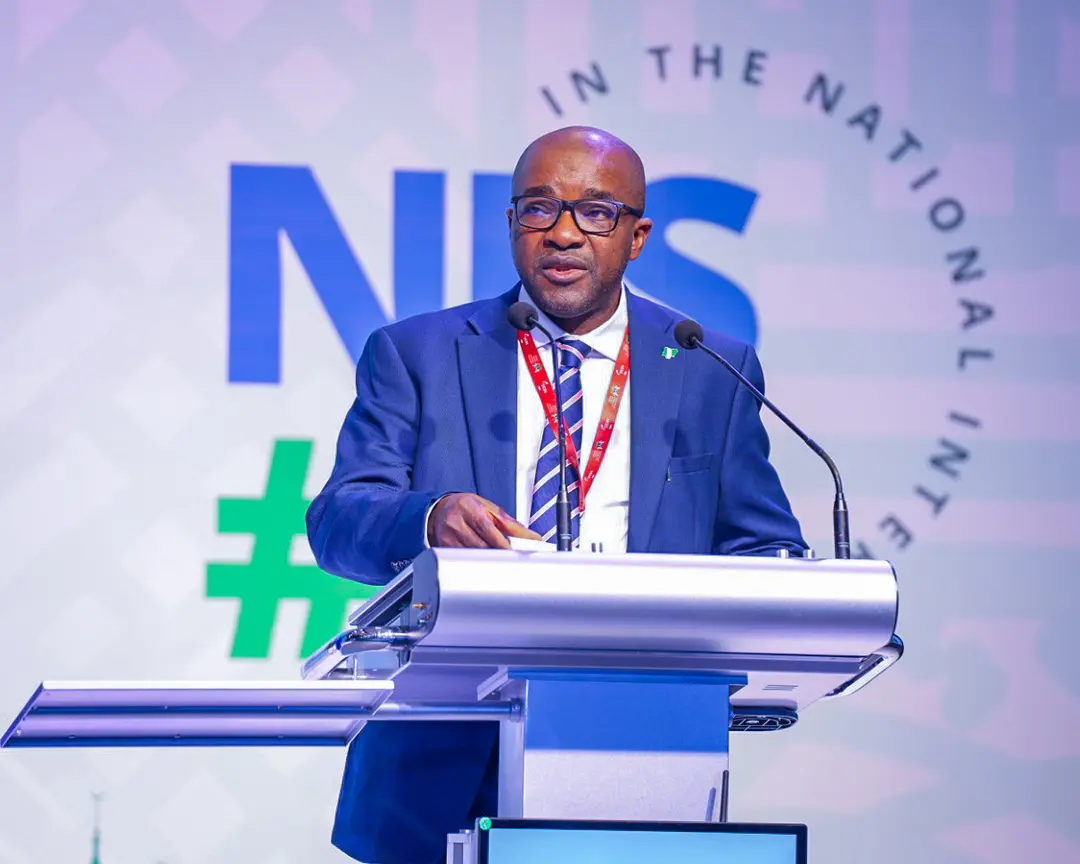
Chairman, Nigerian Economic Summit Group (NESG), Olaniyi Yusuf has urged the Federal Government to translate economic reforms into tangible results, including job creation, increased productivity and improved living standards.
Yusuf made the call on Monday in Abuja at the 32nd Nigerian Economic Summit (NES32), themed “Growth That Works: Delivering Jobs, Productivity and Shared Prosperity”.
He said Nigeria’s economic reforms had created an opportunity to strengthen the foundations for socio-economic development, in spite of the pressures on households and businesses.
“Our responsibility now is to ensure that reforms translate into stronger enterprises, better jobs, more productive workers, rising incomes, improved living standards and shared prosperity,” Yusuf said.
He said recent measures, including petroleum subsidy removal, foreign exchange reforms, fiscal restructuring and banking sector reforms, were necessary to address economic distortions.
However, he said macroeconomic stabilisation alone would not automatically translate into broad-based economic growth or improved citizens’ welfare.
Yusuf said households needed decent jobs, stronger purchasing power, and improved security and reduced poverty, while businesses required lower production costs, reliable electricity and affordable financing.
According to him, Nigeria must sustain economic stabilisation while prioritising practical measures to improve productivity and expand economic opportunities.
He said the summit’s theme reflected the need to measure economic success by the quality of jobs created, business competitiveness and the extent to which prosperity reached Nigerians.
Yusuf identified productivity, human capital development and resilience as key priorities for achieving sustainable and inclusive economic growth.
He said investments in education, healthcare, nutrition and relevant skills would improve workers’ productivity and prepare young Nigerians for employment.
The NESG chairman also called for improved infrastructure, predictable regulations, fair competition and an efficient legal system to encourage private investment and business expansion.
Yusuf said Nigeria’s economic performance presented a mixed picture, with improvements in some macroeconomic indicators alongside persistent challenges affecting businesses and households.
He noted that real Gross Domestic Product (GDP) grew by 4.43 per cent year-on-year in the second quarter of 2026, compared with 3.89 per cent in the first quarter.
Yusuf, however, expressed concern over persistent food inflation, high production costs, unreliable electricity, expensive financing and inadequate infrastructure.
According to him, a slowdown in inflation does not necessarily mean that goods have become affordable, as households continue to grapple with elevated prices.
Yusuf urged policymakers to prioritise productive investments, effective public expenditure and measures to address poverty, food insecurity and gaps in access to essential services.
He also called for stronger links between education and employment through technical and vocational training, digital skills and industry relevant learning.
The NESG chairman identified agriculture, agro-processing, manufacturing, construction, tourism and digital services as sectors with opportunities to expand productive employment.
He said the private sector remained central to Nigeria’s economic transformation but required an enabling environment to invest, produce and create jobs.
Yusuf urged businesses to invest in technology, workforce skills, local supply chains and export competitiveness, while calling on the government to improve infrastructure and ensure regulatory predictability.
He emphasised the need to assess the actual impact of reforms rather than merely documenting policies introduced or activities undertaken.
Yusuf said commitments arising from the summit should include clear institutional responsibilities, realistic timelines, measurable indicators and periodic reviews to ensure accountability.
He called on the government, businesses, development partners and other stakeholders to work together to translate economic stability into investment, productivity, employment and shared prosperity.
Yusuf said the ultimate test of the summit would be whether its deliberations produced tangible improvements in the lives of farmers, manufacturers, entrepreneurs and young people seeking decent jobs.
He urged participants to develop practical solutions and measurable commitments that would continue to deliver results beyond the summit.
By Tony Obiechina, Abuja
The Development Bank of Nigeria Plc (DBN) has launched DAWN: DBN Action for Women in Nigeria, unveiled its Impact Report and presented MSME Data Assets at the seventh edition of Annual Lecture held in Abuja.
DBN, in a statement on Thursday, said while delivering a welcome address, its Managing Director and Chief Executive Officer, Dr Tony Okpanachi, said the central challenge was no longer reforms themselves but ensuring benefits reach businesses at end of the chain.
He asked how to make sure benefits reach traders in Onitsha, fabricator in Aba, farmer in Kebbi and young founder in Yaba, noting that MSMEs accounted for about half of Nigeria’s GDP and more than eight in every ten jobs, adding that when reform works for MSMEs it works for most Nigerians.
He explained that reform becomes prosperity only when entrepreneurs can act on it whether through long tenor loans to buy equipment, banks willing to take risk or skills and records needed to grow.
He said working through Participating Financial Institutions DBN provides longer term funding, partial credit guarantees through subsidiary Impact Credit Guarantee Limited and capacity building including Entrepreneurship Training Programme.
He disclosed that as at December 2025 DBN had disbursed a cumulative N1.4 trillion to MSMEs through 84 Participating Financial Institutions creating about 1.6 million jobs nationwide.
Under the new five year strategy, the Bank aims to reach more than two million MSMEs with deliberate targets for women led businesses, youth led businesses and underserved states.
On DAWN, Okpanachi said finance alone had not enabled enough women-led businesses to scale.
He said initiative brings together financing, guarantees and credit support, technical assistance, outcome linked grants and market linkages delivered through banks, microfinance institutions, fintechs, aggregators, cooperatives and direct channels.
Its priority sectors are agriculture and exports, healthcare, arts and creatives, technology and green business.
He said DAWN is about moving gender focused lending beyond intention and turning access into opportunity.
On the sidelines of the lecture DBN and African Development Bank held a signing ceremony of AfDB DBN 61 million United States dollars Gender Line of Credit development that reinforces Bank commitment to women led enterprises.
Okpanachi urged Participating Financial Institutions to extend lending into sectors and states where access to finance has been limited, policymakers and regulators to measure reform by what changes for business at end of chain and MSMEs to formalise, keep good records and use support now available.
The Vice President as Special Guest of Honour was represented by Dr Fred Iklaga Senior Technical Adviser in the Office of Special Adviser to the President on Economy.
Keynote speakers were Chief Executive Officer of MTN Nigeria, Dr Karl Toriola, and Chairman of Nigeria Sovereign Investment Authority, Dr Segun Ogunsanya.
Fireside chat featured Chief Executive Officer of Sterling Bank Abubakar Suleiman, manufacturing and trade entrepreneur Mrs Omoyemi Chukwurah and by video Kola Masha of Babban Gona.
The Secretary to the Government of Federation, represented by Augusta Warren Bekaredebo, said 2026 tax reforms would bring relief to many small businesses expressing optimism that a lot of businesses will be smiling by next year because they will be exempted from tax.

By Ubong Ukpong, Abuja
The House of Representatives on Wednesday, summoned telecommunication operators in the country to appear before it over the present poor network services.
The Ad Hoc Committee investigating the persistent poor quality of telecommunication services in Nigeria gave the chief executive officers (CEOs) of major telecom operators seven days to appear before it and explain the deteriorating quality of network services across the country.
The committee issued the ultimatum at a public hearing in Abuja on Wednesday, directing the CEOs of MTN Nigeria, Airtel Nigeria, Globacom (Glo), Mafab Communications Ltd.
and other telecommunications service providers to appear before it on October 28, 2026.The resolution followed the adoption of two motions sponsored by Rep. Sunday Umeha and Rep Afam Ogene after the committee expressed displeasure over the failure of the invited telecom operators, including MTN and Mafab Communications, to honour previous invitations and appear before the lawmakers.
The committee directed the Nigerian Communications Commission (NCC) to ensure that all the affected operators comply with the invitation and appear before it at 2 p.m. on October 28 in Hearing Room 447 of the New Building of the National Assembly Complex, Abuja.
It also directed the operators to submit all relevant documents to the committee on or before the scheduled date and account for the persistent decline in service quality, which has continued to affect millions of subscribers and businesses across the country.
The lawmakers warned that any chief executive who failed to honour the invitation would face a possible summons for arrest to compel their appearance before the committee.
Speaking at the hearing, the committee’s Chairman, Rep. Olumide Osoba (APC-Ogun), said telecommunications services had become indispensable to Nigeria’s economy, extending beyond voice calls and internet access to critical commercial activities, including Point of Sale (POS) transactions.
Osoba noted that businesses, financial transactions and other essential services depended heavily on reliable telecommunications networks, making the persistent decline in service quality a matter of serious national concern.
He said the House constituted the ad hoc committee to investigate the recurring complaints by subscribers and determine the factors responsible for the poor quality of services provided by telecommunications operators.
The chairman, however, expressed concern that the invited chief executives had continued to evade direct engagement with the committee by offering various excuses or sending lower-ranking officials to represent them.
He said the practice undermined the purpose of the parliamentary investigation, stressing that the committee expected the chief executives, who were in a position to explain their companies’ operational challenges and commitments, to appear in person.
Also speaking, Rep. Ibe Osonwa expressed displeasure over what he described as the operators’ disregard for the House, despite the substantial revenue they generated from their operations in Nigeria.
Osonwa said it was unacceptable for companies benefiting from the Nigerian market to ignore invitations from the legislature, particularly when the purpose was to obtain explanations on issues directly affecting their customers and the wider economy.
He stressed that telecommunications operators had a responsibility to account for the quality of services delivered to Nigerians, adding that the House would not overlook any attempt to frustrate its investigation.
In his ruling, Osoba urged the NCC to ensure full compliance with the committee’s resolution, reiterating that the affected telecommunications operators must appear before the lawmakers on October 28 and provide the necessary explanations and documents.



Henry Okeke Welcomes Tinubu to Enugu, Hails Mbah’s Development Efforts
ShareBy Raphael Atuu The Convener of New Enugu Group Barrister Henry Okeke, has welcomed President Bola Ahmed Tinubu to Enugu...


COAS Sharpens Combat Edge of Expanding Nigerian Army, Graduates 91 RRI CTCOIN Recruits
ShareBy David Torough, Abuja The Chief of Army Staff (COAS), Lieutenant General Waidi Shaibu, has highlighted the importance of specialised...


FOOG Women Support Group for Tinubu Commends Babangida, Abdulsalami Over Tinubu’s 2027 Endorsement
ShareBy Francis Sadhere, Delta The FOOG Women Support Group for Tinumbu has commended former Nigerian military Heads of State, Generals...


COAS Strengthens Troops Welfare, Commissions Training Infrastructure atDepot Nigerian Army Zaria
ShareBy David Torough, Abuja The Chief of Army Staff (COAS), Lieutenant General Waidi Shaibu, has strengthened the Nigerian Army’s drive...

Benue IDPs Praise UNICEF over Provision of Facilities
ShareFrom Attah Ede, Makurdi Internally Displaced Persons (IDPs) in Benue State have poured praises on the United Nations Children’s Fund...

CBN Appoints Acting MD/CEO ofKeystone Bank
ShareBy Tony Obiechina, Abuja The Central Bank of Nigeria (CBN), in exercise of powers conferred on it by theBanks and...

3,526 Primary Healthcare Centres Revitalised – FG……… Tasks Health Journalists on Accountability
ShareBy Laide Akinboade Abuja The Federal Government (FG), on Thursday, disclosed that 3,526 primary healthcare centres had been revitalised, while...

Court Nullifies Omo-Agege’s NDC Senatorial Candidacy
ShareFrom Francis Sadhere, Delta The Federal High Court sitting in Warri, Delta State, has nullified the nomination of former Deputy...


APC Mourns 15 Supporters Killed In Zamfara Road Accident
ShareBy Orjime Moses, Abuja The All Progressives Congress (APC) has mourned 15 of its members and supporters reportedly killed in...
Ortom ‘Ranched’ Benue People in IDP Camps Instead of Cattle – Tondo
ShareFrom Attah Ede, Makurdi Former Benue State Commissioner for Lands and Survey, John Tondo, has criticised former Governor Samuel Ortom...