
NEWS
FG Reiterates Commitment to Confront Quackery in Health Sector


Federal Government has reiterated its commitment to confront quackery in the health sector in order to address misdiagnosis and delayed treatment.
Dr Iziaq Salako, Minister of State for Health and Social Welfare, made this known in Abuja on Thursday during the presentation of accreditation certificates to deserving medical laboratories.
Salako said that he would work with the security personnel to ensure the objective was achieved and for Nigerians to have confidence in legitimate healthcare providers.
“One of my priorities as a minister of state is to totally confront quackery in the health sector.
“To achieve this, I will need the services of the security personnel to ensure adherence,” he said.
According to him, laboratory bodies like the Medical Laboratory Service Council are essential in achieving this objective.
He charged the council to roll out all their assets and deploy technology to ensure that quackery was eliminated from the profession.
The minister congratulated the eight laboratories for their outstanding achievement and urged other laboratories in the country to emulate them by improving their infrastructure, manpower base, and processes.
“Accurate and reliable laboratory diagnostics, as we know, is the cornerstone of modern medicine.
“They enable early detection of diseases, guide appropriate treatment decisions, and contribute significantly to improving patient outcomes.
“The ISO re-accreditation of National External Quality Assessment Laboratory will undoubtedly enhance the quality and reliability of laboratory results leading to better patient care, reduced treatment errors, and improved public health outcomes,” he said
He said that the ministry would continue to prioritise medical laboratory science to ensure Nigerians have access to qualitative health care services.
In his welcome address, the Registrar of the council, Prof. Tosan Erhabor, said that the re-accreditation of the National External Quality Assessment Laboratory (NEQAL) by the South African National Accreditation Service (SANAS) to ISO 17043 was a remarkable achievement for the council.
He said it was also a triumph for every Nigerian whose health and well-being depend on the reliability of the medical diagnostics system.
“NEQAL is a cornerstone in the architecture of quality assurance for medical laboratories in Nigeria.
” As a specialised laboratory of MLSCN, its mission is not merely to assess laboratories but to elevate them while ensuring that the results they generate are accurate, reliable and timely, thereby reinforcing the three pillars that define the essence of quality diagnosis,” he said.
He called on the minister to make a decisive government pronouncement mandating the participation of all government and private hospitals, private laboratories, to key into MLSCN Accreditation Service and MLSCN External Quality Assurance Proficiency Test EQA/PT Scheme.
“This policy will ensure that every laboratory in Nigeria will adhere to the rigorous standards.
” Fostering a culture of accountability and consistency in diagnostics services, which will be a game changer guaranteeing every Nigerian irrespective of location receives the same high standard of diagnostics accuracy,” he said.
In his remark, Dr Walter Kazadi, World Health Organisation W(HO) Representative and Head of Mission, said that accredited medical laboratories are vital to the healthcare system.
Kazadi, represented by Mr Jubril Kareem, a staff in the organisation, said that they play a critical role in ensuring reliable and accurate diagnosis, guiding treatment decisions, and providing data for effective disease surveillance.
He said it also signifies compliance with international standards, ensuring the highest quality of laboratory services.
“This accomplishment not only improves the quality of results, but also enhances patient safety and strengthens the overall health system in Nigeria.
“Today’s achievement is a testament to the hard work, dedication, and commitment of the laboratory professionals, partners and the government who have worked tirelessly to meet these stringent international standards.
“It reflects your unwavering focus on excellence and your dedication to improving health outcomes for the Nigerian people,” he said.
According to him, the accreditation of these laboratories serves as an inspiration for others to strive for excellence.
” It sets a benchmark for quality and motivates continuous improvement in laboratory services nationwide.
“I encourage all laboratory professionals to remain committed to upholding the standards achieved through these accreditations and to continue contributing to the overall health and well-being of the nation,” Kazadi said.(NAN)



By Eze Okechukwu, Abuja
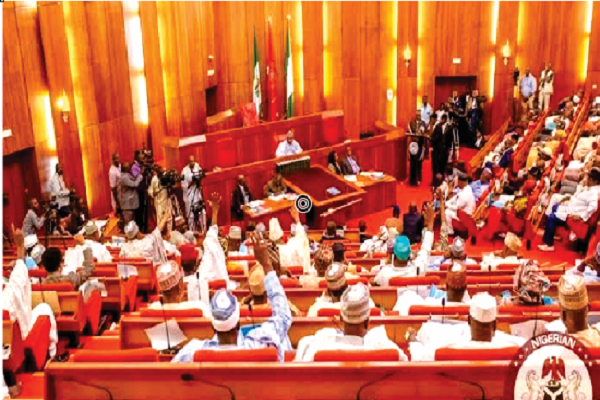
The Senate yesterday ordered mandatory health screening for every international passenger arriving Nigeria airports, seaports, land borders as Ebola resurfaces in the Democratic Republic of Congo with a scare case reported in the FCT.
The resolution followed an urgent motion by Senator Francis Fadahunsi, who warned that with Lassa fever already ravaging states, Nigeria cannot afford another outbreak.
“Protecting our entry points is far cheaper than managing Ebola,” Fadahunsi told the chamber.
Lawmakers insisted screening must be total and indiscriminate — no exemptions based on nationality or departure country because infected travellers can transit through safe-listed nations.
Senator Diket Plang raised the stakes further, demanding immediate funding for NCDC and Port Health Services, including release of withheld funds and emergency budget.
Senate President Godswill Akpabio said the Federal Government has started releasing Ebola response funds but ordered relevant committees to track every kobo.
“Ascertain whether the funds were released and judiciously utilised. Any outstanding debt must be released by the Finance Ministry without delay,” Akpabio directed.

By Ubong Ukpong, Abuja
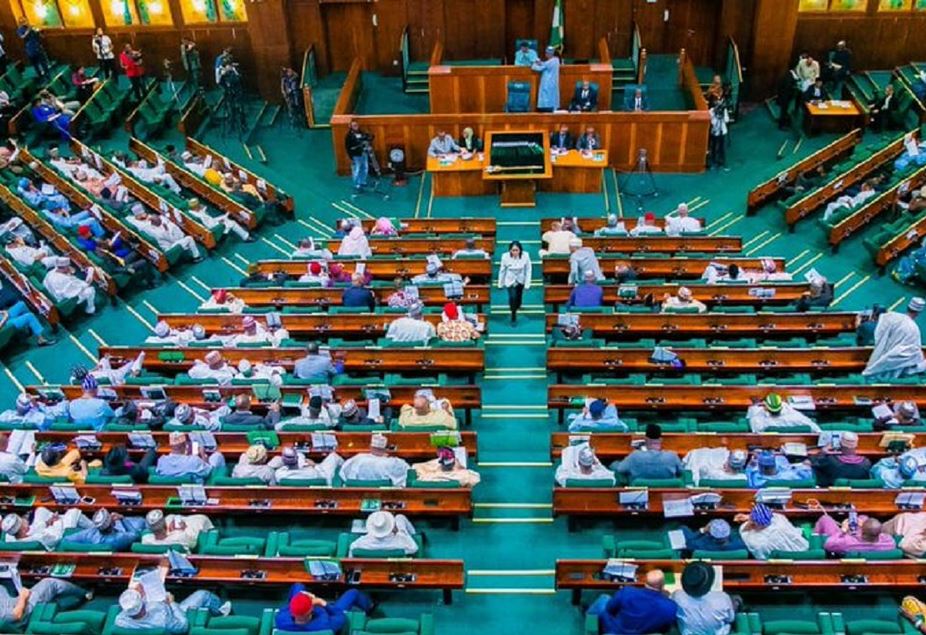
The House of Representatives on Wednesday, summoned telecommunication operators in the country to appear before it over the present poor network services.
The Ad Hoc Committee investigating the persistent poor quality of telecommunication services in Nigeria gave the chief executive officers (CEOs) of major telecom operators seven days to appear before it and explain the deteriorating quality of network services across the country.
The committee issued the ultimatum at a public hearing in Abuja on Wednesday, directing the CEOs of MTN Nigeria, Airtel Nigeria, Globacom (Glo), Mafab Communications Ltd.
and other telecommunications service providers to appear before it on October 28, 2026.The resolution followed the adoption of two motions sponsored by Rep. Sunday Umeha and Rep Afam Ogene after the committee expressed displeasure over the failure of the invited telecom operators, including MTN and Mafab Communications, to honour previous invitations and appear before the lawmakers.
The committee directed the Nigerian Communications Commission (NCC) to ensure that all the affected operators comply with the invitation and appear before it at 2 p.m. on October 28 in Hearing Room 447 of the New Building of the National Assembly Complex, Abuja.
It also directed the operators to submit all relevant documents to the committee on or before the scheduled date and account for the persistent decline in service quality, which has continued to affect millions of subscribers and businesses across the country.
The lawmakers warned that any chief executive who failed to honour the invitation would face a possible summons for arrest to compel their appearance before the committee.
Speaking at the hearing, the committee’s Chairman, Rep. Olumide Osoba (APC-Ogun), said telecommunications services had become indispensable to Nigeria’s economy, extending beyond voice calls and internet access to critical commercial activities, including Point of Sale (POS) transactions.
Osoba noted that businesses, financial transactions and other essential services depended heavily on reliable telecommunications networks, making the persistent decline in service quality a matter of serious national concern.
He said the House constituted the ad hoc committee to investigate the recurring complaints by subscribers and determine the factors responsible for the poor quality of services provided by telecommunications operators.
The chairman, however, expressed concern that the invited chief executives had continued to evade direct engagement with the committee by offering various excuses or sending lower-ranking officials to represent them.
He said the practice undermined the purpose of the parliamentary investigation, stressing that the committee expected the chief executives, who were in a position to explain their companies’ operational challenges and commitments, to appear in person.
Also speaking, Rep. Ibe Osonwa expressed displeasure over what he described as the operators’ disregard for the House, despite the substantial revenue they generated from their operations in Nigeria.
Osonwa said it was unacceptable for companies benefiting from the Nigerian market to ignore invitations from the legislature, particularly when the purpose was to obtain explanations on issues directly affecting their customers and the wider economy.
He stressed that telecommunications operators had a responsibility to account for the quality of services delivered to Nigerians, adding that the House would not overlook any attempt to frustrate its investigation.
In his ruling, Osoba urged the NCC to ensure full compliance with the committee’s resolution, reiterating that the affected telecommunications operators must appear before the lawmakers on October 28 and provide the necessary explanations and documents.
By Ubong Ukpong, Abuja
A bill for an Act to move the nation to developing the capacity to design, manufacture and commercialize drones, passed second reading on Wednesday, in the House of Representatives.
The “Bill for an act to provide for the development, promotion and industrialisation of the Nigerian drone industry; and for related matters,” was sponsored by the Deputy Speaker, Rep.
Benjamin Kalu and 12 others.Leading the debate, one of the co-sponsors, Rep. Satomi Ahmad said the Bill seeks to establish a legal and institutional framework for the development, promotion and industrialisation of Nigeria’s drone industry.
Ahmad explained that it focused on indigenous research, design, manufacturing, commercialisation; reducing dependence on imported technology; building local content and technical capacity.
He said that it is also aimed at attracting investment; creating jobs; and positioning Nigeria as a competitive regional and international centre for drone manufacturing and related services.
Ahmad lamented that Nigeria’s dependence on imported technology has limited opportunities for local innovation, job creation and industrial growth and without coordinated support for manufacturing, commercialisation.
According to him, indigenous enterprises may struggle to translate promising ideas into viable products.
He therefore urged his colleagues to support the Bill as it sought to
address these gaps through targeted incentives, government procurement
preferences, innovation funding and local-content requirements.
Ahmad expressed optimism that the bill would transform Nigeria from a consumer of drone technology into a producer of
indigenous solutions, skilled professionals and competitive industrial products.
The lawmaker said that its successful implementation could stimulate investment, create employment,
strengthen national security and open new markets for Nigerian innovation.
“It is important to note that the future belongs to nations that can transform technological innovation into industrial capacity, economic prosperity and national security.
Drone technology is increasingly vital to agriculture,
infrastructure, emergency response, scientific research and defence,” he said.
The lawmaker said that Nigeria must therefore move beyond dependence on imported technology towards developing its own capacity to design, manufacture and commercialise drones.




2027: Tinubu Accords Benue Security Top Priority, Tompolo Tells Supporters
ShareLeader of the PBAT Door-to-Door Movement, Government Tompolo, has called on the people of Benue state to come out enmasse...


Senate Demands Compulsory Screening of Foreign Arrivals
ShareBy Eze Okechukwu, Abuja The Senate yesterday ordered mandatory health screening for every international passenger arriving Nigeria airports, seaports, land...
Reps Summon Telecom Operators over Poor Network Services
ShareBy Ubong Ukpong, Abuja The House of Representatives on Wednesday, summoned telecommunication operators in the country to appear before it...


Bill to Design, Manufacture, Commercialize Drones Passes Second Reading in Reps
ShareBy Ubong Ukpong, Abuja A bill for an Act to move the nation to developing the capacity to design, manufacture...


Otu Presents N987.8bn Budget Estimate to Assembly
ShareFrom Ene Asuquo, Calabar Cross River State Governor, Sen. Bassey Edet Otu, has presented a proposed budget of ₦987, 808,...

Borno Police Arrest Six Suspects over Mobile Phone Theft, Recover N5.65m
ShareThe Police Command in Borno has arrested six suspects over alleged mobile phone theft and fraudulent withdrawal of ₦5.65 million...


Election Campaigns: FRSC Bars Officers from Politicians’ Escort
ShareThe Federal Road Safety Corps (FRSC) has barred its personnel from escorting politicians during campaigns for the 2027 general elections....

2027: NITDA Raises The Alarm Over AI-driven Election Manipulation
Share By Elijah Oguche, Abuja The National Information Technology Development Agency (NITDA) has warned that artificial intelligence (AI)-powered misinformation, deepfake...


RMAFC Begins Review of Anambra N70bn Stabilization Fund Request
ShareBy Tony Obiechina, Abuja A committee of the Revenue Mobilisation, Allocation and Fiscal Commission (RMAFC) has received Anambra State’s request...


Nigeria, Rwanda Target Regional Security Through Military Partnership
ShareBy Tambaya Julius, Abuja Nigeria and Rwanda are exploring new areas of military cooperation, including personnel exchanges, specialised training and...