
COVER
Nigeria’s Targets $2.5bn Investment from Gas Flare Commercialisation Programme says NUPRC

By Joel Oladele, Abuja (With Agency Reports)
The Nigeria Gas Flare Commercialisation Programme (NGFCP) has the potential to unlock 2.5 billion dollars investment in oil and gas sector, The Nigerian Upstream Petroleum Regulatory Commission (NUPRC), said yesterdayThe commission is also set to hold its first Nigeria Upstream Oil and Gas Decarbonisation Forum in March, to align its upstream operations with global decarbonisation goals and carbon monetisationChief Executive of NUPRC, Gbenga Komolafe, stated this during the African Upstream Forum at the ongoing 2025 Nigeria International Energy Summit (NIES), on Wednesday in Abuja.
Komolafe, who spoke in a session entitled: “Imperative of Regulatory Efficacy in Optimisation of Upstream Activities,’’ said the NUPRC stood as a powerful catalyst for the growth, sustainability, and global competitiveness of the sector.He said the gas flare commercialisation programme would also generate huge revenue and create significant number of jobs.“As the global focus shifts toward a low- carbon future, NUPRC is embedding sustainability into seven upstream operations, mitigating environmental risks and protecting communities.“Key actions include: Managing methane and GHG emissions; fostering energy efficiency and carbon credits, promoting investments in Carbon Capture Utilisation and Storage (CCUS) and Enforcing Environmental Social and Governance (ESG) goals,’’ he said.He said the industry was contributing 95 per cent of foreign exchange earnings and 70 per cent to government revenue, unlocking employment opportunities, and positioning Nigeria as a formidable leader in the global energy arena.“At the heart of NUPRC’s efforts is the growth of Nigeria’s hydrocarbon reserves and production in a cleaner manner for enhanced revenue generation.“In the short-term, we have set new benchmarks for oil and gas production and significantly strengthening the nation’s energy security,’’ he said.Komolafe said the commission was also committed to enriching domestic gas utilisation and expanding gas infrastructure to meet Nigeria’s growing energy demands.The commission, he said would ensure that every Field Development Plan (FDP) included a firm commitment to fulfilling gas delivery obligations and increasing gas supply to the domestic market to meet rising local demand.“As part of our plan to advance deep-water development, we will promote the creation of deep-water clusters, fostering synergies in facility use to unlock the vast potential of Nigeria’s deep-water resources, while reducing costs and leveraging economies of scale,’’ he said.He said the commission was set to hold the maiden Nigeria Upstream Oil and Gas Decarbonisation Forum in March, 2025, adding that it would present its governance and regulatory framework for decarbonisation in the Nigerian upstream sector at the forum.“This forum will provide a platform for key stakeholders to engage in meaningful discussions on decarbonisation and carbon monetisation, while allowing regulators, agencies, and companies across the globe to share their valuable insights and experiences.“Nigeria’s success in the upstream oil and gas sector is anchored on a predictable and enabling regulatory environment.“Through regulatory excellence, collaboration, and visionary planning, NUPRC is poised to guide Nigeria toward a future defined by energy security, economic growth, and environmental responsibility,’’ he said. OPEC Chief Tasks Africa on Unlocking 120bn Barrels of Oil Reserves At the global oil scene, Secretary-General of the Organisation of the Petroleum Exporting Countries (OPEC), Haitham Al-Ghais has tasked Africa to unlock its proven oil reserves of over 120 billion barrels. Haitham Al-Ghais, OPEC Secretary-General, made this known while delivering a keynote address titled “Driving Cross-Continental Investments: Scaling Africa’s Energy Frontier”, at the ongoing Nigeria International Energy Summit (NIES) 2025 in Abuja, Nigeria.The eight edition of the energy summit, which opened on Monday and ends on Thursday, has ‘’Bridging continents: Connecting investors with Africa’s Energy Potential’’ as theme.He also said that Africa with around 18 trillion standard cubic metres of natural gas, was a testament to the continent’s crucial role in the global energy landscape.“The world will need more of this oil in the future. Therefore, it is critical that the African oil and gas industry attracts the level of investment necessary to unlock this great potential”, Al-Ghais added.He said that the vast resources at Africa’s disposal should not be disregarded or neglected merely to accommodate the energy transition agenda pushed by Western nations.The secretary-general expressed appreciation to the leadership and people of Nigeria for their hospitality and thanked the summit organisers for their efforts in organising this year’s edition.According to him, OPEC’s market research and forecasting points to the importance of Africa.“Additionally, we know from Nigeria’s countless contributions to OPEC’s successes, how rewarding it is to work in this great nation. We encourage all potential investors to look at Nigeria’s oil and gas industry,”.Al-Ghais highlighted the strong and enduring relationship between OPEC and Africa, noting that half of OPEC’s member countries are from the continent, including Nigeria, the most populous African nation, and Algeria, the largest in geographical size.Other African OPEC members include Congo, Gabon, Equatorial Guinea, and Libya.He also lauded Africa’s youthful and dynamic population, which presents a strong workforce for the oil sector.“It’s crucial to discuss how we can unlock the potential that this great continent holds, and how to create an investment-enabling environment that attracts the capital necessary to fully realize that potential,” he said.“The investment needs of the oil industry are substantial, with cumulative requirements amounting to 17.4 trillion dollars by 2050.“This is why stability in the oil market is essential for investors to plan effectively,” he added.He highlighted OPEC’s views on some important topics relevant to both the global industry and Africa, including future of global oil demand, energy investment and finance, as well as the ever-evolving issue of climate change and energy transitions.PETROAN Rules out Strike in Demand for N100bn Bridging ClaimsMeanwhile, the Petroleum Retailers Outlet Owners Association of Nigeria (PETROAN) has urged members not to shut down operations.This is following the association’s conflict with the Nigerian Midstream and Downstream Petroleum Regulatory Authority (NMDPRA) over bridging claim issues.Dr Joseph Obele, National Public Relations Officer (PRO), PETROAN made the call after an emergency national executive meeting on Tuesday in Abuja.Obele said that PETROAN would dialogue with NMDPRA over the outstanding payments of the bridging claims rather than shutting down operations.“While acknowledging the frustration and concerns of members regarding the unpaid bridging claims totalling N100 billion, PETROAN firmly believes that a shutdown will have devastating consequences.“These consequences include fuel scarcity, economic disruption andhardship for the Nigerian people,” he said.He said that PETROAN reaffirmed its commitment to dialogue rather than industrial action.“The association urges all parties to engage in constructive engagement and good-faith negotiations to resolve the issue,” he said.According to Obele, a lot will be achieved through dialogue, especially when parties identify mutually beneficial solutions, build trust and strengthen relationships.“A lot will also be achieved if we avoid costly and damaging shutdowns and ensure the continued stability and growth of the downstream petroleum sector.“PETROAN also commends President Bola Tinubu’s efforts to reform the petroleum sector, promoting transparency, accountability and economic growth.“The association encourages all stakeholders to support and encourage these reforms, rather than sabotaging them ” he said.Obele urged the authorities responsible to facilitate the prompt payment of outstanding bridging claims to do so.He said that this would help to alleviate the financial burden on members and ensure the continued smooth operation of the downstream petroleum sector.He commended the National President, Dr Billy Gillis-Harry, for promoting the stability and growth of the downstream petroleum sector through dialogue, cooperation and innovative solutions. (NAN)
By Tony Obiechina, Abuja
The Development Bank of Nigeria Plc (DBN) has launched DAWN: DBN Action for Women in Nigeria, unveiled its Impact Report and presented MSME Data Assets at the seventh edition of Annual Lecture held in Abuja.
DBN, in a statement on Thursday, said while delivering a welcome address, its Managing Director and Chief Executive Officer, Dr Tony Okpanachi, said the central challenge was no longer reforms themselves but ensuring benefits reach businesses at end of the chain.
He asked how to make sure benefits reach traders in Onitsha, fabricator in Aba, farmer in Kebbi and young founder in Yaba, noting that MSMEs accounted for about half of Nigeria’s GDP and more than eight in every ten jobs, adding that when reform works for MSMEs it works for most Nigerians.
He explained that reform becomes prosperity only when entrepreneurs can act on it whether through long tenor loans to buy equipment, banks willing to take risk or skills and records needed to grow.
He said working through Participating Financial Institutions DBN provides longer term funding, partial credit guarantees through subsidiary Impact Credit Guarantee Limited and capacity building including Entrepreneurship Training Programme.
He disclosed that as at December 2025 DBN had disbursed a cumulative N1.4 trillion to MSMEs through 84 Participating Financial Institutions creating about 1.6 million jobs nationwide.
Under the new five year strategy, the Bank aims to reach more than two million MSMEs with deliberate targets for women led businesses, youth led businesses and underserved states.
On DAWN, Okpanachi said finance alone had not enabled enough women-led businesses to scale.
He said initiative brings together financing, guarantees and credit support, technical assistance, outcome linked grants and market linkages delivered through banks, microfinance institutions, fintechs, aggregators, cooperatives and direct channels.
Its priority sectors are agriculture and exports, healthcare, arts and creatives, technology and green business.
He said DAWN is about moving gender focused lending beyond intention and turning access into opportunity.
On the sidelines of the lecture DBN and African Development Bank held a signing ceremony of AfDB DBN 61 million United States dollars Gender Line of Credit development that reinforces Bank commitment to women led enterprises.
Okpanachi urged Participating Financial Institutions to extend lending into sectors and states where access to finance has been limited, policymakers and regulators to measure reform by what changes for business at end of chain and MSMEs to formalise, keep good records and use support now available.
The Vice President as Special Guest of Honour was represented by Dr Fred Iklaga Senior Technical Adviser in the Office of Special Adviser to the President on Economy.
Keynote speakers were Chief Executive Officer of MTN Nigeria, Dr Karl Toriola, and Chairman of Nigeria Sovereign Investment Authority, Dr Segun Ogunsanya.
Fireside chat featured Chief Executive Officer of Sterling Bank Abubakar Suleiman, manufacturing and trade entrepreneur Mrs Omoyemi Chukwurah and by video Kola Masha of Babban Gona.
The Secretary to the Government of Federation, represented by Augusta Warren Bekaredebo, said 2026 tax reforms would bring relief to many small businesses expressing optimism that a lot of businesses will be smiling by next year because they will be exempted from tax.
By Tambaya Julius, Abuja
The Nigeria Labour Congress (NLC) has threatened possible nationwide industrial action following the failure of talks with the Federal Government over workers’ welfare, petrol prices and other outstanding labour demands.
The warning came after a meeting between the government and organised labour at the Ministry of Labour in Abuja on Thursday, October 22, ended without an agreement.
The congress has given the Federal Government until Tuesday, October 27, to make meaningful progress on the issues, warning that its relevant organs would decide the next line of action if the next meeting fails to produce concrete commitments.
The NLC has also directed its affiliates, state councils and civil society allies to begin mobilising members for possible nationwide action.
In a statement issued after the meeting, the NLC Acting General Secretary, Benson Upah, expressed disappointment over what he described as the government delegation’s lack of preparedness for the negotiations.
According to the congress, organised labour presented its demands in good faith but left the meeting without any concrete commitments from the government.
The demands include a reduction in petrol prices to 2024 levels, renegotiation of the national minimum wage, implementation of agreed tax relief measures and resolution of the terms of settlement involving the Joint Health Sector Unions (JOHESU).
The congress also called for the resolution of issues raised by the Joint Public Service Negotiating Council (JPSNC) over peculiar allowances, wage awards and hazard allowances.
The NLC said the government delegation lacked the necessary authority to engage meaningfully on the issues presented by labour representatives.
“The meeting between the Federal Government and organised labour, convened at the Ministry of Labour in Abuja on 22nd October 2026, has ended without resolution,” the statement said.
It added that the Minister of Labour requested that the meeting be adjourned until October 27 to allow the government to prepare adequately for further discussions.
The preparations, according to the statement, would include bringing relevant ministers and heads of departments and agencies to the negotiating table.
The congress said it remained open to dialogue but would not accept continued delays in addressing workers’ concerns.
“We will report back to our organs, and if no meaningful progress is made on Tuesday, the relevant organs of the NLC will decide the next line of action,” it said.
The labour body urged workers and members of the public to remain calm while the negotiations continue, even as it directed its affiliates and allies to prepare for possible industrial action.
“However, we urge all affiliates of NLC and TUC; all state councils and our civil society allies to be alert and start mobilising for a possible action across the nation while we hope that the tenets of our demands are met by the government,” the statement added.
The October 27 meeting is expected to provide another opportunity for both sides to address the outstanding issues and prevent a possible escalation of the dispute.
However, the NLC’s decision to begin mobilisation suggests that tensions could rise if the next round of talks fails to produce meaningful progress.
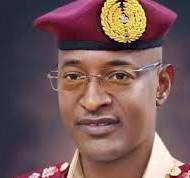
The Federal Road Safety Corps (FRSC) has barred its personnel from escorting politicians during campaigns for the 2027 general elections.
Zonal Commanding Officer, RS6, ACM Abimbola Owolabi, gave the directive during her maiden visit to the Cross River Command in Calabar on Wednesday.
Owolabi said patrol vehicles and sirens must not be used for political activities or private engagements, including weddings and funeral processions.
She directed officers deployed to campaign venues to focus exclusively on traffic management to prevent congestion and road crashes.
The zonal head warned personnel against leading political convoys or providing escorts for politicians, stressing that official vehicles must not be used for unauthorised purposes.




Ashish Sabharwal, India’s Leading Surgeon, Who Drives Robotic Cancer Surgery At Apollo Hospital
ShareBy Cletus Akwaya, who was in India Nothing about him looks extraordinary. He is built of an average body frame,...


Recruitment Concerns: Customs Suspends Training at Two Colleges
ShareBy Tambaya Julius, Abuja The Nigeria Customs Service (NCS) has temporarily suspended training activities at its two training colleges to...

WPRF Delegates Leaving Nigeria with Positive Impressions – Customs CG
ShareBy Tambaya Julius, Abuja The Comptroller-General of the Nigeria Customs Service (NCS), Adewale Adeniyi, has said delegates attending the World...

INEC Urges South-South Youths to Shun Electoral Violence Ahead 2027 Polls
ShareBy Orjime Moses, Abuja The Independent National Electoral Commission (INEC) has urged youths in the South-South to shun electoral violence,...
Nigeria’s Politics of Fear: Who Profits When Democracy Bleeds?
ShareBy Jude Dike Nigeria is approaching another general election, but something more troubling than the contest for political power is...

NAICOM Wants Improved Claims Settlement, Risk Management
ShareBy Tony Obiechina, Abuja The National Insurance Commission has called for improved claims settlement, stronger risk management, and greater accountability...

2027: Alia Mobilises Benue for Tinubu, APC Candidates
ShareBy Attah Ede, Makurdi Benue State Governor, Rev. Fr. Hyacinth Alia, has called on residents of the state to throw...

FG Targets 40 Per Cent Drop in Transport Fares
ShareBy David Torough, Abuja President Bola Tinubu has unveiled fresh measures to reduce the cost of transportation across Nigeria, targeting...
A Right to Life, But at What Cost?
ShareBy Oluwaleye Adedoyin Grace What is the value of a constitutional right that citizens struggle to enjoy? In Nigeria, the...
Bayelsa Oil Communities Accuse Renaissance of Withholding Contract Plan
ShareFrom Mike Tayese, Yenagoa More than 100 Oil-Producing Communities in Bayelsa, and their Representatives, has accused Renaissance Africa Energy Company...