
Health
AMR is a Silent Killer – DG NCDC

By Laide Akinboade Abuja
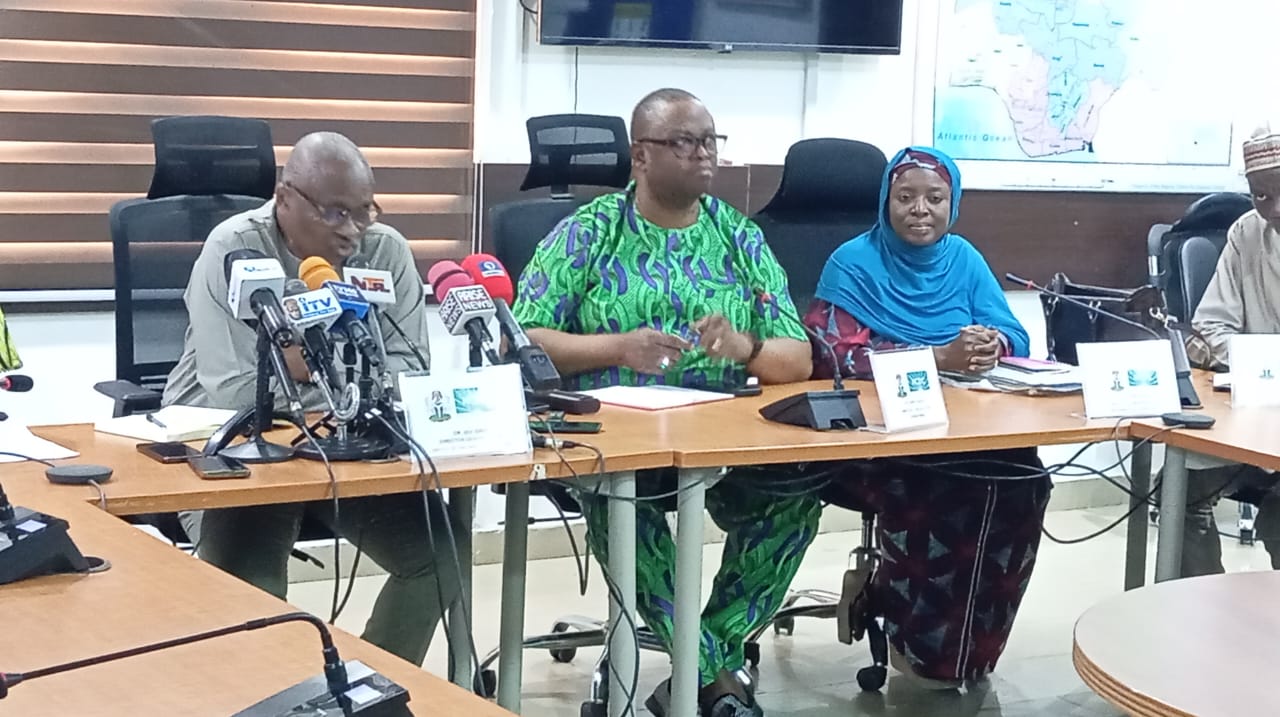
The Federal Government, (FG), has raised alarm over the challenges of Antimicrobial Resistance (AMR) in Nigeria.Olajide Idris, Director General and Chief Executive Officer of the Nigeria Centre for Disease Control (NCDC), stated this in Abuja.
The NCDC DG, who described AMR as a silent killer and it kills more than the combinations of malaria, Tuberculosis and Immunodeficiency Virus,(HIV) Acquired Immunodeficiency (AIDs) syndrome combined together. He said it unacceptable that most Nigerians don’t know how dangerous AMR challenges are.Antimicrobial resistance (AMR) refers to the ability of bacteria, viruses, fungi, and parasites to survive and thrive in the presence of antimicrobial medications, making infections harder to treat. This resistance occurs naturally over time as microbes evolve and adapt, but it’s also accelerated by the misuse and overuse of antimicrobials in humans, animals, and agriculture. AMR threatens the effective prevention and treatment of a wide range of infections, potentially increasing the risk of disease spread, severe illness, and death.According to the NCDC boss, “AMR is a huge importance. AMR was suppose to be part and parcel of this program.”And we are about to roll out some programmes on this AMR. As you all know we are already working on National Action plan on AMR, this would look at Infection Prevention and Control (IPC), anti microbial stewardship and finance these are some of the areas we are looking at. “AMR is a silent killer, it kills more than the combination of malaria, Tuberculosis and HIV combined together.”The worst thing is that much is not known about it. It has become a global focus. “Nigeria is set to host the next ministerial conference on AMR in 2026. This is a huge responsibility for us. We will be planning for this conference next year, we have created various committees to plan this programme but unfortunately we are yet to get funding for this programme. In terms of awareness, it is imperative to create awareness to Nigerians on how dangerous AMR is. Especially stopping unnecessary access to antibiotics, to ensure that if you are going to take antibiotics, you take them based on prescription of Doctors, people should not be going to buy over the counter antibiotics, people should stop prescribing antibiotics for themselves”.He decried Nigerian’s culture and practices and the healthcare workers are all at risk of the effects of AMR.According to him, health workers are guilty as well, because they don’t take proper history or proper diagnosis before prescription and most time their patients don’t need those drugs.In conclusion he said AMR is huge and therefore should be given attention, by creating awareness it deserves.A Consultant Psychiatrist, Prof. Taiwo Obindo has decried the cost of care and drugs for individuals undergoing treatment for various mental health conditions, calling for interventions to reverse the trend.
Obindo, also the immediate past President, Association of Psychiatrists of Nigeria (APN), made the call in an interview at the weekend in Lagos.
He said that those accessing care, especially mental healthcare services, were finding it difficult to keep up with the cost of treatment.
The psychiatrist frowned that the cost of healthcare in Nigeria generally had gone up, attributing the development to inflation, economic downturn and closure of some pharmaceutical companies.
He lamented that most of the pharmaceutical companies that produced some of the drugs had either downsized or relocated to other countries, leading to high cost of drugs/medications.
“The cost of healthcare in Nigeria generally has become so high, making it difficult for an average person to access the needed care.
“Most of the company’s manufacturing the drugs are not in the country and some of those here have either downsized or relocated to other countries – this has resulted in a quadruple of the price of drugs compared to the price before.
“Similarly, the rise in the prices of goods and services caused by the fuel subsidy removal and economic downturn in the country has continually resulted in an astronomical rise in the prices of drugs and hospital care.
“Individuals undergoing treatment for various mental health conditions, particularly those with substance use disorder are finding it difficult to keep up with the cost of treatment.
“This to a great extent affects the treatment outcomes, because many of the patients hardly adhere to medication and prescriptions due to financial incapability,” he said.
Speaking on the implications of the high cost of medication, particularly for mental health conditions, Obindo decried that the situation was taking a toll on the average patient.
He said that most of the patients, after seeing a doctor, end up not buying the prescribed drugs or buy what they could afford, leading to under-dose of the medication.
He explained that the situation could not only lead to relapse, but could make the patient come down with more complicated symptoms.
“Failure to adhere to prescriptions or under-dosing medication can have a lot of implications on the patient, his family and the economy at large.
“Apart from resulting in relapse, it can make the patient perpetually ill or even come down with more severe symptoms.
“Family relationships may be affected and productivity of the individuals may drop, affecting economic growth and development,” he said.
On measures to salvage the situation and ensure citizens had easy access to the needed healthcare, Obindo called for restructuring and expansion of the National Health Insurance Scheme (NHIS) to at least cover 80 per cent of the population.
He added that the scheme’s formularies should be reviewed and expanded to accommodate most mental healthcare medications, so that patients could access drugs when prescribed.
The psychiatrist also underscored the need for the government to not only subsidise importation of the drugs, but also support the pharmaceutical companies with incentives to aid their operations.
“It is the sole responsibility of the government to ensure that the citizens are in good health.
“Considering the cost of transportation, the fact that people in the rural areas will have to travel to urban cities to access mental healthcare adds to their cost of treatment. Some may resort to alternative medicine.
“This is where integrating mental healthcare fully into Primary Health Care becomes necessary, so that people can have access to care anywhere they are,” Obindo said.
By Folasade Akpan
In December 2025, the reported death of Nigerian Law School student Ayomiposi Ojajuni reignited concerns about the fragile state of students’ mental health in Nigeria.
He was allegedly barred from writing the Bar Final examinations at the Yola campus in Adamawa.
The incident, though still under investigation, has once again brought to the fore the intense academic pressure, emotional strain and limited psychological support systems confronting many young people in tertiary institutions.
Ojajuni, a graduate of Olabisi Onabanjo University, was said to have received a series of queries from the school authorities and later discovered he would not be allowed to sit for the professional examinations scheduled for the same day.
Indeed, available data underscores the urgency of the issue.
According to the World Health Organisation (WHO), one in every eight people globally lives with a mental health condition, with depression and anxiety among the leading causes of illness among adolescents and young adults.
In Nigeria, experts estimate that one in four young people may be experiencing some form of mental health challenge, yet access to care remains limited due to stigma, cost and shortage of professionals.
Against this backdrop, students across universities and professional schools face mounting pressures, including heavy academic workloads, financial constraints, family expectations, and social comparisons.
Experts say these factors can greatly affect mental wellbeing if not properly managed.
Sharing his experience, Mr Funbi Phillip, a law graduate of Lead City University, Ibadan, described the mental strain associated with studying law as one of the most demanding aspects of his academic journey.
According to him, the constant pressure to keep up with coursework, assignments, legal drafting and memorisation of numerous cases often felt overwhelming.
“The most challenging part for me was the mental pressure of having to keep up with heavy coursework, assignments, drafting briefs and memorising cases.
“It is a lot, but with consistency, it becomes manageable,” he said.
Phillip emphasised that effective time management was critical to navigating the demands of law school.
“I prioritise my time based on urgency. I make sure I handle continuous assessments before focusing on exams. Everything is about planning”.
He added that a turning point in his academic journey came when he shifted from rote memorisation to a deeper understanding of legal principles, noting that success in law school requires critical thinking, strong writing skills, time management and emotional resilience.
Similarly, students in other demanding disciplines report comparable experiences.
A pharmacy undergraduate, Ms Tiamiyu Omotayo of the same institution, said balancing academic expectations with personal wellbeing and career aspirations could be challenging.
According to her, practical exposure through internships helped her cope with the rigours of pharmacy education.
“The transition from theory to clinical practice is very important. It helps you appreciate what you have learned in class,” she said.
However, she noted that one of her biggest struggles was coping with unmet personal expectations regarding academic performance.
Omotayo said that although her results were good, they did not always align with the high standards she set for herself.
To manage stress, she said she deliberately took breaks and remained focused on her long-term goals, advising prospective students to pursue the profession out of passion rather than financial expectations.
Experts say such experiences are far from isolated.
Rev. Fr. Anthony Azuwike, Head of the Department of Private and Property Law at Veritas University, Abuja, said emotional distress among young people was becoming an increasing concern.
According to him, students are particularly vulnerable because they face academic demands alongside broader socio-economic challenges.
He identified parental expectations as a major source of stress, noting that the inability to meet such expectations often leaves young people feeling overwhelmed.
Azuwike also cited financial hardship, relationship challenges and health conditions as contributing factors.
He further pointed to policy gaps in Nigeria’s mental health framework.
While acknowledging the Mental Health Act signed in 2023 as a step forward, he noted that it does not fully decriminalise attempted suicide nationwide.
“The law recognises attempted suicide as a psychiatric emergency, which is progress.
“However, it does not explicitly decriminalise it, despite growing understanding that such cases require care rather than punishment,” he said.
He stressed that institutions have a duty to protect students’ wellbeing through accessible counselling services, confidentiality and supportive environments that discourage stigma.
Corroborating this view, mental health professionals highlight systemic challenges.
Mrs Rosemary Uwaleme, a mental health counsellor at Inspire Minds Services, said emotional distress among Nigerian undergraduates was widespread.
She attributed this to financial difficulties, unstable family backgrounds and limited access to support systems.
“Many students do not seek help because of stigma. There is also the issue of cost and the limited availability of services on campuses,” she said.
Uwaleme called for stronger counselling systems, increased awareness and regular training for mental health professionals within educational institutions.
In the same vein, psychologists emphasise preventive approaches.
Prof. Remi Alarape of the University of Ibadan urged tertiary institutions to establish robust mental health support systems to prevent students in distress from reaching breaking points.
“Without effective coping strategies, students may equate failure in examinations with failure in life. This can lead to deep emotional distress,” he said.
He advocated a culture that prioritises wellbeing alongside academic achievement and encourages open conversations about mental health.
Beyond institutions, civil society organisations are also stepping in.
The Dora-Care Behavioral Foundation recently organised a Mental Health First Aid outreach for students in Lagos, aimed at equipping young people with knowledge and basic support skills.
Its founder, Ms Akinyelure Feyikemi, said early awareness was key to building resilience among students.
“Equipping students with the tools to understand and support their mental health is crucial for raising a generation that is both academically capable and emotionally resilient,” she said.
Medical experts also underscore the link between mental and physical health.
Dr Joseph Ogba of the Federal Neuropsychiatric Hospital, Yaba, described mental health as fundamental to overall wellbeing.
“There is no physical health without mental health,” he said.
Similarly, Mr Lucky Jet, Head of the Child and Adolescent Occupational Therapy Unit at the hospital, encouraged peer support among students.
“If you notice changes in a friend, reach out. Support can make a significant difference,” he said.
As conversations around mental health continue to gain traction in Nigeria, stakeholders say more coordinated action is needed.
They stress that the incident involving Ojajuni should serve as a wake-up call for institutions, families and policymakers.
Ultimately, experts agree that academic excellence must not come at the expense of psychological wellbeing.
For many, the way forward lies in strengthening campus counselling systems, reducing stigma, expanding access to care and fostering a culture where seeking help is viewed as a sign of strength rather than weakness.
Only then can Nigeria’s education system produce not just academically successful graduates, but emotionally resilient individuals equipped to navigate life beyond the classroom. (NAN)
By Laide Akinboade, Abuja
World Health Organization (WHO), on Tuesday, said health is imperative and central for every society and for human development.
Dr. Pavel Ursu the World Health Organization (WHO) Representative to Nigeria, stated this when he led the walk for the commemoration of 2026 World Health Day, (WHD) in Abuja.
Ursu said, they kicked starts the day with ‘health walk’ because, physical exercise contributes to physical and mental health.
The theme for this year’s WHD, ‘Together for health. Stand with science’.
He stressed that 30 minutes of moderate physical exercise contributes to better physical and mental health.
According to the WHO boss, “The achievements which are grounded on science. And the 2026 World Health Day, is focusing on science.
“We started the day with a health walk. And we do that traditionally because, physical exercise is contributing to our physical and mental health”.
He said, “Today we celebrate not only the World Health Day as such, but also we celebrate the major achievements in human health.
“What I want to tell the Nigerians today is, first of all, to congratulate them with this very important day, which marks and emphasizes that health is central for everybody. Health is central for human development. Health is central for this generation and next generations.
“I would like to mention that 30 minutes of moderate physical exercise contributes to better health. There is a lot of scientific evidence that if everyone can be active for at least 30 minutes per day, that contributes to a stronger physical and mental health. This is why we started the day together with the colleagues from the Federal Ministry of Health, with our partners, with WHO staff, with Health Fellows to celebrate the day, to flag off the World Health Day 2026”.
He mentioned the series of events to mark the day, including a press conference at 2 p.m. here at the Ministry of Health.
Speaking about miss information in the sector, he said, “I would like to also mention that in today’s world, the information about health sometimes is confusing. There are too many channels. We are consuming that information from different influencers, from different channels, and not all the information is rigorous enough in terms of the evidence. So I’d like really to call for Nigerians to be responsible consumers of the information, making sure that they can assess the source of every single advice, making sure that advice comes from a trusted source. That is very important”.
Also speaking, the Minister of State for Health and Social Welfare, Iziaq Salako, reiterated the need for Nigerians to trust science and adhere strictly to professional health advice.
“We call on Nigerians to trust science and follow scientific advice because it is life-saving. What we have achieved globally and in Nigeria is largely due to evidence-based interventions,” Salako said.
He stressed that health remains central to national development and societal progress, urging citizens to prioritise healthy living and informed decision-making.
“Health is central to development, central to society, and central to both present and future generations. By following scientific guidance, we can advance health outcomes and save many lives,” he added



Plateau PDP Cautions Members Against Obtaining Nomination Forms From Pro-Wike Faction
ShareBy Mike Odiakose, Abuja As Nigerians await the verdict of the Supreme Court on the leadership crisis rocking the Peoples...


Soludo’s 16.4km Road Project Ends Years of Suffering, Opens Up Anambra Communities
ShareBy Laide Akinboade Abuja Vice President of Boardwalk Group and Abuja-based real estate developer Chief Obiageli Okwubanego, on Wednesday, commended...


Ekiti Church Attack: CAN Demands Action Over Killing, Abduction of Worshippers
ShareBy Laide Akinboade, Abuja The Christian Association of Nigeria (CAN) on Wednesday, condemnedthe attack on a church gathering in Eda...


Journalist Petitions DSS Over Alleged Criminal Activities Of Company, River-Bend Agent
ShareBy Julius Tambaya, Abuja Following alleged criminal conducts of River-Bend Nigerian Limited and one Mr. Thomas Terzulum Nongo, a renowned...


Stakeholders Urge FG, Benue Govt to Partner NGOs to End Violence, Discrimination Against Girls
ShareBy Julius, Tambaya Abuja Stakeholders have called on the Federal and the Benue State Governments to strengthen collaboration with non-governmental...


Bago Orders Immediate Repairs of Wind-Damaged Buildings at NYSC Camp
Share From Dan Amasingha, Minna Niger State Governor, Mohammed Umaru Bago, has directed the immediate rehabilitation of buildings damaged by a windstorm at the National Youth Service Corps...
2028 Olympic Games Qualifier: Super Falcons to Discover Opponents Today
ShareNigeria’s Super Falcons will find out their opponents for the 2028 Los Angeles Olympic Games women’s football qualifiers this week. The Confederation of African Football (CAF) announced on Tuesday that the draw for the African qualifying...

Ghana Military Convoy Attack Kills Three Civilians, Seven Assailants
ShareFor Somalia’s malnourished children, already suffering the twin catastrophes of looming famine and radical cuts in foreign aid, the U.S.-Israeli...


Imo Deputy Governor Resigns
ShareFrom Marcel Duru Owerri The Commissioner for Information and Strategy Chief Declan Emelumba has said that Imo State Deputy Governor, Ekemaru has resigned. Speaking...


NAF Airstrikes Destroy Terrorists’ Structures in Mandara Mountains
ShareThe Nigerian Air Force (NAF) has sustained its counter-terrorism offensive with precision airstrikes that destroyed terrorists’ structures and logistic hubs in the Mandara Mountains area of Borno....