
Health
Int’l Day of Boychild: EFCC, Others Decry Impact of Cybercrime on Youth’s Mental Health


By David, Torough Abuja
The Economic and Financial Crimes Commission (EFCC) and various stakeholders have raised the alarm over the detrimental effects of cybercrime on the mental health of young boys in the society.
This was noted during the annual essay competition organized by the Great Achievers Initiative for Youth and Community Development (GAIYD) in Abuja.
The event, held in celebration of the International Day of the Boy Child 2025, focused on the theme “Boy’s Health and Wellbeing” and the essay topic, “Where are the Mentors? The Missing Role Models for Boy’s Growth and Development.
”The Chairman, Economic and Financial Crime Commission (EFCC), Ola Olukoyede, who was represented by the Commission’s head of Enlightenment and Reorientation, Aisha Muhammad, emphasized the urgent need for integrity and guidance among youth.
“Girls are just there for the enjoyment, either the boyfriends or the wives, and that’s it. They are just there as a supporters club, so the boys are the ones doing this,” she stated.
Olukoyede explained that the EFCC has established integrity clubs in primary and secondary schools to instill ethical values.
“We have zero tolerance clubs in the tertiary institutions, trying to catch them young, to instill the spirit of integrity and talk to them about what they should know, what they shouldn’t do,” he added.
The discussion highlighted the pervasive threat of cybercrime, which poses significant risks to the mental health of young boys.
The EFCC Chairman warned that cybercrime can lead to anxiety, depression, and stress.
“The issue of mental health and well-being of the male child is crucial and it is at the heart of the 2025 International Day of the Boy Child Celebration.
“The weight of secrecy, fear of detection, and potential prosecution can be overwhelming,” he cautioned.
Olukoyede therefore called for collective responsibility from parents, educators, and mentors to guide young people towards positive alternatives and foster digital literacy.
Also speaking, the wife of Ooni of Ife, Her Regal Majesty, Olori Temitope Enitan Ogunwusi, addressed the gathering, urging stakeholders to be proactive in supporting boys.
The Olori emphasized the importance of being a voice for boys. She challenged adults to reflect on their roles in nurturing boys.
“Who is going to be the voice for our boys? As a mentor, as a parent, as a guardian, are you a voice for your boy or for your boys? How have you been a voice for that boy child? For that son that you birthed?,” Ogunwusi queried.
The Olori further encouraged boys to recognize their potential and urged parents to be positive role models, emphasizing that the responsibility of raising boys falls on the entire community.
“You have God’s kind of mind. Everything that determines your future is right here in your head.”
The Keynote speaker at the event, Kayode Adaramodu addressed the critical issue of mental health, emphasizing the importance of healthy habits and open communication.
“You need to sleep well. Sleeping is very, very important. Exercising is very important. Open communication, developing open skills, positive information, embracing the good side of social media. Learning, connecting with people, and having opportunities to express yourself. These are good ways of promoting your mental well-being,” Adaramodu urged.
He therefore encouraged boys to seek professional help when needed and to utilize mental health resources available to them.
“And you can also find professional help and resources. Psychologists are there. These are people who study human behavior, the way we think, the way we feel.
“The same way you have WhatsApp, the same way you have Facebook, TikTok, and other things like that, for entertainment. To also take care of your mental health related issues, there are apps out there that can help you to become mentally alert and resourceful,” he said.
Speaking earlier, the Founder of GAIYD, Dr. Hillary Akpua, noted the need for a dedicated focus on the boy child and expressed gratitude for the growing advocacy for boys.
“If you have not been paying attention to your boys, please start doing so. Send them for training where they can develop more because the girls you are training today might meet the boy you left untrained tomorrow. I’m sure you won’t want that girl you are busy training today to marry such an untrained boy.
“In order word, for the efforts we put into raising our female children not to be counterproductive eventually, we really need to do better in raising these young men God has blessed us with,” Akpua said.
The highlight of the event was the official launch of One Boy One Skill Project by Olori Temitope Enitan Ogunwusi. The project is aimed at engaging young male adults in different vacations to empower for the future ahead.
Also, there was presentation of prizes to winners of the essay competition.
While the first position received a scholarship worth 150,000 Naira, the second position was awarded 100,000 Naira, and the third position received 50,000 Naira.
Additionally, consolation prizes were provided for runners-up and sponsored gifts for all participants.”
GAIYD, a non-governmental organization dedicated to community and human development, places special emphasis on the growth and empowerment of the male child.
The Niger State Private Health Facilities Agency (NiSPHFA) has sealed 12 unregistered Islamic medicine stores in Minna and a health facility in Katcha Local Government Area (LGA).
The Executive Chairman of NiSPHFA, Dr.
Abdullahi Suleiman, disclosed this while receiving members of the Islamic and Prophetic Medicine Practitioners’ Association of Nigeria (IPMPAN) in Minna.The enforcement is part of the agency’s renewed efforts to protect residents from unsafe healthcare practices and ensure compliance with minimum standards.
Suleiman said the facilities were sealed over alleged non-compliance with regulatory standards.
According to him, the enforcement is not aimed at persecuting healthcare providers but at ensuring residents have access to safe, quality, and standard-compliant healthcare services.
“Our responsibility is to protect the people by ensuring that anyone providing healthcare services operates within the required standards,” he said.
He urged genuine alternative medicine practitioners to register with NiSPHFA, saying registration would enable the agency to identify operators, monitor their activities, and protect residents from unsafe products and practices.
Suleiman also announced plans to organise a trade fair for verified alternative medicine practitioners to promote legitimate practices and improve public confidence in alternative healthcare.
He emphasised the need for practitioners to maintain minimum standards of hygiene, sanitation, safe preparation and storage of medicines, proper packaging, and infection prevention.
“Practitioners should refer patients whose conditions are beyond their capacity to appropriate health facilities. Such referrals will help reduce avoidable health risks,” he said.
The chairman said sustained enforcement, stakeholder collaboration, and improved compliance would enable NiSPHFA to safeguard residents and promote a safer, more accountable, and quality-driven healthcare system across the state.
He said the NiSPHFA enforcement team inspected 10 health facilities in Katcha local government and identified various irregularities requiring improvement.
Suleiman said the affected facilities were issued 21-day notices to correct the identified deficiencies.
“One of the facilities inspected was sealed for non-compliance with established standards,” he said.
He added that the agency also secured the support of the local government area in identifying and addressing facilities operating with irregularities.
IPMPAN Chairman, Abdullahi Haske, commended the state government for establishing NiSPHFA.
He pledged the association’s cooperation in ensuring that its members complied with regulatory requirements.
Stakeholders have called for improved implementation, tracking and accountability of health sector budgets to strengthen healthcare delivery and advance Universal Health Coverage (UHC) in Kaduna State.
They made the call during an engagement on strengthening participatory budget processes, health budget tracking and advocacy on Saturday in Kaduna, with emphasis on the 2027 budget process and implementation of the Annual Operational Plan (AOP) for the health sector.
Seth Luke, a Civil Society Coach on strengthening participatory budget processes under the Open Government Partnership (OGP) Kaduna, said the engagement was aimed at strengthening the capacity of OGP Technical Working Groups and state and local government accountability mechanisms to effectively participate in budget processes and advocacy.
Seth said the engagement was particularly focused on the health sector, including tracking the implementation of the Annual Operational Plan as the state commenced preparations for the 2027 budget.
“We want to see how we can track the implementation of the Annual Operational Plan for the health sector and, from our findings, bring out recommendations around improving funding and other areas that require attention,” he said.
He said the government needed to prioritise health financing beyond budgetary allocation by ensuring effective implementation of approved programmes and projects.
According to him, budget allocation represents government plans based on expected revenue, but available resources should be prioritised toward activities capable of improving healthcare and service delivery at the grassroots.
Seth urged participants to use the knowledge and findings from the engagement to engage relevant government stakeholders on improving health financing and budget implementation.
He also encouraged them to extend the knowledge gained to other sectors and continuously engage government on budgeting, accountability and service delivery.
Similarly, Garba Mohammed, Co-Chair of the Kaduna Maternal Accountability Mechanism (KADMAM), said the engagement was aimed at reviewing health budget performance against key indicators linked to maternal mortality reduction and child survival.
Mohammed said participants examined first and second quarter performance, particularly in areas such as family planning, Maternal, Newborn and Child Health (MNCAH), nutrition, malaria, immunisation and essential medicines.
He said family planning interventions largely involved commodities at the primary healthcare level, while MNCAH activities remained largely donor-dependent.
Mohammed commended the Kaduna State Government for meeting the Abuja Declaration benchmark of allocating at least 15 per cent of its annual budget to health.
He, however, expressed concern over gaps in the implementation of some critical health budget lines, stressing that allocation alone was not enough to improve health outcomes.
“We have looked at the budget allocation, and Kaduna State has met the 15 per cent Abuja Declaration benchmark. We commend the state for that. However, there are still issues around budget performance in critical health indicators,” he said.
He said the findings would be used to identify advocacy priorities and engage key government decision-makers, including the Ministry of Health, Planning and Budget Commission, Ministry of Finance and other relevant authorities.
Mohammed said participants were expected to understand the relevant health budget lines and their implementation status and use the knowledge to undertake evidence-based advocacy in their respective organisations.
Meanwhile, Yusuf Guje, Executive Director, Civic Impact for Sustainable Development Foundation (CISDF), and a participant at the programme, told the News Agency of Nigeria (NAN) that the engagement was timely in strengthening the capacity of civil society and accountability mechanisms.
Guje said the programme would deepen participants’ capacity in budget tracking, project monitoring and social auditing, particularly within the health sector.
He described the health sector as a critical pillar of development, saying civil society organisations had an important role to play in complementing government efforts through effective monitoring and accountability.
He said CSOs needed to strengthen their ability to analyse budgets, track expenditure and visit healthcare facilities to determine whether appropriated and released funds were being properly utilised.
“Civil society needs to really improve on how effectively we analyse the budget, how we track the spending, and go down to the various facilities to see how well the money appropriated and released is being utilised,” Guje said.
He said effective monitoring would help determine the extent to which communities benefited from government investments in healthcare.
According to him, Kaduna State’s commitment to Universal Health Coverage could only be strengthened through sustainable health financing and effective accountability mechanisms.
Guje described CSOs as representatives of communities that often lacked the knowledge, skills and platforms required to engage government on public policies and resource allocation.
He therefore urged civil society actors to continuously strengthen their capacity to represent citizens effectively, particularly in health financing advocacy and accountability.
“As civil society, we need to remain committed to holding the government accountable where necessary and tracking the entire health financing process,” he said.
Guje said the ultimate objective of budget tracking and social accountability was to ensure value for money in public expenditure on health.
He added that effective monitoring of public finances would contribute to improved healthcare delivery and better health outcomes at the grassroots. (NAN)
Cross River Government has made enrolment in the state Health Insurance Scheme compulsory for all civil and public servants in the state.
The Head of Service, Bassey Okon, announced this in a circular dated Sept.
3, following the official relaunch of the Formal Sector Enrolment Programme of the Cross River State Health Insurance Agency.According to the circular in Calabar, at the weekend, the directive takes immediate effect.
Okon stated that the policy was meant to ensure that all the civil and public servants had access to affordable, quality, and timely healthcare services, while strengthening the welfare and productivity of the state workforce.
He directed all the civil and public servants to enroll in the scheme and comply with the registration and documentation requirements of the agency.
The circular also introduced a mandatory requirement for officers to attach valid health insurance enrolment cards to official correspondences relating to personnel matters.
“Correspondences concerning promotion, confirmation of appointment, loan applications, study leave, training or sponsorship, transfer or secondment, as well as other personnel-related requests or benefits, would not be processed without the attachment of a valid health insurance enrolment card,” it stated.
To facilitate the enrolment process, the government established enrolment points at the Office of the Head of Service, New Secretariat, Calabar, and the Ministry of Health, Old Secretariat, Calabar.
Okon directed all Heads of Ministries, Departments, and Agencies (MDAs) to ensure that officers under their supervision were duly informed about the circular and made to comply with the enrolment requirement without delay.
He also urged concerned officers to take advantage of the designated enrolment points for guidance and assistance and to complete their enrolment as required.
He further directed all the heads of the MDAs to bring the contents of the circular to the attention of all civil and public servants under their supervision. (NAN)



ASUSS Opposes NUT Strike in FCT, Urges Teachers to Ignore Stay-at-home Directive
ShareBy Laide Akinboade, Abuja The Academic Staff Union of Secondary Schools (ASUSS), Federal Capital Territory (FCT) Chapter, has dissociated itself...
Edo Varsity Lecturer Dies after Sex Romp in Hotel
ShareA senior lecturer at the Ambrose Alli University, Ekpoma in Edo State, Dr. Matthew Uwuigbe, has died under mysterious circumstances...
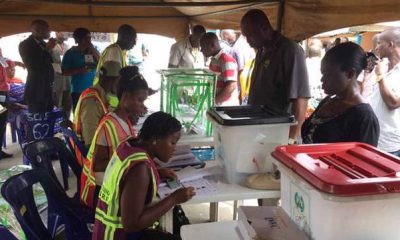

Over 84 Per Cent Nigerians willing to Vote During 2027 Elections – Yiaga
ShareYiaga Africa said 84 per cent of Nigerians intend to vote during the 2027 general elections, urging political parties to...


PNC 2026: NCDMB, DMG Affirm Collaboration with Bayelsa, Unveil New Activities
ShareFrom Mike Tayese, Yenagoa As preparations intensify for the 2026 edition of the Practical Nigerian Content (PNC) Forum, slated for...


Tinubu’s $700 Billion Mineral Resources Deal With America at Whose Interest?
ShareBy Hajia Hadiza Mohammed For some time now the hottest issue of debate in the Nigeria media space has been...


Atiku’s Production Subsidy: Has politics overtaken economics?
ShareBy Kayode Oladele Alhaji Atiku Abubakar, former Vice President of Nigeria and presidential candidate of the African Democratic Congress, (ADC),...

2027: Governors’ Backing Boosts Tinubu’s Chances, says Presidency
ShareBy Tambaya Julius, Abuja The Presidency has said the growing number of governors backing President Bola Tinubu has strengthened his...


Security Operatives Rescue 20 Abducted NYSC Members in Imo
ShareBy Tambaya Julius, Abuja Security operatives have rescued 20 members of the National Youth Service Corps (NYSC) who were abducted...

Nigeria’s Oil Reforms will Unlock $50bn Deep Offshore Investments – Tinubu
SharePresident Bola Tinubu said recent reforms in Nigeria’s oil and gas sector are designed to unlock up to 50 billion...
Ododo Condoles Families of NAF Personnel, Armed Forces Over Ondo Crash
ShareFrom Joseph Amedu, Lokoja Kogi State Governor, Ahmed Ododo has commiserated with the families of the Nigerian Air Force personnel...