
NEWS
Expect Reforms in FCT Transport Sector – Wike


By Laide Akinboade, Abuja
Worried by the challenges of the transportation sector in Abuja, the Minister of the Federal Capital Territory (FCT), Nyesom Wike at the weekend said residents should expect positive reform in the sector.Wike stated this when he inspected the completed Kugbo and Mabushi Bus and Taxi Terminals, access road to Giri District, in preparation for inauguration to celebrate President Bola Tinubu second year in office.
He lamented the indiscriminate way commercial vehicles park to drop passengers on the highway, saying the reform would improve safety and comfort.The FCT Minister said he has already set up a committee and they are already working on the reforms that would be ready before the bus and taxi terminals are inaugurated in a few weeks.“Obviously a lot of things will happen in the transport sector in the FCT. There will be a lot of reforms“Because as part of security measures, we must know those involved in taxi business and what colour to use, so that if anything happens, we will be able to identify them.“Just be assured that we are doing everything possible to strengthen our transportation system,” he said.On his part, former Benue State Governor, Samuel Ortom, who accompanied Minister Nyesom Wike, lauded President Bola Tinubu’s decision to appoint Wike as FCT Minister. Ortom believes that the President’s choice demonstrates his willingness to transcend party lines.Recalling his time as an FCT resident, Ortom noted that in less than a year since Wike’s appointment, the nation’s capital has witnessed remarkable progress.”I’ve been in politics since 1982, and I’ve seen several FCT Ministers, but this is the first time I’m seeing such monumental development and progress,” Ortom said.Ortom expressed gratitude to President Tinubu for recognizing Wike’s capabilities, despite their party differences. “Mr. President is looking beyond party affiliation, and that’s why he brought my friend and leader, Minister Nyesom Wike, to be Minister of the FCT,” he said.Ortom also commended President Tinubu’s Renewed Hope Agenda, acknowledging the challenges but emphasizing the need for citizens to support the President in overcoming them. “We need to work together, join hands with him to make sure that we overcome these challenges that we are facing, irrespective of party affiliation, irrespective of who we are,” Ortom said.”Yes, we have challenges as a country. We have challenges as a people, but truly, we can testify to the fact that at the time Mr. President came in, the country was at its lowest, and today, he is trying to lift the country back on its feet again.“There are challenges. He has admitted that yes, there could be security challenges, economic challenges, and other challenges that we face as a people. But we need to work together, join hands with him to make sure that we overcome these challenges that we are facing, irrespective of party affiliation, irrespective of who we are.”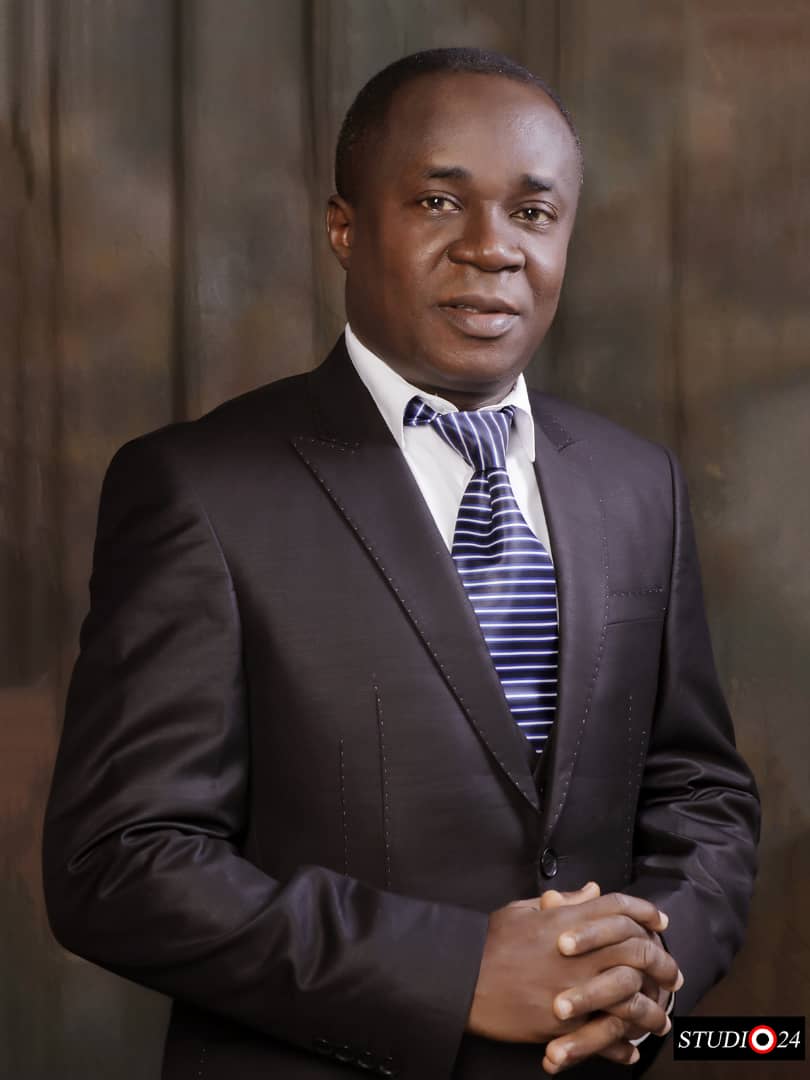
By Uche Uwaleke
The publication of NNPC Limited’s 2025 Audited Financial Statements (AFS) represents another important milestone in the transformation of Nigeria’s national oil company from the opaque institution it was widely perceived to be for decades into a commercially oriented, increasingly transparent and accountable energy company.
More importantly, the accounts provide evidence of a business that is improving its operational performance, strengthening its earnings capacity, generating more cash and gradually repositioning its portfolio towards higher-quality revenue streams.
The decision by NNPC Limited’s management to publish its audited financial statements on schedule and subsequently engage openly with the media, analysts and other stakeholders deserves commendation. This is particularly significant for an organization of NNPC’s size and strategic importance to the Nigerian economy.
The credibility of the 2025 accounts is further strengthened by the independent audit conducted by PricewaterhouseCoopers (PwC), one of the world’s leading professional services firms. PwC issued an unmodified audit opinion on both the consolidated and separate financial statements, concluding that the financial statements fairly present the financial position, financial performance and cash flows of the Group and the Company in accordance with the applicable financial reporting framework.
An unmodified opinion is not, and should not be interpreted as, a certification that every aspect of the company’s operations is efficient or that every management decision is optimal. It does, however, provide important assurance that the financial statements have been subjected to an independent audit and that, in the auditor’s professional opinion, they fairly present the company’s financial position and performance.
The headline financial performance is particularly impressive when considered against the difficult revenue environment in which it was achieved. Profit after tax increased by about 33 percent from ₦5.4 trillion in 2024 to ₦7.2 trillion in 2025, while earnings per share rose by about 32 percent to ₦35.9.
EBITDA increased by 22 percent to ₦18 trillion and net cash generated from operating activities rose by about 16.5 percent from ₦11 trillion to ₦12.8 trillion. The company also declared a ₦5.8 trillion dividend, representing a 35 percent increase over the previous year. These are significant numbers, particularly because they were achieved despite a substantial decline in revenue.
Revenue fell by circa 24 percent to ₦34.5 trillion, principally because of lower crude oil prices and reduced white petroleum product volumes following the deregulation of the downstream petrol market.
The decline in white-product revenue is important because deregulation fundamentally changed the economics and structure of NNPC Limited’s downstream business. While the reform was painful from a top-line revenue perspective, it has also helped to improve the quality of the company’s earnings by reducing its dependence on the lower-margin and subsidy-linked petrol business and increasing the relative contribution of crude oil, natural gas, LNG and other commercially driven activities.
Crude oil and natural gas now account for approximately 91 percent of revenue, compared with 77 percent in 2024, demonstrating a significant shift in portfolio composition.
What makes the 2025 performance particularly noteworthy is that costs declined alongside revenue, but at a pace that allowed margins and earnings to improve. Cost of sales fell by 24.6 percent from ₦33.36 trillion to ₦25.14 trillion, general and administrative expenses declined by about 27.6 percent from ₦3.58 trillion to ₦2.59 trillion, while selling and distribution expenses fell dramatically from ₦145.7 billion to ₦33.1 billion.
Consequently, gross profit margin improved from 26 percent to 27.2 percent, while general and administrative expenses also declined as a percentage of revenue. The figures therefore provide stronger evidence of cost discipline than simply looking at the absolute size of the company’s cost base.
This distinction is important in assessing the criticism surrounding NNPC Limited’s reported total costs of ₦27.76 trillion.
It would be misleading to characterize this entire amount as administrative overhead or discretionary expenditure.
About 91 percent of the total represents cost of sales, while only about ₦33.1 billion relates to selling and distribution and ₦2.59 trillion to general and administrative expenses. For an integrated energy company, cost of sales naturally includes the costs directly associated with producing, purchasing and selling oil, gas and petroleum products.
The 2025 accounts disclose, among other items, ₦4.66 trillion in royalties, ₦4.15 trillion in direct well expenses, ₦2.79 trillion in crude oil purchases, ₦1.86 trillion in gas purchases and ₦1.79 trillion in petroleum products.
The ₦3.71 trillion depreciation charge on oil and gas properties also deserves to be properly understood.
Depreciation is a genuine accounting expense because it recognizes the consumption of the economic benefits of long-lived assets over their useful lives, but it is not a ₦3.71 trillion cash payment made by NNPC Limited during 2025.
Treating the entire depreciation charge as if it represented cash expenditure during the year would therefore distort the interpretation of the accounts. At the same time, statutory payments such as royalties and the NDDC levy should be distinguished from controllable operating costs, while expenses such as gas-flaring charges deserve scrutiny because they can reflect operational inefficiencies and avoidable economic losses.
Proper analysis should therefore distinguish statutory obligations, accounting charges, commodity procurement costs, production costs and genuinely controllable expenditure.
The stronger earnings performance was accompanied by equally encouraging operational results. Crude oil and condensate production reached an average of 1.77 million barrels per day, representing the highest level in five years, while natural gas production reached 7.2 billion standard cubic feet per day, the highest in three years.
Total oil and condensate production increased to 565.8 million barrels, while NNPC Limited’s equity share increased by 11 percent to 223.7 million barrels.
Its equity share of gas production similarly increased by 11 percent to 1,154.9 billion standard cubic feet. The record performance of NNPC Exploration and Production Limited, which reached 355,000 barrels per day, is another indication that the operational improvements are increasingly translating into tangible production gains.
The improvement in production cannot be divorced from the company’s efforts to strengthen the reliability of its infrastructure and address the security challenges that have historically constrained Nigeria’s oil production. The reported average terminal recovery rate of 98 percent between April 2025 and May 2026, compared with operational lows of 1 percent at Bonny in 2022, illustrates the scale of the improvement in operational reliability.
A terminal with a high recovery rate enables a much greater proportion of the oil entering the system to be successfully handled and evacuated, thereby reducing losses and disruptions and creating the infrastructure reliability required to increase production volumes.
In simple terms, having oil underground is not enough; Nigeria must also be able to safely and reliably move it through pipelines and terminals and ultimately sell it.
The progress on gas infrastructure is equally significant.
The completion of the River Niger crossing on the Ajaokuta-Kaduna-Kano pipeline and the reported completion of the 40-inch by 623-kilometre AKK mainline represent important steps towards expanding Nigeria’s ability to transport gas to demand centres.
The commissioning of the ANOH-OB3 Custody Transfer Metering Station and progress towards start-up readiness of the 300 MMscfd ANOH Gas Processing Plant are also important developments. These projects are not merely engineering achievements; they are pieces of infrastructure capable of converting Nigeria’s abundant gas resources into commercially valuable energy, industrial feedstock and government revenue.
The strengthening of the company’s human capital is another noteworthy development. The company has disclosed that more than 1,000 young professionals completed a rigorous one-year internship and training programme before being deployed across the company, an initiative that has been referred to as the “1,000 Tigers” and forms part of NNPC Limited’s Talent-to-Value transformation.
For a company seeking to increase oil production, expand gas monetization, develop midstream infrastructure and create a more commercially competitive downstream business, the quality of its workforce will ultimately be as important as the quality of its physical assets. The reported increase in women’s representation in leadership positions to 23 percent, compared with an industry average of 17 percent, also indicates progress in developing a more diverse leadership structure.
Perhaps the most misunderstood item in the 2025 accounts is the ₦11.2 trillion reported as other receivables from the Federation. It is important to make a fundamental accounting distinction: this is a balance-sheet receivable, not ₦11.2 trillion of fresh security expenditure incurred in 2025. In simple terms, a receivable represents money or value that NNPC Limited says is owed to it.
The company explains that the ₦11.2 trillion comprises ₦8.67 trillion of energy-security receivables and ₦2.53 trillion of other advances and receivables from the Federation.
The background to this balance goes back to the previous year. The 2024 accounts contained an energy-security cost balance of ₦8.67 trillion at year-end, after NNPC Limited had recognised approximately ₦7.13 trillion of energy-security expense during 2024.
These costs related to the approved framework under which NNPC Limited could incur certain costs associated with protecting national oil and gas infrastructure and subsequently recover those costs from the Federation. The important point is that the ₦8.67 trillion was not a new 2025 expense.
NNPC Limited has stated that no energy-security expense was recognised during 2025 and that, following a reconciliation with the relevant government agencies, the energy-security cost receivables were netted against royalties, taxes and dividends due as at December 2024.
The reconciliation was concluded in September 2025. In accounting terms, netting means that instead of one party paying the other and then receiving money back, mutually recognized amounts can be offset.
This clarification is important because the ₦11.2 trillion should not be interpreted as evidence that NNPC Limited suddenly spent ₦11.2 trillion on security during 2025. The figure represents a balance-sheet receivable comprising cumulative amounts due to the company in respect of costs and advances incurred on behalf of the Federation, subject to the reconciliation and settlement arrangements described by management.
The fact that the balance was audited and reconciled with the relevant government agencies further reinforces the importance of examining the accounting substance rather than relying on the headline figure.
Nevertheless, the controversy surrounding the ₦11.2 trillion provides NNPC Limited with an opportunity to improve an already improving disclosure culture. Given the enormous public interest in government-related receivables and energy-security expenditure, future financial statements would benefit from a more detailed movement schedule showing the opening balance, additions during the year, amounts settled in cash, amounts offset against taxes, royalties and dividends, foreign-exchange movements, reclassifications and the closing balance. Similar additional disclosure should be considered for any other material item that is likely to attract significant public scrutiny. Greater granularity would not necessarily indicate a weakness in the accounts; rather, it would reduce the scope for misinterpretation and strengthen public confidence in the financial statements.
The broader story emerging from the 2025 accounts is therefore considerably more positive than the headline decline in revenue might suggest. Revenue fell, but profit increased by one-third; cost of sales declined by roughly one-quarter; administrative expenses fell by more than one-quarter; operating cash flow increased by 16.5 percent; production reached multi-year highs; the company’s equity volumes increased; net debt reportedly declined by 28 percent to ₦15.9 trillion; net assets increased by 15 percent to ₦44.8 trillion; and the dividend increased to ₦5.8 trillion. These are meaningful indicators of a business whose financial performance is becoming less dependent on simply growing the top line.
The transformation should also be viewed within the historical context of the Petroleum Industry Act 2021. For much of its existence since its establishment in 1977, NNPC was widely perceived as an opaque institution, particularly because of the complexity surrounding its commercial activities, government relationships, subsidy arrangements, remittances and financial reporting.
The conversion into NNPC Limited under the PIA fundamentally changed its legal and commercial framework and created an opportunity to operate on a more transparent and commercially accountable basis. The improvement in financial reporting since 2022, culminating in the timely publication of the 2025 audited accounts and direct engagement with analysts and the media, represents a significant cultural change that should be acknowledged and encouraged.
The current management deserves credit for this progress. Publishing audited accounts on schedule, conducting earnings calls, providing detailed explanations of financial performance and responding publicly to criticisms are practices that should become institutionalized rather than dependent on the personalities of individual executives.
The CEO’s willingness to discuss both achievements and remaining weaknesses, including the acknowledgement that NNPC Limited is not yet where it needs to be in unit operating costs and refinery performance, is particularly encouraging. Transparency becomes meaningful when management is prepared not only to highlight favourable numbers but also to acknowledge areas requiring further improvement.
The company’s ambitions, however, are substantial and will require much more than a good set of financial statements. The targets of 2 million barrels per day of crude oil production by 2027 and 3 million barrels per day by 2030, alongside gas production of 10 billion standard cubic feet per day by 2027 and 12 billion by 2030, will require sustained investment, infrastructure reliability, security, technical capability and access to capital.
The planned mobilization of $60 billion across the energy value chain by 2030 therefore represents both an opportunity and a formidable execution challenge. Meeting these targets will be the ultimate test of whether the operational transformation evident in 2025 can be sustained over several years.
The same principle applies to the refineries. The Technical Equity Partnership model and the MoU signed in April 2026 with prospective Chinese partners provide a potentially more commercially disciplined approach to completing and operating the Port Harcourt and Warri refineries. However, the public should judge this initiative by definitive agreements, capital commitments, rehabilitation milestones, operating performance and commercial returns rather than announcements alone.
Management’s stated determination not to repeat cycles of announcements without delivery is therefore welcome.
There is also a broader governance opportunity that NNPC Limited should seize as it continues its transformation. The company’s stated ambition to become globally competitive should ultimately include a clearly articulated programme for its proposed listing on the Nigerian Exchange. Rather than treating a future listing merely as an event, NNPC Limited could develop a transparent, multi-year listing-readiness programme with measurable milestones covering financial reporting, corporate governance, board independence, disclosure standards, audited financial history, subsidiary restructuring, investor relations, dividend policy, capital structure and other requirements necessary for a successful public offering.
The experience of Saudi Aramco provides a useful benchmark in this regard. Saudi Aramco’s eventual listing on the Tadawul was preceded by a prolonged process of preparing the company, strengthening disclosure, establishing governance structures and positioning the business for public-market scrutiny. NNPC Limited need not replicate Saudi Aramco’s model because Nigeria’s institutional, fiscal and capital-market circumstances are different, but it can draw an important lesson from it: a successful listing is the culmination of years of institutional preparation, not simply the decision to sell shares. A published NNPC Limited listing-readiness roadmap, with annual targets and publicly reported progress, would provide investors and Nigerians with an additional measure of accountability.
Overall, NNPC Limited’s 2025 Audited Financial Statements should be regarded as a strong and encouraging set of results. The company increased profit significantly despite a major fall in revenue, generated more operating cash, reduced its major cost categories, improved its margins, increased production, strengthened its balance sheet and declared a substantially higher dividend. More importantly, the operational improvements suggest that the financial performance is being supported by real changes in production, infrastructure reliability, gas development and organizational capability.
The accounts do not establish that every aspect of NNPC Limited is efficient, nor should they shield the company from legitimate scrutiny. A world-class national energy company must be prepared to explain its costs, government receivables, capital allocation, security expenditure, refinery investments and returns with increasing levels of precision.
But scrutiny should be based on the substance of the accounts rather than headline numbers taken out of context. On that basis, the 2025 results provide considerable evidence that NNPC Limited is moving in the right direction.
The most encouraging aspect of the 2025 performance is therefore not simply the ₦7.2 trillion profit. It is the combination of stronger earnings, stronger cash generation, higher production, improved infrastructure reliability, a more resilient portfolio and increasingly transparent reporting. NNPC Limited has moved a considerable distance from the institution Nigerians knew for decades.
The task now is to institutionalize these gains, deepen disclosure, strengthen governance, execute the ambitious investment programme and ultimately demonstrate that the transformation can produce sustained value for shareholders, the Federal Government and, most importantly, the Nigerian people.
Prof Uche Uwaleke FCMA is Director of the Nasarawa State University Institute of Capital Market Studies and President of the Capital Market Academics of Nigeria

The Federal Government said it has established 10 radio diagnostic centres to enhance diagnosis and treatment of diseases in the country.
Coordinating Minister of Health and Social Welfare, Dr Ali Pate, said this during a courtesy visit to Gov.
Bala Mohammed, on Monday in Bauchi.He said that the centres were established through the Medical and Diagnostic Services (MEDSERVE) initiative, and the Nigeria Sovereign Investment Authority (NSIA).
Pate said that the Bauchi centre, located at the Abubakar Tafawa Balewa University Teaching Hospital (ATBUTH), was among the 10 projects initiated in the last two years.
“Two years ago, we laid the foundation for the first one here in Bauchi, a world-class radio-diagnostic centre, the facility has been completed, and all the 10 facilities all over Nigeria have been completed.
“This marks the largest expansion of health infrastructure and equipment in Nigeria’s history,” he said.
Pate said that the Bola Tinubu administration also completed three world-class cancer centres as part of efforts to expand specialised healthcare services.
He said that Bauchi would host the first inauguration, followed by another centre in Ibadan, while the remaining centres would be commissioned subsequently.
The minister highlighted that the projects demonstrated Tinubu’s commitment to revitalising Nigeria’s health sector through modern diagnostic equipment, infrastructure, quality healthcare services, training and research.
Pate said that the federal government would continue to collaborate with state governments, to improve healthcare delivery across the country.
According to Pate, plans are underway for the establishment of a major multi-specialty hospital in each of the six geopolitical zones.
Also, Taiwo Oyedele, Minister of Finance and Coordinating Minister of the Economy, said the diagnostic centre demonstrated how the federal government’s economic reforms were being translated into tangible development projects.
He said that the reforms were aimed at stabilising the macro-economy, restoring investor confidence and strengthening institutions to create an enabling environment for more development projects.
Oyedele underscored the importance of collaboration between the federal and state governments in delivering infrastructure and improving the welfare of Nigerians.
“We will continue to work with Bauchi state and with every state to turn macroeconomic stability into tangible outcomes for our people; better healthcare, better infrastructure and a more productive economy,” he said.
Responding, Mohammed commended Tinubu for approving the establishment of two army formations in Alkaleri and Tafawa Balewa Local Government Areas of the state.
He said the federal government’s security intervention had contributed significantly to the restoration of peace and the return of displaced persons to their communities.
Mohammed acknowledged other federal government interventions in the state, including the establishment of the University of Health Sciences and the Federal Medical Centre Misau.
“We cannot play politics with health and education. We cannot play politics with services.
“We are very grateful to Mr President for what he has done for Bauchi, particularly in the areas of health and security,” he said.
Mohammed said that the diagnostic centre would complement the state government’s efforts to provide quality and affordable healthcare services to residents.
He also assured support of the federal government’s initiatives aimed at improving the welfare of Nigerians. (NAN)

By Tambaya Julius, Abuja
The Federal Government has assured families of the 37 suspected miners who died in the custody of the Nigeria Security and Civil Defence Corps (NSCDC) in Niger State that it will investigate the incident and ensure that anyone found culpable faces the law.
Vice President Kashim Shettima gave the assurance on Monday during a condolence visit to Minna, where he conveyed President Bola Tinubu’s sympathies to Governor Mohammed Bago, the bereaved families and the people of Niger State.
The 37 men died on September 17 after they were detained by the NSCDC over alleged illegal mining.
The circumstances surrounding their deaths have yet to be established.
Shettima announced a Federal Government donation of ₦250 million to support the families of the deceased.
According to him, President Tinubu had ordered a comprehensive investigation into the incident, resulting in the constitution of a 10-member independent investigative committee and the suspension of officers linked to the case pending the outcome of the probe.
Describing the deaths as “a blot on our national conscience,” Shettima said the government’s responsibility to protect citizens does not end when they are taken into custody.
“No parent should receive a body when they are waiting for a son to come home,” he said.
The Vice President said the government would not prejudge the investigation but would ensure that the circumstances surrounding the deaths are fully established and those responsible identified.
“On President Tinubu’s directive, an independent investigative panel has been constituted to establish the facts, determine responsibility and lay the foundation for justice and closure,” he said.
Shettima stressed that being in custody does not strip anyone of their right to protection by the state.
“A citizen deprived of liberty remains entitled to the protection of the state. No allegation, however grave, diminishes that entitlement. No uniform confers immunity from accountability,” he said.
He added that anyone found culpable would be made to answer before the law.
“We owe justice to every soul lost, answers to every bereaved family and due process to every person under investigation. Whoever is found culpable must answer before the law.
Our duty to you outlives this visit,” the Vice President said.
The investigative committee is expected to determine the circumstances surrounding the deaths and recommend measures to prevent a recurrence.
The committee is chaired by retired Deputy Director-General of the Department of State Services, Jonathan Kure, while former Director-General of the Nigerian Law School, Prof. Isa Hayatu Chiroma, SAN, serves as secretary.
Shettima said the incident should also serve as a reminder to law enforcement agencies of their duty to protect human dignity while enforcing the law.
“We have come to you today without the togas of partisan politics. We come as sympathisers, as parents, as uncles and aunts, as brothers and sisters, and, above all, as leaders entrusted with your protection,” he said.
“We have come to share your grief, to hear your concerns, to stand beside the bereaved and to reaffirm our obligation to protect every citizen, without distinction or exception.”
The Vice President commended Governor Bago for supporting the search for justice and providing assistance to those affected.
“Every victim deserves dignity, every survivor deserves care, and every family deserves the truth,” he said.
He also prayed for God’s mercy on the deceased and strength for their families to bear the loss.
Governor Bago thanked Shettima for visiting Niger State on behalf of President Tinubu, describing the visit as a demonstration of empathy and solidarity with the affected families.
He noted that both Tinubu and Shettima were outside the country when the incident occurred, with the President on annual leave and the Vice President representing Nigeria at the United Nations General Assembly.
Bago said the President’s message had been clearly conveyed to the bereaved families and the people of the state.
He, however, stressed that the immediate purpose of the visit was to mourn with the families and offer condolences.
“Your message has been delivered clearly to the families and the people of Niger State that upon your return, insha Allah, you are here today. You have made it; we thank you,” the governor said.
Also speaking, the governor’s Principal Private Secretary, Emmanuel Umar, said the deaths had left the affected families, communities and the entire state in grief.
Umar said Shettima’s visit showed that the President stood with the affected families, adding that the Vice President came not only in his official capacity but also as a leader sharing in the pain of the people.
After the Niger State visit, Shettima proceeded to Maiduguri, Borno State, where he condoled with Governor Babagana Zulum over the death of his sister, Amina (Inna) Zulum.
The Vice President prayed for Allah to grant her Aljana Firdaus and give the family the fortitude to bear the loss.




NNPCL 2025 AFS: The Numbers Tell a Story of Transformation
ShareBy Uche Uwaleke The publication of NNPC Limited’s 2025 Audited Financial Statements (AFS) represents another important milestone in the transformation...


Portuguese Football Federation Backs Ronaldo to Continue with Portugal
ShareThe Portuguese Football Federation has reaffirmed its support for Cristiano Ronaldo’s continued involvement with the national team, with president Pedro...

A Nation Divided as Ronaldo Left with Big Decision on Portugal Future
ShareAs Lionel Messi prepares to get a hero’s farewell for his successful international career, Cristiano Ronaldo’s could have ended with...


FG Establishes 10 Radio Diagnostic Centres to Boost Healthcare Service Delivery
ShareThe Federal Government said it has established 10 radio diagnostic centres to enhance diagnosis and treatment of diseases in the...


Customs Auctions 22,175 Litres of Seized Petrol for N32.1m
ShareBy Tambaya Julius, Abuja The Nigeria Customs Service (NCS) has auctioned 22,175 litres of Premium Motor Spirit (PMS) seized by...


NNPCL: Accounting for Fuel Subsidy
ShareBy Uddin Ifeanyi I am not an accountant, so my opinion on the NNPCL’s recently released 2025 annual financial report...

Can ECOWAS Parliament Turn Climate Commitments into Regional Action?
ShareBy Mark Longyen West Africa’s climate crisis is becoming harder to separate from the region’s familiar struggles with poverty, displacement,...

2027 Elections: INEC Voter Register Hits 103m
ShareBy Tambaya Julius, Abuja The Independent National Electoral Commission (INEC) said Nigeria’s voter register has risen to more than 103...

Niger 37: FG Pledges Accountability Over Deaths of Miners in NSCDC Custody
ShareBy Tambaya Julius, Abuja The Federal Government has assured families of the 37 suspected miners who died in the custody...


11-year-old Girl Found Dead in Suleja Well, Church Guard Arrested
ShareFrom Dan Amasingha, Minna The disappearance of 11-year-old Christabel Albert after she left home for a birthday celebration has ended...