
NEWS
Ododo Clears N98.8 Billion Debt, Tasks Officials On Grassroots Engagement, Local Patronage


From Joseph Amedu, Lokoja
Governor Ahmed Usman Ododo has charged government officials to remain close to the grassroots and ensure constant engagement with the people, noting that such connection is key to responsive governance. Ododo gave the charge during the State Executive Council Meeting held in Lokoja on Monday.
“We are in government to serve the people, and that means staying connected to their needs and aspirations,” the Governor said. As part of efforts to boost the local economy, the Governor also directed all government officials to wear Made-in-Kogi fabrics as a show of support for indigenous industries. He encouraged Kogites to take pride in local products and lead a cultural and economic renaissance from within. Also Briefing journalists after the meeting, the Commissioner for Information and Communications, Hon. Kingsley Femi Fanwo, said the administration is committed to making governance more visible and impactful. “Governor Ododo is driving a government that listens, learns, and leads from the grassroots. His directive on Made-in-Kogi fabrics is a strategic move to grow our economy and export our identity,” Fanwo said. On infrastructure, Fanwo disclosed that perimeter fencing at the Confluence University of Science and Technology (CUSTECH), Osara is 90% completed, while both male and female hostels have been completed and are already housing students. Similar projects at the Kogi State University, Kabba, are progressing satisfactorily. To improve public safety, the Council also approved a bill to restrict the movement of heavy trucks during peak hours. Another bill was approved for the establishment of the Kogi State Agency for Climate Change as part of a forward-thinking response to global environmental challenges. In a separate briefing, the Commissioner for Finance, Budget and Economic Planning, Mukadam Asiwaju Asiru Idris, announced that the Ododo administration has fully liquidated N98.8 billion in debts inherited from previous administrations within just 15 months. The breakdown includes,N8 billion in bonds from the Idris Wada administration,N50.8 billion salary bailout from the last administration,N10 billion ECA-backed infrastructure loan,N15 billion infrastructure loans from Zenith Bank and another N15 billion from UBA Plc.“This is a landmark achievement. His Excellency Governor Ododo has demonstrated fiscal discipline and commitment to economic recovery. Within 15 months, we have cleared N98.8 billion in inherited debt,” Idris said.He added that Fitch Ratings has upgraded Kogi State’s credit rating from ‘B-’ to ‘B’, with a stable outlook, citing prudent financial management. As of September 30, 2024, the state’s debt profile stands at N40.5 billion, placing it on a strong path to debt sustainability.
From Attah Ede, Makurdi
Internally Displaced Persons (IDPs) in Benue State have poured praises on the United Nations Children’s Fund (UNICEF) and its funder, the Swedish International Development Cooperation Agency (Sida), for transforming their camps with clean water, toilets, bathrooms, schools, and healthcare.
Speaking during a UNICEF media field work and tour to Ichwa IDPs camp located in Northbank area of Makurdi, some of the beneficiaries attested that, before now, the camp had no good toilets, adding that open defecation was common and children fell sick every day, while the borehole was so bad that residents were allowed to fetch only one bucket each before it broke down.
A beneficiary Mercy Terna said UNICEF had made their environment clean and also, provided detergents and other women items for them, stressing that UNICEF had trained hygiene promoters who permanently take care of the camp.
She said health care delivery is rendered free as well as education of their children.
According to the mother of 5 children, learning materials are distributed to the children freely.
Another beneficiary Simon Kpamegh who is the camp leader collaborated Mercy’s comments stating that hitherto, they had to trek long distance to Asase access medical care.
Before now, for us treatment but UNICEF built a clinic in the camp, provided medications and trained medical personnel to cater for their health needs.
He said UNICEF renovated latrines, ensured that they are cleaned as well as fumigated the entire camp and distributed educational items to the school.
“I have three children and all of them are learning free of charge. UNICEF also give other household items including buckets.
Youth leader of the host community Jacob Ayege said they have been working very hard with UNICEF to peace and protection of the IDPs especially children.
Sectoral intervention
Education
Mrs Mimi Kiva Assistant Head teacher disclosed that there are over 500 children in nursery and primary section.
She said UNICEF supported by Sida provided learning materials such as white board with markers, books and desks, adding that they trained care givers to cater for people with special needs
Health and Nutrition
Dr Asawa Celestine, a medical doctor engaged by UNICEF with support of Sida said the IDPs are treated freely for malaria and back ache for the elderly, while 10 pregnant women in the camp at the moment, receive adequate pre-natal and anti-natal care to ensure safe delivery.
“There is no mortality case. There is also no case of malnutrition amongst children. UNICEF with support of Sida ensure adequate health care delivery to improve the health of the IDPs”, Dr Asawa said.
Similarly, Sandra Terhemba Immunization Assistant working for UNICEF-Sida said 5,000 children have been immunized frequently since 2023, maintaining that there is no outhreak of disease in the camp.
A care giver Judith Anamba, an auxiliary worker with JASPI said the organization in collaboration with UNICEF holds regular meeting with the IDPs to discuss their welbeing, saying that such engagements have been veru helpful
Camp Manager
Mrs Msurshima Apaa, Ichwa camp manager intimated that UNICEF-sida built 1 block of 5 compartment of latrine with sato pans for people with special needs to enhance equity and inclusion.
She said hygiene promoters have been trained by UNICEF to clean the camp daily while two (2) supervisors inspect the sanitary condition of the camp on a daily basis
The camp manager said UNICEF-Sida engaged medical team to handle major and minor illnesses freely to the IDP while also providing dignity kits to the 568 households and 1,586 individuals.
During the field work embarked upon by Journalists to the camp located at North Bank during when they toured UNICEF facilities in different sectors including education, health and nutrition, Water Sanitation and Hygiene, WASH
By Tony Obiechina, Abuja
The Central Bank of Nigeria (CBN), in exercise of powers conferred on it by the
Banks and Other Financial Institutions Act, 2020, has appointed Mr Murtala
Mohammed as Acting Managing Director/Chief Executive Officer of Keystone
Bank Limited.
He succeeded Mr Hassan Imam, with effect from November 26, 2026.
In a statement by CBN Director of Corporate Communications and Investor Relations, Mr Michael Akuka on Thursday night,
the appointment is consistent with the CBN’s mandate to promote a safe,
sound and stable financial system.
According to the statement, “The CBN wishes to reassure depositors, customers and other stakeholders that
Keystone Bank Limited remains fully operational, with banking services
continuing as normal and depositors’ funds remain secure”.
“The CBN remains committed to safeguarding depositors’ interests and ensuring
the continued soundness and stability of Nigeria’s banking sector”, the statement added.

By Tony Obiechina, Abuja
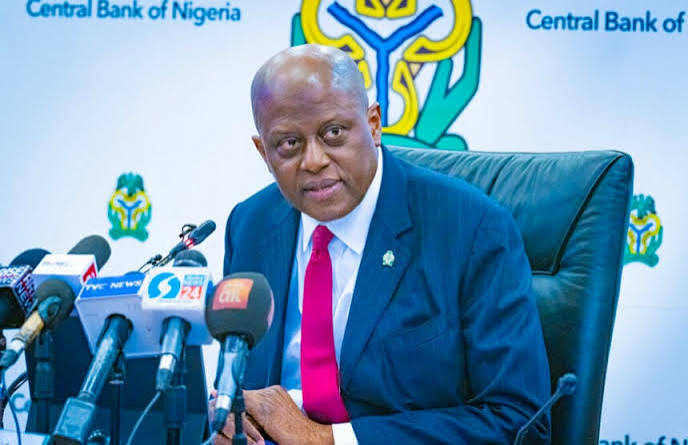
The Monetary Policy Committee (MPC) of the Central Bank of Nigeria (CBN) has retained the benchmark interest rate at 23 per cent, citing the need to consolidate gains in inflation moderation amid emerging risks from election-related spending, increased festive season expenditure and global energy price uncertainties.
The CBN Governor, Olayemi Cardoso, announced the decision on Tuesday at the end of the committee’s 308th meeting, held on November 23 and 24, 2026, in Abuja, with 10 members in attendance.
Cardoso said, “The Committee decided as follows: retain the Monetary Policy Rate at 23 per cent.
”The committee also retained the Standing Facilities Corridor at plus 50 and minus 300 basis points around the Monetary Policy Rate (MPR). It maintained the Cash Reserve Requirement (CRR) for deposit money banks at 45 per cent, merchant banks at 16 per cent and non-Treasury Single Account public sector deposits at 75 per cent.
The decision follows the 350-basis-point reduction in the benchmark interest rate from 26.5 per cent to 23 per cent in September 2026. The apex bank had earlier reduced the rate by 50 basis points in February before retaining it at subsequent meetings ahead of the September adjustment.
Explaining the decision, Cardoso said although headline inflation had moderated for five consecutive months, the committee considered prevailing economic developments and potential inflationary pressures that could undermine the progress recorded.
He said the anticipated increase in spending associated with the end-of-year festive season and election-related activities could stimulate aggregate demand and exert upward pressure on prices.
The committee also expressed concern over the ongoing conflict in the Middle East, which could sustain pressure on global energy prices, as well as adverse weather conditions that could disrupt food production and supply.
According to the latest Consumer Price Index report released by the National Bureau of Statistics (NBS), Nigeria’s headline inflation rate declined to 14.06 per cent in October 2026 from 14.63 per cent in September, representing a reduction of 0.57 percentage points.
Core inflation also fell to 10.78 per cent from 12.95 per cent, while food inflation moderated to 19.13 per cent from 19.59 per cent, reflecting easing price pressures on processed food and farm produce following the commencement of the harvest season.
Cardoso attributed the sustained moderation in inflation to exchange rate stability, improved monetary policy transmission and the impact of the CBN’s restrictive monetary policy stance.
He also disclosed that economic activities had continued to expand, with the Composite Purchasing Managers’ Index rising from 53 points in September to 53.2 points in October, indicating improved performance across the industrial, agricultural and services sectors.
Responding to questions from journalists, the governor said the September interest rate adjustment was yielding the intended results, noting that interbank lending rates were moving closer to the lower band of the Standing Facilities Corridor.
He added that rates on Open Market Operations instruments and Treasury bills had moderated, while the gap between the benchmark interest rate and prevailing market rates had narrowed considerably.
Cardoso also disclosed that credit to the private sector was gradually recovering, expressing satisfaction with the improvement in lending activities.
He explained that the September adjustment was designed to align the benchmark interest rate with prevailing market realities and improve monetary policy transmission, rather than signal a departure from the bank’s restrictive monetary policy stance.
On concerns over recent pressure on the naira and the decline in external reserves, the CBN governor described the developments as temporary and largely seasonal, expressing confidence in the sustainability of exchange rate stability.
Nigeria’s gross external reserves stood at $54.02 billion as of November 17, 2026, providing cover for 10.26 months of imports of goods and services.
Cardoso attributed the recent foreign exchange market volatility to year-end portfolio adjustments by foreign investors, increased demand for foreign exchange by domestic businesses seeking to hedge against future risks and rising election-related expenditure.
He further disclosed that diaspora remittances exceeded $900 million in the preceding month, adding that Nigeria’s current account surplus and sustained remittance inflows would strengthen the country’s external buffers.
The governor assured Nigerians that the apex bank would continue to deploy available policy measures to preserve exchange rate stability.
On the recently signed Memorandum of Understanding between the CBN and the Nigerian National Petroleum Company Limited (NNPCL), Cardoso said the agreement followed months of consultations between both institutions.
He explained that the partnership was designed to improve transparency in the management of oil-related foreign exchange inflows, deepen the foreign exchange market, strengthen external reserves and support the financing of energy projects.
According to him, the CBN would also deploy its advisory expertise and convening power to support the operations of the national oil company.
Looking ahead to 2027, Cardoso reaffirmed the apex bank’s commitment to policy consistency, stronger coordination between fiscal and monetary authorities, sustained banking sector stability and further improvements in monetary policy transmission.
He reiterated that achieving single-digit inflation remained the bank’s overriding objective.
The committee projected a positive outlook for the domestic economy, supported by improved crude oil production and sustained expansion across the agricultural, industrial and services sectors.
However, it cautioned that elevated global energy prices, trade policy uncertainty, supply chain disruptions, cyber threats and diminishing fiscal space remained significant risks to the global economic outlook.
The committee maintained that sustaining the gains in price stability would require continued policy discipline and vigilance against emerging domestic and external inflationary pressures.


Benue IDPs Praise UNICEF over Provision of Facilities
ShareFrom Attah Ede, Makurdi Internally Displaced Persons (IDPs) in Benue State have poured praises on the United Nations Children’s Fund...

CBN Appoints Acting MD/CEO ofKeystone Bank
ShareBy Tony Obiechina, Abuja The Central Bank of Nigeria (CBN), in exercise of powers conferred on it by theBanks and...

3,526 Primary Healthcare Centres Revitalised – FG……… Tasks Health Journalists on Accountability
ShareBy Laide Akinboade Abuja The Federal Government (FG), on Thursday, disclosed that 3,526 primary healthcare centres had been revitalised, while...

Court Nullifies Omo-Agege’s NDC Senatorial Candidacy
ShareFrom Francis Sadhere, Delta The Federal High Court sitting in Warri, Delta State, has nullified the nomination of former Deputy...


APC Mourns 15 Supporters Killed In Zamfara Road Accident
ShareBy Orjime Moses, Abuja The All Progressives Congress (APC) has mourned 15 of its members and supporters reportedly killed in...
Ortom ‘Ranched’ Benue People in IDP Camps Instead of Cattle – Tondo
ShareFrom Attah Ede, Makurdi Former Benue State Commissioner for Lands and Survey, John Tondo, has criticised former Governor Samuel Ortom...

2027: INEC Chairman Seeks Stronger Security Cooperation Ahead Of Elections
ShareBy Orjime Moses, Abuja The Chairman of the Independent National Electoral Commission (INEC), Prof. Joash Ojo Amupitan, SAN, has called...


CBN Retains Interest Rate at 23 Per Cent
ShareBy Tony Obiechina, Abuja The Monetary Policy Committee (MPC) of the Central Bank of Nigeria (CBN) has retained the benchmark...


2027: Emovworho Warns Delta Politicians Against Exploiting Youths
ShareBy Orjime Moses, Abuja A concerned son of the Urhobo Nation, Austin Obule Emovworho, has warned political leaders in Delta...

Katsina Suspends Daura Emir, Orders Probe into Sexual Assault Allegation
ShareBy David Torough, Abuja The Katsina State Government has suspended all official engagements and travels of the Emir of Daura,...