
Oil & Gas
Dangote’ s Compressed Natural Gas Distribution Project Gulps N720bn

By David Torough, Abuja
Dangote Petroleum Refinery has invested over N720 billion to implement its landmark initiative of deploying 4,000 Compressed Natural Gas (CNG)-powered trucks for the nationwide distribution of petroleum products, which is expected to save Nigerians over N1.
7 trillion annually.This bold step will see the privately-owned refinery absorb over N1.
07 trillion annually in fuel distribution costs. The initiative is also poised to significantly benefit over 42 million Micro, Small and Medium Enterprises (MSMEs) by reducing energy costs and enhancing profitability.The initiative, which eliminates transportation costs for fuel marketers and large-scale consumers, is expected to help reduce pump prices and inflation.
From August 15, Dangote will begin the direct delivery of petrol and diesel to filling stations, industrial facilities and other high-volume consumers.
According to a statement from the refinery, it aims to meet Nigeria’s daily consumption of 65 million litres of refined petroleum products. This includes 45 million litres of Premium Motor Spirit (PMS), 15 million litres of diesel and five million litres of aviation fuel.
With the average logistics cost estimated at N45 per litre, the refinery will cover over N1.07trn annually in free distribution expenses.
Dangote Group is investing N720 billion in the acquisition of 4,000 CNG-powered trucks as well as the establishment of nationwide CNG ‘mother and daughter’ stations, among other infrastructure to implement the free distribution initiative.
This strategic programme forms part of Dangote’s broader commitment to eliminating logistics bottlenecks, enhancing energy efficiency, promoting environmental sustainability and supporting Nigeria’s economic development. The company noted that lower fuel distribution costs will help reduce production costs, ease inflationary pressures and stimulate economic growth.
The initiative is also expected to resuscitate dormant filling stations, fostering job creation in the process.
Over 15,000 direct jobs are projected to be created across the logistics chain, including drivers, station managers, and attendants at the CNG stations.
The refinery also emphasised that this programme would help curb cross-border smuggling of petroleum products and support a more efficient and environmentally friendly distribution system.
The Presidency has described the initiative as a pivotal moment in the Federal Government’s push to mainstream gas-powered transportation.
Commercial Coordinator of the Presidential Compressed Natural Gas Initiative (PCNGI), Tosin Coker, praised the move as a strong vote of confidence in Nigeria’s gas-fueled future.
“Dangote Group’s acquisition of 4,000 CNG trucks is not only impressive in scale but also highly strategic,” he said. “It signals to the market that CNG is no longer a distant prospect but a current, practical solution to high energy costs, emissions, and supply chain challenges. PCNGI regards this as a milestone achievement in our efforts to accelerate gas-powered transport adoption.”
The Independent Petroleum Marketers Association of Nigeria (IPMAN) also commended the development, calling it a timely resolution to longstanding challenges in the downstream sector.
IPMAN’s National Publicity Secretary, Chinedu Ukadike, stated that the new model would significantly reduce logistical burdens for independent marketers by delivering more affordable fuel directly to filling stations.
“Our pipelines have been non-functional for years, yet nothing has been done to revive the infrastructure linking the country’s 21 depots. We’ve had to rely on expensive transport from coastal depots,” Ukadike said. “Dangote’s intervention lifts a huge burden off the shoulders of independent marketers.”
Development Economist and Policy Analyst, Professor Ken Ife, said Dangote’s CNG initiative would drive down the price of PMS and yield widespread benefits for Nigerians.
The CEO of Financial Derivatives Company, Bismarck Rewane, dismissed concerns about the refinery becoming a monopoly, arguing that inefficiencies in the sector have been systemic and long-standing. He added that the scheme would help curb the parasitic role traditionally played by middlemen.
“What Dangote is doing achieves two key objectives: delivering products across the entire country at a uniform price by eliminating bridging costs, and significantly reducing logistics expenses through the use of CNG-powered trucks to reach every corner of the nation.
“In economic terms, middlemen—who typically do not invest—are often viewed as parasitic, extracting margins simply for distributing goods. Dangote is bypassing this layer by directly handling distribution and, notably, providing credit facilities to the retail end of the business,” he said.
Energy expert and co-founder of Dairy Hills, Kelvin Emmanuel, said Dangote’s decision to absorb logistics costs marks a turning point that could finally allow Nigerians to enjoy the benefits of local refining.
Energy analyst Ibukun Phillips described the move as “revolutionary”, suggesting it could reshape Nigeria’s energy sector by improving affordability and access, particularly in rural communities.
“Rural consumers, who typically pay more despite earning less, stand to benefit immensely. This could also revive abandoned filling stations and promote equitable distribution,” she explained.
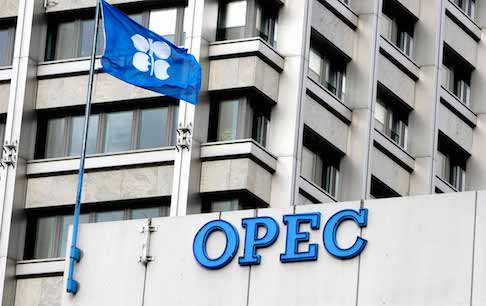
The Organization of the Petroleum Exporting Countries (OPEC), has revised downward its 2026 global oil demand growth estimates, citing expected slower consumption growth in advanced economies, where collective demand will rise by only 100,000 barrels per day.
The cartel said it now expects global oil demand growth to reach 1.
2 million barrels per day in 2026, down from its previous forecast of 1. 4 million barrels per day, explaining that the revision would bring total global oil consumption to 106.3 million barrels per day.In Europe, oil demand will decline by 30,000 barrels per day as weaker economic activity weighs on consumption, OPEC, said in its monthly oil market report.
The OPEC also expects some Asian economies, particularly Japan, to record slower demand growth. The organization forecast Japanese oil consumption to fall by 80,000 barrels per day.
However, strong demand from major emerging economies partly offset these weaker signals.
The OPEC said China would add 250,000 barrels per day to global demand, supported by its petrochemical industry. The organization also forecast India to increase demand by 200,000 barrels per day, driven by infrastructure spending and growth in vehicle ownership. Overall, OPEC expects emerging economies and developing countries to contribute an additional 1.1 million barrels per day to global oil consumption in 2026.
The OPEC’s revision aligns with a broader reassessment of global oil demand expectations.
In its May 2026 report, the International Energy Agency projected a much sharper downturn. The agency forecast a contraction of 420,000 barrels per day in global oil demand for the full year rather than a slowdown in growth.
The gap between the two institutions now exceeds 1 million barrels per day, highlighting the uncertainty surrounding the market outlook.
Both reports identified the near-closure of the Strait of Hormuz as a major factor behind market instability. According to the U.S. Energy Information Administration, six Gulf countries collectively reduced production by 10.5 million barrels per day in April, marking what the agency described as an unprecedented contraction outside pandemic periods.
As supply shortages intensified, oil producers outside the Middle East moved to increase production to offset part of the missing volumes. Several African producers, including Nigeria, Libya and Angola, benefited from rising demand for Atlantic Basin crude among Asian and European buyers that lost access to Gulf oil supplies, according to the IEA.
However, not all African producers can fully capitalize on the opportunity. Nigeria, Africa’s largest oil producer and an OPEC member, nonetheless showed encouraging momentum. According to provisional data published on May 15 by the Nigerian Upstream Petroleum Regulatory Commission, the country increased oil production from 1.546 million barrels per day in March to 1.663 million barrels per day in April 2026.
The Nigerian Content Development and Monitoring Board (NCDMB) has reaffirmed that compliance with Nigerian Content regulations in the oil and gas industry remains non-negotiable.
The Executive Secretary of NCDMB, Felix Ogbe, stated this on Tuesday at the 2026 Nigerian Oil and Gas Midstream and Downstream Stakeholders Summit in Lagos.
Ogbe was represented by Austin Uzoka, Head of the Directorate of Planning, Research and Statistics.
He said the midstream and downstream sectors remained vital to Nigeria’s economic expansion, industrialisation and job creation efforts.
The summit focused on the theme, ‘Unlocking, Growing and Sustaining Nigerian Content Development in Nigeria’s Oil and Gas Midstream and Downstream Sectors.’
Ogbe described the gathering as a strategic platform for shaping the future direction of Nigeria’s energy industry and strengthening indigenous participation.
According to him, reforms, improved regulatory clarity and growing investor confidence are repositioning Nigeria as a leading oil and gas investment destination in Africa.
He noted that the Board, established under the Nigerian Oil and Gas Industry Content Development Act 2010, continued promoting local capacity development and technology transfer.
Ogbe added that the Board had also advanced employment opportunities for Nigerians across several segments of the oil and gas industry.
He said Nigerian companies had recorded significant achievements in upstream operations, particularly in exploration, drilling, engineering, fabrication and project management activities.
According to him, the next growth phase lies within the midstream and downstream sectors of the nation’s petroleum industry.
He identified gas processing, transportation infrastructure, storage facilities, LPG and CNG distribution, refining and petrochemical development as major investment opportunities.
Ogbe said Nigeria was gradually reducing dependence on imported refined petroleum products through increased local refining and processing capacity.
He described the Dangote Refinery as a strong symbol of Nigeria’s industrial ambition, energy independence and economic self-sufficiency.
Ogbe stated that modular refineries were equally opening fresh opportunities for indigenous participation, local investment and improved national energy security.
He also highlighted ongoing gas commercialisation projects as important drivers of industrialisation and value addition within the domestic economy.
The NCDMB boss specifically referenced the Nigeria LNG Train 7 project and the Federal Government’s Presidential Initiative on Compressed Natural Gas.
According to him, both initiatives would strengthen domestic gas utilisation and support broader industrial growth across the country.
While emphasising the Board’s regulatory responsibilities, Ogbe insisted that compliance with Nigerian Content requirements remained central to industry operations.
“Compliance remains non-negotiable, but it must also be practical, implementable and supportive of investment and business growth,” he said.
He urged policymakers, investors, operators and service providers to deepen collaboration in order to maximise opportunities within the sector.
Ogbe said stronger partnerships would help drive sustainable economic growth, industrial capacity and long-term competitiveness in Nigeria’s energy industry.
The two-day summit attracted major stakeholders from the oil and gas industry to discuss strategies for expanding local content development.
Participants also examined ways to strengthen industrial capacity and improve Nigeria’s competitiveness within the global energy market.
Dangote Petroleum Refinery has reduced the price of aviation fuel, also known as Jet A1, from N1,750 to N1,650 per litre.
The company said the move is aimed at reducing the financial burden on airline operators and ensuring steady fuel supply across the country.
The development was announced in a statement issued on Tuesday in Lagos by the company’s spokesperson, Anthony Chiejina.
According to him, the refinery also introduced a 30-day interest-free credit facility for marketers and airline operators backed by bank guarantees.
He added that the company had also changed its pricing structure from dollar-based transactions to payments in Naira, a move expected to ease pressure on local operators.
Chiejina stated that the reduction was necessary due growing concerns over the rising operational costs in Nigeria’s aviation sector.
According to him, aviation fuel accounts for a major part of airline expenses.
He said, “Industry stakeholders have repeatedly warned that the increasing cost of Jet A1 fuel was putting serious financial pressure on domestic airlines and threatening smooth flight operations.
“The refinery’s latest decision is expected to provide relief for airline operators by lowering fuel costs, improving operational stability and supporting efforts to reduce airfares for passengers.”




Tinubu To Commission Fruit Juice Factories, BIPC Motorcycle Assembly Plant In Benue
ShareFrom Attah Ede, Makurdi President Ahmed Bola Tinubu is set to visit Benue State to commission the newly built ultra modern Bensono Concentrate Plant, Benva Juice Factory, and the Motorcycle Assembly...

Dangote Refinery Surpasses Capacity Target, Eyes 1.4m bpd Expansion
ShareBy David Torough, Abuja Dangote Petroleum Refinery and Petrochemicals has achieved a major operational milestone by increasing its crude oil processing capacity to 700,000 barrels...


Alia Appoints New Acting Head of Service in Benue
ShareFrom Attah Ede, Makurdi Benue State Governor, Rev Fr .Hyacinth Alia has approved the appointment of Dr. Ihu Eunice Ogbenyi as new Acting Head of Service (HoS)...
Oshonaike Hails Steady Progress of Nigerian Table Tennis Players
ShareSeven-time Olympian Olufunke Oshonaike said Nigerian table tennis players are making steady progress in spite of the challenges they face in competing...

Poland Bans Smartphones in Primary Schools
SharePoland plans to ban mobile phones in all primary schools from next academic year under draft legislation approved by the government on Tuesday. The...
Reps Minority Picks Ugochinyere as New Leader
ShareBy Ubong Ukpong, Abuja Following the defection of the former minority Leader of the House of Representatives, Kingsley Chinda, the minority caucus has nominated Hon. Ikenga...
Kano Revokes Private School Licences over Sexual Abuse
ShareFrom Aliyu Askira, Kano The Ungogo Local Government Area of Kano State has withdrawn the licences of all private schools within its jurisdiction following allegations that...


CBN Approves Regular Commercial Operations for Abbey Mortgage Bank
ShareBy Tony Obiechina, Abuja Abbey Mortgage Bank Plc, one of Nigeria’s longest‑standing primary mortgage banks, has secured regulatory approval from...


Owo Church Massacre: Court Sentences Four to Death for Terrorism
ShareBy David Torough, Abuja More than three years after the gruesome attack on St. Francis Xavier Catholic Church, Owo, Ondo...

Terrorists Abduct Adelabu’s Sister, Twin Sons, kidnap Six Students in Zamfara
ShareBy Eze Okechukwu, Abuja and Ifeanyichukwu Nwannah, Gusau The nation’s worsening insecurity came into sharp focus on Wednesday, as separate incidents of...