
Health
Nigeria Records 145 Lassa Fever Deaths, as Fatality Rate Increases


Nigeria has recorded 145 deaths from Lassa fever as of 2025 Epidemiological Week 25, with a case fatality rate (CFR) of 18.6 percent.
The Nigeria Centre for Disease Control and Prevention (NCDC), disclosed this in its latest report via its official website during the weekend in Abuja.
The NCDC said the week 25 figure marks an increase from 17.
6 percent reported for the same period in 2024.The report, which covered the week of June 16–22, revealed that 781 confirmed cases were reported out of 5,943 suspected cases across 20 states and 101 Local Government Areas (LGAs).
In the current reporting week, 10 new confirmed cases were reported in Ondo and Edo states with a slight increase from the eight cases recorded the previous week.
According to NCDC, 91 per cent of all confirmed cases in 2025 were reported from five states of Ondo (31%), Bauchi (24%), Edo (17%), Taraba (16%) and Ebonyi (3%).
It said that the disease continues to affect young adults predominantly, within the 21 to 30 age group most impacted. Males were slightly more affected, with a male-to-female ratio of 1:0.8.
The Nigerian public health agency, said that despite a decline in the overall number of suspected and confirmed cases compared to 2024, the rise in CFR is raising concerns among health experts.
The agency highlighted late presentation of cases, high treatment costs, and poor health-seeking behaviour as contributing factors to the increased fatality.
It said that no new infections among health workers were recorded in the reporting week, though 23 healthcare workers have been affected cumulatively this year.
The NCDC said it is currently in collaboration with partners, such as the World Health Organisation (WHO), the United States Centers for Disease Control and Prevention (US CDC), ALIMA, the Institute of Human Virology Nigeria (IHVN) and others.
The collaborations, it stated further, have intensified multi-sectoral response efforts to combat the spread of Lassa fever.
It said that, as part of these efforts, Integrate clinical trials are currently ongoing in Ondo State, with After Action Reviews (AARs) conducted in both Ondo and Ebonyi to evaluate the response to the outbreak.
The agency said that clinician sensitisation, community engagement activities and environmental response campaigns have been carried out in identified hotspot areas.
In addition, the NCDC said that it has deployed 10 national rapid response teams to various states, adopting a one health approach to disease control.
To further strengthen infection prevention and control (IPC), the agency launched an IPC e-learning platform and distributed updated Viral Hemorrhagic Fever (VHF) guidelines to health facilities across the country.
The agency said that other efforts also included active contact tracing, surveillance, media engagement and geospatial risk mapping, alongside regular webinars for clinicians and capacity-building sessions nationwide.
The NCDC identified key challenges including poor environmental sanitation and low community awareness, particularly in high-burden LGAs.
It also said that sustained efforts were needed to curb the fatality rate, ensure early detection, and improve public health outcomes.
The NCDC advised Nigerians to maintain proper hygiene, avoid contact with rodents, and seek medical help promptly when experiencing symptoms such as fever, sore throat, vomiting, or unexplained bleeding.
Lassa fever, which was first identified in 1969 in Lassa, Borno, is endemic in Nigeria, with outbreaks occurring annually.
Symptoms range from mild fever and joint pain to severe bleeding from the nose, mouth, and gastrointestinal tract.
The disease is fatal in about 20 percent of cases, particularly when treatment is delayed.
Across West Africa, hundreds of thousands are infected annually, experiencing symptoms such as fever, vomiting and, in severe cases, bleeding.
One of the most troubling complications is hearing loss, which affects about 25 percent of survivors.
The estimated fatality rate is one per cent, but during outbreaks, mortality can rise significantly, particularly among pregnant women and healthcare workers.
In spite of its significant health impact, Lassa fever remains one of the most neglected diseases, with limited resources allocated to its preventions and treatments.
Currently, no licensed vaccines exist, although around 20 candidates are in development, with the most advanced in Phase IIa clinical trials.
The Hajiya Gambo Sawaba General Hospital (HGSGH) Fistula Centre, Zaria, has successfully repaired over 2,000 obstetric fistula cases since its establishment in 1999.
Chief Surgeon of the centre, Dr. Mohammed-Ado Zakari, disclosed this on Saturday during the 2026 commemoration of the International Day to End Fistula held at the hospital in Zaria.
According to Zakari, the centre currently performs an average of 150 repairs annually, with a success rate of over 70 percent.
The chief surgeon said five doctors and several nurses had also been trained at the centre under the mentorship of Dutch Fistula Surgeon, Dr.
Kees Waaldijk.He said the centre was established through collaborative efforts of the Kaduna State Government, Rotary International, and Waaldijk to address the growing burden of obstetric fistula in northern Nigeria.
Zakari described obstetric fistula as an abnormal opening between the vagina and the bladder or rectum, caused mainly by prolonged obstructed labour, resulting in continuous leakage of urine or stool.
He said the condition remains a major public health and social problem, particularly among rural women with poor access to quality maternal healthcare.
The surgeon revealed that globally, more than two million women “are living with untreated obstetric fistula, while between 50,000 and 100,000 new cases occur annually.”
He added that Nigeria alone may have between 100,000 and one million women living with untreated fistula.
Zakari identified early marriage, home delivery, shortage of skilled birth attendants, poverty, and prolonged obstructed labour as major causes of the condition.
He also raised concerns over increasing cases linked to medical quackery and poor surgical practices.
According to him, over 60 percent of private clinics in Zaria do not have qualified medical personnel to handle maternal healthcare needs.
“We currently have patients who are victims of such unqualified medical personnel undergoing fistula repairs at the centre.
“I am retired and own a private hospital, but I know that the priority of some private clinics is money, not patient-centred services,” he said.
The surgeon, however, commended the Federal Government for interventions through the Basic Health Care Provision Fund (BHCPF) and the Comprehensive Emergency Obstetric and Newborn Care (CEmONC) initiatives.
The 2026 theme for the International Day to End Fistula is: “Her Health is a Right: Invest in Ending Fistula and Childbirth Injury”.
The centre used the occasion to hold a special session for traditional and religious leaders.
The session urged participants to leverage the state health insurance scheme and other federal government’s interventions to improve access to quality, subsidized medical care.
Medical Director of the hospital, Dr. Hassan Adamu, reiterated the hospital’s commitment to providing robust health services to VVF patients.
He called for increased investment by governments, development partners, and philanthropists to strengthen maternal healthcare services and eliminate fistula and childbirth injuries.
In his remarks, Alhaji Sambo Shehu-Idris, District Head of Zaria and Kewaye, commended the centre for the event.
Idris, represented by Alhaji Ibrahim Sarki, Ward Head of Madarkaci, lamented that traditional leaders were closest to the communities and often reported the presence of quack centres.
He, however, said the lack of action by relevant authorities had made them targets of illegal operators.
The Kano State Contributory Healthcare Management Agency (KSCHMA) said it has enrolled vulnerable groups, including hypertensive and HIV patients and inmates in correctional centres, into the state’s healthcare insurance scheme.
The Executive Secretary of the agency, Dr.
Rahila Aliyu-Mukhtar, disclosed this in an interview on Friday in Kano.Aliyu-Mukhtar said the agency had enrolled more than 6,000 vulnerable hypertensive patients across the state to help them access medications and investigations they ordinarily could not afford.
According to her, the intervention has contributed to reducing complications arising from hypertension in the state.
“We received a nationally generated report indicating that Kano State has reduced complications arising from hypertension.
“This can be attributed to the hypertensive patients we enrolled under the scheme,” she said.
The executive secretary added that more than 6,000 people living with HIV have also been enrolled in the programme.
She explained that although antiretroviral drugs were provided through donor support, beneficiaries still require healthcare support for other illnesses such as malaria, typhoid, diabetes, and hypertension.
Aliyu-Mukhtar further disclosed that the agency had concluded plans to enroll 6,000 tuberculosis patients under its vulnerable group programme.
“We realised that TB patients also need support beyond their TB medications because secondary health conditions may arise,” she said.
She also said the agency had enrolled all inmates in correctional centres across the state, describing it as the first initiative of its kind in the country.
Aliyu-Mukhtar noted that the initiative earned the Kano State Government commendation from the Controller-General of Corrections.
According to her, other states have contacted the agency to understudy the implementation model adopted by Kano State.
She said the agency remained committed to reducing out-of-pocket healthcare spending and improving access to healthcare services for vulnerable residents.
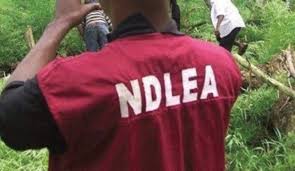
The National Drug Law Enforcement Agency (NDLEA) said the dangers of drug use are often underestimated among young people, with many unaware of the long-term consequences of their actions.
NDLEA representative for the Kwara Command, Galleys Oyedepo said this at a seminar organised by the Federation of Muslim Women Association of Nigeria (FOMWAN) in Ilorin on Friday.
The seminar was organised in collaboration with NDLEA to sensitise secondary and tertiary school students against indulging in drug abuse.
Oyedepo expressed concern that drug and substance abuse is becoming prevalent among youth on campuses of tertiary institutions.
“Drug abuse is increasingly prevalent among young people, particularly on university campuses, where many students turn to substances in response to academic pressure, social expectations, and emotional challenges,” she said.
According to her, what begins as curiosity, peer influence, or a coping mechanism can quickly develop into dependency, trapping students in cycles of addiction.
Oyedepo identified commonly abused substances to include cannabis, codeine-based syrups, tramadol, and synthetic drugs.
She cited findings from the 2018 National Drug Use and Health Survey, which put Nigeria’s drug use prevalence at 14.4 per cent, nearly three times the global average.
The NDLEA representative noted that recent enforcement data further underscored the severity of the problem.
She further disclosed that more than 60 per cent of over 77,000 drug offenders arrested by the agency in the past five years were youths.
“Some are as young as 15, and most individuals currently undergoing treatment and counselling in NDLEA facilities are also young people.
“The trend is partly attributed to a culture that increasingly normalises drug use among youths, with many perceiving it as harmless or fashionable,” she said.
Oyedepo warned that the consequences of drug abuse include poor academic performance, mental health disorders, broken relationships, and increased exposure to crime and violence.
According to her, youth must understand that drug abuse comes with serious and lasting consequences, and that it is not a solution to stress or academic challenges.
FOMWAN Amirah, Hajia Biliqis Oladimeji, said the programme was organised under the Health Committee of the Association to educate young people on the dangers of drug abuse in the state.
Oladimeji lamented the rise in cases of drug abuse among youth in Kwara, saying the association would not fold its arms and watch the nation’s future destroyed by the menace.
She, therefore, appealed to parents and guardians to monitor their wards so that they do not fall victim to drug abuse.




Tinubu To Commission Fruit Juice Factories, BIPC Motorcycle Assembly Plant In Benue
ShareFrom Attah Ede, Makurdi President Ahmed Bola Tinubu is set to visit Benue State to commission the newly built ultra modern Bensono Concentrate Plant, Benva Juice Factory, and the Motorcycle Assembly...


Dangote Refinery Surpasses Capacity Target, Eyes 1.4m bpd Expansion
ShareBy David Torough, Abuja Dangote Petroleum Refinery and Petrochemicals has achieved a major operational milestone by increasing its crude oil processing capacity to 700,000 barrels...


Alia Appoints New Acting Head of Service in Benue
ShareFrom Attah Ede, Makurdi Benue State Governor, Rev Fr .Hyacinth Alia has approved the appointment of Dr. Ihu Eunice Ogbenyi as new Acting Head of Service (HoS)...
Oshonaike Hails Steady Progress of Nigerian Table Tennis Players
ShareSeven-time Olympian Olufunke Oshonaike said Nigerian table tennis players are making steady progress in spite of the challenges they face in competing...

Poland Bans Smartphones in Primary Schools
SharePoland plans to ban mobile phones in all primary schools from next academic year under draft legislation approved by the government on Tuesday. The...
Reps Minority Picks Ugochinyere as New Leader
ShareBy Ubong Ukpong, Abuja Following the defection of the former minority Leader of the House of Representatives, Kingsley Chinda, the minority caucus has nominated Hon. Ikenga...
Kano Revokes Private School Licences over Sexual Abuse
ShareFrom Aliyu Askira, Kano The Ungogo Local Government Area of Kano State has withdrawn the licences of all private schools within its jurisdiction following allegations that...


CBN Approves Regular Commercial Operations for Abbey Mortgage Bank
ShareBy Tony Obiechina, Abuja Abbey Mortgage Bank Plc, one of Nigeria’s longest‑standing primary mortgage banks, has secured regulatory approval from...


Owo Church Massacre: Court Sentences Four to Death for Terrorism
ShareBy David Torough, Abuja More than three years after the gruesome attack on St. Francis Xavier Catholic Church, Owo, Ondo...

Terrorists Abduct Adelabu’s Sister, Twin Sons, kidnap Six Students in Zamfara
ShareBy Eze Okechukwu, Abuja and Ifeanyichukwu Nwannah, Gusau The nation’s worsening insecurity came into sharp focus on Wednesday, as separate incidents of...