
Metro
UNESCO, SUBEB Begin Sensitization, School Mapping Exercise in Bayelsa


The United Nations Educational, Scientific, and Cultural Organization (UNESCO) has inaugurated a Sensitization and School Mapping Exercise under the EU–UNESCO Education and Youth Empowerment Project (Phase II) in Bayelsa.
The initiative, which is in partnership with Bayelsa Universal Basic Education Board (SUBEB) is targeted at six focus states across Nigeria.
The aim is to strengthen the educational system and improve learning outcomes.
Jean-Paul Abiaga, the Head of Office and UNESCO Representative in Nigeria, at the inauguration on Monday, expressed appreciation to the government and people of Bayelsa for hosting the sensitisation activity.
“Today marks a significant step in the implementation of the European Union–funded Project: Education and Youth Empowerment in Nigeria (2nd Phase).
“The aim is to Expand, Integrate and Strengthen Systems (EISS) to build teachers capacity and resilience.
“UNESCO is honoured to provide technical support across six project focal states: Adamawa, Bayelsa, Enugu, Oyo, Plateau and Katsina.
“This initiative reflects a shared commitment to strengthening Nigeria’s education system by investing in the professional resilience, collaboration, and effectiveness of teachers—the backbone of learning and national development,” he said.
Abiaga said that the engagement—the establishment of Teacher Learning Teams (TLTs) —is at the heart of UNESCO’s vision for sustainable teacher development.
“TLTs create a platform where teachers learn from one another, strengthen their pedagogical practices, and build deeper connections with their students and communities.
“Evidence from around the world shows that when teachers collaborate, student learning improves, school communities thrive, and education systems become more equitable and resilient.
“Through collaboration with SUBEB, the State Ministry of Education, and LGEAs, this activity will generate vital, geo-referenced data on school locations, teacher deployment, and infrastructure,” he said.
On his part, the Executive Chairman of SUBEB, Mr Ifidi Festus, said that the sensitisation was to enlighten and encourage the people to support the school mapping in Bayelsa.
Festus, who was represented by Joy Pulesi-Otowono, the Director, Social Mobilisation Department, SUBEB, commended UNESCO for the training and funding of the project.
In his address, Simon Peter, Permanent Secretary, state Ministry of Education, said that the move was to sensitise the people about the initiative.
He said that the Ministry of Education was happy with the partnership and urged the schools involved to take the mapping seriously, to help the students.
Speaking, Esther Ikenye, Programme Assistant, UNESCO, said the project objective was to review, strengthen and implement education policies and programmes by addressing teachers’ shortage and work conditions.
He said it was also to reinforce and support individual teacher capacities (in-service and pre-service) by developing an expanded teacher education programme with a focus on resilience in a fragile context.
“The aim is to build a better teacher, students and colleagues’ relationship in the communities,” Esther said.
The theme of the project is “Expand, Integrate and Strengthen Systems (EISS) to Build Teachers’ Capacity and Resilience.”
 | ReplyReply allForwardAdd reaction |
The National Agency for Food and Drug Administration and Control (NAFDAC) has solicited international partners’ support for establishing vaccine manufacturing facilities in the country.
The NAFDAC Director-General, Prof.
Mojisola Adeyeye, made the call in a statement on Sunday.Adeyeye was speaking at the 8th Nigeria Pharma Manufacturers Expo in Lagos.
The expo was organised by the Pharmaceutical Manufacturers Group of the Manufacturers Association of Nigeria, PMG-MAN, in collaboration with PGE Expo PVT Limited.
Adeyeye acknowledged international partners’ continued support to NAFDAC trajectory at the event jointly organised by PMG-MAN and PGE Expo PVT Ltd.
She said their contributions would be immensely appreciated toward fill-and-finish modular vaccine manufacturing, adding that NAFDAC had met eight of nine functions required for medicines and vaccines benchmarking requirements overall.
“We want to call on our international partners that have been of tremendous help. Without them we would not have been here, while urging support for vaccine manufacturing in Nigeria. “
The director-general said Nigeria had all it took to attain Vaccine Lot Releases Maturity Level Four, aside from local vaccine manufacturing, adding that estimated costs would not be excessive if eventually successfully.
“To get Lot Release-Maturity Level Four, we have figured it out in a way we have estimated. It’s not going to cost too much.
“NAFDAC used to manufacture vaccines and it’s high time we go back to that era and regain that capacity nationwide,” she added.
Adeyeye commended President Bola Tinubu for the 2024 Executive Order, which she noted brought life to NAFDAC’s persistent clamour for incentives for local pharmaceutical manufacturers nationwide over time.
She noted that the Coordinating Minister of Health and Social Welfare and Minister of State for Health bought into the rationale for incentives, partly leading to unlocking the value chain initiative.
According to her, the journey started with the Good Manufacturing Practice Roadmap, during which NAFDAC inspectors conducted compliance audits of over 165 companies across the country for eight months continuously nationwide.
She said the initiative, funded by USAID and executed by the United States Pharmacopeia, helped ensure manufacturers produced quality products, improving positive patient health outcomes during treatment without failure ultimately.
Adeyeye stated further that data showed imports under ‘Five plus Five’ and the Ceiling Initiative decreased by 70 per cent from 2021 to 2025, as manufacturers took up the challenge fully themselves.
She said NAFDAC’s improving staff competence, laboratory recognition and successful re-benchmarking also strengthened the agency, adding that NAFDAC became the first agency in Sub Saharan Africa to be re-benchmarked successfully again.
The Chairman of PMG-MAN, Oluwatosin Jolayemi, said the expo brought manufacturers, regulators, investors and development partners together, calling for the extension of the executive order beyond March 2027, deadline period industry.
Jolayemi noted that medicine security and pharmaceutical sovereignty required policy consistency, investment, capability development and a predictable operating environment, adding that 132 companies from several countries participated in the expo overall.(NAN)

From Ifeanyichukwu Nwannah, Gusau
Over one hundred residents, persons with disabilities, Internally Displaced Persons (IDPs), and other vulnerable groups in Zamfara State have been empowered with skills and cash by the International Organization for Migration IOM, for self-reliance.
The recipients expressed gratitude to the organization for empowering them with skills training and one hundred and forty four thousand Naira training allowances as part of activities marking the 30th anniversary of the creation of Zamfara State.
The beneficiaries, who participated in various skills acquisition programmes, expressed optimism that the intervention would enable them to improve their livelihoods and become self-reliant.
The distribution ceremony, held at the Gusau Local Government Secretariat, brought together traditional rulers, community leaders and other stakeholders.
The intervention forms part of the livelihoods and climate mitigation component of the Conflict Prevention, Crisis Response and Resilience (CPCRR), Programme, funded by the European Union Foreign Policy Instruments and being implemented in Katsina and Zamfara States in collaboration with Mercy Corps and the Centre for Democracy and Development (CDD).
Speaking on behalf of the traditional leaders, the Chairman of the Community Peace and Resilience Committee (CPCRR), and District Head of Madawaki Ward, Alhaji Dahiru Shehu, described the intervention as timely and impactful.
He said that empowering vulnerable women, IDPs and persons with disabilities would help reduce street begging and encourage self-reliance.
“When you empower fourty women in a community, it is like empowering hundreds, because they can multiply the capital into income-generating activities,” he said.
The District Head who was represented by Surajo Labbo, commended Zamfara State Governor, Dauda Lawal, for his partnership with IOM in line with his commitment to providing people with opportunities to earn a living.
Dahiru Shehu also expressed appreciation to IOM for bringing numerous developmental programmes to the State as part of its contributions towards sustaining peace and stability in communities.
Earlier, a representative of IOM said the initiative was part of the organisation’s commitment to improving economic standards among women, persons with disabilities and other vulnerable groups.
“We have trained 104 beneficiaries in various trades, including tailoring, cosmetics production, briquette making, soap making, carpentry and handicrafts, to improve their living conditions in their respective communities”
“The sum of one hundred and forty four thousand Naira is for the two-month training allowances,” he said.
He explained that the beneficiaries would soon be provided with equipment and machines according to the trades they had learned during the training.

By Laide Akinboade, Abuja
In order to boost security, the Federal Capital Territory Administration (FCTA) on Wednesday said it has completed the modern Divisional Police Headquarters and residential staff quarters in Ushafa and Saburi, Bwari and Abuja Municipal Area Councils respectively.
Director of the Security Services Department, FCTA, Adamu Gwary, described the development as a major step toward curbing crime across Abuja’s satellite towns.
Gwary told journalists during a visit to the sites on Wednesday, that the Ushafa and Saburi projects were 100 per cent completed and ready for official handover.
He added that 10 others across other areas councils were more than 90 per cent completed.
He explained that the Ushafa and Saburi facilities were among the 12 Divisional Police Headquarters, two per area council, being constructed across the territory to eliminate security blind spots.
“Out of the 10 ongoing projects, almost all have achieved more than 90 per cent completion, following Wike’s directive for all contractors to wrap up work before the end of November,” he said.
According to him, the strategic projects were part of a broader security initiative ordered by FCT Minister Nyesom Wike to take crime-fighting infrastructure directly to the doorsteps of residents in fringe and rural communities.
He explained that the newly constructed Divisional Headquarters features a fully equipped ground floor housing a central counter, detention facilities, and separate cells for male and female suspects.
He added that the upper floor contains eight fully furnished administrative offices, including an executive office for the Divisional Police Officer (DPO).
He said that to ensure adequate personnel presence and rapid response times, the complex includes a three-storey residential block comprising six fully furnished two-bedroom ensuite flats, complete with dining areas, kitchens, stores, and sitting rooms for officers.
Gwary added that a technical team from the Federal Capital Development Authority (FCDA) Public Building Department would join the contractor to verify all specifications against the Bill of Quantities before the official handover is finalised.
He recalled that during the peak of security challenges in 2023, Wike conducted town hall meetings across six area councils and promised residents that security infrastructure would be decentralised away from the city center.
He said that the Ushafa station and another located at Igbu, 35 kilometers away, near the FCT-Nasarawa border, would secure satellite communities while fortifying the territory’s external borders against cross-border criminality and kidnapping rings.
Reflecting on the progress made since 2023, Gwary noted a measurable reduction in reported kidnappings and heinous crimes across the FCT.
He attributed this drop to a combination of enhanced equipment, expanding physical infrastructure, and strict enforcement against internal collaborators.
Reiterating the minister’s firm stance, Gwary reminded residents that informants supplying information to kidnappers and hoodlums would face the same severe legal consequences as the criminals themselves.
He urged residents to continue providing timely and accurate intelligence to security agencies whenever suspicious activities occur.
The director said that beyond physical structures, the FCTA is aggressively expanding its monthly logistics support to security agencies and tech-driven surveillance capabilities.
He disclosed that the Airport-to-Villa corridor is currently being monitored via advanced technology managed from the Force Headquarters control room.
He added that tech-surveillance networks would soon be expanded beyond presidential routes to cover key high-risk corridors.
The Site Engineer for Ushafa project, Kabir Muhammed, thanked Wike for trusting his firm with the project, assuring that the team worked closely with project monitoring and evaluation teams to deliver the facility within schedule.




Yari Urges Northerners to Honour Power Rotation, Back Tinubu’s Eight-Years Presidency
ShareFrom Rabiu Sanusi Kano Former Zamfara State Governor and Director-General of the All Progressives Congress (APC) Presidential Campaign Council, Senator...


Otu Reinstates 3,000 Sacked LG Workers
ShareFrom Ene Asuquo, Calabar Cross River State Governor, Senator Prince Bassey Edet Otu, has approved the restoration of about 3,000...


First Lady Mobilises Women for Tinubu’s Re-election
ShareNigeria’s First Lady, Sen. Oluremi Tinubu, is set to host more than 20,000 women stakeholders in Abuja today as part...
NAFDAC Seeks International Support to Revive Vaccine Manufacturing in Nigeria
ShareThe National Agency for Food and Drug Administration and Control (NAFDAC) has solicited international partners’ support for establishing vaccine manufacturing...

IOM Empowers IDPs with Skills, Cash in Zamfara
ShareFrom Ifeanyichukwu Nwannah, Gusau Over one hundred residents, persons with disabilities, Internally Displaced Persons (IDPs), and other vulnerable groups in...
Diagnosis at 66: Nigeria’s Healthcare Landscape
ShareBy Racheal Abujah When Nigeria gained independence on Oct. 1, 1960, it held immense promise. Sixty-six years later, healthcare delivery...


Flight Delays, Cancellations: Assessing Nigeria’s Efforts to Improve Air Travel
ShareBy Gabriel Agbeja In spite of arriving on time, checking in, and waiting at the boarding gate, many air travelers...

FG’s Bond Borrowing Hits N7.15tn, Up 106 Per Cent in Nine Months
ShareBy Tambaya Julius, Abuja The Federal Government’s allotment of domestic bonds rose sharply in the first nine months of 2026,...
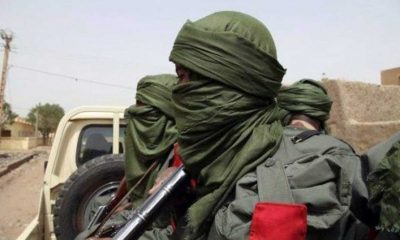

Bandits Demand N94m Ransom for Abducted Niger Farmers
ShareBy Tambaya Julius, Abuja Bandits have contacted the families of farmers abducted in Mariga Local Government Area of Niger State,...


APC Mocks Amaechi Over Mother’s Medication Claim
ShareBy Tambaya Julius, Abuja The All Progressives Congress (APC) has criticised the African Democratic Congress (ADC) vice-presidential candidate, Rotimi Amaechi,...