
NEWS
Why Nasarawa SSG Labaran Shuaibu Magaji SAN, Turns Governance into Simple, Straightforward Mathematics

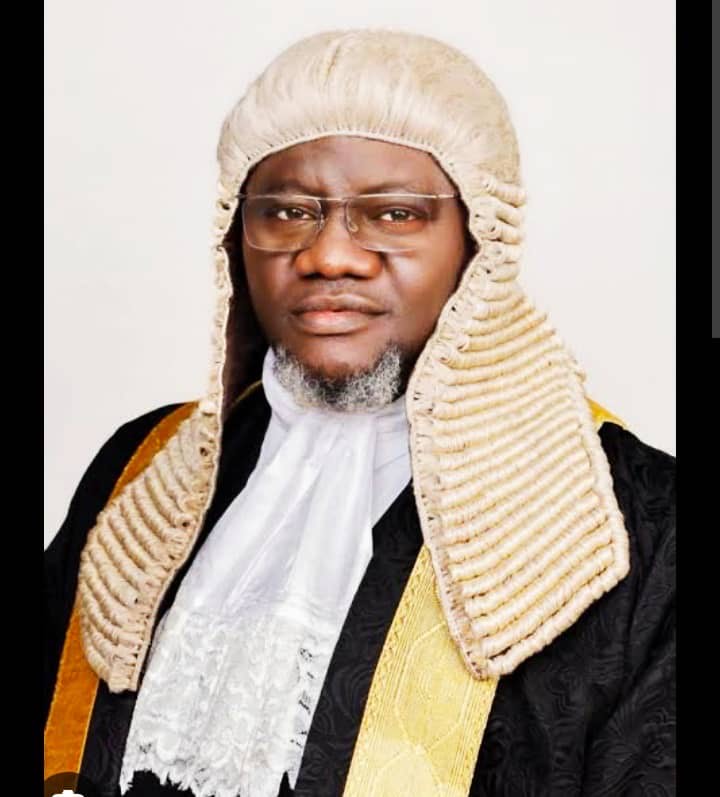
From Abel Zwanke, Lafia
In a political system often clouded by bureaucracy, vested interests, and opaque processes, governance can appear unnecessarily complicated. Yet in Nasarawa State, one man has steadily dismantled that narrative by reducing governance to what he describes as simple, straightforward mathematics:
clarity of purpose, discipline in execution, and accountability in outcomes.
That man is Dr.
Labaran Shuaibu Magaji, the Secretary to the State Government (SSG) of Nasarawa State.Since assuming office, Dr. Magaji has emerged as one of the most influential technocrats in Governor Abdullahi Sule’s administration, an administrator whose methods have reshaped the inner workings of government and redefined public service delivery.
To his supporters, he is the engine room of reforms; to critics, a disruptor of entrenched interests. Either way, his impact is undeniable.
In an interview with our correspondent in his office recently, He described governance as Logic, Not Guesswork, For Dr. Magaji, governance is neither mystical nor theatrical. It is a system that must obey logic.“Once you understand governance, politics becomes a variable, not a stumbling block,” he once remarked during a policy engagement in Lafia. “You must know who gets what, why they get it, and how it should be delivered—without fear or favour.”
This philosophy has guided his approach to policy coordination, inter-ministerial supervision, and financial oversight. Those who work closely with him say his insistence on clarity has transformed government operations.
A senior official in the Ministry of Finance described him as “a man who hates ambiguity.”“If a policy cannot be explained in simple terms, he questions its value. He believes governance must be measurable and traceable, like figures on a balance sheet,” the official said.
Understanding Politics Without Being Captured by It Unlike many technocrats who struggle to navigate political terrain, Dr. Magaji understands the political dimensions of governance without allowing them to compromise integrity.
A top APC chieftain in Nasarawa State noted that this balance has been critical to his effectiveness.
“Dr. Magaji understands politics, but he is not hostage to it. He listens, consults, and advises, but when it is time to act, he acts in the interest of the state,” the party leader said.
Political observers argue that this ability to manage political pressures while maintaining administrative discipline has strengthened Governor Sule’s leadership.
“He shields the governor from unnecessary distractions by ensuring processes are clean and defensible,” said Mustapha Danjuma, a governance analyst based in Abuja. “That alone makes him indispensable.”
One of Dr. Magaji’s most consequential reforms has been the complete elimination of cash-based transactions in government operations.
Under his watch, Nasarawa State adopted a strict e-payment regime, ensuring that all government payments through his office, salaries, contracts, allowances, and procurements are processed electronically.
“Cash is where corruption hides,” Dr. Magaji stated bluntly at a civile service retreat recently in the state. “If money cannot be traced, accountability disappears.”
This reform has significantly reduced financial leakages and restored confidence among development partners and oversight institutions.
Economics analyst, Dr. Abdulkarem Al Hassan, Dean General Studies Federal University of Lafia described the policy as “a turning point.”
“For the first time, auditing became easier. Every naira left a digital footprint. That alone saved the state millions,” he said.Civil servants confirm that while the policy initially faced resistance, its benefits soon became evident.
“People complained at first because old habits were disrupted,” said a director in one of the MDAs. “But today, even junior officers understand that transparency protects everyone.”
Another pillar of Dr. Magaji’s governance philosophy is fiscal restraint.
In a country where public procurement often involves inflated contracts and unnecessary luxury purchases, he introduced a system that prioritizes need over prestige.
“Government does not need to buy the most expensive item to function effectively,” he once told commissioners during a budget defence session. “What matters is value, not vanity.”
Under his coordination, Nasarawa State significantly reduced large-scale, non-essential procurements running into billions of naira.
Funds previously earmarked for luxury vehicles, office fittings, and inflated contracts were redirected to priority sectors such as healthcare, education, and rural infrastructure.
A member of the State House of Assembly corroborated this shift.
“Budget proposals now face serious scrutiny. You must justify every figure. That culture came from the SSG’s office,” the lawmaker said.
Resistance from Vested Interests
Predictably, these reforms have not endeared Dr. Magaji to everyone.
Sources within political circles confirm that several powerful interests, both within and outside government, have attempted to undermine his position.
“When you block financial loopholes, you step on toes,” said a political insider. “Some people are uncomfortable because the system no longer works in their favour.”
Rumours, misinformation, and quiet lobbying have trailed his tenure. Yet, Dr. Magaji remains unperturbed.“I am focused on my assignment,” he said in a rare moment of candour. “If doing the right thing creates enemies, so be it.”
Crucially, he enjoys the firm backing of Governor Abdullahi Sule and the state executive council.Governor Sule, speaking at a public event in 2025, publicly acknowledged his role:
“Dr. Magaji brings discipline, order, and foresight to governance. His commitment to transparency aligns with our vision for Nasarawa State.”
Beyond government circles, Dr. Magaji’s reforms have drawn commendation from civil society organizations and policy think tanks.
The Nasarawa chapter of a transparency advocacy group described him as “one of the most reform-minded SSGs in Nigeria.”
“What we see in Nasarawa is proof that political will, when matched with competence, can deliver results,” the group said in a statement.
Traditional rulers, often critical stakeholders in governance, have also voiced support.A first-class monarch in the state noted:“Projects now reach communities faster because funds are properly managed. We feel the impact at the grassroots.”
Even opposition figures, while cautious, acknowledge the improvements.
“We may disagree politically,” said an PDP chieftain, “but credit must be given where it is due. Financial discipline in government has improved.”
National and International Recognition
Dr. Magaji’s governance reforms have attracted attention beyond Nasarawa State.
He has received national commendations for public sector reforms and has been recognized by international governance institutions for promoting transparency and accountability in subnational administration. Among the honours attributed to his work are:
Awards for Excellence in Public Financial Management
Commendations for Digital Governance and Transparency
Recognition from governance-focused international NGOs for strengthening institutional frameworks
To Dr. Magaji, however, awards are secondary. “Recognition is encouraging, but the real reward is knowing that public resources are being used for public good,” he said.
A Legacy of Simple Mathematics
As Nasarawa State continues its development journey, many believe Dr. Labaran Shuaibu Magaji’s greatest contribution lies not just in policies, but in the culture of governance he has helped entrench one where rules matter, systems function, and accountability is non-negotiable.
A senior political ally summarized it succinctly:“He treats governance like mathematics: remove the excesses, balance the equation, and the result will always be progress.”
In an era when public trust in government is fragile, Dr. Magaji’s model offers a compelling lesson, that governance does not have to be complicated to be effective. Sometimes, all it takes is the courage to apply simple, straightforward mathematics.
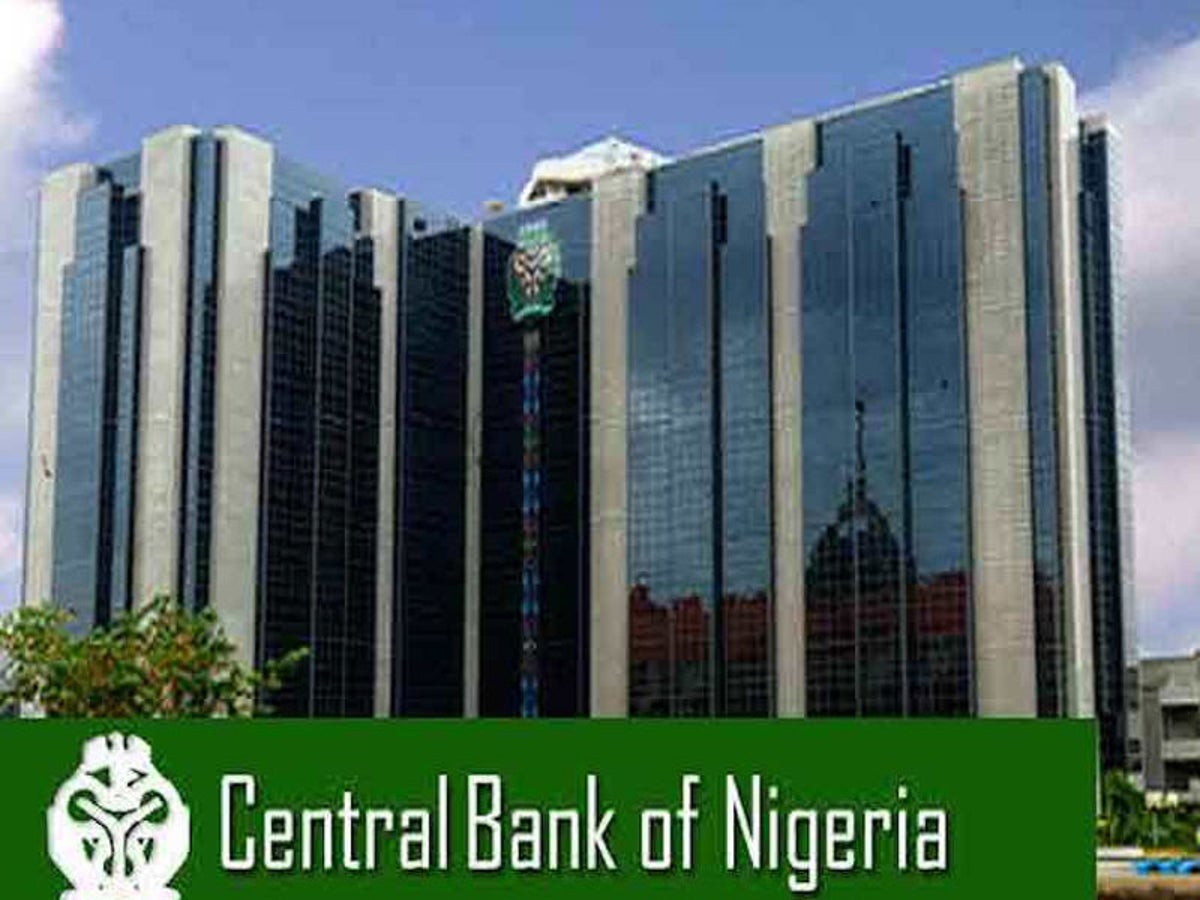
The Central Bank of Nigeria (CBN) and leading economists have projected stronger economic growth and lower inflation in 2026, citing improved macroeconomic fundamentals and reform impacts.
The projection was made on Thursday at a hybrid roundtable organised by the Chartered Institute of Bankers of Nigeria Centre for Financial Studies with B.
Adedipe Associates.The Lagos event was the theme ’12th Edition National Economic Outlook: Implications for Businesses in Nigeria in 2026′.
CBN Deputy Governor, Economic Policy Directorate, Dr Muhammad Abdullahi, said real GDP growth was projected at 4.49 per cent in 2026.
He added that inflation was expected to moderate to 12.
94 per cent, reflecting easing pressures and reform outcomes.Abdullahi said the outlook was supported by non-oil sector expansion, improved crude oil output, rising private investment and a more stable macroeconomic environment.
He said Nigeria recorded a balance of payments surplus of about 3.81 billion dollars in 2025, reversing deficits from the previous two years.
According to him, foreign exchange conditions would remain broadly stable due to FX reforms, higher oil receipts, diaspora remittances and stronger investor confidence.
“External reserves are projected to exceed 50 billion dollars in 2026,” he said, adding that inflation would continue easing.
He attributed the trend to lower food and energy pressures and the lagged effects of monetary tightening.
Abdullahi, represented by Dr Victor Oboh, Director, Monetary Policy, said the apex bank would sustain reforms to strengthen price stability and external sector resilience.
He urged banks to expand credit to productive sectors, including manufacturing, agribusiness and small and medium enterprises.
Keynote speaker, Prof. Biodun Adedipe, Chief Consultant of B. Adedipe Associates Ltd ., said the economy was expected to perform better in 2026 than in 2025.
He described 2026 as a stabilisation year marked by exchange rate stability, declining inflation, rising reserves and strong stock market performance.
Adedipe said Nigerians were already feeling reform impacts, noting easing prices of some staple foods.
He called for sustained policies to boost production, particularly agriculture, to further reduce inflation.
Also speaking, Dr Baba Musa, President of the Nigerian Economic Society, said Nigeria’s economic fundamentals were improving, but outcomes depended on reform execution.
“Effective monetary, fiscal and tax reforms will determine 2026 outcomes,” he said, urging businesses to invest in capacity, technology and markets.
Earlier, Prof. Pius Olanrewaju, Chairman, Council of the CIBN, said the forum set the tone for economic policy dialogue in 2026.
He said new tax reforms effective Jan. 1 would broaden the tax base, strengthen public finances and reduce oil dependence, while protecting small businesses and low-income earners.
 | ReplyReply allForwardAdd reaction |
The Nigerian Midstream and Downstream Petroleum Regulatory Authority (NMDPRA) said the daily domestic supply of Premium Motor Spirit (PMS) rose to 74.2 million liters/day (ml/d) in December 2025.
This is relative to the 71.5 million litres/day supplied in November 2025.
The NMDPRA made this known in its Factsheet Report for December 2025 released on Thursday.
The report contains key statistics on the midstream and downstream petroleum operations in Nigeria.
It revealed that consumption of PMS, also known as fuel, increased to 63.7 million litres/day in December 2025, from the 52.9 million litres/day recorded in November 2025.
According to the report, Dangote Refinery showed strong capacity utilisation for the month of December, reaching a maximum of 71 per cent utilisation.
It said that the Dangote Refinery’s PMS domestic supply increased from 19.47ml/d in November 2025 to an average supply of 32.012ml/d in December 2025, with an initial plan of 50ml/d for December.
It said that Automotive Gas Oil (Diesel) domestic supply decreased to 17.9ml/d in December 2025 from the 20.4ml/d recorded in November 2025, while daily consumption increased to 16.4ml/d in December 2025, from the 15.4ml/d recorded in November 2025.
The report revealed that Liquefied Petroleum Gas (LPG) domestic supply also increased to 5.2mt/d in December 2025 from the 5.0mt/day recorded in November 2025.
The NMDPRA fact sheet however disclosed that the four national oil refineries recorded zero production within the period under review.
It said that there were no production activities in the Port Harcourt Refinery as the refinery remained on shut down mode.
“However, evacuation of prior AGO produced while the refinery was operational before May 24, 2025 averaged 0.247 million litres/day.”
Meanwhile, it said that the Warri and Kaduna Refineries remained on shut down.
On performance of Modular Refineries, the report said that the Waltersmith (Train 2) 5,000bpsd completed pre-commissioning in December, and hydrocarbons would be introduced by Jan. 2026.
According to the report, the refinery’s average capacity utilisation is at 63.24 per cent, while Average AGO supply is 0.051 million litres/day.
“Edo Refinery’s average capacity utilisation is 85.43 per cent, and average AGO supply is 0.052ml/d.
“ARADEL’s average capacity utilisation was 53.89%l per cent and average AGO supply was 0.289ml/d,” it said.
The report revealed that total AGO supply from the three modular refineries averaged 0.392ml/d, adding that other products from the modular refineries were Naphtha, HHK, fuel oil and MDO.
The report showed Daily Consumption Benchmarks for 2025 as – PMS, 50ml/d; Diesel 14ml/d; Aviation Fuel (ATK) 3ml/d and Cooking Gas, 3,900mt/d.
It showed Daily Consumption (truck out) of key Petroleum Products as – PMS, 63.7ml/d; Diesel, 16.4ml/d; Aviation Fuel (ATK), 2.7ml/d and Cooking Gas, 4,380 mt/day.

By Tony Obiechina, Abuja
Nigeria’s headline inflation rate rose to 15.15 per cent in December 2025, reflecting a moderation in price pressures compared with the previous month, the National Bureau of Statistics (NBS) has said.
The Statistician-General of the Federation and Chief Executive Officer of the NBS, Prince Adeyemi Adeniran, disclosed this on Thursday in Abuja while releasing the Consumer Price Index (CPI) report for December 2025.
According to the report, the CPI increased to 131.2 points in December 2025, representing a 0.7-point rise from November.
The figures are based on the newly rebased CPI, with 2024 adopted as the new base year and 2023 as the weight reference period, following the recent rebasing exercise.
On a month-on-month basis, headline inflation stood at 0.54 per cent in December, down from 1.22 per cent recorded in November 2025, indicating a slowdown in the pace of price increases. Food Prices Decline Month-on-Month Food inflation eased significantly during the month.On a year-on-year basis, food inflation stood at 10.84 per cent, while on a month-on-month basis it declined by 0.36 per cent, compared to an increase of 1.13 per cent in November. The NBS attributed the decline to falling average prices of staple food items such as tomatoes, garri, eggs, potatoes, carrots, millet, vegetables, plantain, beans, wheat grain, pepper and fresh onions. Core Inflation at 18.63%Core inflation, which excludes volatile agricultural produce and energy prices, stood at 18.63 per cent year-on-year in December 2025.
On a month-on-month basis, core inflation fell to 0.58 per cent from 1.28 per cent in November. Among the newly introduced indices, energy inflation rose sharply by 2.74 per cent, while farm produce declined by 0.41 per cent. Services and goods recorded moderate increases of 0.15 per cent and 0.64 per cent respectively.
Urban, Rural Inflation TrendsUrban inflation stood at 14.85 per cent year-on-year, with a month-on-month increase of 0.99 per cent, slightly higher than November’s 0.95 per cent. In contrast, rural inflation was recorded at 14.56 per cent year-on-year, while month-on-month inflation declined by 0.55 per cent, compared to a 1.88 per cent increase in November. States with Highest and Lowest Inflation At the state level, Abia (19.03%), Ogun (18.80%) and Katsina (18.66%) recorded the highest headline inflation rates on a year-on-year basis. Sokoto (8.61%), Plateau (9.05%) and Kaduna (10.38%) recorded the lowest.
On a month-on-month basis, inflation rose most sharply in Cross River (3.11%), Abia (2.63%) and Delta (2.53%), while Ondo (-3.74%), Gombe (-3.02%) and Jigawa (-1.96%) recorded declines. For food inflation, Yobe (15.25%), Ogun (14.12%) and Abuja (13.24%) recorded the highest year-on-year increases, while Akwa Ibom (4.34%), Sokoto (4.62%) and Plateau (6.19%) posted the slowest rise. Month-on-month food inflation was highest in Imo (3.19%), Nasarawa (3.16%) and Yobe (1.18%), while Plateau (-2.76%), Rivers (-2.50%) and Zamfara (-1.93%) recorded declines.
The NBS cautioned that state-level comparisons should be interpreted carefully, as CPI weights vary based on consumption patterns across states and locations.
| ReplyReply allForwardAdd reaction |

Why Nasarawa SSG Labaran Shuaibu Magaji SAN, Turns Governance into Simple, Straightforward Mathematics
ShareFrom Abel Zwanke, Lafia In a political system often clouded by bureaucracy, vested interests, and opaque processes, governance can appear...


NYSC Builds Capacity of Corps Leaders in Leadership, CDS Delivery
ShareThe National Youth Service Corps (NYSC) has concluded a three-day capacity-building workshop for corps leaders in Edo. The workshop aims...
Court Strikes out Cybercrime Charge against Akpoti-Uduaghan
ShareThe Federal High Court on Thursday, struck out the alleged cybercrime charge against the senator representing Kogi Central Senatorial District,...


Zamfara Govt after Matawalle’s Crucifixion, Says APC Chieftain
ShareFrom Ifeanyichukwu Nwannah, Gusau A concerned citizen of Zamfara State, Aminu Muhammad has deeply expressed concern over the way Zamfara...

Most Kidnapping, Violence in Ekpoma Carried Out By Locals – Okpebholo
ShareThe Edo State Governor, Senator Monday Okpebholo, has alleged that many of those involved in criminal activities in Ekpoma, Esan...

INEC Urges Peaceful Rivers Assembly By-elections
ShareThe Independent National Electoral Commission (INEC) has urged stakeholders to promote peace and ensure credible Rivers House of Assembly by-elections...


Remembering Fallen Heroes Must Transcend Wreath Laying, Speech Making – ADC
ShareAfrican Democratic Congress (ADC) has said that remembering the fallen heroes in Nigeria must transcend mere laying of wreaths and...


CBN, Economists Project Faster Growth, Lower Inflation in 2026
ShareThe Central Bank of Nigeria (CBN) and leading economists have projected stronger economic growth and lower inflation in 2026, citing...

PMS Daily Domestic Supply hits 74.2m Liters in December – NMDPRA
ShareThe Nigerian Midstream and Downstream Petroleum Regulatory Authority (NMDPRA) said the daily domestic supply of Premium Motor Spirit (PMS) rose...

Inflation Drops to 15.15 Per Cent in December – NBS
ShareBy Tony Obiechina, Abuja Nigeria’s headline inflation rate rose to 15.15 per cent in December 2025, reflecting a moderation in...