
Foreign News
Ghanaians Embrace Fugu Day after Online Mockery of Traditional Outfits


Ghanaians across the country have turned out en masse to wear the country’s colourful traditional outfit, the fugu, after the government designated Wednesdays “Fugu Day”.
The move comes after President John Dramani Mahama’s state visit to Zambia last week when he wore the garment.
Some mockingly called it a “blouse”, prompting a fierce response from Ghanaians online.Ghana’s Tourism Minister Abla Dzifa Gomashie said that wearing the outfit every week would help project the country’s identity “with pride on the global stage”.
She encouraged wearing the outfit “in all its diverse forms, designs, and expressions, complemented by its distinctive and beautiful accessories”.
The fugu, also known as batakari, is a traditional northern Ghanaian top made from hand‑woven, narrow strips of thick cotton fabric stitched together to form a structured, poncho‑style garment.
It is worn by traditional leaders in northern Ghana, as well as ordinary citizens, and is a symbol of royalty and authority.
The traditional fugu top is more often associated with men, who sometimes wear trousers and a hat in matching material, but women also wear a version of it, which can be styled longer or as a dress.
When Ghana became the first sub-Saharan nation to break free from colonial rule in 1957, its founding father – the pan-Africanist Kwame Nkrumah – and five others wore fugus at the celebrations that marked the country’s independence from the UK.
Beyond its cultural importance, Gomashie said the outfit’s weekly display would “generate far-reaching social and economic benefits” especially for local weavers, designers, artisans and traders.
“The government hopes that this collective embrace of fugu will strengthen national unity, stimulate the creative economy, and serve as a powerful symbol of Ghana’s cultural confidence and self-expression,” the minister added.
Following the announcement, many Ghanaians on Wednesday heeded the minister’s call, wearing the outfit in a variety of colours across the country.
Bismark Owusu Sarpong said that the capital, Accra was proud to wear his blue, white and black striped fugu, which he had received as a gift, to put “Ghana on the map” plus he said the outfit came with the added bonus of being comfortable.
Raymond Avenor, also in Accra, agreed wholeheartedly with this: ”Fugu is an easy wear.
“You pick it and off you go. You don’t have to iron it, we don’t wash it often as it should be,” the civil servant said, sporting a blue fugu with white stitching.
“Significantly it’s the northern people of Ghana that use this and it depicts, according to my understanding, royalty. I feel good when I wear it.”
For Andrews Tetteh Zutah, who owns more than seven of the tops, “Fugu Day” should not only be restricted to Wednesdays.
“I wish to have more,” said the Accra office worker in his striped red, khaki and black fugu.
“I wish I will be allowed to wear it anytime to the office but because of office constraints I’m unable to wear it every day. Personally, it’s one of the outfits I love most.” The attention has been great for fugu makers and sellers too.
Elijah Sulemana Musah, owner of a fugu factory, says business is booming – adding that he has received lots of orders from Ghanaian celebrities such as popular musicians Okyeame Kwame and Kwabena Kwabena.
”I’ve had calls coming in from several places both within and outside Ghana. I just met someone who said Zambians have called her and they are interested in the fugu and so she would want me to supply her,” he said. The iconic outfit has been trending on social media for days following the banter between Ghanaians and Zambians.
This revived a cultural movement on social media, with Ghanaians informally declaring “Fugu Friday” to showcase the outfits. Fridays had been designated by the previous government as a day where people were encouraged to wear traditional clothes.
The debate prompted Ghanaians, including MPs, to flood social media proudly showcasing their fugus, while Zambians featured wearing their traditional outfits known as siziba.
The online exchange attracted the attention of Zambian President Hakainde Hichilema, who announced that his country would order fugus from Ghana.
President Mahama also suggested exporting the smock in bulk to Zambia.
While emphasising the fugu’s cultural and political significance, Mahama gave a nod to Nkrumah and how he had worn it in 1957 and said that he himself had recently worn it proudly to the UN.
Other presidents, including Nana Akufo-Addo, John Kufuor and Jerry John Rawlings, have also embraced and publicly promoted the outfit.
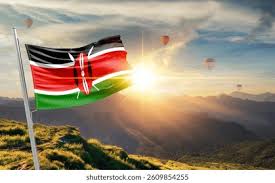
Kenya has sharply raised the cost of petroleum, with diesel prices rising by a record margin despite a fuel tax cut, as the conflict in Iran pushes up global oil prices.
In its latest review, the energy regulator raised the cost of diesel by 40 Kenya shillings to 206 ($1.
6; £1. 2) a litre, while petrol rose by 28 shillings to a similar level. It said this reflected higher global oil and shipping costs, even as the government cut value added tax to 13% from 16%.The new prices will last until 14 May when the next review is due.
Fuel shortages have been reported in parts of the country, although the government insists stocks are sufficient and accuses some fuel companies of hoarding supplies.
The reports of shortages have been overshadowed by controversy over an allegedly substandard consignment imported last month outside government-to-government arrangements and at a significantly higher cost.
Reports that the fuel may have entered the market after being blended with stocks in government storage tanks have sparked public outrage and calls for accountability.
The government has previously said it cancelled the consignment amid concerns over its quality and cost and barred oil marketers from selling it. The matter, which led to the arrest and resignation of senior energy officials, is still under investigation.
On Wednesday, the Energy and Petroleum Regulatory Authority (Epra) said the disputed consignment had not been included in the computation of the new prices.
The price rises come amid the global fuel crisis caused by the US-Israel war with Iran that began on 28 February.
Concerns remain that the energy crisis may deepen despite a conditional two-week ceasefire signed last Wednesday that included opening the Strait of Hormuz, a key shipping route for global oil and gas supplies.
Shipments through the strait have largely been at a standstill since the war began.
Countries have taken various measures to cope with the crisis and cushion consumers from the price shocks, including cutting taxes and minimising wastage.
Kenya’s directive to cut VAT on fuel is scheduled to last until July. South Africa announced a one-month cut in the fuel levy two weeks ago to limit pump prices.
Other African countries to have announced similar measures include Zambia, Namibia and Ghana, while South Sudan announced electricity rationing and Ethiopia prioritised certain sectors to deal with the crisis.
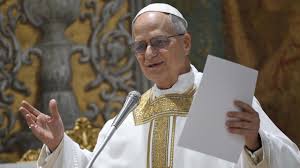
Anglophone separatists in Cameroon have announced a period of “safe travel passage” and halted fighting ahead of Pope Leo XIV’s visit to the conflict‑hit region this week.
Leaders of several armed and secessionist groups said the three‑day measure was in recognition of the “profound spiritual importance” of the papal visit, which starts on Wednesday, and the need to safeguard civilian life.
In a statement from Unity Alliance which brings the groups together – they said they would facilitate the movement of those celebrating the visit. The government is yet to comment.
A near-decade of violence in the English-speaking regions has left at least 6,000 dead and many more forced from their homes.
Pope Leo is currently in Algeria for a second day as part of his 11-day tour of the continent, in which he will also visit Cameroon, Angola and Equatorial Guinea.
Peace is one of the major themes of his visit.
The pontiff arrived in Algeria on Monday, marking the first visit by any pope to the predominantly Sunni Muslim country.
It is also the birthplace of St Augustine, and Leo XIV is the first pontiff from the order to follow his teachings.
He is currently in Annaba where the saint was a bishop – and in the afternoon, is expected to celebrate Mass at the Basilica of Saint Augustine.
The Pope’s second country stop is Cameroon, where he will visit Bamenda, the capital of the country’s North-West region.
The city is regarded as the centre of Cameroon’s conflict between Anglophone separatists and state forces.
A national dialogue organised by the government in 2019 failed to end the violence in the country’s two English‑speaking regions.
Unity Alliance said the decision to pause the fighting “reflects a deliberate commitment to responsibility, restraint, and respect for human dignity, even in the context of ongoing conflict.”
It added that the Pope’s visit should remain “spiritual” and “pastoral” in nature, and warned against any politicisation of the event.
While the Cameroonian, francophone-dominated government has not reacted to the announcement, authorities say appropriate measures had been taken to ensure security in cities scheduled to host the Pope.
Pope Leo’s visit to Bamenda is seen as a symbolic effort by the Catholic Church to promote peace and reconciliation. He is expected to hold a meeting for peace in the city’s Saint-Joseph’s Cathedral.
Officials said all sites to be attended by the Pope will be free of charge for visitors.
Pope Leo’s wide-ranging tour will include stops in 11 cities across the four countries. It is his second major foreign visit since being elected to the papacy last year, and reflects the importance of Catholicism in Africa.
More than a fifth of the world’s Catholics are in Africa, some 288 million people, according to figures from 2024.

President Donald Trump on Sunday ordered a US naval blockade of the Strait of Hormuz in response to Iran’s “unyielding” refusal to give up its nuclear ambitions during peace talks in Islamabad.
While acknowledging that the marathon negotiations in Pakistan had gone “well” and “most points were agreed to,” Trump said Tehran had refused to concede on the issue of its nuclear program.
“Effective immediately, the United States Navy, the Finest in the World, will begin the process of BLOCKADING any and all Ships trying to enter, or leave, the Strait of Hormuz,” Trump said on his Truth Social platform.
“Any Iranian who fires at us, or at peaceful vessels, will be Blown To Hell!”
US Vice President JD Vance left Pakistan without a deal after weekend talks with a team led by Iran’s parliamentary speaker Mohammad Bagher Ghalibaf — the highest-level meeting between the two sides since the 1979 Islamic revolution.
Tehran’s delegation also included Foreign Minister Abbas Araghchi.
“We leave here with a very simple proposal, a method of understanding that is our final and best offer. We’ll see if the Iranians accept it,” Vance told reporters.
In two lengthy posts on Truth Social, Trump slammed Iran for promising to open the Strait of Hormuz, a strategic waterway through which a fifth of the world’s crude oil passes, and “knowingly” failing to deliver.
“They say they put mines in the water, even though all of their Navy, and most of their ‘mine droppers,’ have been completely blown up. They may have done so, but what ship owner would want to take the chance?” Trump said.
Iran had effectively blocked the Strait of Hormuz for weeks, since the United States and Israel launched a bombing campaign against the Islamic republic more than six weeks ago.
On Saturday, the US military announced that two US warships had transited the strait at the start of a mine clearance operation.

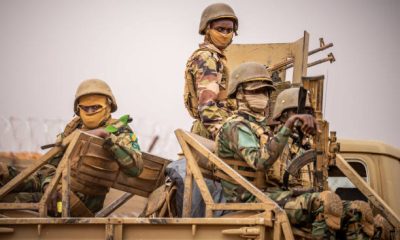

Army Honours Fallen Heroes as Brig. Gen. Braimah, Others Laid to Rest in Maiduguri
ShareFrom Muhammad Muhammad Al-amin, Maiduguri The Nigerian Army has conducted a solemn burial ceremony for Brigadier General Oseni Braimah, Captain...
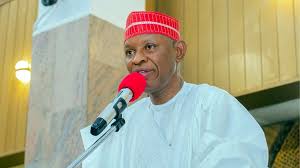

Yusuf Congratulates Abubakar on Election as Int’l Academy of Food Science, Technology Fellow
ShareFrom Rabiu Sanusi, Kano The Governor of Kano State, Abba Yusuf has congratulated Professor Hafiz Abubakar on his election as...
NCA Urges Christians to Exercise Restraint amid ‘Rising Religious Provocations’
ShareFrom Agbo Emmanuel, Kaduna Chairman, Northern Christian Association (NCA) Rev. Joseph John Hayab has called on believers across Nigeria to...
Forum Demands Urgent Security Reset in Nigeria
ShareFrom Agbo Emmanuel, Kaduna The Arewa Consultative Forum (ACF) has declared that Nigeria is now in a “state of war,”...


Wike Urges Contractors to Maintain Projects Deadline
ShareBy Laide Akinboade, Abuja Minister of the Federal Capital Territory (FCT) Nyesom Wike on Wednesday warned contractors handling key infrastructure...


Autism in Nigeria: A Journey of Hope, Struggle and Acceptance
ShareBy Abiemwense Moru Mrs Irene Jacob still remembers the day her son stopped responding to his name. Once lively and...


Dangote Spotlights Refinery, Vision 2030, Others, At Nasarawa Trade Fair
ShareAfrica’s leading conglomerate will feature its flagship Dangote Refinery and Petrochemical Company at the 2026 Nasarawa Trade Fair, which will...

IMF Endorses Nigeria’s Bank Recapitalisation, Calls for Stronger Fiscal Buffers
ShareThe International Monetary Fund (IMF) has endorsed Nigeria’s ongoing bank recapitalisation drive. It said that stronger capital buffers are cushioning...


CBN Proposes Mediation Panel for Loan Disputes
ShareThe Central Bank of Nigeria has proposed the establishment of a mediation panel to serve as the first point of...
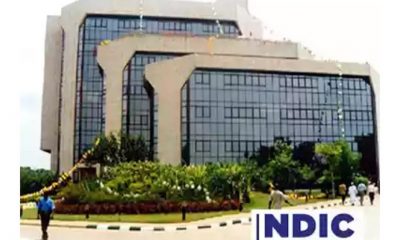

Failed Banks: NDIC Commences Process to Conclude Liquidation of 89 MFBs, PMB
ShareBy Tony Obiechina, Abuja The Nigeria Deposit Insurance Corporation (NDIC) has concluded the process of liquidating 89 closed Microfinance Banks...