
NEWS
Civil Society Rebukes PENGASSAN, Demands Senate Hearing on Maltreatment of Nigerian Staff at TotalEnergies

From Mike Tayese Yenagoa
The Movement of Intellectuals for National Development (MIND), a prominent Civil Society group in Nigeria, has publicly condemned the Petroleum and Natural Gas Senior Staff Association of Nigeria (PENGASSAN) for its recent response to complaints regarding the treatment of Nigerian employees at TotalEnergies.
MIND asserts that PENGASSAN’s attempt to distance itself from the petition, which was submitted to the President of the Nigerian Senate, is disappointing and evasive.
According to Ebi Warekromo, MIND’s Western coordinator, the organization’s petition is founded on verified facts and the experiences of affected workers.
He emphasized that it draws on documented correspondence by the local branch of PENGASSAN, which has previously expressed concerns over unfair labour practices and managerial misconduct at TotalEnergies.
According to him, key issues highlighted include allegations of bullying and intimidation perpetuated by expatriate staff members.
Other concerns raised are serious security breaches and violations of the Nigerian Oil and Gas Industry Content Development (NOGICD) Act, especially the illegal extension of expatriate staff positions beyond their approved tenures.
MIND criticized PENGASSAN’s dismissal of their documentation as “internal correspondence,” calling such a characterization weak and disingenuous.
“Workers’ rights violations and systemic oppression are not internal issues once they begin to harm Nigerian workers,” Warekromo stated.
The organization argues that confidentiality cannot be misused to shield injustices, insisting that internal resolutions must produce tangible results; otherwise, public oversight is warranted.
The group’s concerns extend to the credibility and independence of PENGASSAN in representing its members, questioning its willingness to confront corporate powers on behalf of the workforce. They urged the union to welcome a Senate hearing, seeing it as a chance to clarify its position and renew trust with its workers.
“We are not attacking PENGASSAN; rather, we are responding to the lack of effective representation that has allowed these oppressive practices to go unchecked.”
MIND emphasized. The organization reiterated its stance that where unions hesitate to act, civil society must intervene to ensure justice and fair treatment in labour relations.
MIND advocates for a collaborative approach among all stakeholders, including workers, unions, and regulatory bodies, to promote a healthier working environment within Nigeria’s oil and gas sector.
It asserts that an inquiry could become a pivotal platform for addressing critical issues surrounding labour rights and corporate accountability.
MIND assured that it remains steadfast in advocating for the rights of Nigerian workers, urging PENGASSAN to take substantial action to uphold its responsibilities as a labour union.
 | Mail received.Thanks for sharing!Acknowledged. |
By Raphael Atuu, Abuja
Residents of Waru District in Apo, within Nigeria’s Federal Capital Territory, are raising the alarm over what they describe as a prolonged and frustrating lack of electricity supply in the area.
Located not far from Abuja’s Central Area, Waru remains in near constant darkness, a situation many residents say has worsened over time despite the district’s proximity to key parts of the capital.
According to findings, electricity supply in Waru is not only irregular but nearly non-existent. In some cases, residents report going up to three consecutive days without power.
When electricity does come, it is often in the late hours of the night and lasts only for a few minutes or, at best, a couple of hours before being cut off again.The district, which hosts notable residential estates such as Efab Sunshine Estate, operates largely on prepaid metering systems. However, residents argue that paying for electricity upfront has not translated into reliable service delivery.
“It is frustrating to keep recharging meters without actually enjoying power,” a resident lamented. “We see nearby areas like Apo Resettlement and Kabusa enjoying stable electricity, yet Waru is left in darkness most of the time.”
This perceived disparity in power distribution has sparked questions among residents about fairness and accountability. Many are now openly questioning the operations of the Abuja Electricity Distribution Company (AEDC), the agency responsible for power supply in the area.
“Is AEDC selectively supplying electricity to certain areas?” another resident queried. “Why should a well-fast developing district like Waru, contributing significantly to Abuja’s growth both in population and infrastructure, be neglected?”
Multiple stakeholders and community representatives have reportedly visited AEDC offices in Apo to lodge complaints and seek explanations. However, these efforts have yielded little to no improvement, leaving residents feeling ignored and helpless.
Beyond the inconvenience, the erratic power supply poses serious security concerns. With prolonged darkness, the district becomes vulnerable to criminal activities, as street lighting and residential security systems are often rendered ineffective.
Businesses in the area are also bearing the brunt of the situation. Small and medium-scale enterprises, which depend heavily on electricity, are forced to rely on generators, leading to increased operational costs and reduced profitability. Some business owners say they are on the verge of shutting down.
The situation has also affected students and remote workers who rely on stable electricity for studying and online engagements.
Health implications have been noted as well, as residents struggle to preserve food and access basic cooling systems in the face of intense heat.
Observers argue that the persistent blackout in Waru reflects broader systemic issues within the power distribution network, including possible infrastructure deficits, load shedding practices, or administrative inefficiencies.
Residents are now calling for urgent intervention by relevant authorities, including the Federal Capital Territory Administration (FCTA) and regulatory bodies in the power sector, to investigate and address the root causes of the problem.
They are also demanding transparency from AEDC regarding electricity allocation and distribution patterns in Apo and its surrounding districts.
For many in Waru, the question remains unanswered: why does darkness persist in a district so close to the heart of Nigeria’s capital?
Until concrete action is taken, residents say they will continue to endure what has become a daily struggle living without reliable electricity in one of the country’s most important cities.
By David Torough, Abuja
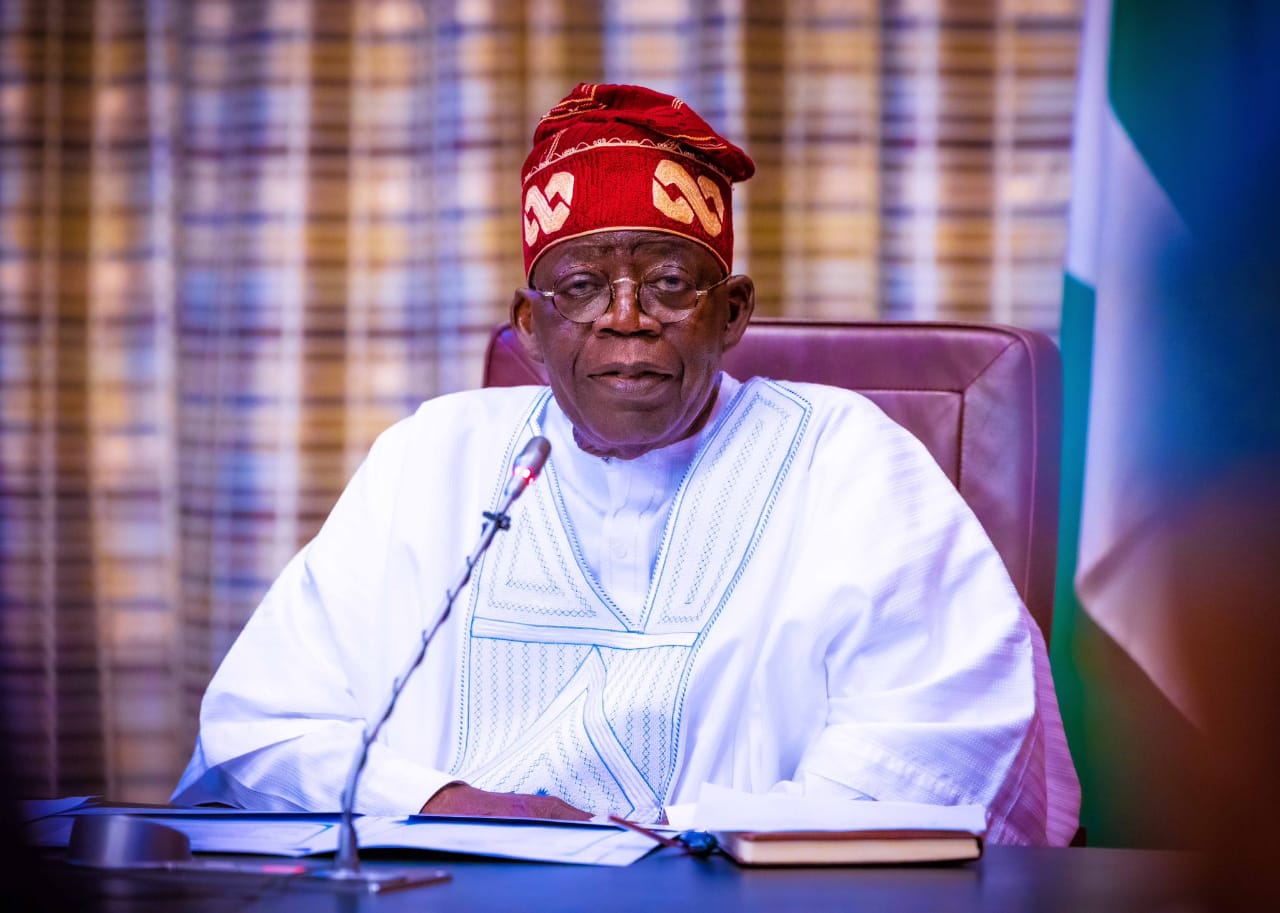
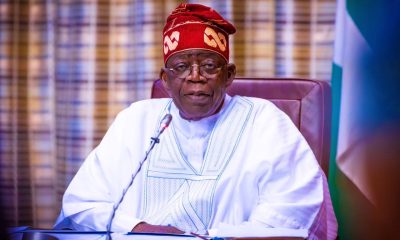
President Bola Tinubu has called for unity, resilience and renewed commitment to nation-building, urging Nigerians to work together to overcome poverty, ignorance and hopelessness.
Tinubu made the call on Thursday at a meeting with leaders and coordinators of the Renewed Hope Ambassadors at the State House, Abuja.
He described the gathering as an opportunity to reinforce democratic ideals, stressing that Nigeria’s progress depends on shared values, integrity and a common national vision.
The president emphasised that democracy must be sustained through respect for the rule of law, separation of powers and active citizen participation.
Highlighting hope as a driver of development, Tinubu urged Nigerians, particularly the youth, to remain optimistic and committed to national growth.
“This is an opportunity of a lifetime to break the shackles of poverty, ignorance and hopelessness, and to build a nation anchored on freedom and democracy.’
He cautioned against disregard for lawful authority, stressing the importance of upholding judicial decisions.
“We cannot submit to disobedience of lawful court orders. We must embrace the judiciary, whether it favours us or not.”
Tinubu said national greatness could only be achieved through unity and a shared vision for progress and prosperity.
“There is no path to national greatness other than building one country with a common vision for development.”
The president assured supporters of his resolve to remain steadfast in spite of challenges, noting that leadership requires courage and perseverance.
Tinubu reiterated his administration’s commitment to economic reforms and infrastructure development aimed at improving citizens’ welfare.
“The journey is not easy, but I assure you, you will not regret being part of this movement for national renewal,” he said.
The president urged the ambassadors to mobilise support and deepen public understanding of government policies and programmes, especially at the grassroots.
National Chairman of the All Progressives Congress (APC), Nantawe Yilwatda, called for stronger collaboration between the ambassadors and party structures at the grassroots.
He said such synergy would enhance voter education, mobilisation and democratic participation across the country.
In his remarks, Director-General of the Renewed Hope Ambassadors and governor of Imo, Hope Uzodimma, commended the president’s reforms as impactful and far-reaching.
Uzodimma pledged continued mobilisation and sensitisation of Nigerians to sustain momentum ahead of the 2027 general elections.
The event was attended by Gov. Uba Sani of Kaduna State, former Senate President Pius Anyim, former Speaker Aminu Bello Masari, former governor of Nasarawa State, Tanko Al-Makura and former Delta governor Ifeanyi Okowa, who all pledged continued mobilisation and support for government programmes.
From Attah Ede, Makurdi
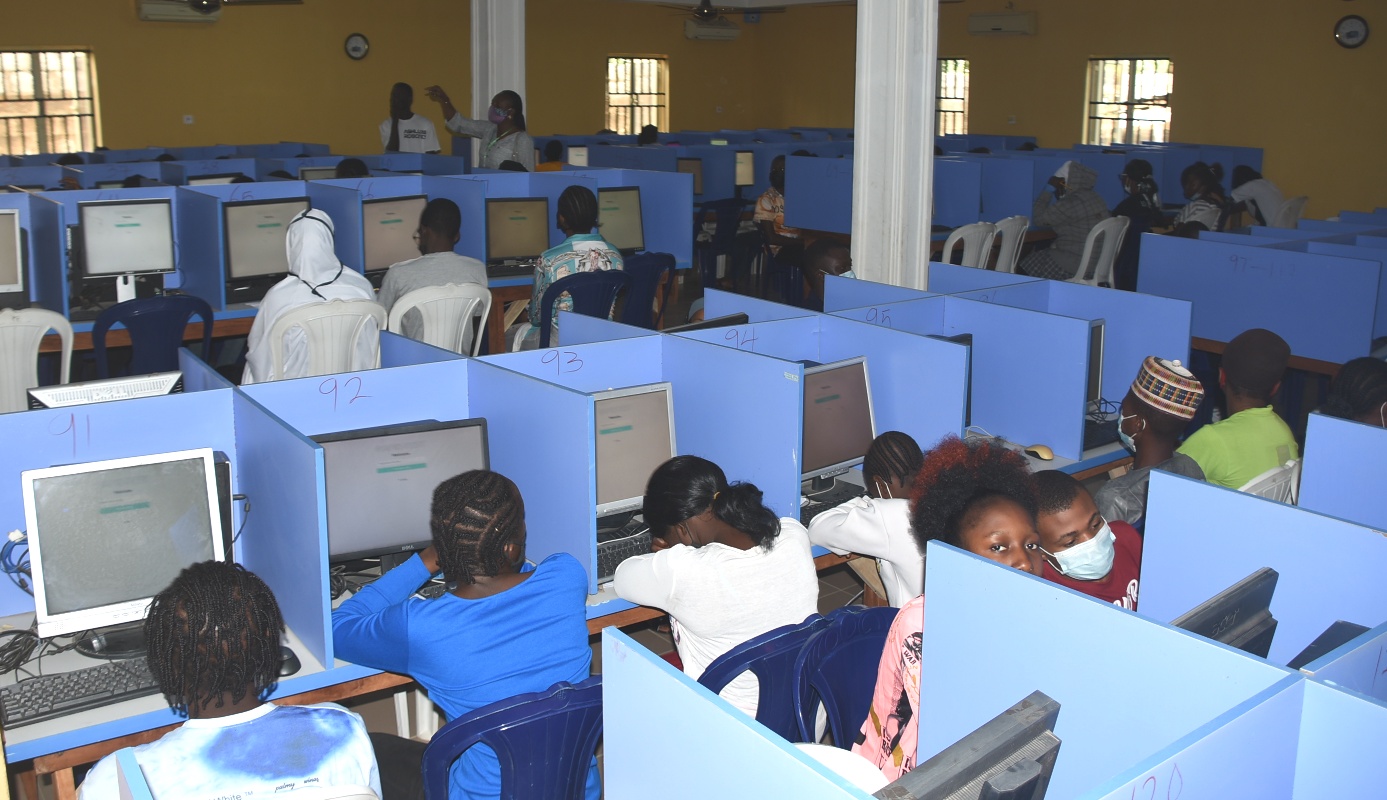
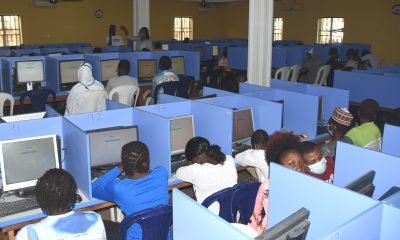
A wave of concern has trailed the ongoing Unified Tertiary Matriculation Examination (UTME) nationwide following the abduction of candidates in Benue State and a separate controversy over alleged religious discrimination at an examination centre in Ibadan, Oyo State.
In Benue, suspected gunmen on Wednesday night abducted at least 14 passengers, most of them prospective UTME candidates, along the Makurdi–Otukpo road.
The victims were travelling in a bus operated by the state-owned Benue Links transport company en route to Otukpo for their examinations scheduled for Thursday.The attack reportedly occurred between 7:00 p.
m. and 8:00 p.m. near Otukpo in Otukpo Local Government Area, when the assailants intercepted the vehicle, dispossessed the passengers of their belongings and forced them into the bush.Eyewitness accounts indicated that the bus was carrying about 18 passengers, mainly young men and women heading to sit for the examination. The driver and one passenger managed to escape the attack.
Confirming the incident, the Benue State Commissioner of Police, Ifeanyi Emenari, said 14 passengers were kidnapped while one escaped. He disclosed that he was personally leading a coordinated rescue operation in the area alongside other security operatives.
According to him, preliminary findings suggest the vehicle may have violated the transport company’s policy against night travel, as the driver allegedly picked up passengers after official hours. He added that investigations are ongoing to determine the circumstances surrounding the journey.
Similarly, the Chairman of Otukpo Local Government Area, Maxwell Ogiri, confirmed that security agencies had been deployed to comb nearby forests in a bid to rescue the victims, noting that the abductees were largely students travelling for the UTME.
The incident highlights growing security concerns along the Makurdi–Otukpo corridor, where travellers have reportedly faced repeated attacks in recent months.
Meanwhile, in a separate development in Ibadan, the Joint Admissions and Matriculation Board (JAMB) addressed a controversy involving a candidate allegedly asked to remove her hijab before being allowed into a Computer-Based Test (CBT) centre.
The incident, which occurred at the Esther Oshikoya CBT Centre during Thursday’s examination screening, drew public attention after a video surfaced online showing the candidate being delayed over her religious attire.
In a statement, JAMB attributed the situation to the actions of an “overzealous” ad hoc staff member who failed to adhere to official guidelines. The Board emphasized that it does not require candidates to remove or alter religious dressing, including the hijab.
JAMB said it intervened immediately upon being notified, directing that the candidate be allowed to proceed without hindrance and reiterating its policy of respecting the religious rights of all candidates.
The Board further assured the public that all ad hoc personnel have been re-briefed on proper screening procedures to prevent a recurrence, stressing that candidates must not face discrimination based on faith or appearance.
As the UTME continues nationwide, both incidents have underscored the need for improved security and strict adherence to examination guidelines to ensure a safe and fair process for all candidates.


Residents Decry Persistent Power Outage in Abuja Community
ShareBy Raphael Atuu, Abuja Residents of Waru District in Apo, within Nigeria’s Federal Capital Territory, are raising the alarm over what they...

2027: Tinubu Meets Coordinators, Renews Plea for Unity, Rule of Law
ShareBy David Torough, Abuja President Bola Tinubu has called for unity, resilience and renewed commitment to nation-building, urging Nigerians to...

Gunmen Abduct 14 UTME Candidates in Benue Enroute Exams Centre
ShareFrom Attah Ede, Makurdi A wave of concern has trailed the ongoing Unified Tertiary Matriculation Examination (UTME) nationwide following the...

Army Honours Fallen Heroes as Brig. Gen. Braimah, Others Laid to Rest in Maiduguri
ShareFrom Muhammad Muhammad Al-amin, Maiduguri The Nigerian Army has conducted a solemn burial ceremony for Brigadier General Oseni Braimah, Captain...

Yusuf Congratulates Abubakar on Election as Int’l Academy of Food Science, Technology Fellow
ShareFrom Rabiu Sanusi, Kano The Governor of Kano State, Abba Yusuf has congratulated Professor Hafiz Abubakar on his election as...
NCA Urges Christians to Exercise Restraint amid ‘Rising Religious Provocations’
ShareFrom Agbo Emmanuel, Kaduna Chairman, Northern Christian Association (NCA) Rev. Joseph John Hayab has called on believers across Nigeria to...
Forum Demands Urgent Security Reset in Nigeria
ShareFrom Agbo Emmanuel, Kaduna The Arewa Consultative Forum (ACF) has declared that Nigeria is now in a “state of war,”...


Wike Urges Contractors to Maintain Projects Deadline
ShareBy Laide Akinboade, Abuja Minister of the Federal Capital Territory (FCT) Nyesom Wike on Wednesday warned contractors handling key infrastructure...


Autism in Nigeria: A Journey of Hope, Struggle and Acceptance
ShareBy Abiemwense Moru Mrs Irene Jacob still remembers the day her son stopped responding to his name. Once lively and...


Dangote Spotlights Refinery, Vision 2030, Others, At Nasarawa Trade Fair
ShareAfrica’s leading conglomerate will feature its flagship Dangote Refinery and Petrochemical Company at the 2026 Nasarawa Trade Fair, which will...