
NEWS
FG Rolls Out 2000 Tractors, Other Implements to Achieve Food Sovereignty


By Raphael Atuu, Abuja
The Federal Government has rolled out 2,000 tractors, implements and over 9,000 spare parts to enhance food production, improve the income of Nigerian farmers and achieve food sovereignty as well as revolutionize the agricultural ecosystem.
Speaking during the Official Flag-off of the Deployment of 2000 Tractors, Implement and over 9000 spare parts under the Renewed Hope National Agricultural Mechanization Programme, in held Sheda, Abuja, recently, the Minister of Agriculture and Food Security, Sen.
Abubakar Kyari revealed that the Initiative was the largest single agricultural mechanization programme ever undertaken on the African continent. ‘’This is not merely an equipment rollout. It is the ignition of a national agricultural productivity revolution, ending the long era of low tractor density in Nigeria’’.Kyari stated that ‘’Through the Renewed Hope National Agricultural Mechanization Program, we are deploying 2,000 heavy-capacity tractors and over 9,000 precision implements under a rigorously engineered national framework. This first tranche of 600 tractors marks the beginning of a phased acceleration. This will be followed by 750 tractors and 650 tractors, culminating in a nationwide force of 2,000 mechanization assets’’.
He said that ‘’ In line with Mr. President’s vision that scale must drive impact, these tractors are not distributed for private ownership. They are entrusted to Mechanization Service Providers (MSPs) where each tractor, with the capacity to service approximately 600 hectares per year, becomes not just a machine but a multiplier of productivity. Many of these MSPs are youth-and-women-led enterprises operating under a lease-to-own model. This is not just about 2,000 beneficiaries. It is about 1.2 million farmers across over 1.5 million hectares annually. It is about national food sovereignty’’.
The Minister pointed out that ‘’the Ministry stands as the sovereign steward, providing policy authority, standards governance, configuration control, lifecycle asset management, quality assurance, performance monitoring, strategic feedback systems, and national capacity building. This is not just equipment distribution. It is a governed transformation as mechanization provides the horsepower, finance provides the liquidity and policy provides the stability. Together, they deliver food security, job creation, and economic resilience’’.
He further said that ‘’ each tractor deployed today comes with two years of free service support. We are institutionalizing maintenance culture, genuine parts replacement, asset longevity, and disciplined performance management. Because mechanization without maintenance is an expenditure. Mechanization with maintenance is investment’’.
He stressed that ‘’ we are deploying 36 mobile service trucks for rapid first-line technical response. We are constructing seven mega mechanization service centers strategically across the nation. And we are catalyzing the establishment of one mega tractor assembly plant capable of producing between 2,000 and 4,000 tractors annually. We are not importing dependency. We are building industrial capability’’.
He further revealed that ‘’Beyond procurement and sustainability lies the structure. The Bank of Agriculture (BOA), in collaboration with Heifer International, is strategically positioned to deploy structured financing models, leasing, hire-purchase, service aggregation, and performance-based access systems that guarantee equitable access, financial discipline, asset sustainability, and measurable developmental impact. These tractors will not sit idle. They will work and multiply productivity. They will generate value across the agricultural value chain.
According to him, ‘’this intervention is part of a comprehensive agricultural financing ecosystem envisioned by Mr. President. Through a ₦50 billion catalytic seed fund with the Bank of Industry (BOI), we are unlocking agro-industrial investment at scale. This wet season alone, ₦250 billion has been mobilized to finance one million smallholder farmers, each cultivating an average of one hectare in 2026 in partnership with state governments.
On this note, to our Mechanization Service Providers: you are the operators of national assets. Let discipline, professionalism, and integrity define your stewardship. To our young entrepreneurs and women-led enterprises: this is your industrial frontier. Lead it with excellence. To our farmers: prepare for higher yields, faster turnaround cycles, reduced drudgery, and expanded acreage. To our partners and investors: Nigeria is mechanizing at scale. You are encouraged to join the momentum, ‘’ the minister appealed.
In his remarks, the Minister of State for Agriculture and Food Security, Sen. Dr. Aliyu Sabi Abdullahi said that the programme would operate through mechanization service centers, allowing farmers to access equipment without the burden of purchasing tractors.
He assured farmers that the programme would be implemented fairly and inclusively, particularly for women who account for a significant portion of agricultural production.
During his welcome address, Managing Director, Bank of Agriculture, BOA, Mr Ayo Sotinrin, said the programme was designed to create a sustainable mechanization ecosystem and avoid past failures.
Sotinrin, revealed that the programme has already attracted strong demand from agribusiness operators and mechanization providers, with over 10,000 applications received in the first phase alone.
He explained that each tractor must service at least 600 hectares annually to remain economically viable, ensuring sustained revenue generation and long-term operational sustainability.
He added that the initiative would operate through structured financing models, including leasing arrangements, service-based repayment, and partnerships with state governments, private operators, and development partners.

From Muhammad Muhammad Al-amin, Maiduguri
The Nigerian Army has conducted a solemn burial ceremony for Brigadier General Oseni Braimah, Captain Ismail, and several other soldiers who lost their lives during a recent insurgent attack in Borno State.
The fallen officers and soldiers were laid to rest on Wednesday at the Maimalari Cantonment Cemetery in Maiduguri, where they were accorded full military honours in recognition of their service and sacrifice to the nation.
The troops were killed on April 9 following coordinated attacks by suspected Boko Haram and Islamic State West Africa Province (ISWAP) fighters on military positions in Benisheikh, a key town in Kaga Local Government Area along the Maiduguri–Damaturu highway.
In a statement shared on its official Facebook page, the Nigerian Army described the burial as a deeply emotional and solemn occasion. It noted that the ceremony reflected both grief and honour as the nation paid tribute to the fallen heroes.
“Their sacrifice highlights the enormous price paid by members of the Armed Forces in defending Nigeria’s peace, unity, and security,” the statement said.
The event was attended by prominent figures, including Borno State Governor Babagana Zulum, Chief of Defence Staff Christopher Musa, and other senior military officers. They praised the deceased as courageous patriots who made the ultimate sacrifice in service to the country.
Prayers were offered for the departed, while military citations outlining their careers and contributions were read in the presence of grieving family members.
The Army also acknowledged the pain of the bereaved families, noting that their loss underscores the human cost of ongoing security operations, even as the bravery of the fallen remains a source of national pride.
From Rabiu Sanusi, Kano
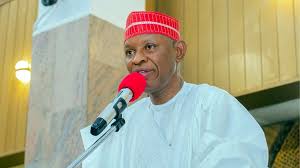
The Governor of Kano State, Abba Yusuf has congratulated Professor Hafiz Abubakar on his election as a Fellow of the International Academy of Food Science and Technology.
This was contained in a statement by the Governor’s Chief Press Secretary, Mustapha Muhammad, on Sunday.
Prof.
Hafiz is the Chairman, Northwest University Governing Council.The Governor described the honour as a well-deserved recognition of Prof. Abubakar’s outstanding contributions to food science, research, and innovation at both national and international levels.
Yusuf noted that the achievement has brought pride not only to Kano State but to Nigeria as a whole, highlighting the growing impact of Nigerian scholars on the global stage.
He commended Prof. Abubakar for his dedication, hard work, and commitment to advancing scientific knowledge, particularly in the field of food science and technology.
The Governor expressed confidence that the recognition would inspire young academics and researchers across Kano State to strive for excellence in their respective fields.
He further assured of his administration’s continued support for education, research, and innovation as key drivers of sustainable development.
Prof. Abubakar was among 27 distinguished scientists from 15 countries selected by the International Union of Food Science and Technology for the 15th class of the Academy.
He is expected to be formally inducted in October 2026 at the World Congress of Food Science and Technology in Hong Kong.
From Agbo Emmanuel, Kaduna
Chairman, Northern Christian Association (NCA) Rev. Joseph John Hayab has called on believers across Nigeria to exercise restraint in the face of rising religious provocations on social media, warning that engaging in heated online exchanges does not reflect the teachings of Christ.
The admonition was contained in a statement issued to journalists in Kaduna on Wednesday, particularly to young people and clergy, to avoid what he described as “vain and unprofitable arguments” capable of breeding division and spiritual decline.
Citing several Bible passages, including Titus 3:9, 2 Timothy 2:14, 2 Timothy 2:23 and 1 Timothy 6:4–5, Hayab noted that Scripture consistently warns believers against quarrels that produce strife rather than edification, stressing that online religious debates have become counterproductive, shifting from meaningful dialogue to abusive exchanges that undermine Christian witness.
The cleric further reiterated that Christians are not called to respond to provocation with insults or hostility, even when their faith is mocked or misunderstood as he explained that true Christian maturity is demonstrated through restraint, wisdom and peaceful conduct even as “believers cannot fight for God.”
He said, “The Bible warns Christians against engaging in vain arguments. From a Biblical angle, vain arguments include reckless, unprofitable, and provocative debates. Believers in Christ are, therefore, instructed to avoid vain arguments because they generate strife, ungodliness, and ruin the speakers and the listeners.
“There are applicable Bible verses, such as Titus 3:9, 2 Timothy 2:14, 2 Timothy 2:23, and 1 Timothy 6:4-5, which clearly admonish Christians to live by example. Accordingly, as a Christian leader, I do not teach, encourage or instruct church members or any Christian at all to insult the divinity of another faith just because some disgruntled persons say or write awful things about Jesus or Christianity. An honest study of the Bible will help you understand that as an ardent follower of Christ, you cannot “fight for God.”
“Our Lord and Saviour Jesus Christ can “fight” those who fight Him, as He did with Saul on his way to Damascus. From a Christian biblical viewpoint, the phrase “Who can battle with the Lord?” underscores that no one can battle against the Lord, because God is an omnipotent warrior and defender whose battles are strategic, and He never loses. Therefore, no Christian should be deceived into copying anyone’s religious zeal.
“Besides, the message in the verses against vain arguments is to prevent believers from wasting time on unproductive, divisive conversations that do not foster spiritual growth or love. Such debates are “unprofitable, worthless, and causes of ungodliness.
“Therefore, the Biblical instruction is to “avoid,” “shun,” or “have nothing to do with” them. It is not a show of strength when any Christian uses abusive words with others, thinking that they were “defending the faith.” Rather, such an act derides the Christian faith, makes a mockery of Christ’s spiritual authority and dims the bright light the Christian gospel brings to the world.”



Army Honours Fallen Heroes as Brig. Gen. Braimah, Others Laid to Rest in Maiduguri
ShareFrom Muhammad Muhammad Al-amin, Maiduguri The Nigerian Army has conducted a solemn burial ceremony for Brigadier General Oseni Braimah, Captain...

Yusuf Congratulates Abubakar on Election as Int’l Academy of Food Science, Technology Fellow
ShareFrom Rabiu Sanusi, Kano The Governor of Kano State, Abba Yusuf has congratulated Professor Hafiz Abubakar on his election as...
NCA Urges Christians to Exercise Restraint amid ‘Rising Religious Provocations’
ShareFrom Agbo Emmanuel, Kaduna Chairman, Northern Christian Association (NCA) Rev. Joseph John Hayab has called on believers across Nigeria to...

Forum Demands Urgent Security Reset in Nigeria
ShareFrom Agbo Emmanuel, Kaduna The Arewa Consultative Forum (ACF) has declared that Nigeria is now in a “state of war,”...


Wike Urges Contractors to Maintain Projects Deadline
ShareBy Laide Akinboade, Abuja Minister of the Federal Capital Territory (FCT) Nyesom Wike on Wednesday warned contractors handling key infrastructure...


Autism in Nigeria: A Journey of Hope, Struggle and Acceptance
ShareBy Abiemwense Moru Mrs Irene Jacob still remembers the day her son stopped responding to his name. Once lively and...


Dangote Spotlights Refinery, Vision 2030, Others, At Nasarawa Trade Fair
ShareAfrica’s leading conglomerate will feature its flagship Dangote Refinery and Petrochemical Company at the 2026 Nasarawa Trade Fair, which will...


IMF Endorses Nigeria’s Bank Recapitalisation, Calls for Stronger Fiscal Buffers
ShareThe International Monetary Fund (IMF) has endorsed Nigeria’s ongoing bank recapitalisation drive. It said that stronger capital buffers are cushioning...


CBN Proposes Mediation Panel for Loan Disputes
ShareThe Central Bank of Nigeria has proposed the establishment of a mediation panel to serve as the first point of...


Failed Banks: NDIC Commences Process to Conclude Liquidation of 89 MFBs, PMB
ShareBy Tony Obiechina, Abuja The Nigeria Deposit Insurance Corporation (NDIC) has concluded the process of liquidating 89 closed Microfinance Banks...