
Religion
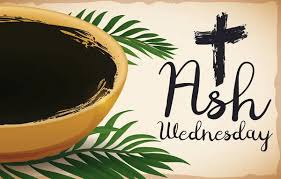
Ash Wednesday: Lenten Season Period of New Hope – Aneke

From Sylvia Udegbunam, Enugu
The Director of communications, Catholic diocese of Enugu Rev. Fr. Anthony Aneke, in his 2026 Ash Wednesday homily write up emphasized that lenten season is a period that God gives new hope, new beginnings, new possibilities to christians.
A period of another second chance.In his homily, he pointed that it is a journey of repentance marked by intense prayer, fasting, almsgiving and other forms of charitable works.
“It is a special moment to grow in faith, hope and charity. In fact, it is a special moment God is giving you to have a fresh encounter with him. Don’t miss it. He is a God of new hopes, new beginnings and new possibilities. In fact, God has many second chances. The Lenten period is another second chance for you.According to him, The Lenten period begins on Ash Wednesday and ends on Holy Saturday, the day before Easter. When we exclude Sundays, that makes a total of forty days. The number forty is very symbolic. The earliest reference we have to a forty day preparation for Easter is in the canons of the Council of Nicaea (A.D. 325). One of the most expressions of its meaning however appears in the work of St. John Cassian in the fifth century.”
He describes Lent as “the tithes of the year”, because it is roughly a tenth of the days in a year. We give those days to the Lord as a special offering; and in doing so; we imitate his own fast, as he intended us to do. Cassian also notes the Old Testament models of Israel in the wilderness, of Moses and Elijah, who also underwent forty days fast.
The placing of ashes on our foreheads with the words, “dust you are and unto dust you shall return” or “repent and believe the gospel” is very remarkable. What does Ash mean for you on Ash Wednesday?
The bible tradition first speaks of ashes as a symbol of Mourning and repentance. We see this in the biblical stories of David, of Job, Esther, of Jonah and the Ninevites, of the prophets like Jeremiah. In each of these episodes, individuals acknowledge their nothingness before God and express their sorrows to God because of their sins and ask for forgiveness, making promises of repentance.
Again, ashes symbolizes our frailty and hence our mortality. This is the fact that we are not as strong as we think we are. We are not as powerful as we think we are. We are finite. We are limited. And such, we will certainly die one day.
Finally, Ashes symbolize our final destiny – Gen: 2:8. We come from Dust and we are going back to dust.
Do we really and wholly come from dust? No. Remember, God breathed into dust and man came to be. We are all breaths of an Immortal God. And that’s how we reflect his image and likeness. If this is true, then ashes represent just the vehicle of our material existence. It does not tell the full story of our nature. But it does point to a powerful God who by the very fact of his breath, we are immortal.
So the paradox is, ashes tell us about our nothingness and at the same time our somethingness. Ashes tell about our mortality and also about our immortality. But most importantly, Ashes tell about the all-powerful God who can turn “nothing” into something and something into nothing. It is this God who can turn these ashes again into a glorious resurrected body. That God is all final end. Our Immortality can end either in his grace or in disgrace. Only those who have identified with his grace will end his grace at the end. Ashes speaks of the hope of our immortality in his grace. Lent is a period of extravagant grace my dear brothers and sisters. Don’t miss it.
May the ashes on your forehead today incite your hope of genuine repentance and faith in his mercy. May these ashes remind you of your nothingness before God and your ‘somethingness’ with Him. May the ashes always remind you of the vanity of your mortality also and also the profundity of your immortality with Him”.
Religion
*Palm Sunday: Show Empathy, Ease Nigerians’ Burden, CAN urges Leaders………laments state of nation
By Laide Akinboade, Abuja
The Christian Association of Nigeria (CAN), at the weekend said in view of the current economic crunch in Nigeria, leaders must not be loud, but be restraints, have empathy and be focused on the common good of the people.
In a statement issued by Archbishop Daniel Okoh,President,CAN, in commemoration of Palm Sunday in Abuja.
The CAN President, lamented about the state of the nation, saying families are feeling the weight of time, cost of living is rising and normal daily lives is getting harder for families.
He said food cost is rising, transportation is high and for many Nigerians is how to stay afloat.
He said it is at this time leaders must make decisions that would ease the pain and burdens of Nigerians.
The statement reads, “As we observe Palm Sunday, we remember a powerful moment. Jesus entered Jerusalem with calm resolve, at a time of uncertainty and expectation. It was not a show of force, but a message of peace, purpose, and hope. In a tense atmosphere, he chose humility; riding on a colt, not in the trappings of power. That choice still speaks to us today.
“Across Nigeria, many are feeling the weight of the times. The cost of living is rising. For countless families, daily life is getting harder. Events far beyond our borders; especially tensions involving Iran, Israel, and the United States, are unsettling global energy markets. The impact is already here. Fuel is more expensive. Transport costs are rising. Food prices are climbing. In moments like this, the calm and clarity of Palm Sunday matter even more.
“For many Nigerians, the concern is simple and immediate: how to cope, how to plan, how to stay afloat. When life feels this uncertain, the tone of national life matters. Words carry weight. Actions have consequences. Palm Sunday reminds us that in tense moments, people need reassurance. They need stability. They need the quiet confidence that those in positions of responsibility understand what they are going through.
“That is why the lesson of Palm Sunday matters for leadership. True leadership is not always loud. It is seen in restraint, in empathy, and in a steady focus on the common good. It is reflected in decisions that ease burdens, calm anxieties, and bring people together. This is a time for such wisdom”.
The CAN boss, therefore urged all Christians in Nigeria, to stand firm on faith, stand together and in peace.
“For the Church and all people of faith, Palm Sunday is also a call to responsibility. It reminds us of a rare moment when people from all walks of life came together with one purpose: to welcome the Messiah in hope, humility, and expectation. That same spirit is needed now. We must stand for peace. We must strengthen unity. We must support one another. In a season that can easily tilt towards tension, we must remain a steady source of light and hope.
“And to every Nigerian, especially the young and those feeling the strain most deeply, do not lose hope. The challenges are real, but they are not the end of the story.
“As we journey through this sacred season, may the spirit of Palm Sunday guide us towards quiet courage, shared purpose, and a renewed commitment to the good of all”, he urged.
Congratulates Muslims on Eid-el-Fitri, urges unity amid economic, security challenges
By Laide Akinboade, Abuja
The Christian Association of Nigeria (CAN), congratulate the Muslim brothers and sisters across the country as they celebrate Eid-el-Fitri 2026.
In a statement issued and signed by
Archbishop Daniel Okoh,President,
Christian Association of Nigeria (CAN), in Abuja
He noted that, Eid marks the end of Ramadan, a period of fasting, prayer, reflection and giving.
He said today Christians in Nigeria celebrate with them, not only the breaking of the fast, but also the strengthening of faith, families and hope.
“At a time like this, our nation needs unity more than ever. From insecurity to economic hardship, the challenges before us are real, but so too is our shared strength. Nigeria works best when we stand together; not divided by faith or ethnicity, but united by a common purpose and a shared future.
“The spirit of Eid; kindness, sacrifice and care for others, offers us a way forward. It calls us to reject division, to choose dialogue over distrust, and to act in ways that heal rather than harm. This is how nations move forward, not just in words, but through everyday actions”, the CAN President, said.
He said, “We join our Muslim compatriots in prayer for Nigeria; for lasting peace, improved security, economic recovery, and leadership guided by wisdom and compassion. We pray that the right values nurtured during Ramadan will endure beyond this season, especially in caring for the poor, protecting the vulnerable, and building a more just society.
“Let this Eid be more than a celebration; let it be a reset for our national conscience”.

A Sokoto-based Islamic scholar, Sheikh Musa Lukuwa, yesterday led his followers in observing Eid al-Fitr prayers in defiance of a directive issued by Sultan Muhammad Sa’ad Abubakar III, who had declared Friday as the official Sallah day.
Lukuwa conducted the two-unit Eid prayer at his Mabera mosque at about 9:10am, hours after the Sultan announced that the Shawwal crescent moon had not been sighted anywhere in Nigeria, thereby extending the Ramadan fast by a day.
In a message circulated on social media, the cleric justified his decision, citing confirmed reports of moon sightings in neighbouring Niger Republic.
“Niger Republic is very close to us about 100 kilometres away.
“If we accept reports from cities like Kano or even Lagos, which are farther away, there is no reason to reject confirmed sightings from a neighbouring country,” ” he said.
He stressed that the action was not intended to undermine the Sultan’s authority but was based on religious conviction.
“We usually follow the Sultan’s directive in starting and ending Ramadan. However, when it is clear that the moon has been sighted, we must act in accordance with the teachings of the Prophet, even if it differs from the Sultan’s declaration,” he stated.
Providing historical context, Lukuwa referenced the era of Abubakar Mahmoud Gummi, when prominent scholars independently announced moon sightings before the responsibility was centralised under the Sultan to ensure unity among Muslims.
He maintained that the Sultan’s decision on this occasion was incorrect.
He reportedly informed congregants around midnight of the development and directed them to assemble for Eid prayers Thursday morning.
In Nigeria, the Sultan of Sokoto, who also serves as President-General of the Nigerian Supreme Council for Islamic Affairs, is the recognised authority for declaring the commencement and end of Ramadan based on verified moon sightings across the country.
His announcements are widely followed to promote unity among Muslims.
However, differences over moon sightings especially when reports emerge from neighbouring countries have occasionally led to divergent observances by some clerics and communities, particularly in northern Nigeria.
This is not the first time Lukuwa and his followers have taken a position at variance with the Sultan’s official declaration, reflecting a broader debate within Islamic jurisprudence on the acceptance of moon sightings beyond national boundaries.


Mutfwang Holds Close Door with Former State Governors
ShareFrom Jude Dangwam, Jos Plateau State Governor, Caleb Mutfwang has convened a strategic meeting with former governors of the state towards addressing the security challenges bedevilling the state. The meeting held...

Lobi Stars Trim Squad to Push for Promotion
ShareThe Nigerian National League (NNL) side, Lobi Stars Football Club of Makurdi, has trimmed its squad and retained a few quality players to push for promotion to the...


Pope Criticises ‘Tyrants’ Who Spend Billions on Wars after Trump Spat
SharePope Leo has criticised leaders who spend billions on wars and said the world was “being ravaged by a handful of tyrants” in unusually forceful comments during a...


Nigerian Men Scared of Bold, Confident Women, Phyna Claims
ShareFormer Big Brother Naija winner, Josephine Otabor, popularly known as Phyna, has claimed that she is still single because Nigerian...


Residents Decry Persistent Power Outage in Abuja Community
ShareBy Raphael Atuu, Abuja Residents of Waru District in Apo, within Nigeria’s Federal Capital Territory, are raising the alarm over what they...

2027: Tinubu Meets Coordinators, Renews Plea for Unity, Rule of Law
ShareBy David Torough, Abuja President Bola Tinubu has called for unity, resilience and renewed commitment to nation-building, urging Nigerians to...


Gunmen Abduct 14 UTME Candidates in Benue Enroute Exams Centre
ShareFrom Attah Ede, Makurdi A wave of concern has trailed the ongoing Unified Tertiary Matriculation Examination (UTME) nationwide following the...
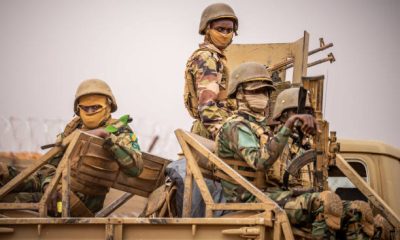

Army Honours Fallen Heroes as Brig. Gen. Braimah, Others Laid to Rest in Maiduguri
ShareFrom Muhammad Muhammad Al-amin, Maiduguri The Nigerian Army has conducted a solemn burial ceremony for Brigadier General Oseni Braimah, Captain...

Yusuf Congratulates Abubakar on Election as Int’l Academy of Food Science, Technology Fellow
ShareFrom Rabiu Sanusi, Kano The Governor of Kano State, Abba Yusuf has congratulated Professor Hafiz Abubakar on his election as...
NCA Urges Christians to Exercise Restraint amid ‘Rising Religious Provocations’
ShareFrom Agbo Emmanuel, Kaduna Chairman, Northern Christian Association (NCA) Rev. Joseph John Hayab has called on believers across Nigeria to...