
DEFENCE
Indian Private Arms Maker Targets Global Defence Market Expansion


India’s push for defence self-reliance is gathering pace as SSS Defence, the country’s only private-sector original equipment manufacturer (OEM) of small arms, positions itself for deeper penetration of the global arms market.
Chief Executive Officer of the company, Vivek Krishnan, disclosed this in an interview.
The CEO spoke on the sidelines of an interaction with a delegation of foreign defence journalists visiting India on a Familiarisation Capsule organised by the Ministries of Defence and External Affairs.
Krishnan said the firm had distinguished itself by designing, manufacturing, testing and certifying its weapon systems entirely in-house, with full ownership of intellectual property.
He explained that India historically lacked a strong private gun-making culture, unlike countries such as the United States or Brazil where civilian shooting traditions helped nurture private weapons manufacturers.
“India has never had widespread private gun production; most weapons were clustered within the military and armed forces. So it was not surprising that private-sector manufacturing came relatively late,” he said.
According to him, policy reforms around 2016 opened the door for new entrants, prompting the company to invest heavily in indigenous design and production rather than relying on foreign licensing.
“What we have built over the last decade is a complete intellectual property backbone—from pistols to sniper rifles—and we continue to expand into higher calibres,” he added.
Krishnan noted that the company leveraged advanced engineering, artificial intelligence and India’s dense manufacturing ecosystem around Bengaluru to bridge what he described as a century-long experience gap with established global arms producers.
Within a 20-kilometre radius of its facility, he said, the firm works with about 40 specialised suppliers, while retaining production of critical components in-house to maintain quality and interoperability.
“India offers a very strong manufacturing ecosystem, and we have built a network model that allows us to scale while keeping tight control over core technologies,” he said.
The CEO disclosed that most international interest in the company’s products comes from countries seeking to modernise their infantry and police forces, with engagements typically initiated through defence ministry channels or competitive tenders.
He revealed that the firm had already exported sniper rifles and ammunition to Armenia and was in discussions with several countries on possible technology transfer or licensed production arrangements.
“We are open to technology transfer where it is commercially viable and supported by sufficient volumes,” he said.
Krishnan added that the company was also expanding into ammunition production through a collaboration with CBC in India, noting that controlling both weapons and ammunition supply strengthened operational reliability for customers.
On funding, he said: “SSS Defence benefits from the backing of a manufacturing group with over 70 years of industrial experience, enabling it to rely largely on internal financing.”
It is believed that the rise of companies like SSS Defence underscores India’s deliberate strategy to deepen private-sector participation in defence production and emerge as a credible exporter to friendly nations.
The company produces weapons such as Sniper Rifles: 338 Saber (1,500m range) and Viper (7.62x51mm); Assault Rifles and Carbines: P72 (7.62x39mm), M72 (5.56x45mm), and Raptor (.300 Blackout).
Others are; Submachine Guns: G72 SMG/CSMG (9x19mm) among others like AK rifle upgrades, ammunition, and weapon optics.
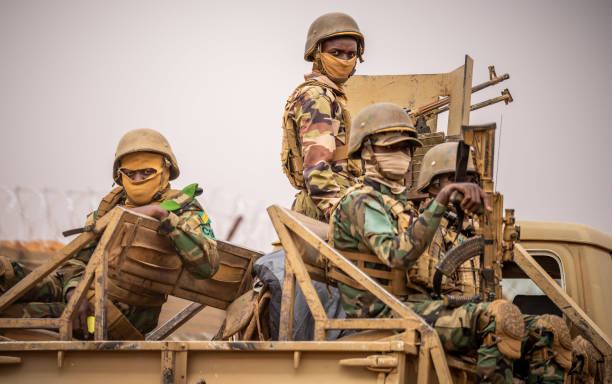
The Nigerian Army has reiterated the need for intensified training to enhance operational effectiveness and sustain battlefield readiness across all formations.
The Director, Support Services, Defence Headquarters, Maj.-Gen. Isiaka Olatunji, said this at the opening of the 2026 Guards Brigade Corporals and Below Competition on Monday in Abuja.
Olatunji said training remained the backbone of military efficiency, stressing that no army could succeed in contemporary security operations without continuous skill development and rigorous field exercises.
He explained that the competition was designed to test the physical, mental and tactical proficiency of junior soldiers who form the backbone of operational execution within the Nigerian Army.
He said “we must train harder to ensure operational effectiveness. Training is not optional; it is essential for survival and success on the battlefield.”
According to him, corporals and below represent the category of personnel who directly execute missions in the field, often in close contact with adversaries.
“You are the ones who execute missions. You come face to face with the enemy at the tactical level,” he added.
The director noted that the exercise would strengthen resilience, discipline, teamwork and combat readiness among participating troops.
He said the Guards Brigade, known for its ceremonial and operational responsibilities in the Federal Capital Territory, remained a critical formation in the defence architecture of the country.
Olatunji urged participants to embrace the training opportunities provided by the competition, describing excellence as “a product of continuous challenge and discipline.”
He also charged troops to uphold professionalism and demonstrate a high level of competence throughout the exercise.
On his part, the Commander, Guards Brigade, Brig.-Gen. Adebisi Onasanya, said “the competition aligns with the Chief of Army Staff’s vision of building a more adaptive, resilient and combat-ready force.”
Onasanya said the exercise would assess weapon handling skills, physical fitness and decision-making abilities of participants.
He added that the outcome of the competition would contribute significantly to determining troop readiness for operational deployments.
The annual Guards Brigade Corporals and Below Competition brings together units for intensive drills and tactical exercises, aimed at improving efficiency and professionalism within the Nigerian Army.
Inspector General of Police, Olatunji Disu, academics and other security professionals have advocated transition from heavy reliance on physical personnel to technology innovation in tackling insecurity in the country.
They stated the position in Abuja on Monday, at an event to celebrate Peter Olumuji, who bagged a Doctors of Philosophy (PhD) in Security and Strategic Studies, from Nasarawa State University, Keffi.
Olumuji is the Secretary of the FCT Administration Command and Control Centre.
The centre was established to improve security in the FCT by collating and analysing security intelligence feeds from drones, Closed-Circuit Television cameras and other technological devices.
The IGP, who chaired the event, said academic certification was crucial for modern security personnel and urged officers to get certified for the specialised roles they perform.
He commended Olumuji, fondly called “Mr Sharp Sharp”, for always getting any job assigned to him done with speed.
“He is a paragon of honesty and professional persistence. Whenever there is a task, he stays on your neck to ensure it is completed.
“I learned this from him: start a job, put a plan to it, and follow it to the end,” he said.
The Vice-Chancellor of Bingham University, Prof. Haruna Ayuba, who supervised Olumuji’s thesis, said that the security and strategic studies programme was vital to winning the war against insecurity.
Ayuba said, “Training experts at this level is now essential to nip security challenges in the bud”.
He praised the celebrant’s dedication to genuine learning saying; “while some students wanted to get a degree by any means, Olumuji was ready to learn.
“We didn’t just work together; we published research papers together,” Ayuba noted.
Similarly, Dr Stephen Okore of the Nigerian Army University, Biu, stressed the need for professionalism in security agencies to ensure competency in tackling insecurity.
Okore described Olumuji as a “gentleman and a good leader” who served as their class governor throughout their master’s and PhD programmes.
On his part, Adamu Gwary, Director of the FCTA Security Services Department, said that Olumuji’s academic achievement was the outcome of FCT Minister Nyesom Wike’s transformation of the FCT security architecture.
Gwary noted that the department was being increasingly populated by holders of PhD, which he said would inject logical thinking in tackling security challenges in the FCT.
“This means that security matters will be handled with innovative responsiveness.
“With the current security situation, this intellectual capacity will ensure that the security department provides the needed expertise in tackling insecurity,” he said.
Responding, Olumuji said that his doctoral research underscored the need for a critical shift in Nigeria’s security strategy.
He emphasised the need for the transition from heavy reliance on physical personnel to the integration of advanced technology.
“By introducing more technology, we reduce the reliance on manpower.
“This is more effective in saving the lives of our gallant men and women in the military and law enforcement, who face risks in the field,” he said.
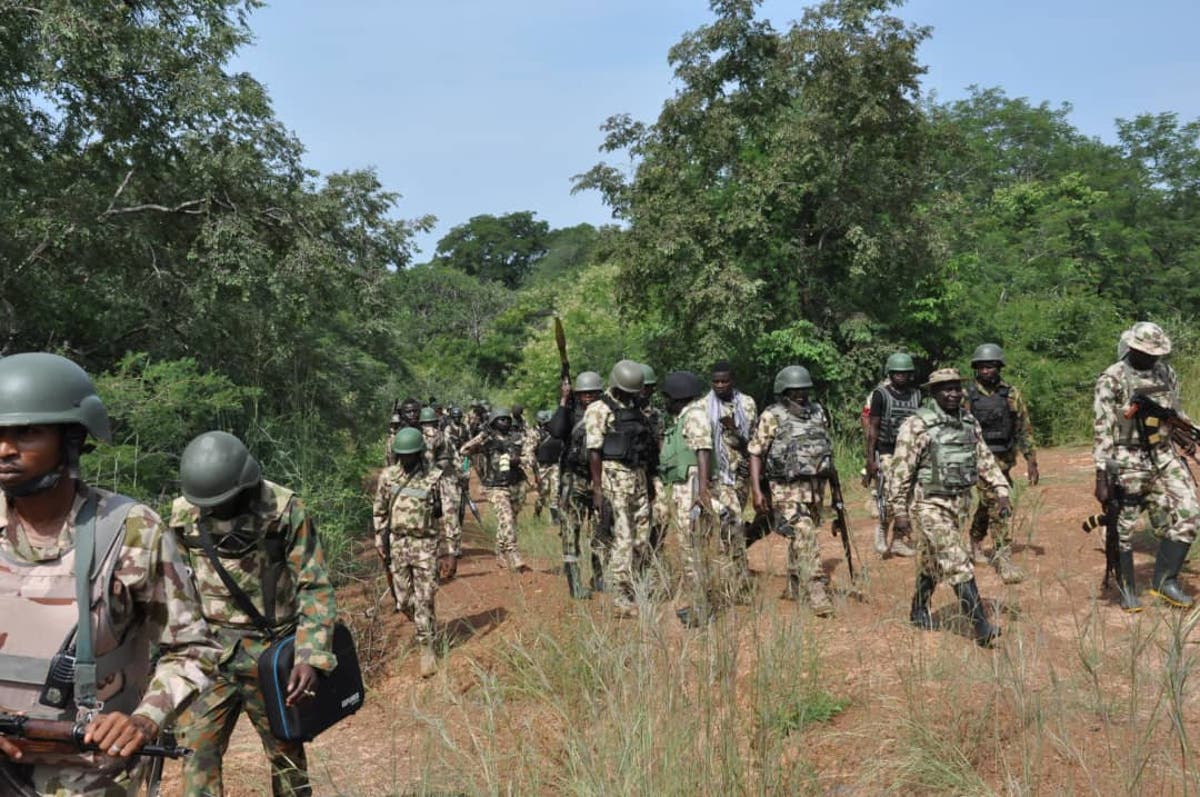
The Nigerian Army said troops recorded major operational gains, including interception of suspected logistics supplies, foiling terrorist attacks and rescuing kidnapped victims across theatres in the last 24 hours.
Operational report on Monday, revealed that troops of Operation Hadin Kai (OPHK) intercepted a truck conveying large quantities of medical supplies suspected to be meant for terrorist elements in the North-East.
The report said the interception occurred at a checkpoint in Nguru, Yobe, where the driver initially presented a waybill for beverages and household items.
According to the report, a detailed search revealed hundreds of cartons of drugs, including antibiotics, injections, bandages and other medical items.
The report said the driver and three occupants were apprehended, adding that the suspect later confessed the consignment was bound for the Republic of Chad through Geidam.
“In a related development, troops arrested a suspected ISWAP/JAS terrorist in Ngamdu, Borno, who confessed he was sent from Jilli to procure food items for insurgents.
“The suspect disclosed that terrorists were currently converging around Gubio and Magumeri areas.
“Troops also arrested two suspected terrorist collaborators in Monguno, who were allegedly facilitating movement of a terrorist’s family members.
“Items recovered from them included mobile phones, cash and other personal effects, while a woman and her three children linked to a terrorist kingpin were later apprehended,” the report said.
It also revealed that troops foiled an attempted infiltration by terrorists in Askira Uba Local Government Area of Borno.
The report added that troops engaged the insurgents during an ambush, forcing them to flee and abandoning weapons and other items, adding that follow-up operations led to rescue of three kidnapped victims from a terrorist enclave.
“In Bama Local Government Area, troops destroyed a terrorist camp during clearance operations, forcing insurgents to withdraw under pressure.
“Similarly, troops of Operation Safe Haven recovered weapons from suspects during stop-and-search operations in Plateau.
“They also arrested a suspected gunrunner and rescued additional kidnapped victims in Bauchi following exploitation of earlier airstrikes.
“In the Federal Capital Territory, troops conducting anti-illegal mining operations raided a site in Gwagwalada, recovering mining equipment, while suspects fled,” it added.
In the Southern part of the country, the report said troops of Operation Delta Safe responded to a communal clash in Delta, restoring normalcy after one person was killed.
It said troops also intensified anti-illegal bunkering operations in Rivers, destroying illegal refining sites and recovering large volumes of stolen crude oil and refined products.
Military authorities reiterated their commitment to sustaining offensive operations, disrupting logistics networks and ensuring security across the country.


Mutfwang Holds Close Door with Former State Governors
ShareFrom Jude Dangwam, Jos Plateau State Governor, Caleb Mutfwang has convened a strategic meeting with former governors of the state towards addressing the security challenges bedevilling the state. The meeting held...

Lobi Stars Trim Squad to Push for Promotion
ShareThe Nigerian National League (NNL) side, Lobi Stars Football Club of Makurdi, has trimmed its squad and retained a few quality players to push for promotion to the...


Pope Criticises ‘Tyrants’ Who Spend Billions on Wars after Trump Spat
SharePope Leo has criticised leaders who spend billions on wars and said the world was “being ravaged by a handful of tyrants” in unusually forceful comments during a...


Nigerian Men Scared of Bold, Confident Women, Phyna Claims
ShareFormer Big Brother Naija winner, Josephine Otabor, popularly known as Phyna, has claimed that she is still single because Nigerian...


Residents Decry Persistent Power Outage in Abuja Community
ShareBy Raphael Atuu, Abuja Residents of Waru District in Apo, within Nigeria’s Federal Capital Territory, are raising the alarm over what they...

2027: Tinubu Meets Coordinators, Renews Plea for Unity, Rule of Law
ShareBy David Torough, Abuja President Bola Tinubu has called for unity, resilience and renewed commitment to nation-building, urging Nigerians to...


Gunmen Abduct 14 UTME Candidates in Benue Enroute Exams Centre
ShareFrom Attah Ede, Makurdi A wave of concern has trailed the ongoing Unified Tertiary Matriculation Examination (UTME) nationwide following the...

Army Honours Fallen Heroes as Brig. Gen. Braimah, Others Laid to Rest in Maiduguri
ShareFrom Muhammad Muhammad Al-amin, Maiduguri The Nigerian Army has conducted a solemn burial ceremony for Brigadier General Oseni Braimah, Captain...

Yusuf Congratulates Abubakar on Election as Int’l Academy of Food Science, Technology Fellow
ShareFrom Rabiu Sanusi, Kano The Governor of Kano State, Abba Yusuf has congratulated Professor Hafiz Abubakar on his election as...
NCA Urges Christians to Exercise Restraint amid ‘Rising Religious Provocations’
ShareFrom Agbo Emmanuel, Kaduna Chairman, Northern Christian Association (NCA) Rev. Joseph John Hayab has called on believers across Nigeria to...