
NEWS
Enugu Air Gets Operator Certificate in Record Time

From Sylvia Udegbunam, Enugu
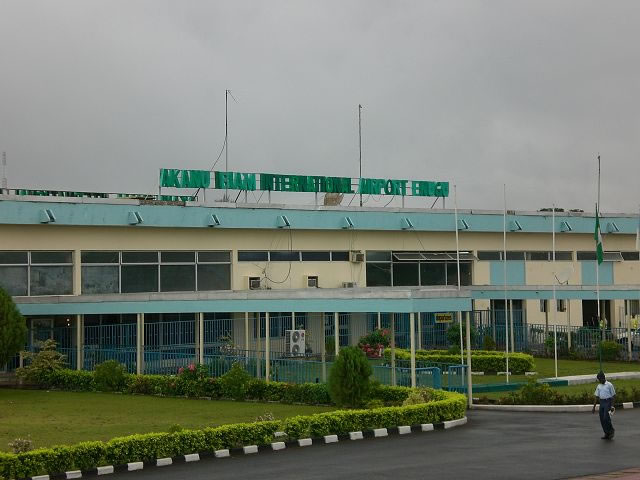
Enugu Air on Tuesday received the Air Operator Certificate (AOC), from the Nigerian Civil Aviation Authority (NCAA), a development it described as a significant step in the realisation of Governor Peter Mbah’s vision to position Enugu as a regional hub for commerce, logistics, and aviation in West and Central Africa.
Presenting the AOC to Enugu Air’s Accountable Manager/ CEO, Captain Tolu Ita, at the Nigerian Civil Aviation Authority, NCAA, headquarters in Abuja, the agency’s Director General, Captain Chris Najomo, described the development as historic in the Nigerian aviation industry, noting that Enugu Air successfully completed the rigorous certification process in just five months and three weeks, significantly faster than the typical industry timeline of 15 to 24 months.
According to Captain Njomo, the fully state-owned airline also distinguished itself by commencing operations with a complete fleet of six aircraft, which he said was a rare feat for a newly certified airline in the country.
The DG emphasised that the certification process involved extensive evaluation across multiple NCAA departments and confirmed that Enugu Air had met all regulatory requirements, demonstrating full compliance with Nigeria’s aviation safety and operational standards.
He commended the vision and leadership of Governor Mbah, describing the speed and discipline with which the airline project was executed as evidence of purposeful governance.
The DG also acknowledged the dedication of the Enugu State team and urged the airline’s management to continue maintaining the highest standards of safety, regulatory compliance, and operational excellence.
In her remarks, the Accountable Manager/CEO of Enugu Air, Captain Tolu, expressed appreciation to Governor Mbah for the vision of Enugu Air and also commended him for creating the enabling environment and providing the leadership support that made the record-breaking certification possible.
While thanking the NCAA for the professionalism and support shown throughout the certification process, she reaffirmed the airline’s commitment to building a reliable, efficient, and globally competitive carrier that would serve passengers with the highest standards of safety and service.
The Commissioner for Transportation, Enugu State, Dr. Obi Ozor, stressed that Enugu Air remained a strategic component of Governor Mbah’s broader transport and logistics transformation agenda aimed at unlocking economic opportunities across Enugu State, the wider South-East region, and Africa.
He noted that the airline would grow its fleet to 20 aircraft and also commence regional operations before the end of 2026, playing a critical role in connecting Enugu to key domestic and international markets and facilitating trade, tourism, investment, and mobility.
He commended Enugu Air’s operating partner, XEJet Limited, for its role in guiding the airline through the rigorous regulatory certification process required for the issuance of the Air Operator Certificate.
The Group Chief Executive Officer of XEJet Limited, Emmanuel Iza, who congratulated the airline for the feat, expressed pride in the Enugu Air/XEJET Limited partnership that produced the result.
“This milestone demonstrates what can be achieved through strong partnerships between government and the commercial aviation sector in advancing air transport development,” Iza stated.
On his part, the Board Chairman of Enugu Air, Barrister Ricky Agu, assured the NCAA that the state government would continue to provide the support required to ensure that Enugu Air operates at world-class standards.
The AOC presentation was witnessed by senior aviation regulators and other members of the Enugu State delegation, including the Special Assistant to the Governor on Transport, Iphie Ugonabo, and members of the airline’s management team.

By Tambaya Julius, Abuja
The Comptroller-General of the Nigeria Customs Service, Adewale Adeniyi, has called for deeper collaboration between the Service and the National Assembly to enhance transparency, accountability, and efficiency in revenue generation through the deployment of Artificial Intelligence (AI).
Adeniyi made this known during a stakeholders’ three days training programme focused on AI-driven revenue generation, remittance, and reconciliation in Abuja, which brought together lawmakers, financial experts and key actors in Nigeria’s public finance system.
He highlighted the traditional role of legislative oversight committees, particularly Public Accounts Committees, which routinely summon government agencies to account for their financial activities.
Adeniyi noted that such engagements are backed by constitutional provisions and are critical to ensuring accountability in public institutions.
The Customs boss said that the narrative is gradually changing, with the Nigeria Customs Service now taking a proactive approach by inviting lawmakers to engage in dialogue and capacity-building initiatives.
According to him, the objective remains the same ensuring transparency, accountability, and fiscal discipline but the method is now more collaborative and forward-looking.
“This engagement reflects our shared commitment to transparency and improved revenue management. We are united in our goal to strengthen accountability mechanisms within the system,” Adeniyi stated.
Adeniyi explained that over the past two decades, technology has played a transformative role in customs operations globally, with Nigeria steadily aligning with international best practices.
According to him, the Nigeria Customs Service has deployed advanced risk management systems to monitor trade flows, identify irregularities, and improve efficiency in cargo clearance.
“These systems allow us to better understand patterns in international trade, as well as economic and policy trends that impact revenue generation,” he noted.
He further revealed that Artificial Intelligence is gradually being integrated into customs operations, particularly in classification systems and cargo inspection.
He described the global developments where AI has been introduced into the Harmonised System (HS) to support machine learning and improve accuracy in trade classification.
“We now deploy scanners and intelligent tools capable of detecting suspicious goods and improving compliance levels,” Adeniyi stated.
He expressed confidence that AI would significantly enhance revenue generation, while also improving remittance accuracy and reconciliation processes across the system.
Adeniyi emphasised that revenue generation in Nigeria involves a complex network of stakeholders, including banks, platform providers, auditors, and multiple government committees.
He noted that the Nigeria Customs Service is only one part of this broader value chain, which also includes oversight bodies within the National Assembly.
“Effective revenue management requires synergy among all stakeholders. AI provides an opportunity to integrate these processes and improve coordination,” he said.
Describing the training as timely, Adeniyi said it was designed to equip participants with the knowledge and tools required to harness AI effectively in their respective roles.
He urged participants to actively engage with facilitators, ask questions, and take full advantage of the programme.
“This initiative is not just about learning but about building a system that works more efficiently for all stakeholders,” he added.
In her address, Kikelomo Adeola stressed the importance of embracing innovation to address the growing complexity of Nigeria’s financial system.
She described Artificial Intelligence as a vital tool for improving efficiency, accuracy, and transparency in public financial management.
Adeola encouraged participants to view the training as a platform for transformation, where new ideas can be explored and institutional reforms strengthened.
The Chairman, Senator Public Accounts Committee Sen. Ahmed Aliyu Wadada commended the Nigeria Customs Service for its commitment to reform and innovation.
He noted that the Service has demonstrated remarkable progress in recent years, particularly in adopting technology and improving operational efficiency.
According to him, legislative oversight is not solely about identifying faults but also about supporting institutions to improve compliance and strengthen their systems.
“The Customs Service has shown a willingness to embrace change, but continuous improvement is necessary as accountability remains an ongoing process,” he said.
The lawmaker acknowledged that AI adoption in Nigeria is still at a developing stage but noted that its potential is vast.
He cited examples from other parts of the world where AI is being used to improve healthcare, automate processes, and enhance productivity across sectors.
“There is no better time for Nigeria to fully embrace AI, especially in revenue generation where leakages must be blocked and accountability strengthened,” he said.

The Insurance Market Performance Report says the insurance industry recorded a spike in its gross claims hitting N725 billion in the fourth quarter of 2025.
The report, which was released in Abuja on Monday by the National Insurance Commission (NAICOM), said the growth represented about 31.
5 per cent of the gross premiums written during the period.It said that the performance highlighted a strong underwriting capacity within the market, and reflected the effectiveness of insurers’ pricing strategies during the quarter.
The commission said that the life insurance section recorded a notable claims settlement ratio of 65.5 per cent while the non-life segment achieved a settlement rate of 75.
5 per cent of total claims reported.It said the industry recorded an aggregate sum of N4,792 billion in total assets, representing 7.4 per cent expansion, sustaining an upward trajectory relative to the prior quarter when it stood at N4,460 billion.
‘The statistics of the market also reported a total sum of N2,602 billion as assets attributable to non-life business, while life insurance accounted for N2,189 billion at the close of the period.
“The Nigerian insurance industry has shown significant resilience amidst a challenging macroeconomic environment.
“The industry sustained solid performance across critical areas including premium generation, claims settlement, profitability and aggregate assets expansion.
“This also underscores a positive outlook especially, as the sector’s ongoing transformation is expected to achieve a strong pillar, capable of supporting the country’s pursuit of the one trillion dollar economy,” the Commission said. (NAN)

From Attah Ede, Makurdi
No fewer than 14 persons, including a mobile police officer, have been killed in renewed attacks on communities in Apa and Otukpo Local Government Areas of Benue State, deepening fears over worsening insecurity in the region.
The latest violence, attributed by locals and officials to suspected armed herdsmen, affected Edikwu-Ankpali, Ikobi and Adija communities in Apa LGA, as well as Upu village in Otukpo LGA, over a three-day period from Friday to Sunday.
Conflicting figures emerged from officials and residents, but multiple sources confirmed that at least 13 civilians were killed in Apa, while a mobile police officer lost his life during a separate attack in Otukpo.
Chairman of Apa LGA, Adams Ogwola, said nine bodies had been recovered from Edikwu-Ankpali, with one person each killed in Ikobi and Adija. He added that several others sustained injuries, while search efforts were ongoing for missing persons.
However, local sources insisted that the death toll could be higher, claiming that three persons were killed on Friday, while about 10 others died in coordinated Sunday night attacks. Youths were said to be combing surrounding bushes in search of additional bodies.
In Otukpo LGA, Chairman Maxwell Ogiri confirmed the killing of a mobile police officer during an attack on Upu community on Saturday. He noted that the officer was among security personnel deployed to restore order, adding that security has since been reinforced in the area.
Residents described the attacks as persistent and devastating, forcing many villagers to flee their homes amid fear of further violence.
Reacting to the incidents, the member representing Apa/Agatu Federal Constituency, Ojotu Ojema, condemned the killings, describing them as “barbaric and senseless.” He lamented the continued loss of lives and the displacement of communities, calling for decisive action from security agencies.
“It is unacceptable that our people continue to live in fear, unable to access their homes and farms,” he said, urging authorities to bring perpetrators to justice and address the root causes of the crisis.
Similarly, local government officials called on both federal and state governments to deploy more security personnel, adopt proactive strategies, and provide support for affected families.
As of the time of filing this report, the police command had yet to issue an official response, while tension remains high across the affected communities.



Customs Deploys AI Training to Boost Revenue Drive
ShareBy Tambaya Julius, Abuja The Comptroller-General of the Nigeria Customs Service, Adewale Adeniyi, has called for deeper collaboration between the Service and...
Insurance Gross Claims Rise to N724.5bn in Q4 2025
Share The Insurance Market Performance Report says the insurance industry recorded a spike in its gross claims hitting N725 billion...


Again, Suspected Herdsmen Invade Benue Communities, Kill 14
ShareFrom Attah Ede, Makurdi No fewer than 14 persons, including a mobile police officer, have been killed in renewed attacks...

ICPC Slams Fresh Nine-count Corruption Charge on El- Rufai
ShareBy David Torough, Abuja The Independent Corrupt Practices and Other Related Offences Commission has filed an amended nine-count charge against...


Justin Bieber Headlines Coachella with Nostalgia-fuelled Set
ShareJustin Bieber made a nostalgia-fuelled return to the major stage as Coachella’s much-anticipated headline act. The 32-year-old spent much of...


Sule Rewards First-Class Graduates, Honours Tanzania’s President at NSUK 8th Convocation
ShareBy Tambaya Julius, Abuja The Nasarawa State University, Keffi over the weekend celebrated its 25th silver jubilee anniversary and combined...


OPay Named Nigeria’s Most Trusted Digital Financial Company at 2026 ISO Awards
ShareOPay, a leading financial institution in Nigeria, has been awarded The Most Trusted Quality Mobile Money and Digital Financial Services...

Kogi Dismisses Claims of Ethnic Exclusion in Employment
ShareFrom Joseph Amedu, Lokoja The Kogi State Government has responded to a viral voice note allegedly recorded by a female civil servant,...
Prosperity Cup 2026: LGA Finals Get Dates
ShareFrom Mike Tayese, Yenagoa The Central Organizing Committee (COC) of Nigeria’s biggest grassroots football spectacle, the Bayelsa Governor’s Football Tournament,...


Trump Orders US Naval Blockade of Strait of Hormuz
SharePresident Donald Trump on Sunday ordered a US naval blockade of the Strait of Hormuz in response to Iran’s “unyielding” refusal to give up its nuclear ambitions during...