
NEWS
Kano Revokes Private School Licences over Sexual Abuse

From Aliyu Askira, Kano
The Ungogo Local Government Area of Kano State has withdrawn the licences of all private schools within its jurisdiction following allegations that a teacher sexually abused four female pupils.
The decision was announced by the Education Councillor, Abdullahi Wakili, who said it followed a review meeting aimed at strengthening school oversight and addressing safety and moral concerns in the area.
Wakili explained that the council chairman, Tijjani Amiru Bilyaminu, has directed all private school proprietors to appear before a screening committee for fresh assessment before they can resume operations.
The action comes after the closure of Al-Hadeed Private School in the Inusawa area of Ungogo, where a teacher popularly known as Uncle Kamal was accused of abusing four underage pupils reportedly from the same family.
The suspect has been arraigned before a magistrate court in the Nomansland area of Kano on rape charges. The court ordered that he be remanded in custody and adjourned the case to June 9, 2026.
Authorities said the sweeping measure is intended to restore public confidence in private schools and ensure the safety of children across the local government.
“Our schools must be safe havens, not places of fear,” Wakili stated.

Poland plans to ban mobile phones in all primary schools from next academic year under draft legislation approved by the government on Tuesday.
The proposal, which will now be submitted to parliament, would take effect on September 1, 2026.
In Poland, primary school education runs through the eighth grade.
The planned law would prohibit the use of mobile phones and other devices capable of recording audio or video during lessons and breaks.
The ban would apply to both public and private schools, the Education Ministry said.
Exceptions would be permitted when the use of a phone is required for teaching purposes, educational support, or for health and safety reasons.
Education Minister Barbara Nowacka said the measure is a response to calls from teachers for stricter rules on smartphone use in schools.
She said that more than half of Poland’s schools have already introduced similar restrictions on a voluntary basis.
The government also approved a package of measures aimed at strengthening child protection online, which must likewise be approved by parliament.
The proposals include tighter restrictions on minors’ access to websites containing pornography and measures designed to speed up the removal of illegal online material.
Under the plans, operators of adult-content websites would be required to verify users’ ages anonymously, without collecting browser data or personal information.
By Ubong Ukpong, Abuja
Following the defection of the former minority Leader of the House of Representatives, Kingsley Chinda, the minority caucus has nominated Hon. Ikenga Imo Ugochinyere as their new Leader.
Sixty one out of the 81 minority members of the House on Wednesday, Select Hon.
Ugochinyere as Reps Minority Leader Designate, awaiting the Speaker’s announcement of the Opposition’s Decision.From the documents sighted by our reporter, majority of the lawmakers of the minority parties cutting across the entire minority bloc, namely ADC, NDC, APP, PRP, LP, APGA, APM, ACCORD and SDP, and across tribal, religious and zonal political lines voluntarily settled for Ikenga as their preferred choice.
From available information, the lawmakers today submitted the official nomination of the new Minority Leader designate, Ikenga, to the Speaker in line with the tradition of the parliament, which is stated clearly under the new Rule Book of the House of Representatives, Order 7, Rule 7, which provides that members shall elect among themselves the Minority Leader to lead them.The lawmakers, who spoke anonymously, expressed confidence that the Speaker of the parliament, as an unbiased leader, will swiftly make the announcement so that the minority can have its leadership in the next few days, and the parliament can be fully constituted with the minority fully represented. The lawmakers said they have also settled for nominees to fill the vacant positions of Minority Whip and Deputy Minority Leader, with one of the positions already taken by an NDC member from the North West. After ongoing harmonisation, the remaining list will be sent to the Speaker within the next few days for announcement.
The lawmakers said they settled for Ikenga because of his excellent legislative record, three years out of his four-year term, during which he sponsored and moved over 40 bills, motions and petitions, in addition to his four years as Senior Adviser to the Senate President, all of which have established him as a qualified candidate for the job. They said that the power to choose rests with the majority of the minority members, and that power has now been exercised, adding that any sentimental arguments will not change the decision of the minority lawmakers, who have overwhelmingly settled for one of their own.
They noted that, in the past, Sen. Akpabio was elected Senate Minority Leader after only three weeks in parliament, and that many others have been elected to top parliamentary positions with fewer years of experience. They added that even when the PDP zoned the speakership to the South West for Mulikat, the lawmakers elected Tambuwal and Ihedioha; when the APC zoned the Senate Presidency to the North East, the senators elected Sen. Saraki and Ekweremadu; and Dogara was elected after the position had been tipped for the South West. Parliament, they stressed, is rooted in the principle of majority decision and not sentiment. The lawmakers said their choice of Ikenga, with three years of legislative experience for a four-year job, is more than enough.
By Tony Obiechina, Abuja
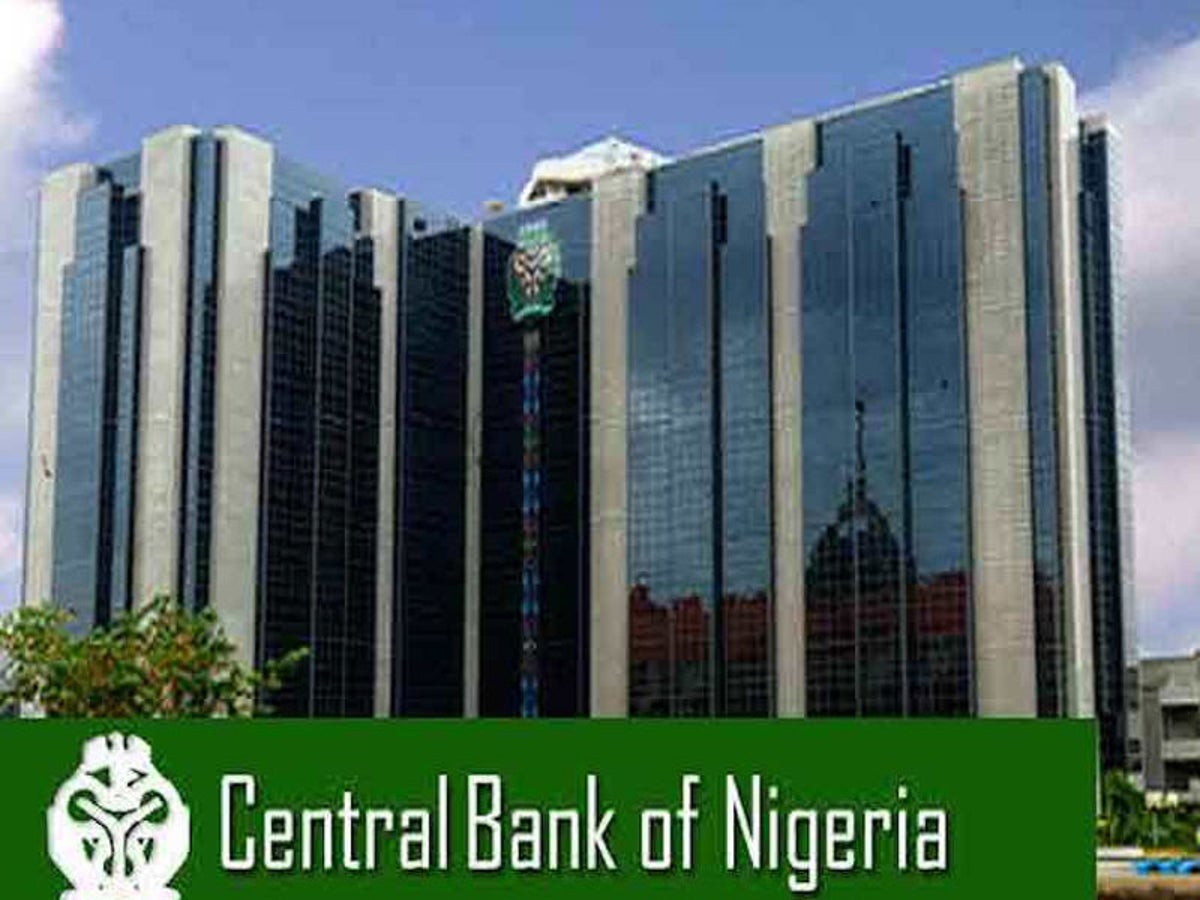
Abbey Mortgage Bank Plc, one of Nigeria’s longest‑standing primary mortgage banks, has secured regulatory approval from the Central Bank of Nigeria (CBN) to convert into a commercial bank.
However, the bank expects to commence operations as a commercial bank in Q4 2026.
The approval is expected to unlock a major strategic milestone for the company, allowing the bank to expand beyond mortgage financing into comprehensive commercial banking services.
In a statement confirming the approval, Abbey Mortgage Bank said the regulatory green light marks the beginning of a “transformative era” in its business journey.
Preparations for the transition are already underway, including technology integration, infrastructure expansion, and corporate rebranding ahead of full commercial banking operations later this year.
Abbey also said it will retain its deep expertise in real estate financing even as it broadens its services to include enhanced electronic banking channels, tailored SME finance products, international trade services, and wealth management solutions.
Abbey’s transition to commercial banking has been in motion for months, supported by strategic decisions and strong financial performance.
At the Annual General Meeting (AGM) held on May 26, 2026, shareholders approved a N164.5 billion private placement and authorised the board to raise an additional N100 billion through various equity and debt instruments, subject to regulatory approvals.
Speaking at the meeting, the Chairman, Mr. Samuel Oni, described the capital raise as a cornerstone of the bank’s strategy to secure a regional commercial banking licence and position Abbey for its next growth phase.
“By the time we are meeting next year, by the grace of God, we will be talking about Abbey Plc as a commercial bank with regional authorisation,” he said.
Abbey Mortgage Bank delivered one of its strongest financial performances in recent years, providing a solid foundation for its commercial banking ambitions.
According to audited 2025 financial statements, the bank recorded a pre-tax profit of N3.12 billion, up 154.3% from N1.22 billion in 2024.
Profit after tax rose to N2.16 billion, while earnings per share increased to 21 kobo from 11 kobo.
Interest income climbed to N18.97 billion, driven by earnings from cash and short-term funds, investment securities, and loans.
The stock began the year at N6.40, giving it a 10.2% year-to-date gain, reflecting investor confidence amid the bank’s transition to commercial banking and its strong Q1 2026 profit performance.
Abbey is expecting to start full commercial banking operations in Q4, 2026. The bank has said it will share details on the official launch date, new corporate identity, and product rollout in the coming months.
Beyond traditional mortgage services, the newly licensed commercial bank will be able to offer retail banking, corporate banking, digital payment solutions, trade finance, SME lending, and wealth management products.
The transition is aimed at enhancing customer offerings through broader electronic banking platforms and a more diversified suite of financial products.
Abbey’s upgrade is seen as part of a broader trend of financial sector consolidation and innovation in Nigeria, as lenders position themselves to meet evolving market demands and deepen financial inclusion.




Alia Appoints New Acting Head of Service in Benue
ShareFrom Attah Ede, Makurdi Benue State Governor, Rev Fr .Hyacinth Alia has approved the appointment of Dr. Ihu Eunice Ogbenyi as new Acting Head of Service (HoS)...
Oshonaike Hails Steady Progress of Nigerian Table Tennis Players
ShareSeven-time Olympian Olufunke Oshonaike said Nigerian table tennis players are making steady progress in spite of the challenges they face in competing...
Poland Bans Smartphones in Primary Schools
SharePoland plans to ban mobile phones in all primary schools from next academic year under draft legislation approved by the government on Tuesday. The...
Reps Minority Picks Ugochinyere as New Leader
ShareBy Ubong Ukpong, Abuja Following the defection of the former minority Leader of the House of Representatives, Kingsley Chinda, the minority caucus has nominated Hon. Ikenga...
Kano Revokes Private School Licences over Sexual Abuse
ShareFrom Aliyu Askira, Kano The Ungogo Local Government Area of Kano State has withdrawn the licences of all private schools within its jurisdiction following allegations that...


CBN Approves Regular Commercial Operations for Abbey Mortgage Bank
ShareBy Tony Obiechina, Abuja Abbey Mortgage Bank Plc, one of Nigeria’s longest‑standing primary mortgage banks, has secured regulatory approval from...


Owo Church Massacre: Court Sentences Four to Death for Terrorism
ShareBy David Torough, Abuja More than three years after the gruesome attack on St. Francis Xavier Catholic Church, Owo, Ondo...

Terrorists Abduct Adelabu’s Sister, Twin Sons, kidnap Six Students in Zamfara
ShareBy Eze Okechukwu, Abuja and Ifeanyichukwu Nwannah, Gusau The nation’s worsening insecurity came into sharp focus on Wednesday, as separate incidents of...


Nigeria Customs, World Bank Launch Two-Week Post Clearance Audit to Boost Revenue, Trade Compliance
ShareBy Tambaya Julius, Abuja The Nigeria Customs Service (NCS), in partnership with the World Bank Group, has commenced a two-week...


Court Suit halted Planned Demolition in Abuja
ShareBy Laide Akinboade, Abuja Residents of Kampala Street, Wuse II, Abuja, have formally notified the Abuja Metropolitan Management Council (AMMC)...