
NEWS
Ex-International Advocates Greater Female Participation in Squash

Former Nigerian international squash player, Longdi Dasbak, on Monday has called for increased efforts to encourage girls to take up squash, saying female participation in the sport remains very low.
Dasbak made the call on Monday during the second edition of the Squash Premier League at the Moshood Abiola National Stadium, Package B, in Abuja.
The week-long tournament, themed “Breeding the Next Generation of Champions,” began on Monday and will end on Aug.
8.Dasbak described the league as a positive initiative that would significantly contribute to grassroots development and the growth of squash in Nigeria.
“I would say this is a very good development, especially for grassroots squash, because that is where every successful sport begins.
“We want to develop young players who will take the game to the next level while making squash more popular across the country. This league is another important way of promoting the sport,” she said.
She said that participation had increased considerably since the league was introduced in 2025, adding that the growing number of children taking part showed that awareness of the sport was improving.
“The first edition did not attract this number of participants, but now you can see many more children taking part. That shows awareness is increasing, and I believe it is a very positive development,” she said.
Dasbak, who participated as one of the instructors at the coaching and officiating clinic organised by the tournament, said it was her first time that she will be speaking at the event.
She said she established the Dasby’s Sports Development Association in Plateau to create opportunities for girls, particularly those from less privileged backgrounds, to participate in sports.
According to her, the association also runs Dasby’s Squash Academy, where boys and girls aged six years and above receive training, with special emphasis on encouraging female participation.
“Female participation in squash is still very low, and we have very few women actively playing the sport. That inspired me to establish the foundation in Plateau State,” she said.
Dasbak said the academy currently has more than 35 young players and expressed optimism that it would continue to expand.
She added that although some parents were initially reluctant to allow their daughters to participate in sports, sustained advocacy had helped to change their mindset.
“Even girls from families that can afford sports programmes are welcome. We bring everyone together because every girl deserves an opportunity,” she said.
On government support for squash, Dasbak said the sport had yet to receive the desired level of attention compared to more popular sports.
“I wouldn’t say squash is receiving the desired attention from the government. Football naturally gets more attention, but squash also deserves greater support,” she said.
She stressed that creating greater public awareness remained essential to attracting more participants to the sport.
Dasbak identified inadequate funding, the high cost of equipment and transportation as major challenges confronting grassroots squash development.
“There are many challenges. Government cannot do everything alone, so individuals and corporate organisations have important roles to play in supporting initiatives like this,” she said.
She said that her foundation was not only focused on sports development but also on empowering girls through life skills that would enable them to become self-reliant.
According to her, she travelled to Abuja with 10 players for the competition and appealed to corporate organisations, philanthropists and other well-meaning Nigerians to support grassroots sports development.
“Our most urgent need right now is sponsorship. With adequate support, we will be able to reach more children and provide greater opportunities for them through sports,” she said.
Dasbak is the founder of Dasby’s Squash Academy for boys and girls aged six years and above, as well as the Dasby’s Sports Development Association, a Plateau-based initiative dedicated to empowering girls through sports.

By David Torough, Abuja
Dangote Petroleum Refinery has reduced the ex-depot prices of Premium Motor Spirit (PMS), popularly known as petrol, and Automotive Gas Oil (AGO), commonly known as diesel, in a move aimed at making petroleum products more affordable and supporting economic activities across Nigeria.
The new pricing, which takes effect on Thursday, August 6, sees the ex-depot price of petrol reduced by N50 per litre from N1,215 to N1,165, while diesel has been cut by N80 per litre, dropping from N1,650 to N1,570 per litre.
Announcing the adjustment in a statement on Wednesday, the refinery said the price review reflects its ongoing commitment to improving energy affordability, expanding access to refined petroleum products, and delivering value to consumers, businesses, and other stakeholders.
According to the company, the latest reduction underscores its resolve to provide affordable, high-quality petroleum products while ensuring a stable supply through improved operational efficiency.
“The price review reflects Dangote Refinery’s ongoing efforts to enhance energy affordability, improve access to refined petroleum products, and support economic activities across Nigeria,” the statement said.
The refinery added that it would continue to pass on the benefits of operational efficiencies to consumers whenever market conditions permit.
Dangote Petroleum Refinery also reaffirmed its strategic role in strengthening Nigeria’s energy security by reducing dependence on imported petroleum products and increasing the availability of locally refined fuels. As Africa’s largest refinery, the company said it remains committed to supporting the country’s economic development through the supply of world-class petroleum products.
The latest price reduction comes as the 650,000-barrels-per-day refinery continues to expand its footprint in the domestic market. The adjustment also follows recent fluctuations in global crude oil prices, which initially eased after a temporary truce between Iran and the United States before renewed tensions affected market stability.
By David Torough, Abuja
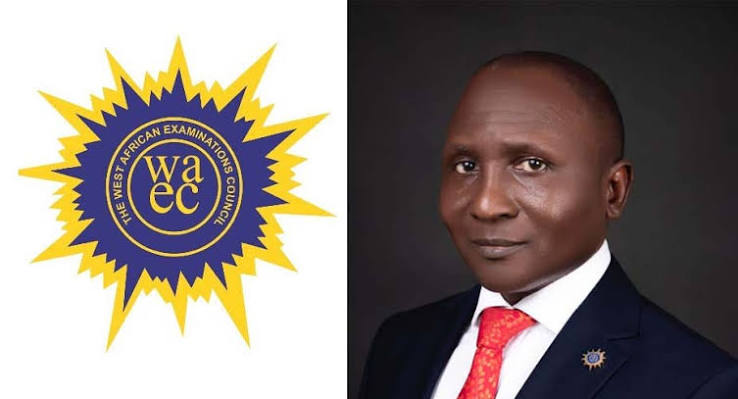
The West African Examinations Council (WAEC) on Wednesday released the results of the 2026 West African Senior School Certificate Examination (WASSCE) for School Candidates, withholding 167,486 results over alleged examination malpractice while announcing that 61.
54 per cent of candidates obtained the minimum university admission requirement of five credits, including English Language and Mathematics.Speaking at a news conference in Lagos, WAEC’s Head of National Office, Dr. Amos Dangut, disclosed that the withheld results represent 8.59 per cent of the candidates who sat for the examination, a decline from the 9.
7 per cent recorded in 2025.Dangut said the affected results were linked to various reported cases of examination malpractice, including the increasing use of mobile phones in examination halls, organised cheating in some schools and activities of rogue websites. He said all reported cases were under investigation and would be reviewed by the appropriate WAEC committee before final decisions are taken.
He added that affected candidates could seek redress through the council’s complaint portal after the committee concludes its work.
According to WAEC, 1,959,668 candidates from 24,207 schools registered for the examination, while 1,950,726 candidates eventually sat for the tests conducted between April 21 and June 19, 2026. The examination was also administered to candidates in Benin Republic, Côte d’Ivoire and Equatorial Guinea where the Nigerian curriculum is in use.
Of those who sat for the examination, 953,459 were males and 997,267 were females.
The council announced that 1,200,514 candidates, representing 61.54 per cent of those who wrote the examination, obtained credits in at least five subjects, including English Language and Mathematics, qualifying them for admission into tertiary institutions. However, Dangut noted that the overall performance reflected a 1.42 percentage-point decline compared with the 2025 examination.
WAEC also disclosed that 1,834,695 candidates, representing 94.05 per cent of the total, had their results fully processed and released, while 116,031 candidates (5.95 per cent) still have one or more subjects undergoing processing due to unresolved issues requiring further verification.
The council assured affected candidates that efforts were ongoing to complete the processing and release the outstanding results within a few days.
Dangut described the 2026 examination as a landmark exercise, noting that WAEC successfully deployed both Computer-Based Testing (CBT) and the traditional Paper and Pencil Examination (PPE), making it the first examining body in Nigeria to implement CBT for school candidates on such a nationwide scale.
He also announced the introduction of a Digital Examiner Marking System and the discontinuation of Smart Identity Cards for result checking. Candidates can now generate electronic PINs through WAEC’s digital certificate platform to access their results, while digital certificates will be available within 48 hours and printed certificates after 90 days.
The council further revealed that 1,213 candidates with special needs participated in the examination, including visually impaired, hearing-impaired, physically challenged and mentally challenged candidates, all of whom were provided with appropriate support.
Despite challenges such as inflation-driven operational costs, logistics delays, late registrations and examination malpractice, Dangut maintained that the 2026 WASSCE was largely successful and reaffirmed WAEC’s commitment to strengthening the integrity of its examinations.
WAEC also confirmed the release of the results on its official X handle, directing candidates to generate their PINs through its website before checking their results on the council’s result-checking portal. Registration for the 2026 WASSCE for Private Candidates (Second Series) is ongoing, while preparations for the 2027 First Series examination will commence shortly.
NEWS
Shipper’s Council Seeks Strategic Partnership with Providus Unity Bank to Drive $1trn Economy Goal

By David Torough, Abuja
The Nigerian Shippers’ Council (NSC) has moved to deepen collaboration with financial institutions to unlock funding, bridge infrastructure gaps, and strengthen the maritime sector’s contribution to Nigeria’s ambition of building a $1 trillion economy by 2030.
The Executive Secretary and Chief Executive Officer of the Council, Dr.
Pius Akutah, MON, stated this when officials of Providus Unity Bank paid a courtesy visit to the Council’s headquarters in Lagos.Dr. Akutah stressed the Council’s statutory role as the Port Economic Regulator, emphasizing its responsibility to promote efficiency, competitiveness, and ease of doing business across Nigeria’s port and maritime sector.
He noted that the maritime industry remains the backbone of the nation’s trade, accounting for about 90% of Nigeria’s international trade activities and playing a vital role in economic growth.
“We have a Presidential mandate to work with all sectors of the economy to ensure that by 2030 we achieve the Trillion Dollar goal. Without the ports, there will be no sector of the economy,” he said.
The NSC boss disclosed that the Council’s regulatory interventions over the past two years have helped prevent over $90 billion in capital flight arising from excessive cargo-related charges, highlighting the impact of effective port economic regulation.
While acknowledging Nigeria’s significant infrastructure assets, Dr. Akutah observed that the sector still faces financing and capacity challenges, stressing the need for partnerships that combine access to capital with technical expertise.
“We are looking for partners. The SMEs are a very crucial component. We are ready to broker relationships between banks and importers, exporters, and SMEs who have potential to grow the economy,” he added.
He said the Council would create a platform for sustained engagement with Providus Unity Bank to explore practical areas of collaboration that would support investment and growth within the maritime sector.
Earlier, the Head of Business Development at Providus Unity Bank, Mr. Ernest Elue, said the visit sought to explore strategic collaboration with the Nigerian Shippers’ Council and other stakeholders in the maritime ecosystem.
He expressed the bank’s readiness to provide financial support for capital-intensive maritime projects, including Inland Dry Ports and Vehicle Transit Areas, through tailored financing solutions for project concessionaires.
Mr. Elue added that the bank is committed to designing flexible financial products that will meet the needs of corporate organisations as well as individual members of unions and cooperatives operating within the maritime value chain.
The proposed partnership is expected to deepen access to finance for critical maritime infrastructure, support small and medium-scale enterprises, and enhance the sector’s capacity to contribute more significantly to national economic development.



WAEC Releases WASSCE Results, Withholds 167,486 over Alleged Malpractice
ShareThe West African Examinations Council (WAEC) has withheld a total of 167, 486 of results of candidates who sat for...

Dangote Refinery Cuts Petrol Price by N50, Diesel Sells N80
ShareBy David Torough, Abuja Dangote Petroleum Refinery has reduced the ex-depot prices of Premium Motor Spirit (PMS), popularly known as...

WAEC Releases 2026 SSCE Results, Withholds 167,486 Over Malpractices
ShareBy David Torough, Abuja The West African Examinations Council (WAEC) on Wednesday released the results of the 2026 West African...


Shipper’s Council Seeks Strategic Partnership with Providus Unity Bank to Drive $1trn Economy Goal
ShareBy David Torough, Abuja The Nigerian Shippers’ Council (NSC) has moved to deepen collaboration with financial institutions to unlock funding,...

FG Bows to Pressure, Commences Wage Arrears Payment August 15
ShareBy David Torough, Abuja The Federal Government has assured federal civil servants that payment of the outstanding N35,000 wage award...


Abuja Media Practitioners Congratulate Ogbodo on Election as Benue NMA Secretary
ShareBy David Torough, Abuja The Abuja media community has congratulated its Media Ambassador, Dr. Mark A. C. Ogbodo, on his...

Customs CG Seeks Stronger NASS Partnership to Advance Modernization Agenda
ShareBy Tambaya Julius, Abuja The Comptroller-General of the Nigeria Customs Service (NCS), Bashir Adewale Adeniyi, has called for a stronger...


Ethical Insurance: Crown Takaful Distributes N100.9Mn To Participants
ShareBy Tony Obiechina, Abuja Crown Takaful Insurance Limited, Nigeria’s leading and most participant-friendly ethical insurance company, has set a new...


Abuja to London: Dr. Shehu’s ABLA Award Projects Tinubu’s Reform Agenda Globally
ShareBy Salisu Ibrahim When an international honour projects a nation’s policy direction, it becomes more than recognition. It becomes evidence.At...


Tinubu Approves Salary Increase for 250,000 Armed Forces Personnel
ShareBy David Torough, Abuja President Bola Tinubu has unveiled a major package aimed at strengthening Nigeria’s armed forces through improved...