
NEWS
Dangote Takes 52.6m Barrels as Domestic Crude Supply Surges


By Tony Obiechina, Abuja
The Dangote Petroleum Refinery emerged as the dominant beneficiary of Nigeria’s improved domestic crude supply in the second quarter of 2026, taking 52.
6 million barrels as the Federal Government’s Domestic Crude Supply Obligation (DCSO) recorded a 97. 4 per cent performance.Fresh data from the Nigerian Upstream Petroleum Regulatory Commission (NUPRC) showed that domestic refineries received 53.7 million barrels of crude oil and condensate between April and June, an increase of 25.2 million barrels, or 88.4 per cent, from the 28.
5 million barrels delivered in the first quarter.The sharp rise marks a major improvement in the implementation of the DCSO, with the Dangote refinery accounting for virtually all of the crude volumes offered to local refiners during the quarter.
According to the NUPRC, producers offered 68.1 million barrels of crude to the Dangote refinery against its requirement of 63 million barrels for the three-month period.
The refinery, however, accepted 52.6 million barrels, equivalent to about 77 per cent of the volume offered and 83.5 per cent of its stated requirement.
The 68.1 million barrels offered to Dangote represented 98 per cent of the total crude volumes offered to all domestic refineries during the quarter, underscoring the refinery’s dominant position in Nigeria’s emerging domestic crude market.
Despite receiving more than 63 million barrels in offers, Dangote took 10.4 million barrels less than its quarterly requirement. It also left about 15.5 million barrels of the crude offered to it unaccepted.
The figures highlight the distinction between crude volumes allocated or offered by producers and the quantities ultimately delivered and accepted by refiners under the DCSO framework.
The NUPRC, in a statement issued by its Head of Media and Corporate Communications, Eniola Akinkuotu, said the Q2 figures demonstrated that the domestic crude supply obligation was being actively administered and enforced.
The commission explained that it holds monthly consultations with crude producers and licensed domestic refiners before allocating specific crude volumes to producers for supply to local refineries.
However, the framework operates on a “willing buyer, willing seller” basis under the Petroleum Industry Act, meaning regulatory allocations do not automatically translate into completed transactions.
The improved Q2 performance nevertheless represents a significant turnaround from the first quarter, when domestic refineries received only 28.5 million barrels despite producers offering 68.7 million barrels.
In Q1, the NUPRC had allocated 61.9 million barrels to domestic refineries, but only about 46 per cent of the allocation was eventually delivered.
By Q2, actual deliveries had risen to 53.7 million barrels against an allocation of 55.1 million barrels, translating to 97.4 per cent performance.
While the volume allocated in Q2 was 6.8 million barrels, or 11 per cent, lower than the 61.9 million barrels allocated in Q1, producers offered slightly more crude. Their offers increased from 68.7 million barrels in Q1 to 69.3 million barrels in Q2.
The major improvement therefore came from the conversion of crude offers into actual physical deliveries.
In Q1, only about 41.5 per cent of the 68.7 million barrels offered by producers reached domestic refineries. In Q2, approximately 77.5 per cent of the 69.3 million barrels offered were actually supplied.
The NUPRC linked the improvement to increased crude oil production and the emergence of longer-term supply arrangements backed by bankable sales and purchase agreements between producers and domestic refiners.
The monthly figures showed significant fluctuations.
In April, producers were allocated 18.13 million barrels but offered 19.31 million barrels. Actual deliveries rose to 20.88 million barrels, representing 114.9 per cent performance against the allocation.
May recorded a weaker outcome. Although producers were allocated 18.78 million barrels and offered 23.19 million barrels, only 14.23 million barrels were supplied to local refiners, representing 75.8 per cent compliance.
Performance rebounded in June, when producers were allocated 18.17 million barrels and offered 26.84 million barrels. Domestic refiners eventually took 18.61 million barrels, representing 102.4 per cent performance.
For Dangote, the improved crude supply environment is particularly significant.
The 700,000-barrels-per-day refinery requires substantial and consistent feedstock to operate at high utilisation as Nigeria seeks to expand domestic refining and reduce its dependence on imported petroleum products.
The Q2 figures show that producers were able to offer crude volumes significantly above Dangote’s requirement. However, the difference between the 68.1 million barrels offered and the 52.6 million barrels accepted also shows that supply commitments do not necessarily translate into equivalent refinery intake.
The development comes against the backdrop of challenges that affected domestic crude supply in the first quarter.
The NUPRC had previously attributed much of the Q1 shortfall to pricing differences between crude producers and domestic refiners, stressing that the DCSO operates within the commercial principles of a willing buyer and willing seller.
By Q2, the commission said, the situation had improved as higher crude production and longer-term agreements helped narrow the gap between supply offers and actual deliveries.
“The Commission observed that the improvement in DCSO coincided with an increase in local oil production and the signing of the long-term crude supply agreement supported by a bankable Sales and Purchase agreement between the Producers and Domestic refiners,” the NUPRC said.
The stronger domestic crude supply is crucial to the success of Nigeria’s refining ambitions, particularly with the Dangote refinery positioned as the country’s largest domestic crude consumer.
For the Federal Government, sustained improvement in crude deliveries will be essential if Nigeria is to match its growing refining capacity with adequate local feedstock and reduce its reliance on imported refined petroleum products.
For Dangote, the Q2 data point to a considerably improved crude supply environment, but they also highlight the continuing challenge of converting producer offers into sufficient and consistent refinery intake.
The NUPRC said it would continue enforcing the DCSO while working to sustain growth in crude oil production and support the government’s objective of achieving greater energy sufficiency.The second-quarter figures therefore represent a major improvement for Nigeria’s domestic refining sector, with Dangote taking 52.6 million barrels and accounting for the overwhelming majority of crude offered to local refineries.
From Ayinde Akintade, Osogbo
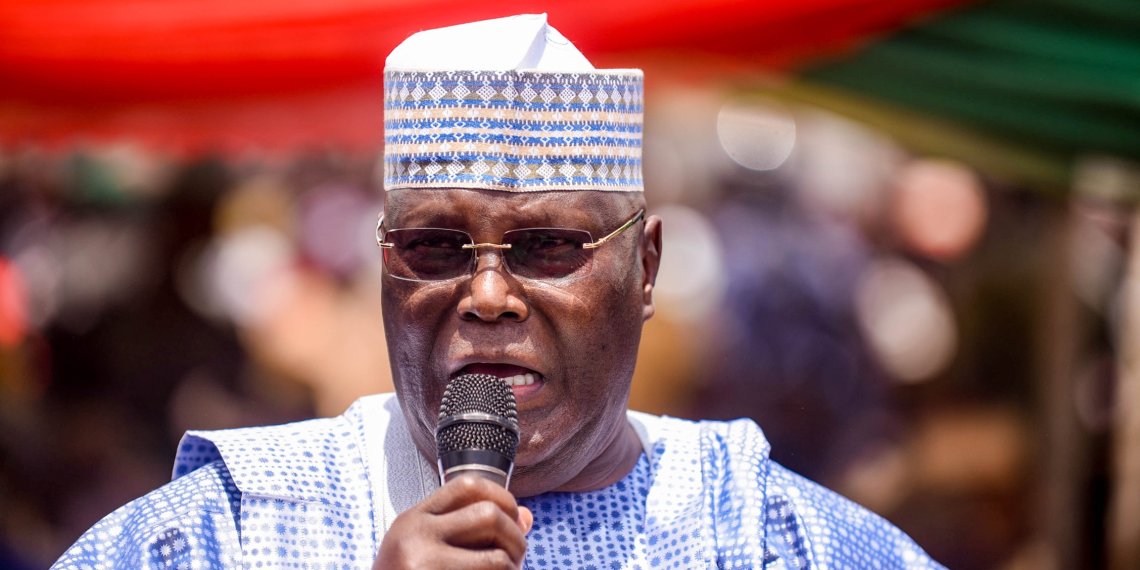
The race for the Osun State governorship has intensified ahead of Saturday’s election, as the African Democratic Congress (ADC) rallied voters behind its candidate, Najeem Salam, while organised labour called for a peaceful, free and credible poll devoid of intimidation.
Former Vice-President and ADC presidential candidate, Alhaji Atiku Abubakar, and the party’s National Chairman, Senator David Mark, led the ADC campaign grand rally in Osogbo on Monday, urging the electorate to turn out in large numbers and vote for the party.
Atiku, recalling his previous political engagements with the people of Osun, expressed confidence that the large turnout at the rally signalled growing support for the ADC.
He said the people of the state had supported him during his previous campaigns, including his presidential bid and his campaign for incumbent Governor Ademola Adeleke, stressing that he would not forget their loyalty.
Mark, who described the gathering as a prelude to the party’s victory, urged voters to protect their ballots and resist any attempt to manipulate the outcome of the election.
He declared that the party would return to Osun in November to celebrate the swearing-in of Salam as governor.
Former Osun governor and ADC National Secretary, Ogbeni Rauf Aregbesola, presented the party as the vehicle for restoring the state’s progressive tradition, promising renewed investment in education, healthcare, youth employment, agriculture and social welfare.
Aregbesola said an ADC government would revive the O’MEALS school-feeding programme and reintroduce O’YES, with a target of employing 20,000 youths. He also promised expanded mechanised agriculture, rural infrastructure and technology-driven development.
Salam, the ADC governorship candidate, reinforced the party’s campaign promises, pledging to create jobs for 20,000 youths within his first 100 days if elected.
He also promised stable electricity, free primary and secondary education and a review of tuition fees in the state’s higher institutions, while warning against any attempt to rig the election.
Meanwhile, organised labour in Osun has entered the electoral debate, with the Chairman of the Nigeria Labour Congress (NLC) in the state, Christopher Arapasopo, calling on civil servants and pensioners to exercise their franchise without fear.
At a joint congress of the NLC and Trade Union Congress at the entrance of the Osun Government Secretariat, Abere, Arapasopo said labour had been monitoring developments ahead of the election and would resist attempts to intimidate workers or other citizens.
He also defended the recent payment of N20,000 to civil servants, saying the payment followed a request by organised labour for palliatives to cushion the impact of economic hardship on workers and pensioners.
According to him, labour had initially requested N20,000 for each worker and pensioner, after which an agreement was reached with the state government for N10,000 payments, with June and July payments subsequently made.
Arapasopo dismissed allegations that the payment constituted vote-buying, saying the initiative originated from labour’s request for assistance to workers and pensioners.
He appealed to political parties, security agencies and the Federal Government to ensure that Saturday’s election does not degenerate into violence or intimidation.
“The governorship election should not be war,” he said, urging workers and citizens to vote for candidates of their choice without harassment.
He further called on the police to remain impartial and protect citizens, while appealing to the international community to closely monitor the election.
The Independent National Electoral Commission (INEC) has cleared 14 political parties to participate in the August 15 governorship election, setting the stage for a closely watched contest in the state.
By David Torough, Abuja
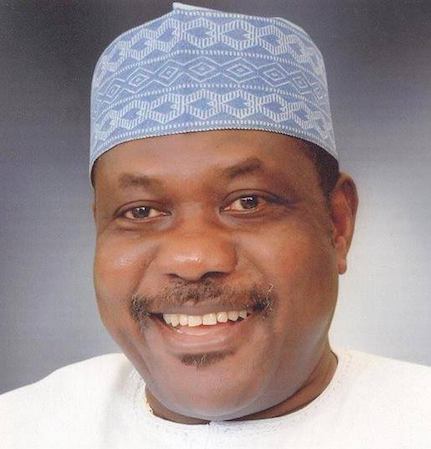
President Bola Tinubu on Monday unveiled an ambitious economic expansion agenda anchored on transforming Nigeria’s livestock industry and exporting homegrown technology and expertise to the wider African market.
The President, represented by the Secretary to the Government of the Federation, Senator George Akume (CON), said Nigeria was targeting more than doubling the livestock sector’s current contribution of over $32 billion annually to the national economy.
At the same time, Tinubu hailed the selection of Nigerian firm, AfriTrade CMP Limited, for the 20-year, multi-billion-dollar African Continental Free Trade Area (AfCFTA) Customs Modernisation Project, describing the development as evidence of Nigeria’s growing capacity to provide homegrown solutions for Africa’s economic integration.
The two developments, according to the President, underscore his administration’s determination to strengthen domestic production, create jobs, attract investment and position Nigeria as a major economic and technological hub on the continent.
Speaking at the opening of the 9th All Africa Conference on Animal Agriculture in Abuja, Tinubu said livestock remained a critical pillar of Nigeria’s food security and economic diversification strategy.
He said the sector currently supports millions of livelihoods and contributes more than $32 billion annually to the economy, with Nigeria possessing more than 58 million cattle, 64 million sheep, 124 million goats and 660 million poultry species.
“Our national strategy aims to more than double the sector’s economic contributions to position Nigeria as a leading hub for livestock production and processing in Africa,” he said.
Tinubu said the establishment of the Federal Ministry of Livestock Development in July 2024 marked the beginning of a comprehensive transformation of the industry from largely subsistence practices to a modern, technology-driven and commercially competitive sector.
He said the government was implementing the National Livestock Growth Acceleration Strategy to raise productivity, strengthen value chains, improve animal health services, expand commercial feed production, enhance livestock genetics and promote climate-smart production.
The administration, he added, was also promoting ranching and modern livestock production systems to increase productivity and reduce conflicts associated with traditional livestock practices.
Tinubu said opportunities were being opened for investment in dairy, meat processing, leather, feed milling and other livestock infrastructure, while efforts were underway to reduce Nigeria’s dependence on imported dairy products.
“Our ongoing dairy transformation programme seeks to double local milk production through improved genetics, better nutrition, modern breeding systems, and stronger private sector participation,” he said.
The President said the livestock value chain could generate millions of jobs, particularly for young people and women, through access to finance, digital technology, innovation and private-sector partnerships.
He also called for greater African cooperation in tackling animal diseases, climate change, food insecurity, trade barriers and transboundary livestock movements.
Tinubu’s emphasis on expanding domestic productive capacity was echoed in his response to the AfCFTA Customs Modernisation Project, where he said Nigerian innovation was increasingly finding applications beyond the country’s borders.
In a statement issued by his Special Adviser on Information and Strategy, Bayo Onanuga, the President commended the selection of AfriTrade CMP Limited, a subsidiary of Bergmans Security Consultant and Supplies Limited, for the continental customs project.
The project is expected to deploy digital and physical infrastructure to improve customs processes, cargo tracking, border management and trade-data exchange across participating African countries.
Another Bergmans subsidiary, Trade Modernisation Project Limited, is implementing Nigeria’s customs modernisation programme through B’Odogwu, the indigenous Unified Customs Management System.
Tinubu said the continental deal demonstrated that solutions developed and tested in Nigeria could serve as models for the rest of Africa.
“What has been built and tested in Nigeria is now providing a model for the continent,” he said.
“This is how African integration should work: Africans building African solutions for African opportunities.”
The President said the Federal Government would continue creating opportunities for Nigerian businesses to compete at home and across Africa under its Nigeria First policy.
The AfCFTA Secretary-General, Mr Wamkele Mene, recently visited the Nigeria Customs Service headquarters in Abuja to observe the Nigerian customs modernisation programme in operation.
Mene described B’Odogwu as a model for Africa, noting that although non-African companies had offered similar services, AfCFTA opted for an African solution.
The system, first piloted in October 2024, supports cargo tracking, data infrastructure, surveillance, risk management and non-intrusive inspection processes. It is also being integrated with the National Single Window launched in March 2026 as a unified digital gateway for cross-border trade.
The President said the development demonstrated that Nigeria could play a leading role not only in producing food and livestock for Africa but also in building the digital infrastructure needed to facilitate continental commerce.
“The promise of AfCFTA will be realised when goods can move across African borders faster, at lower cost and with fewer barriers,” Tinubu said.
He added that Nigeria was ready to contribute its experience, innovation and enterprise to that future.
The President urged African stakeholders to deepen cooperation in livestock production, animal health, research, technology, investment and trade, stressing that no country could achieve sustainable transformation in isolation.
He said Nigeria’s broader objective was to transform its domestic economic strengths into continental opportunities, with agriculture, livestock, technology and trade infrastructure serving as key drivers.
“Together, we can transform Africa from a continent with enormous livestock potential into a global leader in livestock production,” Tinubu said.
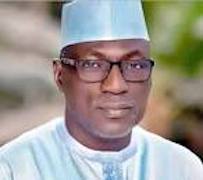
Former Governor of Kaduna State, Senator Ahmed Mohammed Makarfi, has said he didn’t bargain for the “deluge” of good will messages, which came his way on his 70th birthday, on August 8.
In a statement at the weekend, the former National Chairman of Peoples Democratic Party(PDP) said while it was “no doubt a privilege worthy of appreciation to attain the age of three scores and ten on August 8, 2026” he was overwhelmed by the show of love from different parts of the country and beyond.
“My attempts to write individualized responses to the thousands of messages have come to nought as I lose count of who and what messages to respond to.
“I take this opportunity therefore, to convey my most sincere and heartfelt gratitude and appreciation to the multitude of well wishers across all divides who have, in their various ways shared the momentous day with me.
I, however, want to thank notably, Allah (SWT) for enabling the attainment as well as so many other favours that only He is capable of” he said in the statement to the media.
He appreciated President Bola Ahmed Tinubu, the Speaker, House of Representatives, Dr Tajuddeen Abbas, Kaduna State Governor, Senator Uba Sani, members of the National Assembly, the set of 1999 governors and other former governors, His Highness Ambassador Ahmed Nuhu Bamalli, CFR, Emir of Zazzau and several other Emirs and Chiefs from both within and outside Kaduna State, leaders of various political parties, other political leaders as well as candidates to various offices across partisan divides, religious leaders, and friends and well-wishers, as stated who he said either called or wrote goodwill messages to him.
“I equally appreciate the numerous youths and youth groups that took to the social media to felicitate with me.
I want to say that the various messages, many of which described me in superlatives that made me wonder as to who the references are, have humbled me but at the same time will serve as a tonic that gingers me to continue to give my best to support the unity, peace and progress of our country and its people” he stated.
He urged his friends, political associates and supporters to close ranks and confront the myriad of problems bedeviling the nation saying the challenges were surmountable with a strong will and spirit.



Dangote Takes 52.6m Barrels as Domestic Crude Supply Surges
ShareBy Tony Obiechina, Abuja The Dangote Petroleum Refinery emerged as the dominant beneficiary of Nigeria’s improved domestic crude supply in...

Osun Guber: ADC, Labour Raise the Alarm, Demand Free, Fair Election
ShareFrom Ayinde Akintade, Osogbo The race for the Osun State governorship has intensified ahead of Saturday’s election, as the African...
Nigeria Livestock Revolution Targets Aftica Leadership, Says Tinubu
ShareBy David Torough, Abuja President Bola Tinubu on Monday unveiled an ambitious economic expansion agenda anchored on transforming Nigeria’s livestock...

Makarfi Marks 70th Birthday Anniversary, Appreciates Massive Solidarity
ShareFormer Governor of Kaduna State, Senator Ahmed Mohammed Makarfi, has said he didn’t bargain for the “deluge” of good will...


NYSC Swears in 1,760 Corps Members in Bayelsa
ShareFrom Mike Tayese, Yenagoa The National Youth Service Corps (NYSC) has sworn in a total of 1,760 Corps members for...

Tears Flow as Benue Buries 16 Victims Killed by Suspected Herdsmen
ShareFrom Attah Ede, Makurdi Members of Efeyi community in Ugboju district in Otukpo Local Government Area of Benue State, on...

FG Donates 100 Vials of Anti-snake Venom Benue
ShareFrom Attah Ede, Makurdi The Federal Government through Federal Ministry of Health and Social Welfare, has donated 100 vials of...
Presidential Media Team’s Road Journey and Reality of Benue’s Security Narrative
ShareBy Rotimi Ijikanmi For four days, the road into Benue became a moving test of perception, with a presidential media...

INEC Extends Deadline for Submission of Nominations for State Elections Aug 11
ShareIndependent National Electoral Commission (INEC) has extended the deadline for the submission of the list of candidates for the governorship...


NGO Set to Empower Residents of Kabusa District
ShareBy Raphael Atuu, Abuja A non-governmental organisation, Regy and Henry Amazing Grace Foundation, in conjunction with the National Commission for...