
NEWS
CBN Sets Agenda for Post-Recapitalisation Banking


By Tony Obiechina, Abuja
The Central Bank of Nigeria (CBN) said recent reforms in the foreign exchange market, monetary policy framework and banking sector recapitalisation programme have strengthened the foundations of Nigeria’s financial system and positioned it for greater resilience.
CBN Deputy Governor, Corporate Services, Dr Mohammed Sani Abdullahi, disclosed this on Tuesday in Abuja while declaring open the 38th CBN Seminar for Finance Correspondents and Business Editors.
The seminar, themed “Towards a Robust and Resilient Financial System in the Post-Banking Sector Recapitalisation Era,” brought together financial journalists and business editors to examine the future of Nigeria’s financial system.
Abdullahi said the reforms were introduced to restore stability, rebuild confidence and refocus the apex bank on its core mandate following the assumption of office by the current management three years ago.
He acknowledged the role of the media in communicating and scrutinising policy decisions during a period of significant economic reforms.
“You reported difficult decisions when outcomes were still uncertain. You asked questions as markets adjusted and helped businesses and households understand what the changes meant. You also challenged us, as you should,” he said.
According to him, when the current management took over in 2023, Nigeria was confronted with significant macroeconomic and financial sector challenges, including a fragmented foreign exchange market, exchange-rate distortions, pressure on external reserves, rising liquidity levels and declining investor confidence.
He noted that the wide gap between official and parallel-market exchange rates created incentives for arbitrage and weakened confidence in the formal foreign exchange market.
To address the challenges, the CBN consolidated multiple foreign exchange windows, removed restrictions on 43 categories of imports that had previously been excluded from accessing official foreign exchange, cleared verified foreign exchange obligations and introduced measures to improve market transparency.
Abdullahi said the reforms were complemented by tighter monetary policy, stronger liquidity management and the gradual winding down of intervention financing programmes.
He added that the banking sector recapitalisation programme announced in 2024 was designed to ensure that banks have adequate capital buffers to support economic growth and withstand future shocks.
“Three years on, the foreign exchange market is showing greater stability, while the recapitalisation programme is strengthening the capacity of banks to support the economy as broader reforms take hold,” he said.
Earlier, the Director of Corporate Communications and Investor Relations, Michael Chukwuemeka Akuka, described the seminar as an important platform for engagement between the CBN and financial journalists.
He said the focus had shifted from whether banks could successfully raise fresh capital to how a recapitalised banking sector would deploy the additional resources to support economic development and sustain public confidence.
“It is no longer whether the banking sector can raise capital, but what a recapitalised banking sector does with the additional capital that has been raised,” he said.
Akuka urged journalists to interrogate policy issues beyond the headlines and develop a deeper understanding of economic reforms.
“The quality of public understanding of monetary policy and financial system reform depends substantially on the accuracy, context and judgement that finance correspondents and business editors bring to their reporting,” he added.
Also speaking, the Director of Stakeholder Engagement and Institutional Relations, Hakama Sidi-Ali, commended finance correspondents and business editors for their support and contributions to the transformation of the CBN’s communications strategy over the past three years.
She attributed many of the Bank’s communication successes and recognitions to constructive engagement with the media and urged journalists to extend the same support to the new leadership of the Corporate Communications and Investor Relations Department.The two-day seminar featured paper presentations by regulators, banking industry leaders and media professionals on banking sector reforms, financial stability and the evolving role of monetary policy in Nigeria’s post-recapitalisation environment.

By David Torough, Abuja
The National Assembly on Tuesday extended the implementation of the capital component of the 2025 Appropriation Act for another three months, moving the deadline from September 30 to December 31, 2026.
The decision was taken separately by the Senate and the House of Representatives as both chambers resumed from their extended annual recess, only to adjourn plenary again until October 13.
The latest extension is the fourth adjustment to the lifespan of the 2025 capital budget. The deadline was initially extended from December 31, 2025, to March 31, 2026, and subsequently to June 30 and September 30.
In the Senate, the extension followed consideration of a bill sponsored by the Senate Leader, Senator Opeyemi Bamidele (APC, Ekiti Central). Bamidele said the amendment was necessary because the implementation of capital projects under the 2025 Appropriation Act had not reached optimal levels, despite the release of funds to Ministries, Departments and Agencies (MDAs).
The House also approved the extension after a motion by its Majority Leader, Julius Ihonvbere. He said several factors affecting the Nigerian economy had made it difficult to complete implementation of the capital budget within the existing timeframe.
He said the extension would ensure that incomplete projects and outstanding obligations were not affected by the expiration of the September 30 deadline.
The additional three months will allow MDAs to continue implementing projects and utilising funds appropriated under the 2025 capital budget alongside the 2026 budget.
Nigeria’s 2025 budget was signed at about N54.99 trillion, while the 2026 budget currently being implemented stands at N68.32 trillion.
Akpabio raises security, economic concerns
At the Senate’s resumption, Senate President Godswill Akpabio drew attention to the challenges confronting Nigerians, including insecurity, kidnapping, flooding and the rising cost of living.
Akpabio said the National Assembly’s performance should ultimately be measured by its effect on citizens, particularly through safer communities, improved livelihoods and stronger institutions.
He recalled the anguish of families whose relatives had been abducted during the lawmakers’ recess and called on security agencies to intensify efforts to rescue captives and protect vulnerable communities.
“So long as a single Nigerian languishes in captivity, a part of Nigeria is itself captive, and this chamber cannot call itself free of the burden,” he said.
On flooding, Akpabio expressed sympathy for affected communities, noting that many Nigerians had lost homes, farms and livelihoods. He called for early warnings to be translated into adequate preparation, protection and timely relief, warning that losses suffered by farmers could also affect food security.
He also acknowledged the pressure of the high cost of living, urging lawmakers to consider the effect of economic reforms and official economic figures on families struggling to afford basic needs and graduates searching for employment.
Akpabio urged senators to resume their legislative duties with patriotism and determination despite the political activities ahead.
Both chambers adjourn again
The House resumed on Tuesday after a 68-day annual recess. The lawmakers had last sat on July 23 and were originally scheduled to return on September 15 before the recess was extended by two weeks because of rehabilitation work in the National Assembly chambers.
Following Tuesday’s proceedings, the House adjourned plenary until October 13. The Senate also adjourned until the same date.
The twin decisions mean that while the National Assembly has provided additional time for the implementation of the 2025 capital budget, plenary proceedings in both chambers will not resume fully until October 13.
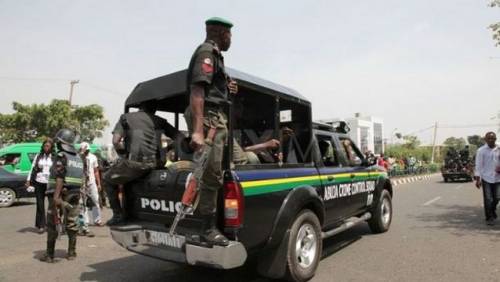
The police command in Bauchi State, said it has apprehended a housewife over alleged killing of her co-wife following a domestic violence incident in Bauchi metropolis.
This was contained in a statement by the spokesman of the command, SP Nafiu Habib, on Monday in Bauchi.
He said that the command detained the suspect (name withheld) on Sept.
27 for alleged culpable homicide following a domestic incident at Tafawa Balewa Housing Estate in Bauchi.Habib said that on Sept. 27, at about 4:05 p.m., the Police C-Division, Bauchi, received credible information that there was a domestic incident between two wives residing in the same household belonging to their husband.
He said that preliminary investigation revealed that the 33-year-old suspect, who is the second wife, allegedly acting under hallucinations, struck the first wife with pestle on the forehead, and the victim fell unconscious.
“Upon receipt of the report, detectives attached to C-Division immediately mobilised to the scene.
“The scene was documented, and the victim was rushed to the Specialist Hospital, Bauchi, where she was certified dead by a medical doctor. The corpse has been deposited at the hospital mortuary for autopsy,” he said.
Habib said that the police recovered the pestle used in committing the offence.
He quoted the Commissioner of Police, Sani-Omolori Aliyu, as directing the transfer of the case to the State Criminal Investigation Department (SCID) for discreet investigation and prosecution.
Aliyu condoled with the bereaved family and cautioned against domestic violence.
The CP also advised husbands to seek timely medical and psycho-social support for members of their families exhibiting mental health challenges. (NAN)
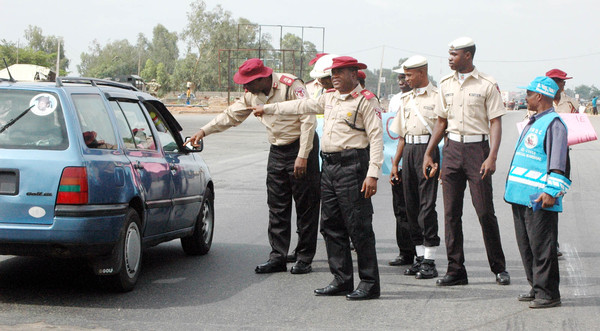
The Federal Road Safety Corps (FRSC) has deployed more than 170 ambulances across the country as part of efforts to strengthen emergency response and rescue operations on Nigerian roads.
The Corps Public Education Officer (CPEO), Osondu Ohaeri, disclosed this on Monday in Abuja, while responding to questions on the operational capacity of the corps emergency ambulance network and its response to Road Traffic Crashes (RTCs).
Ohaeri said the FRSC had the largest number of ambulances among emergency response agencies in Nigeria, with more than 170 ambulances and 60 Zebra points across the country.
He said the figure should however not be interpreted as the number of ambulances currently operational or serviceable as of September 2026.
According to him, an accurate current figure of serviceable ambulances will require the latest fleet-status report from the corps medical and rescue office.
He explained that the figures demonstrated the scale of the corps emergency response network, while the availability of individual ambulances was managed operationally based on their location, condition and assignment.
On the adequacy of the ambulances for emergency rescue, he said the corps continued to maintain and deploy its assets as part of its emergency response responsibilities, stressing that the status of individual vehicles could vary depending on their operational condition and assignment.
The CPEO said the corps was also focused on improving its emergency response capacity, particularly by strengthening rescue deployment and collaboration with other relevant agencies.
He also said that the corps had historically recorded an average response time of about 15 minutes under its documented emergency-response programme.
He cautioned against presenting the figure as the current nationwide average without updated operational data.
According to him, response time varies depending on several factors including the location of a crash, traffic congestion, distance from the nearest ambulance point and accessibility of the crash scene.
He added that the accuracy and timeliness of information provided by callers could also affect the speed with which rescue teams reached crash scenes.
Other factors he said include the possibility of emergency teams responding to other incidents simultaneously.
Ohaeri stressed that the corps had identified faster response to road traffic crashes and other emergencies as one of its management priorities in 2026.
He said efforts were therefore ongoing to strengthen rescue deployment and inter-agency collaboration to improve emergency response to road crashes.
He added that the FRSC remained committed to improving emergency rescue operations, strengthening the deployment of its resources and working with relevant stakeholders to ensure better outcomes for road crash victims.
He reiterated that complaints concerning emergency response, evacuation, treatment of victims or other forms of alleged misconduct should be channeled through the appropriate authorities for investigation and necessary action.
The CPEO further assured that the corps would continue to strengthen its emergency response mechanisms as part of broader efforts to reduce the consequences of road traffic crashes and improve the safety of road users nationwide.(NAN)




CBN Sets Agenda for Post-Recapitalisation Banking
ShareBy Tony Obiechina, Abuja The Central Bank of Nigeria (CBN) said recent reforms in the foreign exchange market, monetary policy...
Gunmen Abduct 18 Women in Benue, 47 Niger Farmers
ShareFrom Attah Ede, Makurdi, and Dan Amasingha, Minna Fresh fears over the worsening insecurity across the country emerged on Tuesday...


NASS Extends 2025 Capital Budget Again, Adjourns to Oct 13
ShareBy David Torough, Abuja The National Assembly on Tuesday extended the implementation of the capital component of the 2025 Appropriation...


Police Detain Woman for Alleged Killing of Co-wife in Bauchi
ShareThe police command in Bauchi State, said it has apprehended a housewife over alleged killing of her co-wife following a...


FRSC Deploys 170 Ambulances Nationwide for Emergency Rescue
ShareThe Federal Road Safety Corps (FRSC) has deployed more than 170 ambulances across the country as part of efforts to...


NBA Decries Rising Insecurity in Plateau, Urges Urgent Action
ShareThe Nigerian Bar Association (NBA) has decried the spate of security challenges currently confronting Plateau and other parts of Nigeria....

Benue Begins Compilation of Out-of-school Children
ShareThe Benue Government has begun compilation of out-of-school children as part of efforts to improve child protection and access to...

NAPTIP Uncovers Suspected Baby Trafficking Ring in C’River
ShareThe National Agency for the Prohibition of Trafficking in Persons (NAPTIP) has uncovered an alleged child trafficking operation involving newborn...


Kaduna Pensioners Applaud Uba Sani over N3.65bn Gratuity, Death Benefits
ShareThe Kaduna State Chapter of the Nigeria Union of Pensioners (NUP) has commended Gov. Uba Sani for approving N3.65 billion...

FG Calls for Urgent Action to Protect Nigeria’s Rivers
ShareThe Federal Government has called for integrated management of Nigeria’s rivers, forests, wetlands and watersheds to safeguard water resources, public...