
BUSINESS
Customs Tightens Surveillance Along Lagos-Ogun Waterways


By Tambaya Julius, Abuja
The newly appointed Acting Controller of the Western Marine Command, Deputy Comptroller Timothy Jonah, has pledged to intensify surveillance and intelligence gathering to tackle smuggling along the Lagos-Ogun waterways.
Jonah also promised to strengthen collaboration with sister security agencies and riverine communities, stressing that effective information and intelligence sharing would be central to his operational strategy.
He made the commitment while addressing officers and men of the command at its headquarters in Lagos.
His position was contained in a statement issued by the Customs Public Relations Officer, Deputy Superintendent of Customs Clarinet Nwosu, and made available to journalists in Lagos on Tuesday.
Jonah described the Western Marine Command as a hotspot for smuggling, saying sustained intelligence sharing would be crucial to strengthening operations and disrupting illicit activities.
He said the command would deepen its partnership with the Nigerian Navy, Marine Police and other security agencies to prevent the movement of illicit goods through the waterways.
The Acting Controller also disclosed plans to engage traditional rulers, riverine community leaders and other stakeholders to improve intelligence gathering and strengthen the fight against smuggling.
He, however, assured legitimate businesses operating along the waterways that enforcement would not be allowed to disrupt lawful economic activities.
According to him, trade facilitation remains a core responsibility of the Nigeria Customs Service, adding that enforcement must be carried out in a manner that supports legitimate trade.
Jonah noted that the World Customs Organisation places emphasis on safe and efficient trade flows, stressing that effective control measures were necessary to protect the integrity of the supply chain.
He assured compliant operators that the Customs Service had no issues with legitimate businesses, warning that those involved in illegal activities would face enforcement action.
He urged operators to comply strictly with existing customs and maritime laws, assuring legitimate traders of the Service’s support.
On officers’ welfare, Jonah said he would build on the welfare initiatives of the Comptroller-General of Customs, including health checks and sporting facilities, to improve officers’ fitness, morale and productivity.
He also announced that the command would begin visits to riverine community leaders and border kings from next week as part of efforts to strengthen community relations and improve intelligence gathering.
Jonah pledged to consolidate the achievements of his predecessor while introducing measures to further improve the command’s operational effectiveness.
The Acting Controller also charged officers and men to embrace teamwork, discipline and respect for constituted authority, stressing that operational success depended on collective effort.
He said no officer could succeed in isolation, adding that excellence in the Customs Service required cooperation, teamwork and unity of purpose.
Jonah reminded officers that the Nigeria Customs Service was a regimented organisation founded on discipline and respect for the chain of command.
He therefore urged them to follow established reporting channels and avoid bypassing their immediate supervisors when raising issues or seeking solutions.
He described unit heads as leaders at their respective levels and tasked them with developing strong problem-solving skills and taking responsibility for challenges within their areas of command.
According to him, effective leadership involves more than occupying a position; it requires the ability to solve problems, support colleagues and leave a positive impact in assigned areas.
Jonah also emphasised the importance of officers’ welfare, health consciousness, work-life balance and reputation management.
He urged officers to maintain a professional appearance, dress appropriately, demonstrate courage and professionalism when engaging sister agencies, and embrace continuous learning to improve their knowledge and effectiveness.
By Tony Obiechina, Abuja
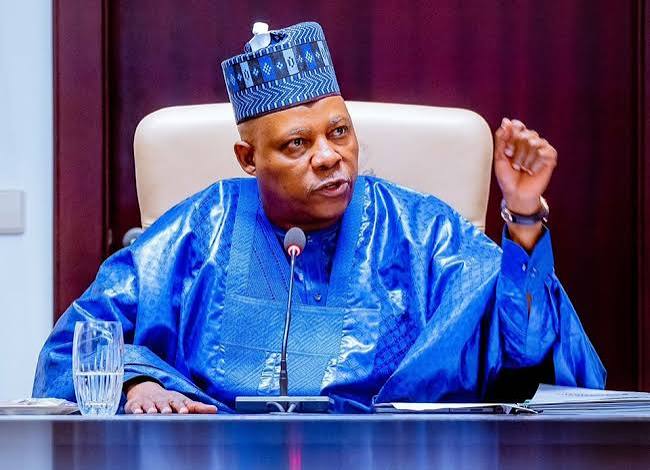
Vice-President Kashim Shettima has tasked Moniepoint Microfinance Bank to expand access to affordable loans for farmers, small business owners and other underserved Nigerians.
Speaking while commissioning the bank’s Abuja office the Vice president warned that the opening of its new Abuja headquarters must translate into tangible economic benefits for citizens.
According to Shettima financial institutions must move beyond providing banking services to creating economic opportunities that enable Nigerians to grow businesses, generate income and improve their living conditions.
The Vice-President who was represented by the Minister of Finance and Coordinating minister of the Economy Taiwo Oyedele made the remarks during the inauguration of Moniepoint’s North Central regional headquarters in Abuja.
He said the value of the new facility should not be measured by its physical structure but by the number of businesses it would help expand and the jobs it would create.
“We are commissioning a building today. Its lasting value will be measured by the businesses it helps to grow and the opportunity it brings closer to our people,” he said.
Shettima urged the financial institution to prioritise women entrepreneurs, young business owners, rural communities and businesses operating outside major commercial centres, noting that many Nigerians still struggle to obtain affordable financing.
He particularly called on the bank to extend its lending operations across the agricultural value chain, including farming, processing, storage, transportation and marketing.
According to him, farmers require timely funding to purchase agricultural inputs and finance cultivation, while agro-processors need capital to acquire machinery and establish storage facilities.
He stressed that financial institutions must understand the peculiarities of agricultural production, including planting and harvesting seasons, weather conditions and fluctuations in market prices.
“A farmer needs finance that understands the farming calendar. A processor needs finance that understands the production cycle,” he stated.
The Vice-President also criticised lending conditions that make it difficult for small businesses to access credit, saying interest rates, additional charges, repayment periods and delays in loan processing determine whether financing supports or undermines businesses.
“Affordability involves the interest rates, the fees that we charge, the repayment period, and time spent securing even that facility itself,” he said.
Shettima urged Moniepoint to adopt more efficient credit assessment methods and transparent pricing structures to reduce barriers to borrowing.
He also encouraged the bank to use digital transaction records to assess businesses that lack conventional collateral, subject to customers’ consent and adequate safeguards.
Beyond lending, he urged the institution to provide practical financial education to entrepreneurs, including how to distinguish revenue from profit, separate personal finances from business accounts and understand their tax obligations.
Shettima further warned that expanding digital banking without adequate consumer protection could expose customers to fraud, unauthorised transactions and other financial abuses.
“Inclusion must be built on trust. Customers must be confident that their money is safe, their information is handled responsibly, and the terms of a product are clearly explained,” he said.
He called for stronger fraud prevention measures, accessible complaint channels and effective customer support systems, insisting that customers should not require advanced financial knowledge to understand banking charges or resolve complaints.
The Vice-President also commended Moniepoint’s combination of digital banking services and physical customer engagement, saying technology alone could not address every challenge confronting financial service users.
In his remarks Moniepoint’s Managing Director, Babatunde Olofin, disclosed that the institution processes daily transactions exceeding N1 trillion and serves more than 21 million customers, while supporting over one million jobs across Nigeria.
Olofin said the establishment of the Abuja headquarters was part of efforts to complement the bank’s digital operations with physical facilities where customers could receive face-to-face assistance.
He explained that the institution initially focused on underserved businesses and informal-sector operators who had been largely neglected by traditional banks.
According to him, the new physical locations would enable customers to access assistance in familiar local languages and strengthen confidence in the bank without changing its technology-driven business model.
He said Abuja was strategically selected because of its position in the North Central region, which connects the northern states and serves as a major agricultural and commercial corridor.
Olofin added that Moniepoint planned to establish more physical locations in other states to improve accessibility and customer engagement.

TotalEnergies EP Nigeria Limited has commenced drilling of the Akpo Far East B exploration well, days after its Country Chair and Managing Director, Matthieu Bouyer, announced at the 2026 Nigerian Association of Petroleum Explorationists (NAPE) annual conference and exhibition that the company was launching a new deep offshore drilling campaign in Nigeria.
The well, being drilled with the Noble BlackRhino rig, is the first deep offshore exploration well to be drilled in Nigeria in 10 years.
It is expected to be followed by exploration and appraisal wells at Egina South and on the PPL 2000 and PPL 2001 licences.Speaking during an executive panel at the 44th NAPE Annual International Conference and Exhibition in Lagos, Bouyer said the drilling campaign was evidence of improving investor confidence in Nigeria’s energy sector.
The conference, held from 8 to 12 November, focused on unlocking reserves growth through exploration, local capabilities and adaptive technology.“The attractiveness of Nigeria has returned in our portfolio,” Matthieu Bouyer told the conference.
He said Nigeria’s challenge was not the availability of resources and called for faster conversion of discovered resources into projects and production.
“We need to think fast,” he said, calling for supply-chain constraints and other barriers to investment decisions to be addressed more quickly.
The Akpo Far East B well forms part of a broader exploration programme that will extend to Egina South and PPL 2000 and PPL 2001. TotalEnergies and its partner, SAPETRO, signed a Production Sharing Contract for the two licences in September 2025 after they were awarded through Nigeria’s 2024 Exploration Round. TotalEnergies holds an 80% operating interest, while SAPETRO holds 20%.
TotalEnergies emerged as the successful bidder for PPL 2000 and PPL 2001 in December 2024. The company’s planned drilling on the acreage, less than two years after the award, highlights the pace at which it is progressing the new exploration opportunity.
At the NAPE session, Bouyer said improved transparency in Nigeria’s licensing process had enabled TotalEnergies to secure new acreage through a competitive bid round for the first time in more than a decade.
He also pointed to recent Federal Government reforms, including Executive Orders designed to improve the competitiveness of deepwater and non-associated gas projects, as factors supporting renewed investment.
“The Executive Orders are working,” he said, citing recent investment decisions on the Ima and Ubeta gas developments as evidence of progress.
Commenting on the drilling programme, Mr Bouyer said the Akpo Far East B well and the planned activity at Egina South and PPL 2000 and PPL 2001 demonstrated TotalEnergies’ confidence in Nigeria’s resource potential.
“This momentum goes hand in hand with the efforts of the Nigerian authorities to strengthen transparency and attract investment into the country,” he said.
He acknowledged the teams responsible for the fast-track mobilisation of the Noble BlackRhino and thanked the company’s partners, NNPC Limited, Meren, CNOOC International and SAPETRO, for their support.
The NAPE executive session also featured Aliko Dangote, President and Chief Executive of Dangote Group, and Austin Avuru, NAPE Fellow and Co-founder of Seplat Energy, among others. Discussions centred on the reforms, fiscal stability and government-industry collaboration required to accelerate investment and increase Nigeria’s oil and gas production.

Sunbeth Treenuts and Sesame Limited, a subsidiary of Sunbeth Agro HoldCo, announces the completion of its acquisition of UAC of Nigeria Plc’s 73.29% shareholding in Livestock Feeds Plc, following approval from Nigeria’s Securities and Exchange Commission.
The completion establishes Sunbeth as the majority shareholder of Livestock Feeds Plc and marks the beginning of a new phase focused on preserving the company’s heritage, strengthening its operations and supporting its long-term growth.
Sunbeth’s immediate priority is to support business continuity, working closely with the Board, management and employees to strengthen operations and maintain dependable service to customers and partners.
Commenting on the completion, Peeyush Karnani, Chief Strategy Officer of Sunbeth Agro HoldCo, said:
“Livestock Feeds is an established business with a proud heritage, trusted brands and longstanding relationships across Nigeria’s livestock industry. We recognise the responsibility that comes with becoming its majority shareholder.
“Our approach is to build on these foundations. Our immediate focus is continuity, operational stability and supporting the people and partnerships behind the business. We intend to combine Sunbeth’s strength in sourcing soya and other key feed ingredients with Livestock Feeds’ manufacturing expertise and established distribution network to improve supply reliability, strengthen competitiveness and create sustainable value for all shareholders.
“This acquisition also provides an important foundation for Sunbeth’s long-term strategy to build an integrated protein business spanning animal nutrition, poultry and cattle production, and meat processing. We will pursue this strategy through disciplined, phased investment, with a clear focus on strengthening Livestock Feeds and supporting the growth of Nigeria’s livestock industry.”
Sunbeth has also announced the appointment of five new directors to the Board of Livestock Feeds Plc, effective 17 November 2026.
The newly appointed directors are Mr Sam Okuwlehi, Mr Seyi Ebenezer, Professor Franklin Nnaemeka Ngwu, PhD, Mrs Mary Mulili, and Mr Farrukh Siddiqui. They will join three existing directors who will continue to serve on the Board: Mr Joseph I.D. Dada, Mr Adegboyega Adedeji, and Mr Abayomi Adeyemi.
Employees remain central to the company’s future. Sunbeth intends to work collaboratively with the Livestock Feeds team, drawing on its experience and knowledge as the business enters its next phase.
For customers, distributors and suppliers, the priority is to sustain trusted relationships, maintain product quality and strengthen supply reliability. Future improvements will be introduced through a structured and carefully managed process.
As majority shareholder, Sunbeth is committed to supporting sound governance, operational resilience and disciplined investment to build lasting value for Livestock Feeds Plc and all its shareholders.



Establishment of Development Commissions, Tinubu’s Best Decision for Nigeria, Says Momoh
ShareBy David Torough, Abuja The Minister of Regional Development, Engr. Abubakar Momoh, has described the establishment of the Regional Development...


OPHK Air Strikes Kill 37 Terrorists, Destroy Four Vehicles in North-East
ShareBy David Torough, Abuja The Nigerian military says air strikes conducted by the Joint Task Force, Operation HADIN KAI (OPHK),...

2027: Akwa Ibom opposition ‘ll Vote Tinubu, says Akpabio as Tompolo Donates 31 Campaign Vehicles
SharePresident of the Senate, Godswill Akpabio, says the All Progressives Congress (APC) in the state and other opposition political parties...


Don’t Destroy Family Ties Over Politics, Ogazi Cautions Youths
ShareBy Tambaya Julius, Abuja Gidan Zakara community in Karu Local Government Area of Nasarawa State has declared 100 per cent...

BTOCARES: Ondo Families, Students, Farmers Celebrate as Tunji-Ojo’s Intervention Eases Hardship
ShareBy David Torough, Abuja Beneficiaries of the BTOCARES humanitarian initiative in Ondo State have expressed gratitude to the Minister of...


WPRF Delegates Leaving Nigeria with Positive Impressions, Says Customs CG
ShareBy Tambaya Julius, Abuja The Comptroller-General of the Nigeria Customs Service (NCS), Adewale Adeniyi, has said delegates attending the World...

Customs Suspends Training at Two Colleges over Recruitment Concerns
ShareBy Tambaya Julius, Abuja The Nigeria Customs Service (NCS) has temporarily suspended training activities at its two training colleges to...


INEC Shelves Comprehensive Voters’ Register Clean-Up
ShareBy Orjime Moses, Abuja The Independent National Electoral Commission (INEC) has said it will no longer conduct a comprehensive clean-up...
Protect The President, But Do Not Punish the People
ShareNo one disputes it: the security of the President of the Federal Republic of Nigeria cannot be compromised. Not for...
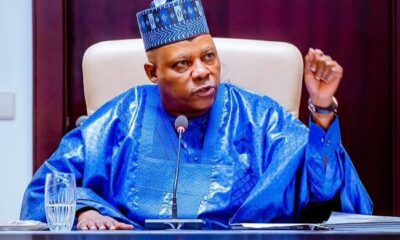

Shettima to Moniepoint: Provide Affordable Loans for Businesses
ShareBy Tony Obiechina, Abuja Vice-President Kashim Shettima has tasked Moniepoint Microfinance Bank to expand access to affordable loans for farmers,...