
NEWS
Trust is Democracy’s Invisible Currency, Says Akpabio

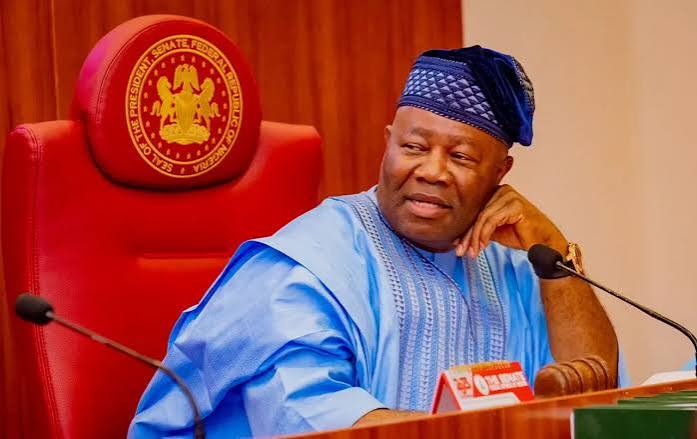
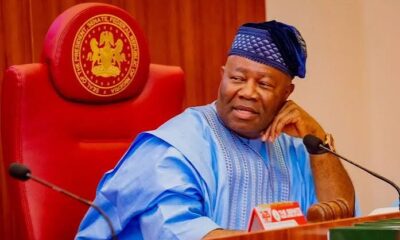
The National Assembly remains the bridge through which the hopes and aspirations of ordinary Nigerians must translate into government decisions, Senate President Godswill Akpabio has said, stressing that democracy can only endure when citizens feel heard, included and confident in their future.
Akpabio said this on Tuesday while addressing the 153rd Assembly of the Inter-Parliamentary Union in Arusha, Tanzania, where he identified inclusion, trust and opportunity as the pillars of a democracy that delivers tangible benefits to citizens.
The Senate President, who is also Chairman of Nigeria’s National Assembly and head of the Nigerian delegation to the global parliamentary gathering, said the success of democracy should not be judged by elections or economic statistics alone, but by its impact on the daily lives of Nigerians.
Akpabio said inclusion, trust and opportunity “are the foundations of a democracy that gives every citizen a voice, every community a place and every generation a reason to hope.”
In his address titled “Inclusion, Trust and Opportunity,” the former Akwa Ibom governor stated that democracy meant more than elections, while development meant more than impressive statistics.
He said, “If progress is not seen in our people, our work is not finished. Trust is the invisible currency of democracy. We cannot command it, demand it or legislate it into existence. We earn it through fairness, transparency and accountability.
Akpabio said Nigeria’s diversity made inclusion both a democratic necessity and a national responsibility, insisting that no citizen or community should be excluded from the country’s common future.
He told the international parliamentary forum that the administration of President Bola Tinubu, working with the 10th National Assembly, was pursuing reforms designed to widen participation and expand opportunities for Nigerians.
Akpabio said expanded regional development institutions were aimed at bringing development closer to communities and responding more directly to their needs.
He also said tax reforms were being pursued to make the system fairer, reduce the burden on low-income earners and small businesses, and strengthen enterprise.
On education, the Senate President highlighted the Nigerian Education Loan Fund as an intervention aimed at ensuring that financial circumstances did not determine the future of young Nigerians.
“Distinguished colleagues, let this Assembly renew our resolve to build Parliaments that listen, governments that serve and institutions that keep faith with their people.
“Let us turn inclusion into participation, trust into partnership and opportunity into shared prosperity. The smallest village must have a stake in the greatest national ambition. When every citizen can say, “I belong, I am heard, and my future matters,” democracy becomes a promise fulfilled.
“That is the future Nigeria seeks. That is the future we must build together. I thank you,” Akpabio said.
By Laide Akinboade Abuja
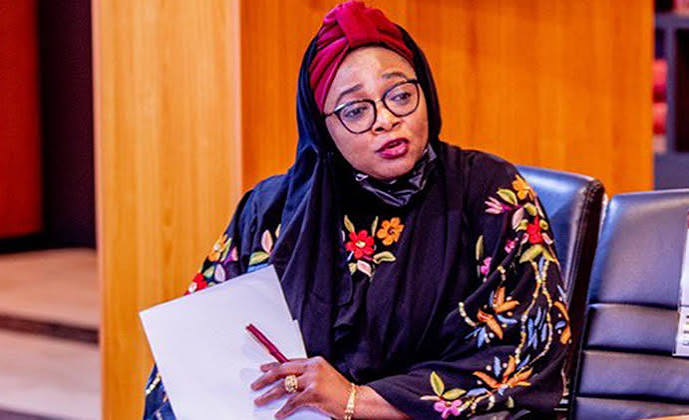
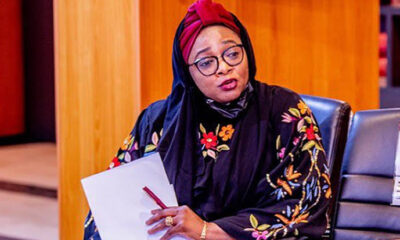
The Minister of Women Affairs and Social Development, Imaan Suleiman-Ibrahim, on Tuesday, tasked Nigerian women to ensure they equip themselves because this would bridge barriers in economic, institutional, social and equal participation in decision-making.
Suleiman-Ibrahim, stated this in Abuja, at the public presentation of a book titled “Rising Beyond Borders” authored by Dame Esther Uduehi, Founder and BOT Chairperson, League of Women Voters of Nigeria (NILOWV).
She praised Nigerian women resilience in business, agriculture, education, public service, politics, science, the professions and community leadership.
The Women Affairs Minister reiterated the commitment of the Federal Government to building policies, institutions and programmes that do not merely speak about women’s advancement, but create practical pathways through which women can acquire skills, access opportunities, build livelihoods, exercise their rights and participate meaningfully in shaping the future of Nigeria.
The Minister said, “The story of Nigerian women is, in many ways, a story of rising beyond borders. Across our communities, women have continuously demonstrated resilience in business, agriculture, education, public service, politics, science, the professions and community leadership. Yet we also recognise that too many barriers remain; economic barriers, institutional barriers, social barriers and barriers to equal participation in decision-making. This is precisely why the mandate of the Federal Ministry of Women Affairs and Social Development is so important.
“We are committed to building policies, institutions and programmes that do not merely speak about women’s advancement, but create practical pathways through which women can acquire skills, access opportunities, build livelihoods, exercise their rights and participate meaningfully in shaping the future of Nigeria”.
She said, 10 million women represent mothers, daughters, entrepreneurs, farmers, professionals, artisans, students, traders, community leaders and caregivers spread across Nigeria.
She stressed that the author used her leadership opportunity not only to occupy positions, but she understands the responsibility that comes with influence and using that influence to widen the space for others.
She therefore urged Nigerian Women to rise beyond the borders that divide us without surrendering the diversity that makes Nigeria strong.
The Minister appealed to legislators, policymakers, development partners, civil society organisations, private-sector leaders and women’s movements, to have renewed commitment of creating an environment in which women can participate fully in Nigeria’s democratic and economic life.
In her address, the President of the League of Women Voters of Nigeria, Irene Awunah Ikyegh, called for action on the Special Skills Bill for Women, saying the proposed legislation was intended to create additional opportunities for women and address persistent gender imbalance in representation.
Awunah expressed concern that the bill had yet to be brought forward for voting and appealed to stakeholders to sustain advocacy for its consideration.
She said the women’s movement must continue to pursue reforms that would open more opportunities for women in education, leadership and public life.
According to her, the presentation of Rising Beyond Borders marked the opening chapter of NILOWV’s 30th anniversary celebration and provided an opportunity to preserve the history of the women’s movement while inspiring a new generation of women to understand and confront the barriers to their participation.
She urged universities, particularly departments of gender studies, political science, development studies, history and government, to consider the book as a supplementary text for teaching and research on women’s leadership, political participation, democracy and social transformation.
Awunah also called on women-led organisations, civil society groups, political women’s groups and development partners to obtain copies of the book and make them available in libraries, offices, training centres and mentorship programmes.
She said the movement’s history must be preserved because future generations needed to understand the sacrifices and struggles that had contributed to the progress recorded by Nigerian women.
“A movement that does not preserve its history risks losing the lessons that made its progress possible,” Awunah said.
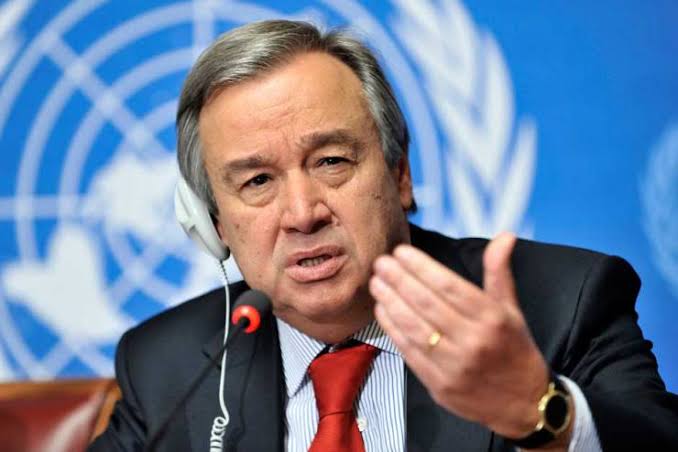
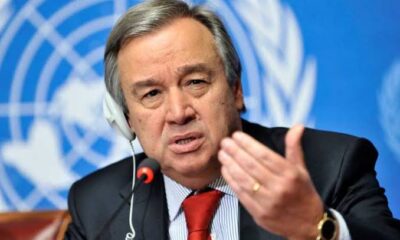
UN Secretary General António Guterres on Monday called for a peaceful future for Israelis and Palestinians ahead of the third anniversary of the Oct. 7 attacks by the militant organisation Hamas on Israel.
“Let this anniversary mark not only another year of mourning, but also a renewed determination to build a different future,” Guterres said in New York.
He said Israelis and Palestinians should be able to “live side by side in peace and security, with their rights, dignity, and aspirations fulfilled. “These horrors must never be repeated, “He added.On October 7, 2023, Hamas and other armed groups killed more than 1,200 Israelis and foreign nationals and abducted 251 people to Gaza.The attacks triggered the Gaza war, in which more than 74,000 Palestinians have since been killed, according to the Hamas-controlled health authority in Gaza.
A ceasefire has been in place since October 2025, although deadly attacks have continued.
Relations between the Israeli government and the United Nations remain deeply strained, with Israel accusing Guterres of bias and the UN chief repeatedly criticising Israel’s conduct in Gaza.
Guterres also paid tribute to the victims of the Oct. 7 attacks.
“Nothing can justify these atrocities,” he said.
“Their suffering, and the enduring grief of their families, must never be forgotten.”
The UN chief also highlighted the suffering of Palestinians in Gaza following the war.
“Their suffering, too, demands an end, now,” he said.
Guterres said the ceasefire had brought some relief but had yet to deliver security, adequate humanitarian assistance or a credible path to recovery and peace.
He urged all sides to fully implement their commitments and move to the next phase of the ceasefire.
“It is time for the ceasefire to become permanent. It is time to allow humanitarian assistance at scale.
“And it is time to respect international law,” he said.
“We must build the political path to lasting peace across the whole region.”
Kenya has confirmed its first case of Ebola, a Kenyan citizen who has been living in the Democratic Republic of Congo for the past seven years.
Health Minister Aden Duale said the patient, who fell ill a month ago, and was treated in several hospitals in DR Congo, died days after arriving in Nairobi.
Duale said the patient boarded a flight on Saturday and underwent normal public screening at the main airport in Nairobi before he was transferred by a relative to a hospital in the city.
More than 4,000 people have died from Ebola in DR Congo this year, in what is the second most deadly known outbreak of the disease.
Shortly after DR Congo declared an outbreak of Ebola in May, it was also reported in Uganda, where two people have died. However, the World Health Organization (WHO) declared the county free of the disease in August.
Since then, all cases of the disease have been declared in DR Congo.
The current outbreak has been caused by the Bundibugyo species of Ebola, which is relatively rare, with no known vaccine.
Duale confirmed that the Kenyan national had tested positive for the Bundibugyo species.
According to the minister, the patient first travelled by road from DR Congo to the Ugandan capital Kampala, where he boarded a flight to Nairobi
Duale said that after being taken to the Nairobi Hospital, the patient was transferred to an isolation facility which was built during the Covid-19.
It was there that the patient “developed fever, chills, intense fatigue and weakness, painful swallowing, muscle pain and bleeding under the skin”.
The patient died at 23:30 (20:30 GMT) on Monday and his burial is planned for later on Tuesday in line with public health safety protocols.
At least 28 contacts, including family members and healthcare workers, have been identified, while health authorities are tracing a further 23 passengers and four crew members who travelled on the same flight.
So far, WHO has recorded 4,082 deaths out of 8,463 cases since the emergence of the Bundibugyo species of the virus.
There are currently no approved vaccines or treatments for the species, which is highly infectious.



Trust is Democracy’s Invisible Currency, Says Akpabio
ShareThe National Assembly remains the bridge through which the hopes and aspirations of ordinary Nigerians must translate into government decisions,...

Why Women Must Equip Themselves – Minister
ShareBy Laide Akinboade Abuja The Minister of Women Affairs and Social Development, Imaan Suleiman-Ibrahim, on Tuesday, tasked Nigerian women to...

Horrors Must Never be Repeated, Says UN Chief
ShareUN Secretary General António Guterres on Monday called for a peaceful future for Israelis and Palestinians ahead of the third...

Kenya Confirms its First Ebola Death as Outbreak Spreads
ShareKenya has confirmed its first case of Ebola, a Kenyan citizen who has been living in the Democratic Republic of...


NAF Names Crew, Passengers on Board ill-fated Flight
ShareThe Nigeria Air Force (NAF) has released the names of personnel and passengers in the crashed NAF 931 aircraft. This...
SUBEB Begins Training of 75 SMOs in Zamfara
ShareThe Zamfara State Universal Basic Education Board (ZSUBEB) has flagged off the training of 75 State and Local Government Education...
Kano Approves Promotion of Over 18,000 SUBEB Staff, Releases N235.1m
ShareKano State Governor, Abba Kabir Yusuf, has approved the implementation of the January and July 2026 promotions of 18,984 teaching...

Why JAMB Took UTME to Canada – Registrar
ShareThe Registrar of the Joint Admissions and Matriculation Board, Prof. Segun Aina, has explained the decision to establish a Unified...


Dangote Stops Petrol Sales to Fuel Importers
ShareThe Dangote Petroleum Refinery has finally stopped the sale of Premium Motor Spirit (petrol) to major marketers importing petroleum products...


Nigeria Overtakes Four Nations in Africa Investment Ranking
ShareNigeria has emerged as the biggest climber in Africa’s latest investment risk ranking, rising four places to eighth position as...