
POLITICS
Atiku’s Production Subsidy: Has politics overtaken economics?

By Kayode Oladele
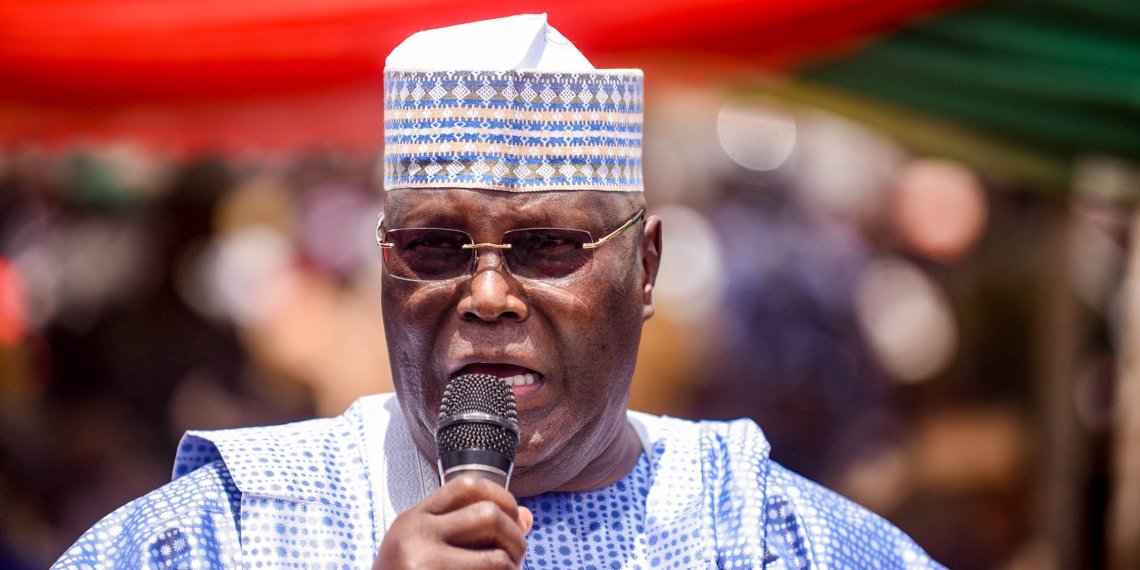
Alhaji Atiku Abubakar, former Vice President of Nigeria and presidential candidate of the African Democratic Congress, (ADC), has returned to the centre of Nigeria’s economic debate with a proposal that deserves careful scrutiny.
In his Independence Day policy statement, Alhaji Atiku Abubakar promised Nigerians what he described as a capped and budgeted production subsidy tied to verified petrol refined in Nigeria.
Imported petrol, he said, would not qualify. The subsidy would support domestic refining, its costs and beneficiaries would be disclosed and independently audited and the benefit would be expected to reach Nigerians through lower pump prices.On the surface, the proposition is attractive, particularly at a time when Nigerians are understandably concerned about transportation costs and their effect on virtually every aspect of daily life. However, once the attractive packaging is removed, Atiku’s proposal raises a very familiar economic question.
If the government deliberately reduces the cost of producing petrol so that it can be sold more cheaply, who pays the difference? The answer is the Nigerian public.
Atiku has insisted that his proposal is different from the old subsidy arrangement and that distinction should be acknowledged. The previous system was largely associated with subsidising imported petrol. Atiku proposes instead to support domestic production, with the subsidy tied to verified locally refined fuel. However, moving the subsidy from importation to production does not make its cost disappear. It merely changes the point at which public resources enter the petroleum value chain.
If crude that could otherwise be sold at its economic value is supplied to qualifying refineries at a discount, the difference represents an opportunity cost to the Federation. Atiku himself has acknowledged this. The relevant question, therefore, is not whether the subsidy has a cost.
It plainly does. The questions are how much it will cost, how long it will last, where the resources will come from and whether the expected reduction will actually reach the Nigerian standing at the petrol pump.
This is where the proposal becomes far less straightforward than its political appeal suggests.
Atiku says the subsidy will be capped. What is the cap? He says it will be budgeted. What is the proposed annual budget? What volume of locally refined petrol will qualify? What will be the subsidy per barrel or litre? What happens if international crude prices rise substantially or the exchange rate moves sharply? What is the maximum financial exposure of the Federation? How will qualifying production be verified? Most importantly, what enforceable mechanism will guarantee that the financial benefit given to producers is passed through the distribution chain to the consumer? These are questions of elementary public finance.
The APC Presidential Campaign Council has already asked Atiku to disclose the proposed subsidy rate, annual expenditure ceiling, eligible volume, funding source and safeguards against diversion, smuggling and fraudulent claims. Those are legitimate questions.
If Atiku believes the assumptions being advanced by the APC are wrong, he should provide his own figures. Nigerians need more than the promise that petrol will become cheaper. They deserve to see the arithmetic behind that promise. Anyone asking Nigerians to entrust him with the management of their economic resources should be prepared to put numbers behind his policies.
There is also the legal and regulatory question. Atiku’s running mate, Rotimi Amaechi, has now said that an Atiku administration would seek an amendment to the Petroleum Industry Act if the existing law prevents the proposed production subsidy from being implemented.
That statement is significant because it confirms that the relationship between the proposal and the present petroleum regulatory framework is not an imaginary concern raised by political opponents. It is a matter that Atiku’s own ticket may require legislative action.
This brings us to an even more fundamental issue. Nigeria has travelled the subsidy road before. For years, enormous public resources were committed to keeping petrol prices artificially low. The arrangement became a major burden on public finances and was associated with smuggling, abuse and distorted economic incentives. Resources that could otherwise have been available for roads, schools, hospitals, security, power and other public purposes were committed to sustaining the system.
It is therefore striking that Atiku, who has long presented himself as an advocate of market reform and previously supported subsidy removal, now proposes another subsidy as part of his answer to Nigeria’s economic difficulties.
The mechanism may be different and fairness requires us to acknowledge that difference. However, Nigerians are still entitled to ask what has changed in his economic thinking and why an intervention he once regarded as unsustainable has returned, albeit in a redesigned form, to the centre of his petroleum policy. Politics should not erase institutional memory.
The contrast with President Bola Ahmed Tinubu’s reform direction should also be properly understood. The choice is not between subsidising petrol and simply abandoning Nigerians to high transportation costs.
Tinubu’s alternative is to move government intervention away from permanently subsidising every litre of petrol consumed and towards changing the underlying economics of transportation through alternative fuels, domestic refining, infrastructure and competition. That distinction, in
My opinion is fundamental.
Under the old subsidy arrangement, the government attempted to make petrol cheaper by absorbing part of its cost. As consumption increased and international prices and the exchange rate moved, the potential burden on the treasury also increased. Tinubu’s alternative seeks to reduce Nigeria’s dependence on petrol itself.
This is the thinking behind the expansion of Compressed Natural Gas and electric mobility. Nigeria is richly endowed with natural gas. Rather than continue depending overwhelmingly on petrol and diesel for road transportation, the government is seeking to use more of that domestic resource to power vehicles while developing electric transportation and mass transit.
The principle is straightforward. If commuters can move more cheaply using CNG or electric transportation, the government does not have to subsidise every litre of petrol consumed in Nigeria in order to reduce transportation costs. If commercial transport operators increasingly move from petrol to domestically available gas, Nigeria can progressively reduce the vulnerability of transportation costs to international petroleum prices and foreign exchange pressures.
The Federal Government reported in September that more than 120,000 vehicles had been converted to CNG, with more than 400 certified conversion centres and over 90 CNG refuelling stations operating across the country. The government has also reported lower fares on some routes served by CNG and electric public transportation.
These are government reported figures and they must ultimately be measured against what Nigerians actually experience across the country. The important point is the direction of policy. The objective is to create alternatives to petrol rather than make the treasury permanently responsible for reducing the price of petrol.
Domestic refining is another essential part of the alternative. For decades, Nigeria lived with the contradiction of being a major producer of crude oil while depending heavily on imported refined petroleum products. A more sustainable petroleum economy should refine more of what Nigerians consume at home while encouraging sufficient competition among refiners, distributors and retailers.
Competition matters because deregulation without competition can leave consumers exposed to concentrated market power. The ultimate objective should therefore be a market with adequate domestic refining capacity, multiple suppliers, alternative fuels and efficient distribution so that competition increasingly influences prices rather than an open ended commitment from the public treasury.
This is where the difference between Atiku’s proposal and Tinubu’s approach becomes clear. Atiku proposes using public resources to reduce the production cost of locally refined petrol in the expectation that the benefit will reach consumers through lower pump prices. Tinubu’s approach is to maintain market based petrol pricing while expanding domestic refining and developing alternatives to petrol, particularly CNG and electric transportation.
Put simply, Atiku proposes another government subsidy to make petrol cheaper. Tinubu’s reform seeks progressively to make Nigerians less dependent on petrol. That is a fundamental policy distinction.
Atiku is entitled to present his alternative to Nigerians. However, he must also submit that alternative to the discipline of numbers. Saying that a subsidy will be capped does not tell us the cap. Saying it will be budgeted does not tell us the budget. Saying it will be transparent does not tell us the annual fiscal exposure. Saying that consumers will benefit does not explain how the government will guarantee that the benefit reaches them.
These details matter because Nigeria cannot afford economic policy built around promises whose costs become clear only after implementation.
President Tinubu took the difficult decision to confront a subsidy system that had become a serious burden on the public treasury. The transition has created pressures for Nigerians and the government must acknowledge and respond to them. The answer, however, should be to make the reforms work better, deepen domestic refining, accelerate CNG infrastructure, expand electric and mass transportation, encourage genuine competition and strengthen the productive economy until Nigerians increasingly feel the benefits.
There is nothing wrong with questioning Tinubu’s reforms. Indeed, Nigerians should question them and demand results. However, questioning the speed or effectiveness of reform is different from concluding that the country should once again commit public resources to suppressing the effective price of petrol.
Atiku says his own subsidy will be different. Then let him show Nigerians precisely how different it will be. Let him state the proposed subsidy rate, the eligible volume, the annual ceiling, the source of funding, the expected duration and the mechanism for ensuring that the benefit reaches consumers. Let Nigerians see the figures and judge the proposal on its actual economic consequences rather than its immediate political attractiveness. That, in my view, is where the debate should be.
Nigeria cannot permanently subsidise its way out of structural economic problems. There will always be political pressure to postpone difficult decisions. There will always be an election around the corner. There will always be an attractive argument for making an expensive commodity cheaper through government intervention. However, somebody ultimately pays the bill. Therefore, before Nigerians are asked to embrace another subsidy arrangement, Atiku should tell them exactly what that bill will be.
Giving an old economic instrument a new design does not remove its cost. Nigeria has travelled the subsidy road before and knows the dangers that can accompany it. The more sustainable course is to confront the weaknesses in the present reforms, accelerate the alternatives, expand domestic production and competition and make those reforms work for ordinary Nigerians rather than return the public treasury to the endless business of paying the difference at the petrol pump.
Kayode Oladele is a Nigeria -US Attorney, former member of the House of Representatives and former Chairman of the House Committee on Financial Crimes.
POLITICS
2027: Akwa Ibom opposition ‘ll Vote Tinubu, says Akpabio as Tompolo Donates 31 Campaign Vehicles
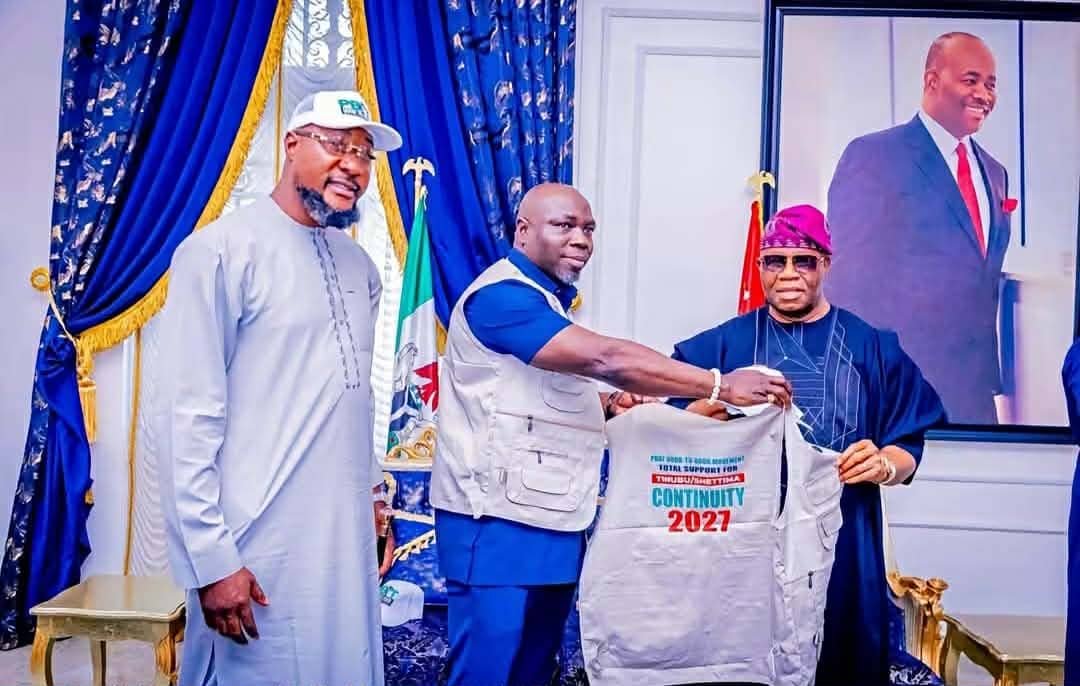
President of the Senate, Godswill Akpabio, says the All Progressives Congress (APC) in the state and other opposition political parties have formed a coalition that will vote massively to reelect President Bola Tinubu in the 2027 presidential election.
This is just as the High Chief Government Ekpemupolo-led PBAT Door-to-Door Movement inaugurated its Akwa Ibom State chapter and executives with a donation of 31 campaign vehicles, speakers and other campaign materials.
Speaking at the event held at the Ibom Hall Ground in Uyo, on Sunday, the Senate President declared that the entire state was for Tinubu and the APC because the people of the state were already enjoying the Tinubu Presidency through programmes like NELFUND, CreditCorp, presidential CNG initiative, coastal roads, payment of salaries and other economic policies which were stabilising the economy.
Likening the PBAT Door-to-Door Movement to the Peanut Brigade of the United States of America, through which a largely unpopular Jimmy Carter became president, he said history had taught that the destiny of nations is not only determined in the corridors of power, which underscores the importance of the work the Movement was doing.
“Thank you to the PBAT Door-to-Door Movement for recognising that true democracy must get to the homes of the people, that less magnificent doors like doors of farmer, widows, students, those who were struggling but whose hopes have been renewed, matter,” Akpabio said.
Continuing, he noted that the story of the 2027 election would be told by families who open their doors to the movement, students that have benefitted from initiatives like NELFUND, bursaries paid by the state government as a result of increased federal allocation, and workers who are no longer owed salaries, among others, emphasising that democracy must not become so fascinated by the great doors that it forgets the humble doors of the masses.
Akpabio reiterated the support of the National Assembly for President Tinubu, saying he requires such support to stay focused on the job he is doing.
Earlier, Ekpemupolo, popularly known as Tompolo, who was represented by the Managing Director of Tantita Security Services, Chief Kestin Pondi, said the donation of the vehicles was to support the state organs of the APC in the campaign for Tinubu.
He reeled out some of the policies and reforms of the Tinubu administration and pointed out that such reforms often come with hardship but added that the pains abate once the reforms begin to yield result, which was already happening in the case of Nigeria.
Tompolo noted that reforms in other countries which many Nigerians admire, did not happen within a four-year tenure but the outcome of years of continuity by various governments, emphasising the need for Tinubu to be reelected to complete his two terms and consolidate on the ongoing reforms.
Also in a remark, the National Coordinator of the Movement, Sunday Asuku, urged the people to vote massively for Tinubu and other APC candidates, emphasising that the opposition does not mean well for the country and it shows in the antecedents of some of those contesting elections.
He pointed out that with the support of a cooperative National Assembly, led by Akpabio, President Tinubu had been able to give assent to bills such as the NELFUND Act and other bills like local government autonomy and state police which will soon be signed into law.
“We must follow a visionary leader working to change the face of Nigeria,” he stated.
By Tambaya Julius, Abuja
Gidan Zakara community in Karu Local Government Area of Nasarawa State has declared 100 per cent support for the All Progressives Congress (APC) candidate, Rt. Hon. Daniel Ogah Ogazi, in his bid to represent Karu, Keffi and Kokona Federal Constituency in the House of Representatives.
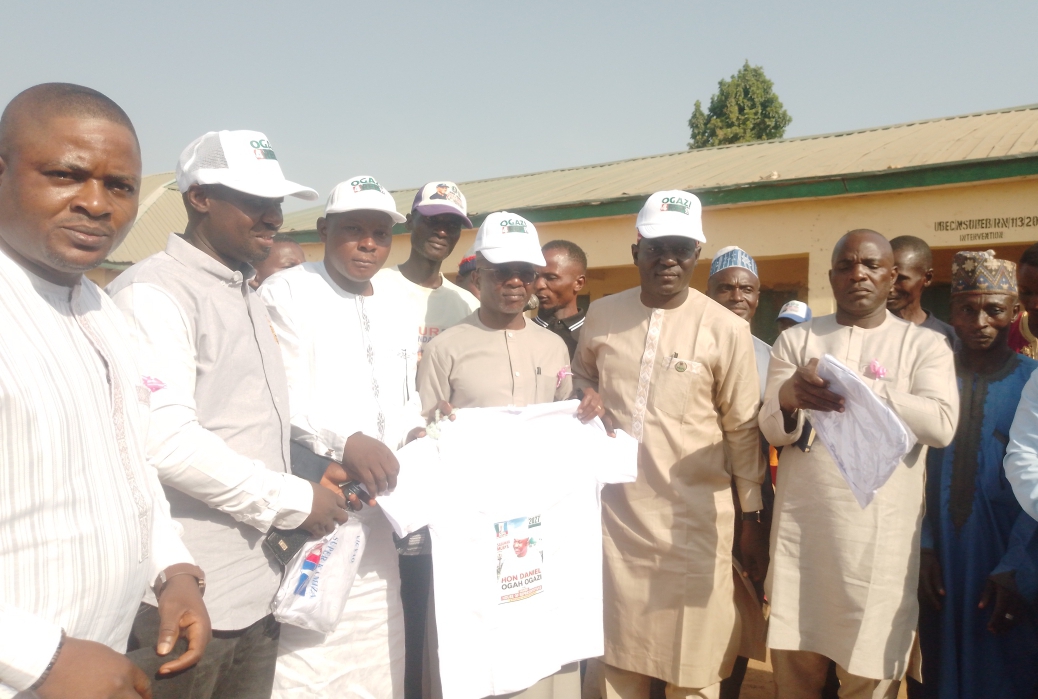
The community made the declaration during Ogazi’s familiarisation visit and the unveiling of his campaign banner, donated by his supporters, where residents expressed confidence in his leadership and pledged their support for his political ambition.
Speaking during the engagement, Ogazi thanked the community for their love, solidarity and confidence in him, describing their support as an investment in the future of their children.
“All that you are doing is for the future of your children. I joined politics to worship God through service and to support humanity,” he said.
He urged the people to shun religious and tribal sentiments in politics, advising them to support candidates based on their credibility, commitment and genuine interest in the welfare of the people.
Ogazi also encouraged residents to pray for credible candidates, expressing confidence that God would guide them in making the right choices during the elections.
He particularly cautioned youths against allowing politicians to influence them into electoral violence, stressing that political differences should not destroy family ties, friendships and peaceful coexistence.
“Do not allow politics to destroy your relationships with your relatives. Do not destroy yourselves because of elections. At the end of the day, God is the giver of positions. Why should we fight and destroy ourselves over political positions?” he asked.
Reflecting on his political journey, the flag bearer recalled that he once worked as a commercial motorcycle operator, popularly known as an Okada rider, before rising to his current political position.
He said his experience had taught him valuable lessons about perseverance, grassroots engagement and the realities of political participation.
During the visit, the community presented campaign T-shirts, caps and other campaign materials to Ogazi as a demonstration of their solidarity and identification with his ambition to represent the people of Karu, Keffi and Kokona Federal Constituency at the National Assembly.
In his remarks, the Deputy Speaker of Karu Local Government Legislative Council and Councillor representing Bagaji/Agada Electoral Ward, Hon. Adamu Abubakar, expressed confidence in Ogazi’s aspiration, declaring that the community had already made its choice.
“God has chosen you, and we have also chosen you, Hon. Daniel Ogah Ogazi. In the forthcoming general elections, we will record a victorious history that has never been achieved in Bagaji/Agada Ward,” he said.
Also speaking, the Karu Local Government APC Chairman, Hon. Samson Muntari, reaffirmed the party’s readiness to secure victory in Karu and Nasarawa State at large in the 2027 general elections.
By Orjime Moses, Abuja
The Independent National Electoral Commission (INEC) has said it will no longer conduct a comprehensive clean-up of the national voters’ register before the 2027 general elections, citing time constraints and opposition to its earlier plan.
INEC Chairman, Prof.
Joash Amupitan, disclosed this during an appearance on Bereke Family TV, where he explained that the commission had initially proposed a six-month exercise to address irregularities in the register.The proposed exercise was expected to remove deceased persons, underage voters, incomplete registrations and duplicate entries.
Amupitan, however, said the commission had postponed the comprehensive exercise until after the 2027 elections because there was insufficient time to complete it before the polls.
He said INEC would instead concentrate on addressing duplicate registrations and other questionable records brought to its attention.
“We cannot do everything now; we have no time to do it, but we can do duplications, those ones they are flagging,” he said.
The INEC chairman said some of the cases involved individuals appearing in the register with as many as five different photographs.
He said the commission was reviewing such records to ensure that the register was cleaned up before the elections.
Amupitan also disclosed that the ongoing review had reduced the number of registered voters, adding that INEC would publish the final register after completing its review.
He said the commission had initially scheduled December 15 for the release of the final register but was reviewing the timeline following complaints over the preliminary register.
The controversy followed the identification of questionable records and suspected AI-generated photographs during the display of the preliminary register nationwide in October.



Establishment of Development Commissions, Tinubu’s Best Decision for Nigeria, Says Momoh
ShareBy David Torough, Abuja The Minister of Regional Development, Engr. Abubakar Momoh, has described the establishment of the Regional Development...


OPHK Air Strikes Kill 37 Terrorists, Destroy Four Vehicles in North-East
ShareBy David Torough, Abuja The Nigerian military says air strikes conducted by the Joint Task Force, Operation HADIN KAI (OPHK),...

2027: Akwa Ibom opposition ‘ll Vote Tinubu, says Akpabio as Tompolo Donates 31 Campaign Vehicles
SharePresident of the Senate, Godswill Akpabio, says the All Progressives Congress (APC) in the state and other opposition political parties...

Don’t Destroy Family Ties Over Politics, Ogazi Cautions Youths
ShareBy Tambaya Julius, Abuja Gidan Zakara community in Karu Local Government Area of Nasarawa State has declared 100 per cent...

BTOCARES: Ondo Families, Students, Farmers Celebrate as Tunji-Ojo’s Intervention Eases Hardship
ShareBy David Torough, Abuja Beneficiaries of the BTOCARES humanitarian initiative in Ondo State have expressed gratitude to the Minister of...


WPRF Delegates Leaving Nigeria with Positive Impressions, Says Customs CG
ShareBy Tambaya Julius, Abuja The Comptroller-General of the Nigeria Customs Service (NCS), Adewale Adeniyi, has said delegates attending the World...
Customs Suspends Training at Two Colleges over Recruitment Concerns
ShareBy Tambaya Julius, Abuja The Nigeria Customs Service (NCS) has temporarily suspended training activities at its two training colleges to...

INEC Shelves Comprehensive Voters’ Register Clean-Up
ShareBy Orjime Moses, Abuja The Independent National Electoral Commission (INEC) has said it will no longer conduct a comprehensive clean-up...
Protect The President, But Do Not Punish the People
ShareNo one disputes it: the security of the President of the Federal Republic of Nigeria cannot be compromised. Not for...

Shettima to Moniepoint: Provide Affordable Loans for Businesses
ShareBy Tony Obiechina, Abuja Vice-President Kashim Shettima has tasked Moniepoint Microfinance Bank to expand access to affordable loans for farmers,...