
DEFENCE
Troops Arrest Suspected Ammunition Supplier, Recover 300 Rounds Hidden in Sack of Beans

By David Torough, Abuja
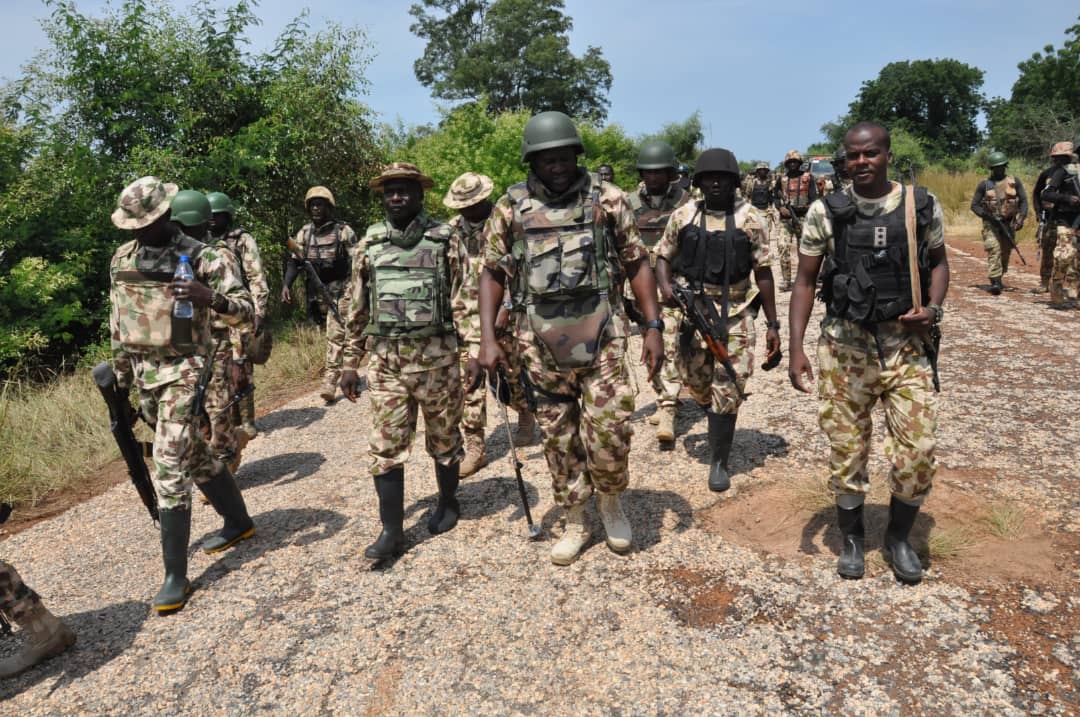
Troops of the Nigerian Army have arrested a suspected ammunition supplier and recovered 300 rounds of 7.62 x 39mm ammunition concealed in a sack of beans during an intelligence-led operation.
The operation, carried out at about 9:30 p.
m. on Tuesday, November 17, 2026, involved troops of the Atsawa Blocking Force working in collaboration with local vigilantes.The suspect, identified as 47-year-old Umaru Muhammad, a resident of Ashe Village, was intercepted following credible intelligence. A search of his belongings reportedly uncovered the ammunition, which had been concealed in a sack of beans in an apparent attempt to disguise its transportation as an ordinary commercial consignment.
According to a statement issued on Wednesday by the Acting Director of Army Public Relations, Colonel Appolonia Anele, preliminary interrogation indicated that the ammunition was allegedly intended for two individuals identified as Gimba and Dare, reportedly residents of Gori Village along the River Niger corridor in Lokoja Local Government Area of Kogi State.
The statement said the two individuals were described as local vigilantes, raising concerns about the possible infiltration or exploitation of community security structures by criminal ammunition supply networks.
However, the allegations remain subject to further investigation.
Other items recovered during the operation included a Bajaj motorcycle, a mobile telephone and ₦30,500 in cash.
Muhammad is currently in military custody as investigations continue to determine the extent of the suspected ammunition supply network and identify other individuals who may be connected to the alleged transaction.
The Army said the interception formed part of its sustained efforts to dismantle the logistics and ammunition supply chains supporting banditry, terrorism, kidnapping and other criminal activities across the country.
It added that troops would continue to intensify intelligence-driven operations and strengthen collaboration with local security stakeholders to prevent criminal groups from accessing weapons and other resources used to carry out attacks.
The Nigerian Army also urged members of the public to remain vigilant and report suspicious movements, particularly the transportation of concealed arms, ammunition and other prohibited items, to security agencies.
The military reiterated its commitment to protecting law-abiding citizens and restoring lasting peace and security across the country.
By David Torough, Abuja
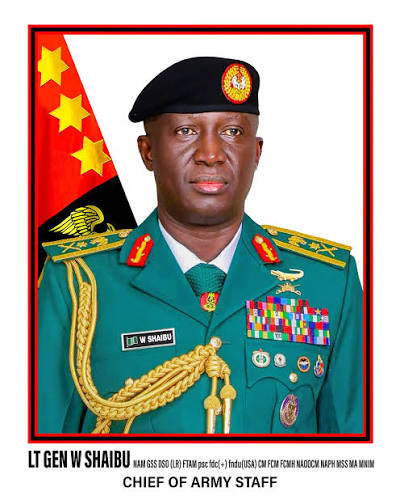
The Chief of Army Staff (COAS), Lieutenant General Waidi Shaibu, has commissioned 20 transit flats and a modern Officers’ Mess at Obienu Barracks in Bauchi State, reaffirming the Nigerian Army’s commitment to improving the welfare and living conditions of its personnel and their families.
The facilities were commissioned on Wednesday, November 18, 2026, as part of the Army’s ongoing efforts to strengthen personnel welfare, modernise its infrastructure and enhance operational readiness.
Speaking at the ceremony, General Shaibu said the Army’s modernisation drive extends beyond acquiring sophisticated military equipment and expanding formations to include investments in personnel welfare and improved living conditions.
He stressed that decent accommodation and a conducive environment were essential to boosting troops’ morale, promoting family stability and improving operational effectiveness, particularly as the Army continues to expand its capacity to tackle emerging security threats.
According to him, the newly commissioned 20 transit flats would address accommodation challenges faced by personnel deployed on postings, courses and temporary assignments.
He added that the modern facility, named the Lieutenant General Waidi Shaibu Officers’ Mess, features contemporary accommodation, a Hall of Fame and recreational facilities designed to encourage professional interaction, strengthen esprit de corps and promote institutional pride among officers.
The Army Chief commended the Nigerian Army Armoured Corps and other stakeholders for the successful execution of the projects, describing them as evidence of the military’s commitment to personnel welfare and prudent resource management.
He also urged personnel who would benefit from the facilities to ensure their proper maintenance to guarantee their sustainability and continued usefulness.
General Shaibu reiterated that the welfare of soldiers and their families remained a major priority of his leadership, assuring that investments in accommodation, healthcare, education and other welfare initiatives would continue alongside the Army’s modernisation and expansion programmes.
He maintained that a well-motivated, professionally trained and adequately supported force remained crucial to sustaining operational successes against terrorism, insurgency, banditry and other security threats facing the country.
The commissioning underscores the Nigerian Army’s growing emphasis on balancing military capability development with improved welfare infrastructure for its personnel.
By David Torough, Abuja
The Armed Forces of Nigeria (AFN) say troops neutralised 217 terrorists and other criminals, rescued 349 kidnapped victims and arrested 333 suspects during coordinated military operations across the country in October 2026.
The military also recorded the surrender of 70 insurgents, recovered 105 weapons and 3,174 rounds of ammunition, and dismantled 49 illegal oil-refining sites, recovering 756,837 litres of petroleum products during operations conducted between September 30 and October 30.
The figures were disclosed by the Director of Defence Media Operations, Major General Michael Onoja, during the monthly press briefing on ongoing military operations on Friday, October 30, 2026.
According to the briefing, troops sustained offensive operations across the country’s six geopolitical zones, targeting terrorist groups, bandits, kidnappers, arms traffickers, oil thieves and other criminal networks, with support from the Nigerian Air Force and other security agencies.
In the North-East, troops under Operation HADIN KAI neutralised 162 terrorists, arrested 98 suspects, rescued 39 kidnap victims and received the surrender of 68 insurgents.
One of the major engagements occurred between October 6 and 7 when troops repelled an attempted ISWAP attack on Kukawa town in Borno State, neutralising 25 terrorists and recovering six AK-47 rifles, ammunition, rocket-propelled grenade bombs and other military equipment.
The operation also recorded the neutralisation of a senior ISWAP commander, Abdussamad Ohida, in Owo Forest, Ondo State, on October 2.
Ohida was identified as the group’s deputy leader in Central Nigeria and was reportedly involved in planning attacks across several states.
In the North-West, troops under Operation FANSAN YAMMA neutralised 18 terrorists, arrested 10 and rescued 167 kidnapped persons.
A significant operation took place on October 7 in Maiyama Local Government Area of Kebbi State, where troops repelled a large-scale attack by Lakurawa terrorists reportedly advancing on more than 100 motorcycles and armed with machine guns and rocket-propelled grenades. Ten terrorists were neutralised, while others fled.
Troops also rescued 27 villagers abducted in Gamji community, Sabuwa Local Government Area of Katsina State, on October 16, alongside other successful rescue operations across the theatre.
In the North-Central, Operation SAVANNAH SHIELD recorded three terrorists neutralised, three arrests and 29 rescued kidnap victims across Kwara and Niger states.
Under Operation ENDURING PEACE, troops neutralised six criminals, arrested 84 suspects and rescued 13 kidnapped persons across Plateau and Kaduna states.
Similarly, Operation WHIRL STROKE recorded 24 terrorists neutralised, 71 arrests and 68 rescued kidnap victims across Benue, Kogi, Nasarawa and Taraba states.
Among the notable successes was the rescue of 11 passengers abducted along the Ayere-Kabba Road in Kogi State on October 19, following a pursuit operation by troops.
In the South-South, Operation DELTA SAFE neutralised two criminals, arrested 45 suspects and dismantled 49 illegal refining sites.
The operation, conducted alongside Operation DELTA SENTINEL, also resulted in the recovery of 756,837 litres of stolen petroleum products.
Troops also sustained operations against kidnapping and illegal oil bunkering in Rivers, Edo and Cross River states.
In the South-East, Operation UDO KA neutralised two terrorists, arrested 22 suspects and rescued 33 civilians.
A major breakthrough was recorded following the abduction of prospective National Youth Service Corps (NYSC) members and other passengers along the Owerri-Onitsha Expressway in Imo State on October 1.
The abducted prospective corps members were rescued on October 7, while a follow-up operation on October 16 led to the arrest of five members of the kidnapping syndicate and the recovery of three AK-47 rifles, a pistol and ammunition.
The military also reported the neutralisation of 10 terrorists during a follow-up operation against a kidnapping syndicate in Anambra State, with weapons and materials suspected to be used in the fabrication of improvised explosive devices recovered.
Beyond kinetic operations, the Armed Forces said more than 50 terrorist fighters and their family members surrendered to troops at various locations in Borno State, while other surrenders contributed to the overall figure of 70 insurgents recorded nationwide.
The military further disclosed that troops recorded 98 attacks across different operational theatres during the reporting period. Operation HADIN KAI recorded 27 attacks, Operation FANSAN YAMMA 24, Operation ENDURING PEACE 29, Operation WHIRL STROKE 12, Operation UDO KA four, while Operations DELTA SAFE and SAVANNAH SHIELD recorded one attack each.
Despite the operational gains, the military acknowledged civilian casualties following terrorist attacks in Binari community, Karim Lamido Local Government Area of Taraba State, on October 23.
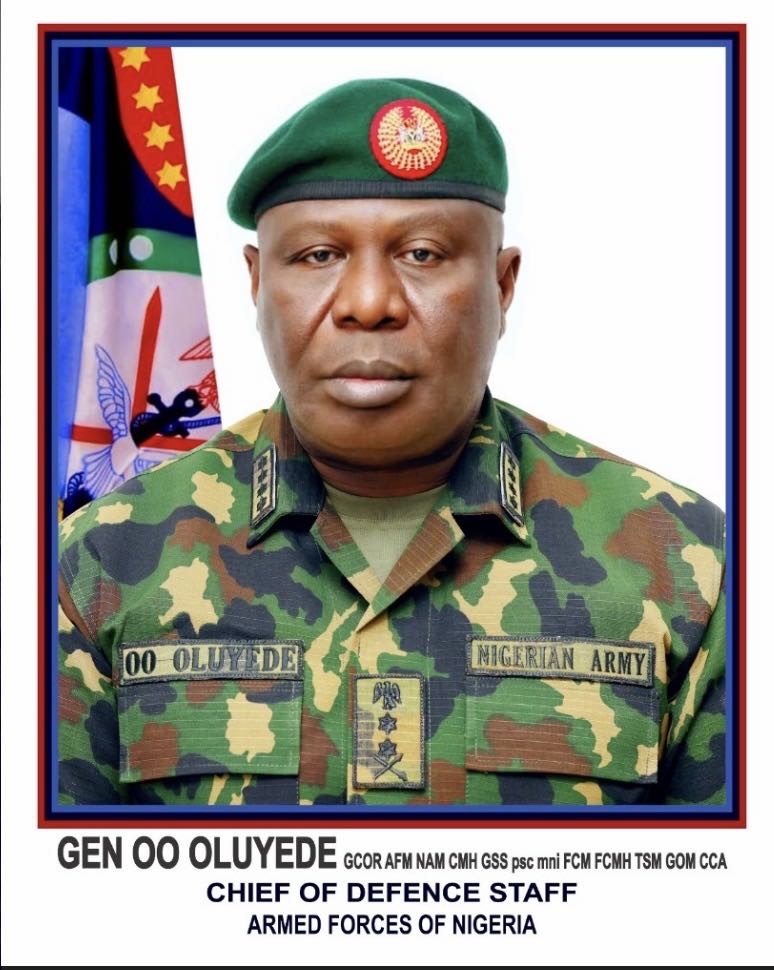
The Chief of Defence Staff, General Olufemi Olatunbosun Oluyede, expressed condolences to the affected families and assured residents that efforts would be intensified to apprehend those responsible.
The briefing also highlighted the Armed Forces’ non-kinetic interventions, including the construction and rehabilitation of community infrastructure, provision of healthcare facilities, solar-powered boreholes, educational facilities and other development projects across several states.
The military said it would sustain collaboration with other security agencies, strengthen intelligence sharing and intensify efforts to dismantle terrorist support networks, including informants, logistics suppliers, arms traffickers and recruiters.
The Defence Headquarters urged members of the public to provide credible and timely security information to the nearest military formation or through the toll-free emergency line 193, assuring that information received would be treated confidentially.
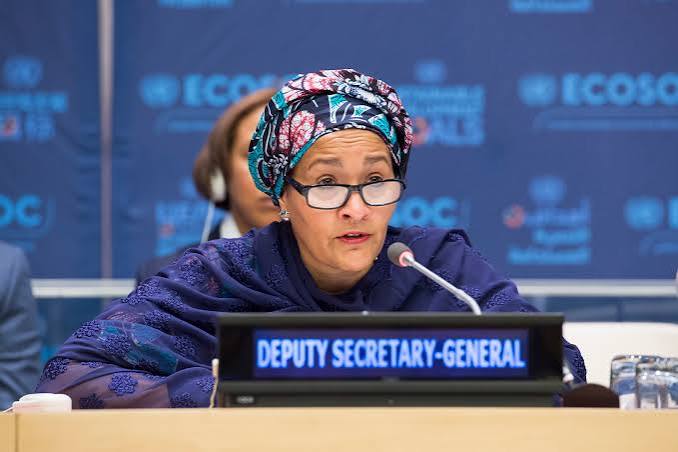
UN Deputy Secretary-General Amina Mohammed, has called for stronger intelligence sharing, public trust and responsible use of emerging technologies to strengthen Africa’s fight against terrorism and violent extremism.
Mohammed made the call in virtual remarks at the High-Level African Lessons Learned Forum on Counter Terrorism Cooperation, Intelligence Sharing and Emerging Technologies in Abuja on Monday.
She said terrorism continued to devastate families and communities across Nigeria’s North-East, the Lake Chad Basin, the Sahel and parts of East and Southern Africa.
“In Nigeria we know the cost of this scourge, the toll it is taking on families and communities across the North-East and the Lake Chad Basin,” she said.
Mohammed said the violence was claiming lives, displacing communities, disrupting economic activities and undermining development in vulnerable areas.
“Behind each of these numbers are people whose hopes for their children are no different from our own,” she said.
She welcomed the forum’s practical approach to examining successful counter-terrorism strategies, identifying failures and sharing lessons across countries.
The UN deputy secretary-general identified trust, emerging technology and community-centred interventions as critical priorities for strengthening counter-terrorism cooperation.
“Intelligence sharing begins with trust. That means trust between agencies, between nations and countries, and between the state and its people,” she said.
She said communities were more likely to share information when security institutions were accountable, justice was accessible and human rights were respected.
She stressed that trust was essential to building effective partnerships between citizens and security agencies in preventing terrorist attacks.
On emerging technologies, Mohammed warned that terrorist groups were adapting rapidly and exploiting artificial intelligence and synthetic media for recruitment and propaganda.
She noted that the same technologies could support early warning and prevention if deployed with appropriate safeguards and effective oversight.
She cautioned that military operations alone would not bring an end to terrorism, urging governments to complement security measures with rehabilitation, reintegration, justice and community support.
She cited Nigeria’s Operation Safe Corridor and similar programmes as examples of efforts to help individuals leave armed groups and rebuild their lives.
According to her, sustainable reintegration requires justice for victims and adequate support for communities receiving former associates of armed groups.
The UN official also called for greater investment in young people through education, decent employment and accessible public services.
She said addressing the needs of vulnerable populations was particularly urgent, with only four years remaining to achieve the 2030 Agenda for Sustainable Development.
“The United Nations stands with you. We will continue supporting solutions that Africa designs and leads,” she said.
Mohammed expressed hope that the lessons shared at the forum would strengthen cooperation and produce tangible improvements in the lives of communities affected by terrorism.
In his remarks, the European Union (EU) Ambassador to Nigeria, Mignot Gautier, announced 20 million euros in non-lethal military equipment to support the Nigerian Armed Forces in the fight against terrorism.
Gaitier said the support approved under the European Peace Facility (EPF), was designed to respond to Nigeria’s needs in tackling terrorism.
“Last week, the EU announced its decision to use for the first time the EPF to support the Nigerian armed forces in their fight against terrorism with 20 million euros of non-lethal equipment,” the ambassador said.
He added that the latest support complemented the EU’s longstanding assistance to the Multinational Joint Task Force (MNJTF) operating around the Lake Chad Basin.
According to him, the EPF has provided a total of 285 million euros in support of the multinational force over several years.
The ambassador reaffirmed the EU’s commitment to strengthening counter-terrorism cooperation with Nigeria, the African Union and other African partners.
He said terrorism and violent extremism required coordinated international responses, stronger intelligence sharing and sustained partnerships among security agencies and judicial institutions.
“Intelligence sharing is crucial and involves secure channels between agencies and the judicial system,” he emphasised.
The Country Representative, United Nations Office on Drugs and Crime (UNODC), Cheikh Touré, called for African-led counter-terrorism strategies, warning that terrorist groups were increasingly exploiting cross-border networks, organised crime and emerging technologies.
Touré said Africa had become a major centre of global terrorism, with the Sahel accounting for more than half of all terrorism-related deaths worldwide.
He said four of the five countries responsible for nearly 70 per cent of global terrorism deaths in the previous year were African: Burkina Faso, Nigeria, Niger and the Democratic Republic of the Congo.
Touré said terrorist groups were strengthening cross-border operations, collaborating with organised criminal networks and exploiting improvised explosive devices, drones, digital platforms and artificial intelligence.
He cautioned against adopting international counter-terrorism practices without considering the specific needs and institutional capacities of African countries.
“The groups we confront cross borders with a fluency that too often exceeds our own. Our response therefore must be equally fluent and be African-led,” he said.
He reaffirmed UNODC’s commitment to working through African institutions and regional frameworks, including the African Union, ECOWAS and the Abuja Process.
The forum brings together African and international stakeholders to discuss intelligence sharing, emerging technologies, counter-terrorism financing and strategies for preventing and countering violent extremism.




Troops Arrest Suspected Ammunition Supplier, Recover 300 Rounds Hidden in Sack of Beans
ShareBy David Torough, Abuja Troops of the Nigerian Army have arrested a suspected ammunition supplier and recovered 300 rounds of...
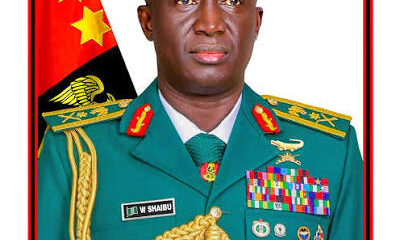

COAS Commissions 20 Transit Flats, Modern Officers’ Mess in Bauchi
ShareBy David Torough, Abuja The Chief of Army Staff (COAS), Lieutenant General Waidi Shaibu, has commissioned 20 transit flats and...


Kaduna Refutes ADC’s Claim of Campaign Venue Denial
ShareFrom Agbo Emmanuel, Kaduna The Kaduna State Government has dismissed allegations that it stopped the African Democratic Congress (ADC) from...
2027: Tinubu’s Victory Already Secured in Kogi – Duro Meseko
ShareFrom Joseph Amedu, Lokoja The Deputy National Publicity Secretary of the All Progressives Congress (APC), Duro Meseko, has assured President...

INEC Warns Parties, Observers against Announcing Unofficial Results Ahead Of 2027 Polls
ShareBy Orjime Moses, Abuja The Independent National Electoral Commission (INEC) has warned political parties, election observers and other stakeholders against...


FG, States, LGCs Share N2.441trn Oct Revenue
ShareBy Tony Obiechina, Abuja A total sum of N2.441 trillion, being October 2026 Federation Account Revenue, has been shared to...

Tinubu Receives State Police Bill, Begins Final Review before Assent
ShareBy David Torough, Abuja President Bola Tinubu has received the Constitution Alteration Bill, 2026, seeking to establish state police across...


DAILY ASSET Fixes November 26 for 10th Anniversary, Awards
ShareEvent Holds at Nicon Luxury Hotel, Abuja DAILY ASSET Newspaper has announced November 26, 2026, for its 10th Anniversary Celebration...


Morov Community Bans Mining Activities, Inaugurates C’ttee to Investigate Lawful Mining Operations
ShareBy David Torough, Abuja The Morov Community Development Association (MCDA) has resolved to halt all mining activities in the community...
Morov Community Bans Mining Activities, Inaugurates C’ttee to Investigate Lawful Mining Operations
ShareBy David Torough, Abuja The Morov Community Development Association (MCDA) has resolved to halt all mining activities in the community...