
NEWS
Constructive Criticism Strengthens Democracy, Good Governance, Says Diri


From Mike Tayese, Yenagoa
Bayelsa State Governor, Douye Diri has described objective and constructive criticism as a critical tool for strengthening democracy and good governance in Nigeria.
Diri spoke on Tuesday at the launch and public presentation of the book, “A Critical Assessment of Democracy in Nigeria,” written by Sir Godwin Ebbeli, at the Chief DSP Alamieyeseigha Memorial Banquet Hall, Yenagoa.
Represented by his deputy, Dr. Peter Akpe, the governor said writing a book on democracy in Nigeria takes courage, noting that a critical and objective assessment of the country’s democratic practice is not an attack on democracy but a service to it.
He noted that Nigeria has enjoyed more than a quarter of a century of uninterrupted democratic rule, the longest in its history, but stressed that longevity is not the same as maturity.
According to him, Ebbeli’s book highlights three interrelated challenges — insecurity, corruption and a weak economy — with the rule of law at the centre.
“When the rule of law is weak, corruption thrives; and when corruption thrives, the economy suffers,” Diri said.
He added that when young people cannot find opportunities, insecurity finds willing recruits, stressing that the vicious cycle can only be broken by strengthening the centre through good laws, independent courts and institutions that answer to the people.
Diri also identified peace and security as the cornerstone of national development, urging critics of government policies and programmes to do so with decorum and clear conscience for the collective good of society.
“Since 1999, Nigeria has enjoyed more than a quarter of a century of uninterrupted civil rule — the longest democratic stretch in our history. That is an achievement we must never take for granted, but longevity is not the same as maturity.
“The cover of this book captures three challenges: insecurity, corruption and a weak economy, and at the centre is the rule of law. These three problems are connected. When the rule of law is weak, corruption thrives; and when corruption thrives, the economy suffers.
“When young people can’t find opportunities, insecurity finds willing recruits. The only way to break that vicious cycle is to strengthen the centre — good laws, independent courts, and institutions that answer to the people.
“I thank the author and organisers for bringing us together around this serious and honest thinking about how we govern ourselves.
“Writing a critical book about democracy in Nigeria takes courage because it tasks all of us, leaders and citizens alike, to look in the mirror. A critical assessment is not an attack on democracy, but is a service to democracy. Only an honest diagnosis can lead to a lasting cure.
“In Bayelsa, the heart of the Niger Delta, we know that peace in our communities is the foundation of every other progress. Good governance must be felt and not merely announced. Security in our waterways, in our schools, and healthcare, and in our economy gives our youths a reason to stay and build,” Diri said.
Reviewing the book, veteran journalist and prolific writer, Chief Nengi Josef Ilagha, said the author drew from sentiments expressed by world-renowned political thinkers and leaders such as Nelson Mandela, Barack Obama, Margaret Thatcher and Goodluck Jonathan, in discussing democracy as it applies to Nigeria’s four republics.
Ilagha said the book highlights the state of insecurity, the unrealised potential of the country, “the menace of corruption and the imperative of the rule of law in an equitable and egalitarian Nigeria.”
According to him, Ebbeli posits that it would do the present crop of politicians in Nigeria a world of good if they took the trouble to understudy the life and times of the founding fathers of independence and emulate their enviable leadership qualities.
Speaking as chairman of the occasion, retired Supreme Court Justice and Pere of Tuomo Kingdom, King Francis Tabai, commended Ebbeli for putting his knowledge of governance and the economy into a book for the benefit of present and future generations.
On his part, the chief launcher, Senator Degi Eremienyo, described the 25-chapter book as a timely collection of articles on contemporary issues, noting that it charts a new course aimed at redirecting Nigeria on the right path of democratic governance and political development.
In his vote of thanks, Ebbeli said the inspiration behind the work came from a radio programme in which he featured in 2023. He expressed gratitude to Governor Douye Diri, his deputy, Dr. Peter Akpe, King Francis Tabai, and other invited guests from across the country who came to support the launch.
NEWS
Morov Community Bans Mining Activities, Inaugurates C’ttee to Investigate Lawful Mining Operations
By David Torough, Abuja
The Morov Community Development Association (MCDA) has resolved to halt all mining activities in the community and constituted an investigative committee to examine the requirements for conducting mining operations in a lawful, orderly and sustainable manner.
The resolutions were reached at an extraordinary meeting of the Association held on October 31, 2026, at Mbaiber Kindred, Ajio Community Secondary School, Morov.
According to the resolutions, the Association expressed concern over the implications of illegal mining activities, stressing that the peace, security and development of the community must not be compromised by mining operations conducted without adherence to established procedures.
To address the concerns and establish a clear framework for future mining activities, the Association inaugurated a nine-member committee with the mandate to investigate the requirements for holistic and lawful mining operations while safeguarding the interests, peace and development of Morov.
The committee is chaired by Surveyor Emmanuel T. Nongo, the Surveyor General of Benue State, while Ikyenge Akaa will serve as Secretary.
Other members include Tersoo Kuanum, Terver Gbem, Mathias Tsua, Gilbert Tor, Simon Gese, Charity Andyar Iyô and Dr. Tarsoo Ade.
The committee has been given one month to complete its assignment and submit its report to the Association.
Speaking on behalf of the committee, the Chairman, Surveyor Nongo, pledged his commitment to the assignment, assuring that he would work closely with other members to deliver on the mandate within the stipulated period.
The meeting was attended by eight out of the ten members of the MCDA Executive Council, alongside the Tyoor Mbaketsa and all Kindred Heads in Morov. The eldest man in Mbaiber, Ukor, was also present, together with a strong representation of community elders and opinion leaders.
In his remarks, the President General of the Morov Community Development Association, Chief Dr. Agwa Nicholas Terzungwe (KSM), Nyamkyume I Tiv, CRS, reaffirmed the Association’s commitment to protecting the collective interests of the community and ensuring that activities capable of affecting its peace and development are subjected to proper scrutiny.
The resolution signals the Association’s determination to ensure that any future mining activities in Morov are guided by due process, legality and the overall interest of the community.
From Joseph Amedu, Lokoja
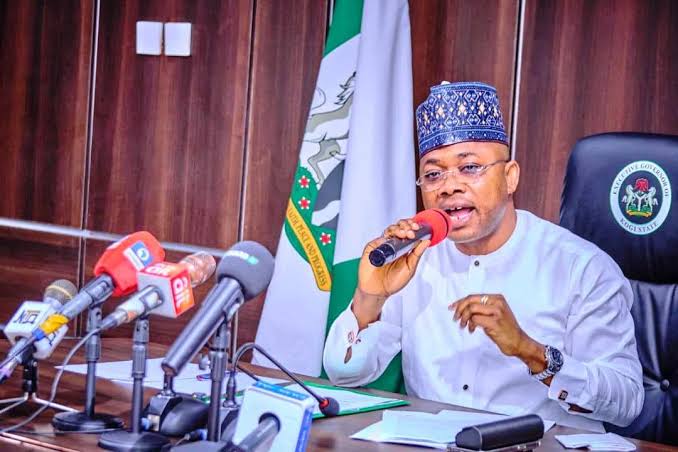
The Kogi State Government has commiserated with the family of Adewumi Olamide Gift, a student of the Kogi State College of Nursing Sciences, Obangede, over her painful death.
Following the development, Governor Ahmed Ododo has directed the Commissioner for Health, Dr.
Abdulazeez Adams to immediately investigate the circumstances surrounding her death.“Already a team has been deployed to the College to conduct a thorough investigation”
Commissioner of Information and Communications, Kingsley Fanwo in a statement issued on Wednesday, assured the family, students and the general public that the investigation will be thorough and transparent.
“Government extends its heartfelt condolences to the bereaved family, the management, staff and students of the College. We pray that God grants the family the strength to bear this painful loss and repose to the soul of the deceased” the statement said.

By Laide Akinboade, Abuja
The World Health Organisation (WHO) on Wednesday raised alarm over Africa having the highest death rates associated with Antimicrobial Resistance (AMR).
The WHO Regional Director for Africa, Dr Mohamed Janabi, stated this in his message commemorating the 2026 World Antimicrobial Resistance Awareness Week, observed from November 18 to 24.
Janabi lamented that bacterial antimicrobial resistance was associated with an estimated 4.7 million deaths globally in 2021, with sub-Saharan Africa bearing the heaviest mortality burden.
Antimicrobial resistance occurs when bacteria, viruses, fungi and parasites develop the ability to withstand medicines designed to kill them or stop their spread, making infections increasingly difficult to treat
Janabi said, “From 18 to 24 November, we join the global community to mark World AMR Awareness Week under the theme “One Health, One Action: Prevent AMR now”. The theme recognizes that the health of people, animals, plants and the environment is closely connected. Preventing resistance demands action across all these sectors.
“The discovery of penicillin and other antibiotics transformed medicine infections that once proved fatal became treatable, and surgery, cancer treatment and organ transplantation became safer. Today, antimicrobial resistance threatens these gains. Medicines we have relied on for generations are losing their effectiveness, making infections harder to treat and putting lives at risk across our Region.
“Antimicrobial resistance, or AMR, occurs when bacteria, viruses, fungi and parasites no longer respond to medicines. Bacterial AMR was associated with an estimated 4.7 million deaths globally in 2021. Sub-Saharan Africa bears the highest rates of AMR-associated mortality, adding to the pressures on families and health services”.
The WHO boss noted that, “Inappropriate use of antimicrobials in people and animals accelerates resistance. Poor infection prevention, inadequate water and sanitation, and unsafe waste disposal help resistant organisms spread. Addressing these conditions must be central to our response.
“Countries across the WHO African Region are making progress. All 47 Member States now have national action plans on AMR, although implementation varies. All are also enrolled in WHO’s Global Antimicrobial Resistance and Use Surveillance System, and 44 can perform susceptibility testing for priority bacterial pathogens, helping identify which antibiotics are likely to work.
“Thirty-six countries have adopted WHO’s Access, Watch and Reserve classification of antibiotics. This supports appropriate prescribing and efforts towards the global target of ensuring that at least 70% of antibiotics used in human health come from the Access group by 2030.
“Coordination across sectors is also improving. The number of countries with functional One Health AMR governance mechanisms increased from 15 to 29 between 2023 and 2026. These arrangements clarify responsibilities and help sectors plan and act together”.
He therefore commended the Member States and regional Quadripartite partners (the Food and Agriculture Organization of the United Nations, the United Nations Environment Programme and the World Organisation for Animal Health) for their collaboration.
“We must now translate this progress into more consistent protection for communities. Preventing infections reduces the need for antimicrobials. Clean water, sanitation, good hygiene, vaccination and effective infection prevention in health facilities and farms are essential. Safe management of waste and wastewater also merits greater attention”.
Janabi urged all governments to turn national plans into funded action, with clear responsibilities and measurable results. Domestic investment must support laboratories, surveillance and the appropriate use of antimicrobials, while ensuring that people can access quality-assured treatment when they need it.
“I urge health professionals and those working in animal health and agriculture to prevent infections and use antimicrobials responsibly. Researchers, industry and development partners should support country priorities, expand equitable access to diagnostics and treatments, and strengthen the evidence needed to guide action.
“Communities, young people, educators and the media can help make AMR better understood. Practical advice includes keeping vaccinations up to date, practising good hand hygiene, using antibiotics only when prescribed by a qualified health professional, and never sharing leftover medicines”.
He also assured that, WHO will continue working alongside countries and partners to strengthen the One Health response and protect the medicines that make so much of modern health care possible.




Constructive Criticism Strengthens Democracy, Good Governance, Says Diri
ShareFrom Mike Tayese, Yenagoa Bayelsa State Governor, Douye Diri has described objective and constructive criticism as a critical tool for...
Morov Community Bans Mining Activities, Inaugurates C’ttee to Investigate Lawful Mining Operations
ShareBy David Torough, Abuja The Morov Community Development Association (MCDA) has resolved to halt all mining activities in the community...

Ododo Orders Investigation over Death of Adewumi Olamide Gift
ShareFrom Joseph Amedu, Lokoja The Kogi State Government has commiserated with the family of Adewumi Olamide Gift, a student of...


AMR: Africa has Highest Number of Death Rate – WHO
ShareBy Laide Akinboade, Abuja The World Health Organisation (WHO) on Wednesday raised alarm over Africa having the highest death rates...

Bauchi Pledges Dedicated Training Land, Logistics as Nigerian Army Expands to 12 Divisions
ShareFrom Ajiya Ayuba, Bauchi The Bauchi State Government has committed to providing dedicated training land and sustained logistical support to...

Enugu PDP Inaugurates Ward, LG Campaign Coordinators
ShareFrom Sylvia Udegbunam, Enugu The Peoples Democratic Party (PDP), in Enugu State, has inaugurated Ward and Local Government Campaign Coordinators...

2027: Abba Urges Kano Residents to Obtain PVCs
ShareFrom Rabiu Sanusi, Kano Kano State Governor, Alhaji Abba Kabir Yusuf, has called on pensioners and residents across the state...


UNICEF Organises Two-day Media Dialogue on Humanitarian Action for Children in Benue
ShareFrom Attah Ede, Makurdi The United Nations Children’s Fund (UNICEF) with support from the Government of Sweden through the Swedish...

ASUU Declares Indefinite Strike at Zamfara State University
ShareThe Academic Staff Union of Universities (ASUU), Zamfara State University branch, has commenced an indefinite strike over the failure of...

CBN, NNPCL Sign MOU to Strengthen Macroeconomic Stability, Energy Financing
ShareBy Tony Obiechina, Abuja The Central Bank of Nigeria (CBN) and the Nigerian National Petroleum Company Limited (NNPCL) have signed...