
Uncategorized
#ENDSARS Protests:What do the Probe Panels Hope to Achieve?

By Ladidi Sabo
When the International passport of ModupeOdele, a US-trained Nigerian attorney and co-lead of ENDSARS Legal, an initiative which provided free legal aid to peaceful #ENDSARS protesters was confiscated by agents of Nigeria’s federal government to stop her from travelling abroad, the fears of many sceptics who questioned the good will in the famous “your voice has been heard loud and clear” speech made by President Muhammadu Buhari while urging Nigerian youths to halt the protests became palpable.
Public affairs analysts posit that the current development where leaders of the protests are being harassed by law enforcement agents demonstrate that the initial entreaties for the protests to stop and assurances that errant policeman will be sanctioned were mere platitudes.
The avalanche of harassments on leaders of the protesters, with bank accounts of some leaders frozen and even a company assumed to be linked with the protests deregistered by the Corporate Affairs Commission (CAC) accentuate this position.
Condemnations have since trailed the freezing of #EndSARS campaigners’ accounts. Recently, an Abu Dhabi Federal Court of Appeal in the United Arab Emirates (UAE) upheld the imprisonment of six Nigerian citizens found guilty of funding the Boko Haram terrorist group operating in the North East of Nigeria. Allegations are rife that some top Nigerians are funding the insurgents who have held sway for more than a decade in the North Eastern of Nigeria.
Following the swiftness in freezing the campaigners’ accounts, many marvel that till date, the Nigerian government Following the swiftness in freezing the campaigners’ accounts, many marvel that till date, the Nigerian government has neither traced nor frozen any bank account linked with sponsors the terrorist group. Receivers of the funds also remain unknown. “ “ has neither traced nor frozen any bank account linked with sponsors the terrorist group. Receivers of the funds also remain unknown.
“Following the swiftness in freezing the campaigners’ accounts, many marvel that till date, the Nigerian government has neither traced nor frozen any bank account linked with sponsors the terrorist group. Receivers of the funds also remain unknown.”
Besides, an acclaimed human rights activist allegedly sponsored by the Nigerian Government, has sued 50 Nigerian celebrities including musicians David Adeleke also known as Davido, Tiwa Savage, Folarin Falana known more popularly as Falz and Aisha Yesufu for allegedly promoting the protest. Interestingly both President Buhari and Vice President Osibanjo’s daughters supported the protests. While Zahra Buhari shared an image on her insta-story that says “#EndPoliceBrutality, Kiki Osinbajo shared a post on her Instagram page saying “Police brutality must end now” using the hash tags #endpolicebrutality and #endsars. Whether their actions will be challenged in court like those of the 50 charged for endorsing the protest remains to be seen.
Meanwhile, a Chief Magistrate Court in Abuja has ordered the Commissioner of Police in charge of the Federal Capital Territory (FCT) to investigate the alleged 50 promoters of the #EndSARS movement. Already, hundreds of the protesters across the country have been arrested and held in prison custody, nay correctional centres.
“Following the swiftness in freezing the campaigners’ accounts, many marvel that till date, the Nigerian government has neither traced nor frozen any bank account linked with sponsors the terrorist group. Receivers of the funds also remain unknown.”
This is in spite of the main object of the protest being to end police brutality, amongst other ills in the country. The agitating questions are – Is it legal for citizens to stage peaceful protests about disturbing situations in the country? Does complaints against the government amount to being disloyal and unpatriotic? Does it also suggest attempts to subvert the government? Does the government really want to end police brutality? Sadly, military brutality has been added to the list.
“While Zahra Buhari shared an image on her insta-story that says “#EndPoliceBrutality, Kiki Osinbajo shared a post on her Instagram page saying “Police brutality must end now” using the hash tags #endpolicebrutality and #endsars. Whether their actions will be challenged in court like those of the 50 charged for endorsing the protest remains to be seen”
In the heat of the protests, the Federal Government dissolved the Federal Special Anti-Robbery Squad (FSARS) with the Inspector General of Police (IGP), emphasising that the dissolution was in response to the yearnings of the Nigerian people. Federal government then said it was embarking on massive police reforms and asked each state governor to set up a judicial panel of inquiry to look into police brutality in its jurisdiction. The current turn of events challenges government’s sincerity on the entire enterprise.
While Nigerians are still reeling with shock over the Lekki toll gate shootings in peace time by Nigerian soldiers, the Attorney General of the Federation (AGF), Abubakar Malami (SAN) made some revelations. He said the shooting was done by hoodlums in military uniforms. His exposé came even before the judicial panels of inquiry across the 36 states and Federal Capital Territory have barely begun sitting. How did he arrive at his conclusions?
Then his office added that there is no sufficient evidence to prosecute the 33 operatives of the disbanded SARS indicted in last year’s report of a Presidential Investigative Panel. Consequently, the Attorney General has directed the Inspector-General of Police, Mr Mohammed Adamu, to set up “a special investigation team” to conduct “thorough investigation” into the cases. A damning investigative video by the Cable News Network (CNN) has punctured the denials of Nigerian government and its agencies over the killings.
The cable network said: “CNN has examined bullet casings found at the scene and confirmed with current and former Nigerian military sources that the bullet casings match those used by the army. Two ballistics experts have also confirmed with CNN that the shape of the bullet casings indicate they used live rounds, which contradicts the army’s claim they fired blanks. “And working with the Balkan Investigative Reporting Network, CNN has established that several of the bullets from the Lekki toll gate originated from Serbia. Export documents CNN has seen show that Nigeria purchased weaponry from Serbia almost every year between 2005 and 2016.
“After the army withdrew from the scene, members of the police, including the SARS police unit — disbanded by authorities on 11 October — moved in, according to multiple eyewitnesses CNN spoke with. “In a video obtained by CNN and geolocated to Lekki toll gate at 2:36 a.m., one eyewitness, Legend, whose second name we’re not publishing for his safety, can be seen with the Nigerian flag around his head saying, “…my hand is broken, my leg is broken, and police are still shooting at us…”
Expressing little faith when the judicial probe panels were about to be set up, Prof. Chidi Anselm Odinkalu wrote: “There is a lot of glibness on #Police Reform. “In 2005, the Justice Ejiwunmi Presidential Commission on Reform of Administration of Justice reported with substantial recommendations on Police Reform.
“In 2006, the Muhammadu Danmadami, Presidential Commission on Police Reform made extensive recommendations. Danmadami was a retired Deputy Inspector General of Police (DIG) and President of the Association of Retired Police Officers in Nigeria. In 2008 when the MD Yusuf Presidential Committee on Police Reform submitted its report, it described the workforce of the Nigeria Police Force as largely “undesirable” and complained that many of the police men were “criminals.” MD Yusuf was then Inspector General and founder of the special branch, which later became SSS (State Security Service).
“In 2012, the Parry Osayande Presidential Commission on Police Reform reported similar conclusions and recommendations. Osayande was DIG and former chairman of Police Service Commission (PSC). In 2019, you had the Tony Ojukwu Presidential Committee on SARS. All these reports are lying fallow. I have read all the reports. The Danmadami, MD Yusuf and Parry Osayande reports were all similar in diagnoses and recommendations. No one has implemented their recommendations or even tried them out. Now we want another merry-go-round?”
Pundits hold that more worrisome is the fact that the entire process has been given ethnic coloration thereby conveying the impression that some sections of the country are trying the run down the government of President Buhari a northerner. This has also prompted a reawakening of calls for restructuring so that every region could choose what works best for it.
Prior to the Lekki killings was the sudden appearance of ProSARS demonstrators who turned against the peaceful protesters. Across some northern states ProSARS demonstrators brandished placards. Thereafter, hoodlums stormed Lagos State Government House, Alausa and attacked #EndSARS pro- testers. Meanwhile, a disturbing video went viral on social media where a government official was caught on camera coordinating thugs to attack peaceful protesters in Abuja.
Yet another video showed an armed police officer and others in mufti smashing a packed Toyota Camry in Benin City, Edo state, a day after Governor Godwin Obaseki declared a curfew following the protests in Edo. Nobody has been apprehended.
Enraged leaders of thought like those in the Na- tional Consultative Front, NCFront, have accused both the federal and state governments of colluding with thugs and hoodlums to discredit and scuttle a popular Youths action.
A cross section of Nigerians including rights ac- tivist Ebun-Oluwa Adegboruwa, SAN, maintain that people must be allowed to protest without police harassment. Another constitutional lawyer and rights activist, Mike Ozekhome, SAN, posit that the stance of some prominent leaders on the dis- bandment of SARS validates the need to urgently restructure the country.
Against the backdrop of the numerous panels of inquiry set up in the past, and plethora of recom- mendations, never implemented, including that of Human Rights Violations Investigation Commis- sion (HRVIC) popularly called Oputa Panel, that sat for nearly a whole year, there is a groundswell of opinion that the recommendations by the current judicial panels on police brutality would similarly be swept under the carpet. Not a few worry that if that happens, the grossly strained national unity could snap completely and irretrievably. In all, it does not seem like any lesson has been learnt from the #EndSARS protest nor does it seem like the demands being pressed for were understood by the authorities concerned.
This article was first published in the Law and Society Magazine




By Tochukwu Jimo Obi
Sixty six years after independence, Nigeria should be asking itself a question that can no longer be postponed: what exactly has become of the great promise of our nation? A country blessed with enormous human and natural resources should not, at this stage of its journey, still be struggling with problems that ought to have become distant memories.
As we mark 66 years of independence, this should be more than another occasion for colourful ceremonies, patriotic speeches and celebrations. It is a time for sober reflection as a people, to examine where we are, where we ought to be and, most importantly, how best to move Nigeria forward.Undoubtedly, Nigeria is not where it used to be. There have been significant developments in different sectors of the economy and society, and successive administrations have introduced policies and programmes aimed at addressing the country’s challenges. However, we must also acknowledge that we are certainly not where we ought to be, considering the enormous human and natural resources available to us. A nation blessed with abundant natural resources, a large youthful population and considerable human capital should be able to provide a higher standard of living for its citizens.
At 66, Nigeria should have no reason to still be battling with inadequate power supply, dilapidated roads, massive unemployment and widespread hunger. These are challenges that have persisted for decades, despite the huge resources committed to addressing them. While some of our past and present leaders may have done, or may still be doing, their best, the reality remains that their efforts alone have not been enough to solve the numerous problems bedevilling the nation. What Nigeria requires is sustained commitment, effective institutions, accountability and policies that go beyond individual administrations.
Corruption and insecurity also continue to pose serious challenges to national development. Resources that should be channelled towards infrastructure, education, healthcare, job creation and other essential services can be undermined by corruption and poor accountability. Similarly, insecurity discourages investment, disrupts economic activities and threatens the lives and livelihoods of citizens. We cannot continue like this as a nation. There must be a collective determination to strengthen institutions, uphold the rule of law and confront the factors that continue to undermine national development.
Unfortunately, the people themselves appear to have become accustomed to many of these perennial problems. This has contributed to a situation where some citizens fail to demand accountability from leaders or make effective use of their democratic power during elections. Democracy gives citizens the opportunity to choose their representatives and to replace those whose performance does not meet their expectations. Elections should therefore be about competence, integrity, policies and the ability to serve the public interest, rather than personal loyalty or temporary benefits.
Sycophancy has also become increasingly visible in our political space. Some people praise leaders excessively for personal gain, defend actions they would ordinarily condemn and, in some cases, sell their votes during elections, only to complain about bad leadership afterwards. Citizens must understand that leadership and followership are interconnected. When voters trade their electoral power for immediate personal benefits, they may be contributing to a system that makes it more difficult to demand responsible governance later. The ballot should be treated as an important instrument for shaping the future of the country.
As Nigeria marks this 66th anniversary, our leaders at all levels must put the interest of the nation at the centre of their decisions and actions. Religious, political and ethnic considerations should not be allowed to take precedence over the collective interest of Nigeria. Diversity should be a source of strength rather than a reason for division. Those entrusted with public office must remember that political positions are temporary, while the consequences of decisions taken in office can affect generations yet unborn.
The people also have an important role to play in moving Nigeria forward. Citizens must obey the law, reject corruption, participate responsibly in elections, demand accountability and contribute positively to their communities. Professionals must give their best in their respective fields, young people must be encouraged to pursue productive opportunities, and the private sector must continue to contribute to economic development. Nation building cannot be left entirely to government. Every Nigerian has a responsibility to contribute to the Nigeria we desire.
At 66, the question, therefore, is not simply which way Nigeria, but what kind of Nigeria do we want to leave for the next generation? The answer lies in our collective willingness to change the things that have held us back, strengthen the institutions that sustain democracy and development, and place national interest above personal, political, religious and ethnic considerations. Nigeria has the resources, talent and potential to achieve greatness. What is required is the collective will to translate that potential into reality. As we celebrate 66 years of independence, let us renew our commitment to building a peaceful, prosperous and united nation. Nigeria shall be great again.
Tochukwu Jimo Obi, Obosi Anambra state.
By Tambaya Julius, Abuja
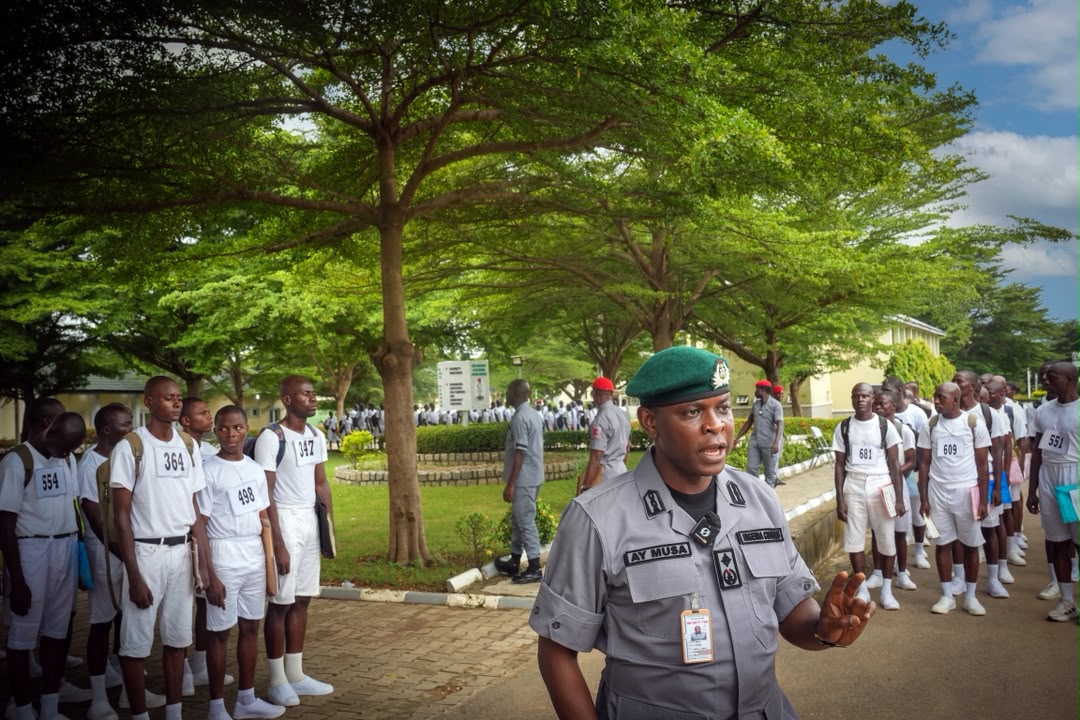
The Nigeria Customs Service (NCS) has concluded the final phase of its 2025 recruitment exercise, with nearly 3,000 shortlisted candidates undergoing screening in an exercise the Service said recorded improved coordination and efficiency.
The two-week exercise, held at the Training and Doctrine Command (TRADOC), Gwagwalada, Abuja, commenced on September 7 and ended on September 19, 2026.
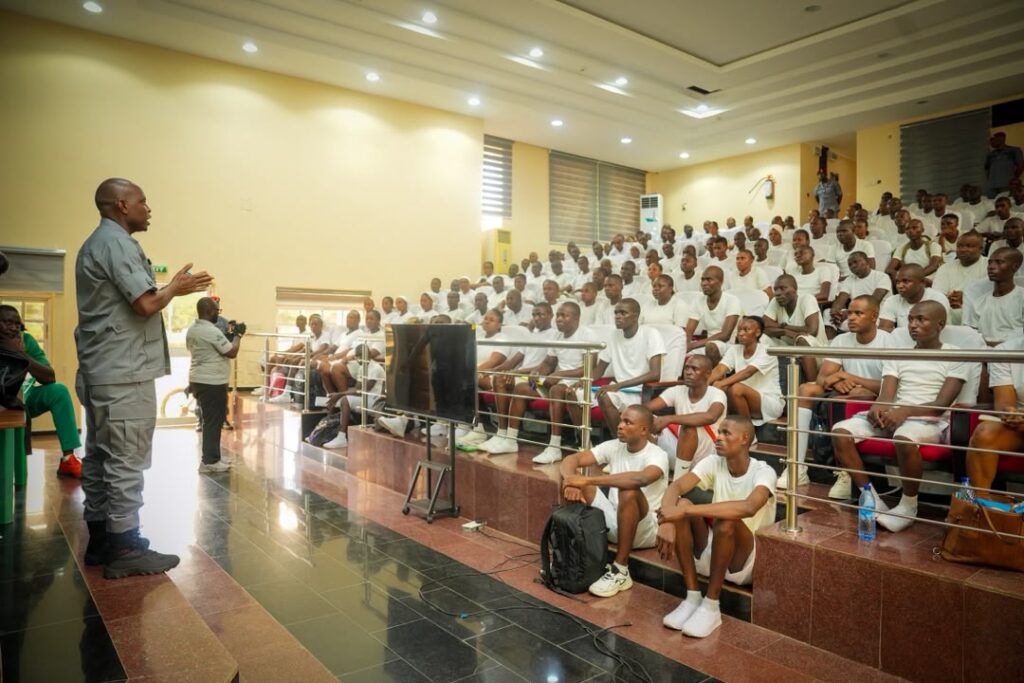
Candidates shortlisted for the Assistant Superintendent of Customs II (ASCII), Inspectorate and Customs Assistant cadres underwent documentation, physical fitness assessments and medical screening as part of the final stages of the recruitment process.
The exercise was conducted in batches, a measure introduced by the Service to reduce congestion and ensure smoother movement of candidates through the various screening points.
Speaking on the exercise, the Assistant Comptroller-General of Customs in charge of Human Resource Development, Frank Onyeka, said the Service had addressed challenges identified during the earlier phase of the recruitment process.
According to him, measures were introduced to improve coordination and reduce congestion at the screening centres.
“We have put measures in place to reduce congestion and ensure a smoother process this week. The gaps identified last week have been addressed, and we do not expect them to recur this week,” Onyeka said.
He urged candidates to remain disciplined and comply with the procedures established for the exercise.
The Service also introduced personalised screening forms as part of efforts to strengthen verification and minimise discrepancies in candidates’ records.
The Deputy Comptroller of Customs and member of the recruitment coordinating team, Adamu Musa, said each shortlisted candidate was provided with a form containing personal information and details required for the various stages of the screening.
He said the approach represented a departure from the previous system in which candidates received forms at the screening venue.
“Any candidate that has been shortlisted has a form designed especially for him, unlike in the past where you come, they issue you a form, and then some people along the way go and even change some of the records,” Musa explained.
According to him, the forms contained candidates’ names and other details covering sports, medical assessment, documentation and related requirements.
“So, once the candidate comes, you just verify what you already have from the system,” he added.
Musa said the new arrangement had made it easier for officials to authenticate candidates’ information while reducing opportunities for alterations and discrepancies.
The recruitment team also assessed candidates against established requirements, including age, physical fitness and drug screening.
Musa disclosed that candidates who test positive for hard drugs, exceed the stipulated age requirement or are found to have physical conditions that could affect their ability to perform their duties may be disqualified, subject to the final decision of the Service’s management.
He also stressed the importance of continuous recruitment and manpower development, noting that the expanding responsibilities of the Customs Service require personnel capable of responding to emerging challenges.
According to him, a well-trained workforce remains important to the Service’s responsibilities in national security, border protection, revenue collection and trade facilitation.
The Service also warned candidates and members of the public against relying on unverified information about the recruitment exercise.
Musa urged applicants to obtain recruitment updates only through the official communication channels of the Nigeria Customs Service, including its official website and verified social media platforms.
He warned that fraudsters could exploit the recruitment process by circulating fake announcements, misleading applicants or making unauthorised demands.
The warning comes as the Service moves towards the next stages of the recruitment process following the completion of the final screening exercise.
With the introduction of personalised forms, batch screening and tighter verification procedures, the NCS said it had strengthened the process to improve efficiency, reduce congestion and protect the integrity of the recruitment exercise.

Post Recapitulation: NAICOM Holds First Quarterly Staff Meeting
By Tony Obiechina, Abuja
The Commissioner for Insurance, Olusegun Ayo Omosehin, at the weekend presided over the Quarterly Staff General Meeting of the National Insurance Commission (NAICOM), the first such gathering since the successful conclusion of the insurance industry’s recapitalization exercise.
The meeting brought together management and staff to review the achievements recorded during the recapitalization programme and to align on the Commission’s strategic direction for the period ahead.
Participants also used the occasion to discuss issues bordering on staff welfare, institutional effectiveness, and the overall growth of the organization.
In their deliberations, the Commission reaffirmed its commitment to stronger regulation and supervision of the insurance sector, continuous capacity building for staff, and sustained operational excellence.
NAICOM said in a statement on Saturday that the resolutions reached at the meeting would help drive the emergence of a more resilient, competitive, and trusted insurance industry in the country.



Atiku Abubakar: Perhaps it is Time to Give Him a Fair Hearing
ShareBy Ishaya Inuwa Durkwa There comes a time when a people must decide whether yesterday’s grievances will continue to determine...

Zamfara at 30: At Last, Zamfara Has Begun to Fly
ShareBy Suleman Ahmad Tudu On October 1, 1996, Zamfara State was carved out of the old Sokoto State by the...

FG Moves to Automate Teachers’ Awards, Ends Manual Selection Process
ShareBy Tony Obiechina, Abuja The federal government has digitalised the selection process for the 2026 President’s Teachers’ and Schools’ Excellence Awards (PTSEA),...

Utsev Leads Nigerian Delegation to World Water Congress in Glasgow
ShareBy David Torough, Abuja Minister of Water Resources and Sanitation, Engr. Prof. Joseph Terlumun Utsev, will on Saturday, October 3,...


BBNaija Season 11: Keivo Becomes Second Housemate to be Disqualified
ShareKeivo has become the second Big Brother Naija housemate to be disqualified from Season 11. This follows his physical altercation...

Mofe-Damijo Envisions Bright Future for Nigeria at 66
ShareVeteran actor and public speaker, Richard Mofe-Damijo, has expressed optimism about Nigeria’s future, describing the country as a work in...


My Wife Paid $20k for Her Surgery Herself, Peller Fires Back at Carter Efe
ShareNigerian content creator and streamer, Peller, has fired back at Carter Efe after the streamer compared their relationships while praising...

I Didn’t Want to be in the Spotlight – Tems
ShareGrammy-winning Nigerian singer Temilade Openiyi, popularly known as Tems, has revealed that despite wanting musical success, she was uncomfortable with...
Nigeria at 66: Which Way Nigeria?
ShareBy Tochukwu Jimo Obi Sixty six years after independence, Nigeria should be asking itself a question that can no longer...

Nigeria at 66: Booming Banks, Struggling Nation, Where Is the Promised Prosperity?
ShareBy Blaise Udunze As Nigeria celebrates 66 years of independence, it must ask whether the country has delivered the prosperity...