
Business News
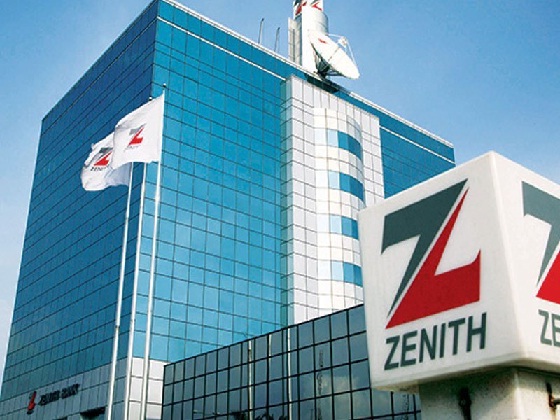
Zenith Bank Half Year Profit Rises to N111.7Bn

From Udo Onyeka, Lagos
Zenith Bank Plc, is impressed by its audited results for the half year ended June 30, 2019, which showed positive growth across key financial metrics.
This significant growth has further reaffirmed the bank’s position as one of the leading financial institutions in Africa.
As a testament to its commitment to its shareholders, the bank also announced a proposed interim dividend pay-out of 30 kobo per share.
The result showed gross earnings growing by 3 per cent from N322.
2 billion to N331.6 billion driven by a significant growth of 24 per cent (YoY) in non-interest income from ₦88.6 billion in H1 2018 to N109.7 billion in H1 2019.In particular, fees from electronic products increased by N17bn 168 per cent from ₦10bn in H1 2018 to N27 in H1 2019, demonstrating significant progress in its retail banking initiatives.
This top-line growth filtered through to the bottom-line as Profit Before Tax (PBT) increased to N111.7 billion reflecting a 4 per cent growth over N107.4 billion reported in H1 2018 with earnings per share (EPS) increasing by 9 per cent to N2.83 in H1 2019 from ₦2.60 compared to the prior period.
Between December 2018 and June 2019, the Group’s total deposit increased by 3 per cent with retail deposits growing by N267 billion 31 per cent from N861 billion to close at ₦1.1 trillion.
Despite the growth in its deposit base, the bank optimized interest expense leading to a 4 per cent reduction from N74.7 billion to N72.1 billion due to the Group’s improved funding mix and its profound treasury management skills.
Also Net Interest Margins (NIMs) witnessed a compression from 10 per cent in the same period last year to 8.6 per cent in H1 2019, as a result of the declining yield environment but cost of funds improved from 3.4 per cent to 3.0 per cent.
The banks robust risk management ensured that absolute Gross Non-Performing Loans (NPLs) remained flat.
However, the marginal movement in NPL ratio was as a result of the 3 per cent reduction in the bank’s loan book from N2.02 trillion as at December 2018 to N1.95 trillion at the end of the period.
The bank is also creatively deploying new retail loan products to ensure it captures a reasonable share of the retail loan market, while remaining committed to maintaining strong balance sheet with liquidity ratio at 74.6 per cent and Capital Adequacy Ratio (CAR) at 25 per cent ensuring it remained above regulatory thresholds.
Going into the second half of the year, the bank intends to continue to consolidate its leadership in the corporate space while its retail banking drive will continue unabated. It expects to see an improvement in economic activities even as it maintains its promise of delivering a unique service experience to customers.
Consistent with this superlative performance and in recognition of its track record of excellent performance, the bank was recently ranked as the Most Valuable Banking Brand in Nigeria in 2018 by The Banker Magazine.
Similarly, Zenith Bank was recognized as the Best Corporate Governance Bank in Nigeria by The World Finance for the sixth time just as Ethical Boardroom, a Europe based Boardroom watchdog reaffirmed this recognition by naming the bank as the Best Bank in Corporate Governance in 2018.









Sunbeth Treenuts and Sesame Limited, a subsidiary of Sunbeth Agro HoldCo, announces the completion of its acquisition of UAC of Nigeria Plc’s 73.29% shareholding in Livestock Feeds Plc, following approval from Nigeria’s Securities and Exchange Commission.
The completion establishes Sunbeth as the majority shareholder of Livestock Feeds Plc and marks the beginning of a new phase focused on preserving the company’s heritage, strengthening its operations and supporting its long-term growth.
Sunbeth’s immediate priority is to support business continuity, working closely with the Board, management and employees to strengthen operations and maintain dependable service to customers and partners.
Commenting on the completion, Peeyush Karnani, Chief Strategy Officer of Sunbeth Agro HoldCo, said:
“Livestock Feeds is an established business with a proud heritage, trusted brands and longstanding relationships across Nigeria’s livestock industry. We recognise the responsibility that comes with becoming its majority shareholder.
“Our approach is to build on these foundations. Our immediate focus is continuity, operational stability and supporting the people and partnerships behind the business. We intend to combine Sunbeth’s strength in sourcing soya and other key feed ingredients with Livestock Feeds’ manufacturing expertise and established distribution network to improve supply reliability, strengthen competitiveness and create sustainable value for all shareholders.
“This acquisition also provides an important foundation for Sunbeth’s long-term strategy to build an integrated protein business spanning animal nutrition, poultry and cattle production, and meat processing. We will pursue this strategy through disciplined, phased investment, with a clear focus on strengthening Livestock Feeds and supporting the growth of Nigeria’s livestock industry.”
Sunbeth has also announced the appointment of five new directors to the Board of Livestock Feeds Plc, effective 17 November 2026.
The newly appointed directors are Mr Sam Okuwlehi, Mr Seyi Ebenezer, Professor Franklin Nnaemeka Ngwu, PhD, Mrs Mary Mulili, and Mr Farrukh Siddiqui. They will join three existing directors who will continue to serve on the Board: Mr Joseph I.D. Dada, Mr Adegboyega Adedeji, and Mr Abayomi Adeyemi.
Employees remain central to the company’s future. Sunbeth intends to work collaboratively with the Livestock Feeds team, drawing on its experience and knowledge as the business enters its next phase.
For customers, distributors and suppliers, the priority is to sustain trusted relationships, maintain product quality and strengthen supply reliability. Future improvements will be introduced through a structured and carefully managed process.
As majority shareholder, Sunbeth is committed to supporting sound governance, operational resilience and disciplined investment to build lasting value for Livestock Feeds Plc and all its shareholders.

By Tambaya Julius, Abuja
The Comptroller-General of the Nigeria Customs Service (NCS), Bashir Adewale Adeniyi, has called on officers and men of the Customs Police Unit (CPU) to uphold discipline, professionalism and integrity, stressing that accountability must begin within the Service.
Adeniyi made the call while delivering the keynote address at the inaugural Customs Police Summit 2026, held at the NAF Conference Centre and Suites, Abuja.
The summit, with the theme, “Reimagining Customs Policing: Learning From the Past, Responding to the Present, and Preparing for the Future,” brought together customs personnel and representatives of security and law enforcement agencies to discuss ways of strengthening the unit and preparing it for emerging enforcement challenges.
The Customs boss, who is also the Chairperson of the World Customs Organization (WCO) Council, said the Service must first demonstrate the discipline and integrity it expects from traders and members of the public.
He described the Customs Police Unit as a critical part of the Service’s internal control system, noting that its responsibility goes beyond investigating misconduct to ensuring that officers exercise their powers within the confines of the law.
According to him, the unit, formally inaugurated in July 2019, was established to investigate erring personnel, prevent crime and promote compliance, guided by the principle that no officer is above the law.
He said the experience of the Service over the years had reinforced three important lessons: integrity must begin at home, enforcement powers must be exercised responsibly, and effective policing requires cooperation among relevant institutions.
The Comptroller-General expressed concern over the growing sophistication of criminal networks, which he said were increasingly exploiting legitimate trade routes and digital platforms to move illicit goods, including firearm components, narcotics, counterfeit medicines, protected wildlife and proceeds of illegal activities.
He maintained that tackling these threats required more than aggressive enforcement, calling instead for smarter, intelligence-driven operations supported by technology and international best practices.
Adeniyi pointed to several World Customs Organization instruments, including the SAFE Framework, Authorised Economic Operator (AEO) Programme, advance rulings, Time Release Study and Revised Kyoto Convention, as important tools for promoting compliance, facilitating legitimate trade and reducing opportunities for corruption.
He also highlighted the role of technology and data management in strengthening customs operations, citing the B’Odogwu platform, which integrates declarations, valuation, risk management and AEO processes.
He added that the INTERPOL Data Centre at Customs Headquarters had provided the Service with access to global criminal databases, while the Nigeria Customs Service Act 2023 had strengthened the legal foundation for intelligence-led operations, joint border activities and mutual administrative assistance.
The CGC identified Consolidation, Collaboration and Innovation as the three pillars that must shape the future of customs policing.
He explained that consolidation would require stronger operational procedures, improved investigations, properly documented cases for prosecution and continuous professional development of personnel.
He called for closer working relationships with the Nigeria Police Force, Armed Forces, National Drug Law Enforcement Agency (NDLEA), National Agency for Food and Drug Administration and Control (NAFDAC), Department of State Services (DSS), Independent Corrupt Practices and Other Related Offences Commission (ICPC), Nigeria Agricultural Quarantine Service (NAQS), neighbouring countries and border communities.
He also encouraged the Service to take advantage of emerging technologies, including artificial intelligence, advanced scanners, geospatial tools and electronic cargo tracking, to improve investigations and strengthen enforcement operations.
Adeniyi urged participants to use the summit to develop practical recommendations, including a Customs Police doctrine based on the NCS Act 2023 and Revised Arusha Declaration, improved protocols for joint operations and evidence management, guidelines for the responsible use of artificial intelligence in investigations, and better training and welfare for CPU personnel.
Addressing officers of the unit, he reminded them that their red berets represented the confidence Nigerians placed in the Service and must therefore be worn with discipline, restraint and pride.
He stressed that integrity remained the greatest badge of honour for every customs officer.
The Acting Provost Marshal of the NCS, Deputy Comptroller TS Sanusi, described the summit as an important step towards strengthening the institutional capacity and repositioning the Customs Police Unit.
Sanusi said the unit was established to provide a dedicated structure for maintaining discipline, investigating misconduct and ensuring compliance with professional standards among personnel and stakeholders.
He observed that the Service could not effectively enforce laws and regulate international trade without having strong mechanisms to promote discipline and accountability within its own ranks.
He added that the increasing challenges of transnational organised crime, illicit financial flows, corruption and emerging security threats had made the work of the Customs Police Unit more important.
The Acting Provost Marshal expressed appreciation to the Comptroller-General for his leadership, support and approval of funds for the inaugural summit, noting that the gesture reflected management’s commitment to strengthening the unit.
He also recognised the contributions of former Provost Marshals and personnel who helped establish the unit’s operational structures and professional standards.
Sanusi urged serving personnel to lead by example, insisting that discipline must begin with them if they were to earn the respect and confidence required to enforce it among others.
In his remarks, Assistant Comptroller-General of Customs at Headquarters, MS Shuaibu, called for a renewed approach to customs policing, with greater emphasis on professionalism, intelligence gathering and institutional accountability.
Shuaibu said the summit provided an opportunity to reflect on the unit’s achievements, address existing challenges and develop strategies to respond to changing global trade patterns and security threats.
He acknowledged the unit’s contributions to internal discipline, investigation of infractions and the protection of the Service’s interests, but stressed the need to continually improve its operational capacity.
He identified intelligence gathering, surveillance, risk analysis, inter-agency cooperation and modern investigative techniques as key areas requiring attention.
The ACG further emphasised that the exercise of police powers must be guided by respect for human rights and due process, warning that enforcement must never become an excuse for unjust treatment.
He urged officers to remain firm but lawful, courageous but responsible, and impartial in carrying out their responsibilities.

A graduate of the University of Maiduguri, Shianya Ebwaseh, said the Nigerian Education Loan Fund (NELFUND) helped improve her Grade Point Average (GPA) to 3.50 through financial support that enabled her to concentrate on her studies.
Ebwaseh, who graduated from the Department of Zoology, Faculty of Life Sciences, said this in an interview on Monday in Maiduguri.
She said financial difficulties had previously affected her academic performance, as she struggled to meet her daily needs while pursuing her degree.
The graduate said she resorted to selling fried chips and groundnuts on campus to support herself, sometimes missing lectures because of the time and energy required to run the business.
According to her, the introduction of NELFUND’s student loan scheme relieved her financial burden through tuition support and a monthly N20,000 upkeep allowance.
“Before NELFUND, I struggled with my GPA because of financial challenges. I sometimes missed lectures after spending hours frying and packaging chips for sale.
“But when NELFUND came, I stopped the business and concentrated on my studies. My GPA improved to 3.50, which is Second Class Upper,” she said.
Ebwaseh said the financial support also enabled her to attend lectures regularly, purchase learning materials and prepare adequately for tests and examinations without constant worries about money.
She added that her examination scores improved significantly after she began receiving the support, attributing the change to increased concentration and financial stability.
The graduate, who said she accessed the scheme in her third year, described the application process as simple and encouraged other eligible students to apply.
She also said the programme had helped financially disadvantaged students remain in school, particularly those whose parents could not afford tuition fees and upkeep.
Ebwaseh appealed to the Federal Government to sustain the initiative, emphasising that withdrawing the support could expose many students to financial difficulties and possible dropout.
She said the scheme had given beneficiaries an opportunity to pursue their academic ambitions with fewer financial distractions.(NAN)



Court Nullifies Omo-Agege’s NDC Senatorial Candidacy
ShareFrom Francis Sadhere, Delta The Federal High Court sitting in Warri, Delta State, has nullified the nomination of former Deputy...


APC Mourns 15 Supporters Killed In Zamfara Road Accident
ShareBy Orjime Moses, Abuja The All Progressives Congress (APC) has mourned 15 of its members and supporters reportedly killed in...
Ortom ‘Ranched’ Benue People in IDP Camps Instead of Cattle – Tondo
ShareFrom Attah Ede, Makurdi Former Benue State Commissioner for Lands and Survey, John Tondo, has criticised former Governor Samuel Ortom...


2027: INEC Chairman Seeks Stronger Security Cooperation Ahead Of Elections
ShareBy Orjime Moses, Abuja The Chairman of the Independent National Electoral Commission (INEC), Prof. Joash Ojo Amupitan, SAN, has called...


CBN Retains Interest Rate at 23 Per Cent
ShareBy Tony Obiechina, Abuja The Monetary Policy Committee (MPC) of the Central Bank of Nigeria (CBN) has retained the benchmark...


2027: Emovworho Warns Delta Politicians Against Exploiting Youths
ShareBy Orjime Moses, Abuja A concerned son of the Urhobo Nation, Austin Obule Emovworho, has warned political leaders in Delta...


Katsina Suspends Daura Emir, Orders Probe into Sexual Assault Allegation
ShareBy David Torough, Abuja The Katsina State Government has suspended all official engagements and travels of the Emir of Daura,...


Makarfi Chairs DAILY ASSET 10th Anniversary, Awards
ShareBy David Torough, Abuja Former Kaduna State Governor, Senator Ahmed Mohammed Makarfi, has accepted the invitation to chair the 10th...


Customs Unveils Novara to Spotlight Officers’ Challenges
ShareBy Tambaya Julius, Abuja The Nigeria Customs Service (NCS) has unveiled a 79-episode television drama series, Novara, to showcase the...

FCT Upgrades 20 PHCs Under World Bank-supported IMPACT Project
ShareBy Laide Akinboade, Abuja The Federal Capital Territory Administration (FCTA) has upgraded 20 Primary Health Centres (PHCs) across the territory...