
Oil & Gas
NEITI Commends NASS on passage of PIB


The Nigeria Extractive Industries Transparency Initiative (NEITI) has welcomed with excitement, the bold step by both chambers of the National Assembly to pass the Petroleum Industry Bill (PIB).
NEITI gave the commendation in a statement signed by Obiageli Onuorah its Head, Communications and Advocacy, in Abuja, on Thursday.
She quoted the Executive Secretary of NEITI Dr Orji Ogbonnaya Orji as describing the decision of the Senate and the House of Representatives to consider the Bill as priority resulting in its eventual passage as bold, courageous and progressive.
According to Orji, NEITI as an agency set up to enthrone transparency and accountability in the management of extractive industries in Nigeria has demonstrated genuine and legitimate interest in the PIB from the onset.
“ NEITI’s interest is in view of the urgency and strategic importance of a new law to replace the existing archaic legislation that have aided huge revenue losses, impeded transparency, accountability and investment opportunities in the nation’s oil and gas industry,’’ he said
. He recalled that as an anti-corruption agency in the sector, NEITI boldly alerted the nation through a special Policy Brief “The urgency of a new petroleum sector law” that the current stagnation of investment opportunities in the Petroleum Industry was as a result of the absence of a new law for the sector.
This. He said has led to huge revenue losses to the tune of over 200 billion dollars.
“ In that publication which was widely circulated, NEITI argued that the “revenue losses were as a result of investments withheld or diverted by investors to other (more predictable) jurisdictions.”
“The publication added that “The hedging by investors stems from the expectation that the old rules would no longer apply, but not knowing when the new ones would materialise.
“In addition, NEITI Reports in the sector had also disclosed that over 10.4billion and N378.7billion were lost through under-remittances, inefficiencies, theft or absence of a clear governance framework for the oil and gas industry,’’ he added.
The NEITI Executive Secretary noted that he was optimistic that with the new governance law for the industry, these huge revenue losses to the nation as a result of process lapses and outright stealing would be strictly checked if not eliminated.
“The implementation of the global Extractive Industries Transparency Initiative which Nigeria is a key signatory, have over the years been frustrated by the absence of a dynamic law that suits modern business modules and trends in the ever evolving oil and gas industry” Orji said.
.He expressed the hope that the PIB when assented to by the President will provide a dynamic governance framework required to re-position the Petroleum industry to fully embrace competition, openness, accountability, professionalism and better profit returns on investments to both companies and government.
He added that NEITI and its multi-stakeholders are encouraged that the National Assembly in this particular instance threw politics aside and dealt with the PIB issue with the attention it deserves in over all public interest.
The Executive Secretary also commended the media, the civil society, development partners, industry, stakeholders and experts who have followed the bill in the National Assembly for their valued contributions to what has been achieved so far.
“While NEITI awaits early harmonisation and the details of the contents of the bill as passed and hoping for early Presidential consideration and assent, the transparency agency looks forward to working with its stakeholders in the industry to ensure effective implementation under the global EITI framework,’’ he added.(NAN)



he National Bureau of Statistics (NBS) said the average retail price of a litre of petrol witnessed a drop from N1,184.83 in October 2024 to N1,052.31 in October 2025.
The NBS made this known in its Petrol Price Watch for October 2025 released in Abuja yesterday.
It stated that the October 2025 price of N1,052.
31 represented a 11. 18 per cent decrease over the price of N1,184. 83 recorded in October 2024.“Comparing the average price value with the previous month of September, the average retail price increased by 8.42 per cent from N970.59.”
On state profiles analysis, the report said Kogi paid the highest average retail price of N1,110.
00, followed by Sokoto and Borno at N1,105.93 and N1,101.63, respectively.“Conversely, Oyo, Nasarawa and Abia paid the lowest average retail price at N1,001.79, N1,009.38, and N1,012.50, respectively,’’ it stated.
Analysis by zones showed that the North-East recorded the highest average retail price in October 2025 at N1,072.74 while the South-West Zone recorded the lowest price at N1,032.81 per litre.
The NBS also stated in its Diesel Price Watch Report for October 2025 that the average retail price was N1,398.57 per litre.
It said that the October 2025 price of N1,398.57 per litre amounted to a 2.96 per cent decrease on a year-on-year basis over the N1,441.28 per litre paid in October 2024.
“On a month-on-month basis, the price increased by 9.45 per cent from the N1,277.81 per litre recorded in September 2025,’’ it added.
On state profile analysis, the report said the highest average price per litre of diesel in October was recorded in Enugu at N1,468.29, followed by Niger at N1,465.69 and Jigawa at N1,437.40.
On the other hand, the lowest price was recorded in Katsina at N1,301.24 per litre, followed by Edo at N1,307.84 and Kebbi at N1,308.94.In addition, the analysis by zones showed that the South-East Zone had the highest price of N1,415.85 per litre, while the South-South recorded the lowest price at N1,387.18 per litre.(NAN)

Dangote Petroleum Refinery has said that its gantry price reduction actually prompted petrol price downward adjustments by marketers.
The management rejected what it described as series of misleading publications claiming that the recent reduction in pump prices by oil marketers is a consequence of the Federal Government’s reversal of the 15 per cent import tariff.
‘This narrative is entirely false, deliberately misleading, and inconsistent with actual market dynamics.
For the avoidance of doubt, the factor that prompted the price adjustment was our own reduction of PMS gantry and coastal prices on November 6.’ it said in a statement.According to the statement, the subsequent change in pump prices is now being wrongly attributed to a tariff decision in an attempt to distort the facts and misinform the public.
It will be recalled that Dangote Petroleum Refinery, on November 6, reduced its PMS gantry price from N877 to N828 per litre, representing a 5.6 per cent decrease, and its coastal price from N854 to N806 per litre.
These changes were publicly announced across major media platforms, including, but not limited to, The Punch, Vanguard, The Cable, Daily Trust, The Sun, The Street Journal, Petroleumprice.ng, New Telegraph, Business Hallmark, and several others, and were implemented well before marketers adjusted their pump prices.
The claim that the reduction in pump prices was driven by the suspension of the 15 per cent import tariff is therefore incorrect, it said.
‘The import tariff had received the approval of His Excellency, President Bola Ahmed Tinubu, GCFR as far back as October 21 for immediate implementation.
The refinery management noted that contrary to repeated claims by certain interests, imported products which are often below acceptable standards have consistently been sold at higher pump prices than the premium-grade fuel supplied by Dangote Refinery.
The continued importation of substandard fuel constitutes dumping, a harmful practice that undermines economic growth and industrial development.
Nigeria has witnessed the devastating consequences of such unchecked dumping before, including the collapse of the once-thriving textile industry, which was a major employer of labour, it noted.
Dangote Petroleum Refinery further reiterated its commitment to supplying high-quality, internationally benchmarked petroleum products at competitive prices, adding. “Our operations continue to moderate prices in the market, ensuring Nigerian consumers receive genuine value for money.”
The Nigerian National Petroleum Company Limited (NNPC Ltd.) is fast-tracking its transformation through strategic investments in infrastructure, governance reforms, and operational efficiency, positioning the company for a landmark Initial Public Offering (IPO).
Under its “Fit for the Future” strategy, NNPC Ltd.
aims for global competitiveness, public listing, and a pivotal role in connecting Africa to international markets through extensive gas infrastructure development initiatives.Group Chief Executive Officer, Bashir Ojulari, disclosed this during a dialogue at the 2025 Abu Dhabi International Petroleum Exhibition and Conference (ADIPEC), emphasising the company’s commitment to transparency, efficiency, and investor readiness.
Ojulari said NNPC Ltd. was steadily preparing for its IPO under the Petroleum Industry Act (PIA 2021) by improving governance, operational transparency, and accountability to meet international investment standards and expectations.
“Our IPO journey is mandated by law. We are publishing monthly performance reports and embedding global best practices to make NNPC a high-performing, investor-ready company with enhanced transparency.
“The ‘Fit for the Future’ project focuses on market leadership, building the necessary structures for IPO readiness, increasing investor attractiveness, and strengthening the company’s long-term competitiveness and operational capacity,” Ojulari said.
The CEO highlighted the transformation programme’s five core workstreams: production growth, gas monetisation, downstream optimisation, market leadership, and talent development, forming the backbone of NNPC’s strategy to become globally competitive.
Ojulari said the initiative was also reshaping NNPC’s workforce through innovation, digitalisation, and international exposure, enhancing staff capabilities via the “Talent Valley” programme and secondments with global partners.
He stated, “The new board and management were given a clear mission by the President: achieve two million barrels per day by 2027 and three million barrels per day by 2030.”
On gas development, Ojulari noted targets of 10 billion cubic feet per day by 2027 and 12 billion cubic feet by 2030, achievable through partnerships, operational efficiency, and access to broader investment capital.
He added that production recovery had been boosted by collaboration with international and indigenous operators, along with fiscal incentives under the PIA 2021, contributing to growth in oil output and investment confidence.
“Nigeria’s oil output has increased from 1.5 million to about 1.7 million barrels per day. We recently signed our first deepwater Production Sharing Contract in 15 years,” he revealed.
On gas, Ojulari said Nigeria’s reserves, exceeding 600 trillion cubic feet equivalent, positioned the country for full industrialisation and regional economic leadership, underscoring NNPC’s strategic focus on natural gas development.
He said NNPC was leading the Nigeria–Morocco Gas Pipeline Project, connecting West African economies and Europe, allowing countries along the corridor to both consume and supply gas, boosting trade and energy integration.
“The pipeline aligns with our vision to make Africa a major global gas player while promoting economic integration, industrialisation, and sustainable development across participating nations,” Ojulari said.
He added that NNPC was finalising partnerships with global operators to upgrade refineries to international standards, seeking partners with proven expertise and shared investment responsibility to enhance operational efficiency.
Ojulari reaffirmed NNPC’s commitment to advancing energy access and industrial growth across Africa, emphasising that its transformation journey was simultaneously commercial and developmental, with benefits for investors, governments, and communities alike.
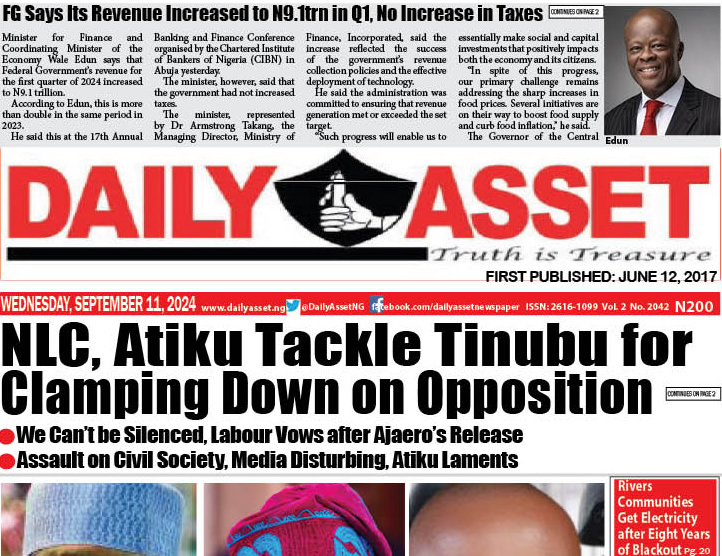


Group Backs Tinubu, Urges Sule to Run for Senate
ShareFrom Abel Zwanke, Lafia The Chief Executive Officer of the Community Initiative for Character Moulding and Entrepreneurship Development (CiCMED) and...

Ooni Installs Oluremi Tinubu as Yeye Asiwaju Ile Oodua
ShareFrom Ayinde Akintade, Osogbo The Permanent Chairman, Southern Nigeria Traditional Rulers Council (SNTRC), Arole Oodua Olofin Adimula and Ooni of...


NYSC Presidential Honor Award Winner Returns to Benue, Shows Appreciations
ShareFrom Attah Ede, Makurdi An ex- corps member and a recipient of Presidential Honour Award, Udokpo Abasi, at the weekend...


NGO Launches Climate Project Steering Committee in Benue
ShareFrom Attah Ede, Makurdi A global Non-Governmental Organisation (NGO), International Alert has inaugurated Climate Project Steering Committee in Benue State,...


A silent Emergency: Soaring Costs of Diabetes Care Spark Alarm
ShareBy Folasade Akpan For Mrs Schola Effiong, a 58-year-old confidential secretary in Calabar, managing diabetes in today’s economy feels like...

World Bank, Partners Record Progress Toward 1.5bn Healthcare Goal
ShareThe World Bank Group, global partners and countries on Saturday announced continued progress toward the goal of delivering affordable and...


UN Commits to Strengthening Nigeria’s Policy Framework, Enhancing Digital Safety
ShareThe UN Women has reaffirmed its commitment to strengthening policy frameworks, enhancing digital safety, and promoting accountability for online harms...

Nightclub Fire in India’s Goa Kills 25 People
ShareA fire at a popular nightclub in India’s coastal region of Goa has killed 25 people, local officials say. Police...
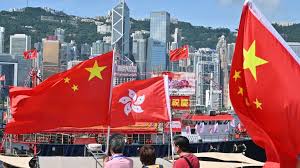

Hong Kong votes in Election as City Mourns Deadly Fire
ShareHongkongers are voting in an election seen as a test of public sentiment following a deadly fire that angered some...


PDP Crisis: Wike Camp Moves to Conduct Fresh Congresses, Convention
ShareBy Laide Akinboade, Abuja The factional Board of Trustees (BoT) of the Nyesom Wike tendency in the Peoples Democratic Party...