
BUSINESS
Durban Set to Host Intra-African Trade Fair in November

By Tony Obiechina, Abuja
The second Intra-African Trade Fair (IATF2021) has been rescheduled to take place in Durban, KwaZulu-Natal, South Africa from 15 to 21 November 2021. The Trade Fair was previously due to be held in Kigali, Rwanda from 8 to 14 December 2021.
In a statement made available by Afreximbank on Monday the decision to move the Trade Fair to Durban was made by the Advisory Council of IATF2021 at its 10th meeting held virtually on 25 May 2021. This decision was arrived at after formal consultations with the Government of Rwanda, who indicated that logistical constraints related to the COVID-19 pandemic had adversely affected the progress of construction of a new facility to host the event.
Commenting on the decision, Chief Olusegun Obasanjo, IATF2021 Advisory Council Chairman and former President of the Federal Republic of Nigeria, commended the Government of Rwanda, Afreximbank, the AU, the AfCFTA Secretariat and all IATF stakeholders for showing great resilience in adapting to the uncertain environment arising from the COVID-19 pandemic situation.
“We have once again been able to shoulder the consequences of the COVID-19 pandemic, which is affecting all sectors worldwide and forcing Governments, corporates and individuals to take unprecedented measures to ensure public safety and keep economies running,” said Chief Obasanjo.
“Relocating IATF2021 to Durban saves us time on the calendar and will enable African countries and corporates, as part of their recovery strategy, to take full advantage of the Trade Fair, which is also an important component of the implementation of the African Continental Free Trade Agreement under which trading commenced this year.
“Having undertaken a comprehensive assessment of the measures that are being taken by the AU and Afreximbank under the African Vaccine Acquisition Task Team (AVATT) as well as other initiatives to procure vaccines for the continent, we believe that a significant number of people would have been vaccinated by November and this will allow us to have a successful event. We will continue working with the Government of South Africa to ensure that all the COVID-19 measures are complied with during the Trade Fair as the safety of both residents and visitors is paramount.
“We congratulate the Government of the Republic of South Africa and KwaZulu-Natal Provincial Government and thank them for the swift efforts that are being made to ensure that IATF2021 safely accommodates the growing number of participating governments, exhibitors, buyers, conference delegates, and visitors that have confirmed their participation in the event,” added Chief Obasanjo.
Welcoming the conference, Premier of KwaZulu-Natal Sihle Zikalala said: “As KwaZulu-Natal, we are honoured to host this important gathering of the world as we implement our own Economic Reconstruction, Recovery and Transformation Plan. Our approach is to carefully balance the protection of lives against promoting and sustaining livelihoods.
“Based on plans announced by our President Cyril Ramaphosa on rolling out the COVID-19 vaccination programme in South Africa, we will be ready in November to host our brothers and sisters in Durban for this Intra-African Trade Fair (IATF2021),” said Premier Zikalala.
“We look forward to welcoming the delegates to the Trade Fair. This gathering is one of the most significant strategic interventions to remind us of our interconnectedness, and of the urgent need to promote intra-Africa trade to reignite economic opportunities and create much-needed jobs for all our people.
“In this regard we applaud the IATF2021 Advisory Council under the leadership of former President of the Federal Republic of Nigeria, Chief Olusegun Obasanjo for this bold decision as we soldier forward to a better Africa for all,” added Premier Zikalala”, he added.


The Central Bank of Nigeria (CBN) has launched a major overhaul of the Agricultural Credit Guarantee Scheme Fund (ACGSF), unveiling a new strategic direction aimed at expanding credit access to smallholder farmers and accelerating national food security efforts.
Speaking in Abuja at the inauguration of the reconstituted ACGSF Board, CBN Governor, Olayemi Cardoso, described the revamp as “a new dawn” for agricultural financing.
He said the initiative reflects the Federal Government’s renewed commitment to reposition agriculture as a driver of inclusive growth, rural development, and economic diversification.Cardoso noted that the ACGSF-established in 1977-remains one of the country’s most impactful development finance tools.
Yet, despite employing nearly two-thirds of Nigeria’s labour force and contributing over 20 per cent to GDP, the agric sector continues to receive less than five per cent of total bank credit. This structural mismatch, he said, has stunted the potential of millions of farmers for decades.The CBN governor stressed that the agricultural landscape has evolved far beyond subsistence farming, now governed by integrated value chains, technology, climate risks and a growing agritech ecosystem. In line with these realities, he said the Scheme must transform into a dynamic, data-driven institution capable of supporting modern agriculture.
He highlighted the 2019 amendment that expanded the Scheme’s share capital from N3 billion to N50 billion and broadened its operational scope. One of the notable enhancements, he added, is the inclusion of farmers’ representatives on the new Board-an “inclusive and strategic” move to ensure policies are grounded in real sector needs.
Cardoso emphasised that the central objective of the revamp is to unlock affordable credit for smallholders who account for 90 per cent of the nation’s agricultural output but remain underserved due to limited collateral, poor credit history and weak access to financial services.
He urged the Board, chaired by Dr. Olusegun Oshin, to design products tailored to women, youth and other underserved groups while leveraging fintechs, microfinance banks and cooperatives to deliver innovative lending models. He also called for the deployment of technology-from satellite imagery to digital dashboards-to track loan utilisation and ensure measurable impact.
Dr. Oshin welcomed the reforms and advocated further expansion of the Fund to meet the scale of investment required for meaningful sectoral transformation.
 | ReplyReply allForwardAdd reaction |
National leaders have challenged youths to lead Nigeria’s renewal, warning that meaningful change now depends on young citizens organizing, demanding accountability and driving sustained civic action.
They made the call on Wednesday night at the 15th anniversary of Enough is Enough Nigeria (EiE), held in Lagos, with the theme “Footprints and Frontlines”.
EiE is a civil society organisation advocating for accountable governance and citizen participation.
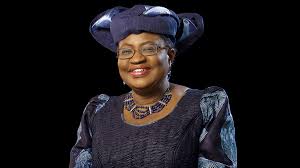
In a virtual keynote address, Director-General of the World Trade Organisation (WTO), Dr Ngozi Okonjo-Iweala, urged young Nigerians to lead change with courage and conviction.
She recalled her 2010 message to youths, saying it remained relevant.
“Do not wait and watch. Do not ask for permission. Get up, organise and make a difference,” she said.
Okonjo-Iweala noted that with 70 per cent of Nigeria’s population under 30, young people hold huge influence in shaping the country’s direction.
She urged them to use their numbers constructively while confronting persistent challenges such as unemployment and poor access to capital.
She praised EiE’s “Office of the Citizen” initiative for empowering communities to demand transparency and improved public services, adding that civic pressure was crucial for reform.
“Real change depends on organised, determined and courageous young citizens,” she said.
In his remarks, Emir of Kano and former Central Bank Governor, Mohammad Sanusi, said rebuilding Nigeria required honesty and collective responsibility.
“As citizens, we must remember this nation belongs to us. We have done enough damage. Enough is enough, we need to stop,”he said.
Sanusi said Nigeria had repeatedly missed development opportunities because public office was often treated as personal property.
He called for a shared national vision that transcends ethnicity, religion and political interest.
Bishop Matthew Kukah of the Catholic Diocese of Sokoto commended EiE for its resilience in advancing social justice and called on Nigerians, especially the youth, to persist in the struggle for a fair society.
“The journey to justice and fairness has no finish line.
Let us remain relentless in building a Nigeria that is just, equitable and bigger than all of us,” Kukah added.
Former Minister of Communication Technology, Mrs Omobola Johnson, emphasised collaborative effort in nation-building, saying development required hard work, sacrifice and citizens’ willingness to contribute their “time, talents and treasures.”
Executive Director of EiE, Yemi Adamolekun, said Nigeria continued to underperform because citizens were not demanding enough from leaders.
She urged Nigerians not to detach their personal progress from the fate of the country.
She said, “Whatever industry we work in, if Nigeria becomes a failed state, we will all suffer. Silence is not an option. Evil is amplified when good people stay silent.”
After highlighting EiE’s milestones over the past 15 years, Adamolekun announced 36-year-old Mrs Ufuoma Nnamdi-Udeh as the organisation’s new Executive Director.
The anniversary also featured the relaunch of Footprints: Past, Present, Future (2nd Edition), compiled by EiE and forwarded by the late diplomat Dr Christopher Kolade, in whose honour the event was partly dedicated.
Attendees also watched the premiere of One Voice, Many Echoes, a short film featuring archival footage from the 1993 election annulment protests, the 2010 Enough is Enough marches and the 2020 EndSARS demonstrations.
The Economic and Financial Crimes Commission (EFCC) has called for deeper collaboration with Civil Society Organisations (CSOs) and the media in the fight against corruption, describing both groups as “critical drivers of national change.”
Acting Zonal Director of the EFCC, Kaduna Zonal Directorate, Bawa Usman Kaltungo, made the call on Thursday in Kaduna at a one-day sensitisation workshop for journalists and CSOs.
Kaltungo, who spoke on behalf of the EFCC Chairman, Ola Olukoyede, said the workshop was organised to strengthen cooperation between the commission and key stakeholders whose roles remain vital to public accountability and national integrity.
According to him, CSOs serve as the conscience of society and a bridge between citizens and government, while journalists use the “powerful pen” to shape public opinion and expose wrongdoing.
“Together, you are indispensable allies in safeguarding our economy and our collective future,” he said.
Kaltungo stated that the EFCC had benefited significantly from intelligence and information shared by CSOs and the media, which had helped expose suspicious financial transactions, abuses of office and systemic fraud.
“Our fight against corruption is not a solo mission. It requires synergy, trust and shared intelligence,” he said, urging the participants to use the workshop as a platform for open dialogue and strengthened collaboration.
Kaltungo commended the EFCC Public Affairs Department for organising the programme and formally declared the workshop open.
Earlier, Head of Public Affairs, EFCC Kaduna Zonal Directorate, Zainab Ahmed, outlined the objectives of the workshop, describing CSOs and journalists as the Commission’s “most valued stakeholders.”
She said the workshop was designed to deepen understanding of the legal and practical processes involved in prosecuting financial crimes, emerging threats in the digital space, and the preventive responsibilities of non-state actors.
“Our goal is to ensure all participants leave better informed, better connected, and better equipped to play their respective roles,” she said.
A presentation by the Head of Legal and Prosecution, Nasiru Salele, took participants through key issues in financial crime prosecution, including levels of involvement, evidence assessment and investigation procedures.
Salele identified challenges affecting prosecution, such as uncooperative judges and frequent transfers of Federal High Court judges.
He also highlighted advancements in EFCC investigations, including the use of AI tools and strengthened international cooperation.
Another session, led by Ayukor Ovirororo of the Procurement Fraud Section, focused on cryptocurrency-related crime. He explained how criminals store, move and launder crypto assets through centralized and decentralized exchanges.
Ovirororo warned that while cryptocurrency offers economic opportunities, it also poses national financial risks, citing recent high-profile cases as examples of unregulated digital operations escalating into major threats.
The final session, presented by Tony Orilade, Head of Public Interface at the EFCC Headquarters, centred on the preventive roles of CSOs and the media.
He emphasised the impact of investigative journalism, policy advocacy, public awareness campaigns and monitoring of government activities.
Orilade added that CSOs also provide safe platforms for whistle-blowers and play a significant role in shaping stronger anti-corruption frameworks.



CBN Revamps Agric Guarantee Scheme, Targets Smallholder Farmers
Share The Central Bank of Nigeria (CBN) has launched a major overhaul of the Agricultural Credit Guarantee Scheme Fund (ACGSF),...

Okonjo-Iweala, Others Urge Youths to Drive Reforms, Strengthen Civic Action
ShareNational leaders have challenged youths to lead Nigeria’s renewal, warning that meaningful change now depends on young citizens organizing, demanding...


Eight Students Die, Three Injure in Jos Road Crash
ShareFrom Jude Dangwam, Jos The Vice Chancellor of the University of Jos, Prof. Ishaya Tanko has confirmed the sad death...


ShareUNICEF Hails Bayelsa as Champion of Primary Healthcare Devt in Nigeria From Mike Tayese, Yenagoa The United Nations Children’s Fund...

EFCC Seeks Stronger Alliance with CSOs, Media in Anti-corruption Fight
ShareThe Economic and Financial Crimes Commission (EFCC) has called for deeper collaboration with Civil Society Organisations (CSOs) and the media...

ShareMutfwang Pledges Support for Minister of Defence in Fight against Insecurity From Jude Dangwam, Jos Plateau State Governor, Caleb Mutfwang,...


FRSC Deploys New Sector Commander to Benue
ShareThe Federal Road Safety Corps (FRSC) on Thursday, announced the deployment of Corps Commander (CC) Kehinde Dahunsi as new commander...

Study Links 290,000 Deaths to Sexual Violence against Children
ShareA study has linked Sexual Violence Against Children (SVAC) to 290,000 deaths worldwide, predominantly from suicide, HIV/AIDS, and type 2...

Reps Push for Lower Air Fares, Target Airport Charges, Taxes
ShareThe House of Representatives has called on the Federal Government to slash airport charges by 50 per cent and offer...

Reps Make Case for Abandoned Road Project in Kogi
ShareThe House of Representatives has urged the Federal Ministry of Works to re-mobilise Setraco Nigeria Ltd. for immediate completion of...