
OPINION
Democracy:Why Nations Sink Into Chaos

By Jerome-Mario Utomi
‘I believe that when the plundering and debilitating hands of the military are removed from governance and the country’s infrastructure, educational and health system are reconstructed, Nigerians will enjoy a boom of creativity and productivity- Ola Vincent’, Former CBN Gov. Sept. 27, 1998.
Democracy, taken objectively signifies the right to choose.
What is, however, doubtful of this arrangement is the quality of people making such decisions. As experience has shown that when such number is placed under scrutiny, it often reveals that a greater percentage manifests signs of education but ill-informed while others exude burning desire to bring into play this electoral Instrument conferred on them by the constitution but lacks the action logic to choose rightly.The above scenario about democracy has accounted for situations where some countries despite their practice of democracy, came to grief because the people applauded and voted those who ordinarily, have nothing to do with governance or organizing civil society, while several others despite our poor systems of government, were well-governed, because good and strong leaders were in charge.
Nigeria, a nation of people with extraordinary intellects, very high energy and vigour and other attributes profoundly important to build a modern nation but socioeconomically stunted, has despite two decades of an unbroken experiment, become a telling example of a state where democracy failed to underwrite social justice or promote social mobility A happening not because the nation is lacking in natural resources but like the recent problem of ‘’global economic recession’ confirmed that poor management of resources can increase the level of poverty even in the most prosperous countries of the world’.
Aside from poor management of resources, anyone sensitive to the present moods, trends, and occurrences in the country will discover that the present predicament has its roots in actions, John Hamm, of VSP Capital, in San Francisco, seriously warned against.
Writing on the topic; the five messages leaders must manage, Hamm noted that; if you want to know why so many organizations sink into chaos, look no further than their leaders’ mouth. Over and over, leaders present grand, overarching-yet fuzzy –notions of where they think the organization is going. They assume everyone shares their definition of ‘vision’ accountability and result. The result is often sloppy behaviour and misalignment that can cost an organization dearly.
Certainly, looking at our nation today, it is possible to establish a link between the leader’s asymmetrical definition of ‘vision’ and why people have become so restive, so destructive, so militant and so fractured into ‘ethnosyncrasies’ and idiosyncrasies.
While this calls for concern is that before the attainment of democracy on the 29th May 1999, many political pundits accused the military of being intolerant, immature, corrupt, unserious, unpatriotic and tribalistic.
But today, if what happened then was ugly, the present episode is scary as our political class has not only acquired the same title but gone ahead to add poor leadership, poor strategy for development; lack of focus on sectors that will improve the condition of living of citizens such as education, health, agriculture and the building of infrastructure to their achievements.
Over two decades after such plundering and debilitating hands of the military were removed from governance of the country, instead of Nigerians to enjoy a reconstructed infrastructure, educational and health system and a boom of creativity and productivity as envisioned by Ola Vincent, corruption; undeveloped, emasculated labour, poor execution of policies and programmes, conversation on Rural Grazing Areas(RUGA), and rejection of the move to have the nation restructured has been the order of the day on the political space called Nigeria.
Having raised these challenges we currently face as a nation, I may go on to say that non-possession of the basic requirement for a credible democratic practice is the simple explanation that fuels the present national plight.
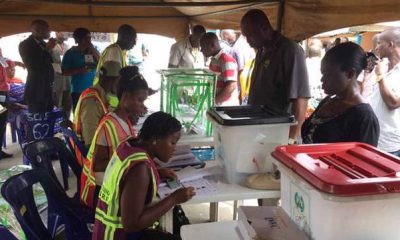
As observed in my recent intervention, reports have it that for election to be credible, it must be organized in an atmosphere of peace, devoid of rancor and acrimony. The outcome of such an election must be acceptable to a majority of the electorate and it must be acceptable within the international community. If elections are to be free and fair, laws designed in that regard must not just exist; they must be operational and be enforced. And the power of freedom of choice conferred on the electorates must be absolute and not questionable.
Contrary to these provisions, since the re-emergence of democracy in 1999, the country has conducted different elections and they were all marred by different degrees of malpractices.
Also fueling this national fracture, anger, and restiveness is the deliberate demonstration of impunity, as well as superiority by one group or region against the other. In doing this, we forget the age-long warning that ‘never be so foolish to believe that you are stirring admiration by flaunting the qualities that raised you above others. By making aware of their inferior positions, you are only stirring unhappy admiration or envy that will gnaw at them until they undermine you in ways that you may not foresee’. It is only the fools that dare the god of envy by flaunting his victory’.
Next to the demonstration of impunity is the national vexation by the people who once lived in comfort and loved to stay alive as life was never a burden. But right now, are ill-fed and ill-clad.
To reverse this appalling situation, while the government must recognize the need to discuss the future of this country has become eminently urgent, Nigerians must in the interim remember that to safeguard democracy, the people must have a keen sense of independence, self-respect and their oneness, and should insist upon choosing as their representatives only such persons as are good as true.
Governments must come up with programmes to sustain the youths who for the moment have lost all fears of punishment and yielded obedience to the power of violence. Their fathers and grandfathers embezzled millions of naira meant for development projects. They used the money to acquire arms for electoral purposes. They have armed the youths to unleash terror on their perceived enemies’. The youths seem not to be interested in dropping the guns so easily.
The Alamajiris in the north must be reintegrated back to school, so should challenges of the youths in the south-south whose farmlands and other means of livelihood have been destroyed through oil prospecting and explorations be addressed,








By Hakeem Jamiu
In his seminal work, Political Order in Changing Societies (1968), Professor Samuel P Huntington argues that political order is essential for societal development. He emphasises that strong, adaptable political institutions are necessary to manage conflicts and meet growing societal demands during periods of rapid change.
Huntington warns that failure to adapt swiftly to societal shifts often results in political decline and instability.
These insights offer a valuable perspective for analysing the recent palace coup in Guinea-Bissau, a country on the verge of greater unrest.Between 24 and 26 September, I was in Guinea-Bissau for the Economic Community of West African States (ECOWAS) pre-summit as the lead facilitator nominated by the Amandla Institute for Policy and Leadership Advancement (AIPLA).
During this time, I predicted that political upheaval was imminent. It was no surprise, therefore, when, on 26 November, a palace coup took place, leading to the forced evacuation of former President Goodluck Jonathan, head of the West African Elders Forum Election Observation Mission.
He described it as a “ceremonial coup,” an unusual act in which President Umaro Embaló himself announced the coup, despite claiming to be under arrest. This move was clearly staged to prevent the announcement of election results, ultimately undermining democracy in the country.
Embalo’s strategy to consolidate power began long before the coup. He had previously excluded his main challenger, PAIGC’s Domingos Simões Pereira from the electoral process, through judicial manipulation by the Supreme Court, which barred Pereira from contesting the election.
Pereira, a former prime minister, had supported the independent candidacy of lawyer Fernando Dias. Despite his official term ending on 27 February, Embaló remained in office, citing a different inauguration date.
His controversial decision to seek re-election, despite initial promises not to, prompted public protests, which were suppressed by force, with activists arrested and opposition movements restricted.
The road to Bissau, however, was not just fraught with political instability but also physical danger. As I journeyed from Zinguinchor to Bissau, a typically two-hour trip extended to eight hours due to the dilapidated roads, squeezed between rising rivers. The road was perilous, especially when we learnt of the armed insurgents operating along the route.
The driver, having initially misled us about the condition of the road, almost abandoned us at the Senegalese border. Fortunately, immigration officials ensured that we continued. Later, it was revealed that the road’s poor condition has been intentionally kept so as to prevent insurgents from reaching the capital easily.
The coup, led by General Horta Inta-A, just a day before the announcement of presidential election results, claimed that it was necessary in order to prevent “narcotics traffickers” from manipulating the election.
Both President Embaló and opposition candidate Fernando Dias claimed victory, with Dias seeking asylum in the Nigerian embassy, due to credible threats to his life. The people’s resolve for change had been underestimated by Embaló, who believed he could easily eliminate the opposition.
Despite the country’s dire economic situation, with deteriorated infrastructure and widespread poverty, the people of Bissau maintained a remarkable sense of joy.
Young men and women danced in the streets at 3 a.m., while others gathered at the hotel we stayed in, socialising late into the night. These youthful social gatherings reflect a society aware of global trends, including political unrest, despite being influenced by their leader’s poverty politics.
The summit, held at the Royal Hotel in Bissau from 24 to 26 September, focused on the future of ECOWAS, in its 50th anniversary. The theme, “Political Stability, Peace, and Security in West Africa,” seemed ironically prescient.
The dialogue, involving the civil society, youths, and security experts, examined the challenges facing ECOWAS, particularly Unconstitutional Changes of Government (UCG).
My prediction that Guinea-Bissau would soon face political turmoil was echoed by ECOWAS’ General Ojabo, who remarked that his troops were primarily tasked with “guard duties at the homes of politicians,” reflecting the mistrust between Guinea-Bissau’s political class and its military. “The minute ECOWAS pulls out of GB, there will be chaos,” he warned, a grim foreshadowing of what was to come.
The coup, led by General Horta Inta-A, just a day before the announcement of presidential election results, claimed that it was necessary in order to prevent “narcotics traffickers” from manipulating the election. Both President Embaló and opposition candidate Fernando Dias claimed victory, with Dias seeking asylum in the Nigerian embassy, due to credible threats to his life. The people’s resolve for change had been underestimated by Embaló, who believed he could easily eliminate the opposition.
This turned out to be a grave miscalculation, and the coup was a direct result of the president’s failure to meet the people’s expectations. As Huntington’s theory suggests, political instability often arises when rising societal expectations are unmet, leading to frustration and disorder.
The African Union (AU) has also suspended Guinea-Bissau from its activities, calling for respect for the electoral process. The United Nations has urged restraint and respect for the rule of law. The coup in Guinea-Bissau presents another challenge to ECOWAS’s credibility, especially as the region has seen an alarming rise in military takeovers. The coup belt, stretching across West Africa, is increasingly a source of concern.
ECOWAS, having strongly condemned the coup, has suspended Guinea-Bissau from its decision-making bodies and is advocating for the restoration of constitutional order in the country. Meanwhile, the African Union (AU) has also suspended Guinea-Bissau from its activities, calling for respect for the electoral process.
The United Nations has urged restraint and respect for the rule of law. The coup in Guinea-Bissau presents another challenge to ECOWAS’s credibility, especially as the region has seen an alarming rise in military takeovers. The coup belt, stretching across West Africa, is increasingly a source of concern.
Guinea-Bissau, with its fragile political and economic situation, faces considerable instability. With a population of only two million and a per capita GDP of $670, the country ranks among the poorest in the world. Around 70 per cent of the people live below the poverty line, with limited access to essential services such as healthcare, roads, education, and sanitation. As the political crisis deepens, there are concerns that drug trafficking could intensify, further destabilising the region.
For ECOWAS, the challenge is clear: it must persist in applying diplomatic pressure on the coup leaders to restore constitutional order. Military force alone is insufficient; what is needed is a sustained diplomatic strategy supported by respected statesmen.
ECOWAS needs to rediscover its role as a facilitator of West African peace, rather than as an end in itself. The organisation must act consistently and enhance its operational capabilities to tackle the root causes of instability. Unconstitutional changes of government are not merely political anomalies but symptoms of systemic governance failures that must be addressed to prevent further crises across the region. The time for action is now.
Hakeem Jamiu, an ECOWAS facilitator, writes from Ado-Ekiti.

By Folasade Akpan
For Mrs Schola Effiong, a 58-year-old confidential secretary in Calabar, managing diabetes in today’s economy feels like “climbing a hill that only gets steeper”.
Diagnosed in 2009, she said her monthly expenditure on insulin, tablets, laboratory tests and monitoring supplies now exceeds ₦150,000.
“You cannot stop taking the drugs, yet the cost keeps going up.
“Sometimes I do not have the money to buy some of them at the same time,” she said.
Her struggle mirrors the experiences of thousands of Nigerians at a time when experts warn that diabetes is becoming a major public health concern.
According to a 2018 national meta-analysis by Uloko et al.
, titled “Prevalence and Risk Factors for Diabetes Mellitus in Nigeria: A Systematic Review and Meta-Analysis”, Nigeria’s diabetes prevalence stands at 5.7 per cent, representing 11.2 million adults.The authors defined diabetes mellitus as a metabolic disorder of chronic hyperglycaemia caused by absolute or relative insulin deficiency and associated with disturbances in carbohydrate, protein and fat metabolism.
The study, which pooled data from numerous research works across the country, revealed wide regional disparities.
The prevalence rate was 3.0 per cent in the North-West, 5.9 per cent in the North-East, and 3.8 per cent in the North-Central, respectively.
The rates were higher in the southern part of the country: 5.5 per cent in the South-West, 4.6 per cent in the South-East, and 9.8 per cent in the South-South.
Experts say these patterns reflect changing lifestyles, rapid urbanisation and limited access to routine screening.
However, for many patients, statistics tell only a fraction of the real story.
Mr Offum Akung, a 57-year-old teacher in Cross River, said he had to ration his drugs because prices kept rising faster than his salary.
“I spend over ₦40,000 a month and still cannot buy everything on my prescription.
“I rely mostly on Glucophage now; when money allows, I add Neurovite Forte; diabetes management has become more difficult than the disease itself,” he said.
He appealed for government intervention, saying many patients were already “giving up”.
The Second Vice-President of the Diabetes Association of Nigeria, Mr Bernard Enyia, said the economic situation had pushed many Nigerians with diabetes into dangerous coping methods.
He said that he once managed his condition with about ₦70,000 monthly, but currently spends more than ₦180,000.
“Insulin has become something you pray for, while some people are sharing doses or skipping injections.
“Once you break treatment, the complications come quickly.”
Enyia, who lost his job as a health worker in 2017 due to frequent hospital visits, described the emotional toll as immense.
“It affects your finances, your social life, your marriage — everything. Many Nigerians with diabetes are quietly drowning,” he said.
Globally, concerns are also rising.
The World Health Organisation (WHO) estimates that more than 24 million adults in Africa are living with diabetes, a figure projected to rise to 60 million by 2050.
Marking World Diabetes Day 2025, WHO Regional Director for Africa, Prof. Mohamed Janabi, warned that rising obesity, lifestyle changes and weak health systems were fueling an “unprecedented wave of diabetes” across the continent.
He urged governments to prioritise access to affordable insulin, diagnostics and long-term care.
More so, pharmacists say they are witnessing the crisis firsthand.
The Senior Vice-President, Advantage Health Africa, Mr Adewale Oladigbolu, said many patients were no longer able to maintain regular medication schedules.
“People buy drugs today and skip them tomorrow because they do not have money.
“With non-adherence, they never reach therapeutic goals.”
Oladigbolu, a Fellow of the Pharmaceutical Society of Nigeria, said that locally manufactured metformin remained in high demand due to affordability, but insulin-dependent patients faced the harshest burden.
He stressed that diabetes care extended far beyond drugs.
“You need glucometers, strips, blood pressure monitors and regular tests.
“In countries where insurance work, patients do not think about the cost; in Nigeria, they pay for everything out of pocket,” he said.
He called for diabetes care to be covered under health insurance to reduce the financial burden on patients.
President of the Diabetes Association of Nigeria, Prof. Ejiofor Ugwu, described the rising cost of treatment as “a national crisis hiding in plain sight.
He said insulin, which sold for about ₦3,500 four years ago, presently costs ₦18,000 to ₦22,000 per vial.
“Test strips that were ₦2,000 now sell for ₦14,000, while glucometers have risen from ₦5,000 to over ₦25,000.
“On average, a patient now needs between ₦100,000 and ₦120,000 every month. Imagine earning ₦50,000 and being asked to spend twice that on one illness.”
He warned that between half and two-thirds of Nigerians with diabetes remain undiagnosed.
“We are seeing more kidney failure, more limb amputations, more blindness.
“These are late presentations caused by delayed or inconsistent treatment.”
Ugwu urged the Federal Government to urgently subsidise essential anti-diabetic medications and remove taxes on their importation.
“Most of these drugs are produced outside the country.
“Once you add import duties and other charges, prices become unbearable; subsidies and tax waivers could drop costs by at least 30 per cent,” he said.
He also called for expansion of the National Health Insurance Authority (NHIA) to cover a wider range of anti-diabetic medicines, glucose meters and strips — none of which are currently covered.
For many Nigerians, however, the struggle continues daily.
Across households, clinics and pharmacies, the message is the same: as Nigeria’s diabetes prevalence rises and treatment costs soar, more patients are slipping through the cracks — some silently, others painfully — while waiting for meaningful intervention.
In all, stakeholders say diabetes is a national emergency; people are dying quietly because they cannot afford medicine; hence the urgent need for relevant authorities to make anti-diabetic medications accessible and affordable.(NAN)
 | ReplyReply allForwardAdd reaction |

By Dorcas Jonah
In the Nigerian culture, extended families and communities play a crucial role in care-giving, instilling values, and supporting the development of children.
This cultural heritage of community parenting emphasises shared responsibility in raising children.
But in contemporary Nigeria, this age-long practice is facing enormous challenges due to modernisation.
In scrutinising this trend, some parents are of the view that community parenting helps in instilling morals and curbing social vices among children and youths, while others believe it is outdated.
Some parents are of the belief that their children are their responsibility; so they do not tolerate others correcting their children.
By contrast, others say that community parenting, when done with good intentions, can help raise a better society.
Mr Peterson Bangyi, a community leader in Dutse Makaranta, said that community parenting was the bedrock of raising a child.
He said the adage: “it takes a village to raise a child”, remained a powerful principle in contemporary society.
According to him, by Nigeria’s cultural norms and values, a child is owned by everyone; therefore, the grandparents, aunts, uncles, and neighbours actively contribute to raising children.
“This approach fosters a sense of belonging and ensures children grow up with diverse role models.”
Bangyi said that the extended families practiced by more communities were the backbone of parenting.
“But modernisation has taken away this practice as most families do not want people to come close to their children,’’ he said.
Mrs Monica Umeh, a mother of two, emphasising on the importance of community parenting, said that it played significant role in shaping her upbringing as a child and young adult.
Umeh advised that when correcting other people’s children, it is essential to do so with love and good intentions, without any form of bitterness.
“I am a strong advocate of community parenting as long as it is done with love and good intentions.
“I believe no parent can single-handedly raise a child without the support of others,’’ he said.
Mr Temitope Awoyemi, a lecturer, said that community parenting was crucial and could not be over-emphasised.
He said that community parenting helped society in inculcating strong moral values in children and youths, adding that modern life could be isolating for parents.
Awoyemi said that strong community support networks had been shown to lower parental stress levels and promote a more optimistic approach to raising children.
“It also ensures that a child receives guidance and correction from various adults, providing a broader, more consistent moral and social baseline that might be missed by parents who are busy with work.
“Community parenting encourages collaborative, interdisciplinary support from various community members and agencies in addressing a child’s developmental needs comprehensively.
“It focuses on prevention of long-term problems and celebrating individual strengths,’’ he said.
Awoyemi said that as the society continued to evolve, community parenting could adapt to ensure children benefitted from both cultural roots and contemporary innovations.
Mr Fortune Ubong, a cultural enthusiast, attributed the increasing crime rate in Nigeria to lack of community parenting that had extended to schools, and government institutions.
According to him, community parenting remains the foundation of every child’s moral upbringing.
“Most parents are now focused on earning a living and improving their lifestyle, in the process abandoning their primary duty of molding and guiding their children; this is where community parenting plays a greater role,” he said.
However, Mrs Joy Okezia, a businesswoman, said that given the recent developments in the country, correcting a child should be the sole responsibility of their parents.
Okezia said that she preferred to correct her children herself as she knew them better than anyone else.
She also noted that with the rising insecurity in the country, intervening to correct a child could pose a significant risk to the person.
Mrs Ijeoma Osita, a civil servant, also shared Okezia’s view, saying that a child’s behaviour was shaped by their family upbringing.
She said that if a child was not taught to love and respect others at home, an outsider would have little impact in correcting such a child.
Osita emphasised that parents should in still in their children the values of love and respect regardless of their status or background.
According to her, a child brought up with good values is less likely to misbehave well.
She cited the Holy Bible, saying, that says: “Train up a child in the way they should go, and when they are old, they will not depart from it’’.
Osita said that community parenting remained a vital aspect of Nigerian culture, promoting shared responsibility and resilience among families.
He opined that while modernisation posed challenges, blending traditional practices with modern strategies offered a promising path forward.
Observers say robust community connections are linked to better social-emotional development, academic achievement, and overall well-being for children.
They say that in modern society, amidst the digital world, economic instability, and busy work schedules, parents face pressures, making community support systems fundamental.
All in all, stakeholders are of the view that combining traditional community parenting with modern childcare – integrating technology, play-based learning, and skill acquisition – will produce well-rounded children.(NAN)




Tinubu Congratulates UNIJOS Graduands, Pledges Support for Education
ShareFrom Jude Dangwam, Jos President Bola Tinubu has congratulated graduands of the University of Jos (UNIJOS) at the institution’s 35th...


2027 Election: Igbo’s Community Promises Votes for Eno
ShareFrom Christopher Tom, Uyo Non-indigence in Akwa Ibom State especially the Igbo’s community has promised to give the highest number...


Zamfara Reaffirms Commitment to Address Gender-based Violence
ShareBy Ifeanyichukwu Nwannah, Gusau The Zamfara State Government has reaffirmed its commitment to addressing gender-based violence (GBV) and other forms...

Nentawe, Alia, Suswam, Others Bag Chieftaincy Titles from Tiv Kingdom
ShareFrom Attah Ede, Makurdi The Tiv Kingdom has conferred honorific chieftaincy titles on prominent sons, daughters and friends of the...


World Human Rights Day: NGO Takes Medical Outreach to Okaka Correctional Center
ShareFrom Mike Tayese, Yenagoa The 8th edition of Prof. Seiyefa Brisibe Outreach has celebrated the 2025 World Human Rights Day...

Coup in Guinea-Bissau and the Dilemma of ECOWAS
ShareBy Hakeem Jamiu In his seminal work, Political Order in Changing Societies (1968), Professor Samuel P Huntington argues that political...


Chelsea End Winless Run with Comfortable Brighton Victory
ShareChelsea ended their four-game winless streak in the Women’s Super League with a comfortable 3-0 away victory against Brighton. A...


Liverpool ‘United as One’ after Salah Return – Van Dijk
ShareCaptain Virgil van Dijk said Liverpool “are absolutely united and go forward as one” after Mohamed Salah returned to the...
Mikaelian Beats Jack to Regain WBC Title
ShareNoel Mikaelian beat Badou Jack by a unanimous points decision in Los Angeles to regain the WBC cruiserweight title. Mikaelian...

Mobile Phone Association Pillar of Modern Commerce, Driving communication, Says Mamas
ShareFrom Ayinde Akintade, Osogbo The National President of Association of Mobile Phone and Allied Products Traders of Nigeria (AMPAT), Hon....