
NEWS
Villa Review: Buhari Vows to Make Citizens Smile, Talks Tough on Budget, Security

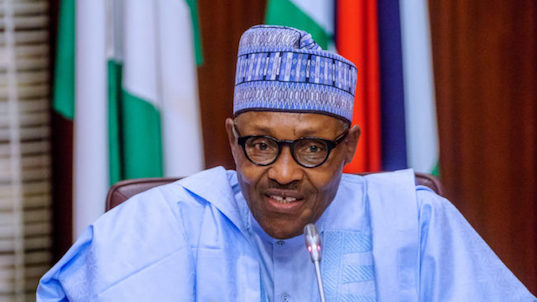
President Muhammadu Buhari has renewed the determination of his administration to uplift the quality of life of Nigerians through aggressive implementation of humane and gender responsive budget as well as security measures to check criminal activities in the country.
Reports said that the president presented the 2022 Appropriation Bill for an aggregate expenditure of N16.
39 trillion to the joint session of the National Assembly (NASS) on Thursday.The president described the 2022 Appropriation which was earlier approved for presentation to NASS by the Federal Executive Council (FEC) on Oct. 6, as Budget of Economic Growth and Sustainability.
According to him, the 2022 budget is also the first in the nation’s history, where Ministries, Departments and Agencies (MDAs) were clearly advised on gender responsive budgeting.
The president seized the opportunity of the budget presentation to provide an overview of global and domestic developments in the country.
While observing the COVID-19 protocol during his presentation, the president also gave a summary of his administration’s achievements and its plans for the next fiscal year.
President Buhari stressed that these were exceptional times for Nigeria.
He said: “The grim realities of COVID-19 and its lethal variants are still upon us. From president to pauper, the virus does not discriminate.
“This is why our country still maintains its COVID-19 guidelines and protocols in place to protect citizens and stop the spread of this disease.’’
Buhari had earlier returned to Abuja on Oct. 5 after attending the inauguration of Prime Minister Abiy Ahmed of Ethiopia for a second five-year term in office.
The Nigerian leader was in Addis Ababa, the Ethiopia capital, on Sunday where he delivered a goodwill message at the inauguration event held at the historic Meskel Square.
NAN reports that other African leaders at the event included the Presidents of Djibouti, Kenya, South Sudan, Senegal, Somalia, Uganda and the Prime Minister of the Democratic Republic of Congo.
Also while in Addis Ababa, Buhari had on Oct. 5 met with President Salva Kiir of South Sudan where he expressed Nigeria’s readiness to assist South Sudan to achieve political and economic stability.
The president assured the full support of Nigeria to all efforts to bring long-term stability and prosperity to the continent.
On Oct. 6, the Federal Government warned that it may be forced to impose State of Emergency in Anambra to ensure peaceful conduct of the forthcoming gubernatorial election in the state.
The Minister of Justice and Attorney-General of the Federal, Abubakar Malami, gave the warning when he fielded questions from State House correspondents at the end of the meeting of the Federal Executive Council (FEC).
The meeting was presided over by Buhari in Abuja on Wednesday.
NAN observed that stakeholders in Anambra project including the Independent National Electoral Commission (INEC) had raised alarm over the upsurge in cases of violent attacks on individuals and government facilities in Anambra as the governorship election in the state draws closer.
The minister, however, threatened that the federal government may declare a state of emergency, if the security situation in the state did not improve.
Buhari also granted audience to a team from ExxonMobil Corporation led by Liam Mallon, its President on Upstream Oil and Gas, at State House Abuja, on Wednesday.
At the meeting, the president urged operators in the petroleum industry to take advantage of the new Petroleum Industry Act (PIA) to promote their investments in the oil and gas sector.
Also on Oct. 6, Buhari met behind closed doors with former president Goodluck Jonathan, in his office at the Presidential Villa, Abuja.
The agenda of the meeting was unknown to newsmen, while no official statement was issued on the outcome of the meeting.
Jonathan, who is ECOWAS Special Envoy to the Republic of Mali, had been updating Buhari on efforts by West African leaders to restore stability to the country.
The president on Oct. 7 also met behind closed door with Gov. Willie Obiano of Anambra at the Presidential Villa, Abuja.
NAN observed that the meeting came barely 24 hours after the Federal Government had threatened to invoke emergency rule as part of measures to address security challenges and safeguard electoral process in the state.
Obiano, who spoke to State House correspondents at the end of the closed door meeting, said he updated the President on security challenges facing the state, saying bandits from neigbouring states are responsible for the killings and disruption of public peace in the state.
The governor, however, described the call for the declaration of State of Emergency in Anambra to address security challenges in the state as “very unfortunate’’.
On Oct. 8, the president, who also doubles as Ministry of Petroleum Resources, received the certificate of incorporation of the Nigeria National Petroleum Company Limited from the Corporate Affairs Commission (CAC).
He noted that with the certification of the company the country expected nothing less from the Board of Directors, the Chief Executive Officer, and the Chief Finance Officer, “than the realisation of a global national oil company that this nation desires and deserves”.
Under the recently signed Petroleum Industry Act (PIA), the Nigerian National Petroleum Corporation (NNPC), was expected to transform to a limited liability company, a fact that has now been accomplished.
Vice-President Yemi Osinbajo was also in London, the United Kingdom, where he participated at different meetings including the High-Level United Nations event on the Energy Transition plan in Africa with special focus on Nigeria.
The meetings included first, a closed-door session with COP26 President-Designate, Mr Alok Sharma, a cabinet rank British Minister and the Chair of the UK Government’s COP26 Energy Transition Council (ETC) at Whitehall.
He was also at an interaction with the academic community at Imperial College followed by meetings of the Global Energy Alliance and presentations on the Nigeria Energy Transition Plan and Nigeria’s Integrated Energy Plan.
Osinbajo observed at Imperial College that Africa as a continent was home to the world’s youngest fastest growing population and in order to create jobs and enable climate-smart industrialisation, “the scale and quality of electricity services must increase significantly”.
Also on Friday, Buhari assented to the Agricultural Research Council of Nigeria (Amendment) Bill 2021 to boost agricultural activities in the country.
The president, who assented to the bill before his recent visit to Ethiopia, said the bill was in consonance with the commitment of his administration to diversify the economy with agriculture playing a critical role.
”With the amendment, the Council is expected to play a crucial part in coordinating research efforts in the agricultural sector towards achieving food sufficiency and security in the nation,” he added.
Buhari also approved the establishment of the Federal College of Agriculture, Kirikasamma, and the Federal College of Education (Special), Birnin Kudu, both in Jigawa.
NAN reports that a 55-minute documentary, titled: ”The Buhari Effect: Undeniable Achievements”, was aired on Channels Television on Oct. 9 at 7p.m.
The documentary, which is in view of some milestone of the administration of Buhari, would also be aired on Nigerian Television Authority (NTA) on Sunday at 7 p.m.
Buhari ended the week at the Passing Out Parade for Cadets of 68 Regular Course (Army, Navy and Air Force) in Kaduna, Kaduna State, where he pledged that the Federal Government would do everything within the ambit of the law to protect Nigerians from the activities of criminals.
The criminal activities, according to the president, include insurgency, banditry, kidnapping and politically motivated killings.
The president said that more equipment had been received from some friendly countries to improve the security operations in Nigeria.
According to him, the government remains focused on its priority of improving security, bolstering the economy and fighting corruption. (NAN)






US Secretary of State Marco Rubio has said Rwanda’s actions in eastern Democratic Republic of Congo are “a clear violation of” the peace deal brokered by Donald Trump last week.
In a post on X, he said the US would “take action to ensure promises made to the President are kept”, without going into details.
Trump hailed the deal signed with great fanfare in Washington between DR Congo’s President Félix Tshisekedi and Rwanda’s President Paul Kagame as “historic” and “a great day for Africa, great day for the world”.
But the M23 rebel group said it has “fully liberated” the key city of Uvira in an offensive the US and European powers say is backed by Rwanda.
UN experts have previously accused it of having “de facto control” of the rebel force’s operations.Rwanda denies the allegations, however, its presence in Washington was a tacit acknowledgment of its influence over the M23.
The rebels were not signatories to Trump’s deal – and have been taking part in a parallel peace process led by Qatar, a US ally.
The latest fighting risks further escalating an already deeply complex conflict.
Prof Jason Stearns, a Canada-based political scientist who specialises in the region, said that the view in M23 circles was that “they need more leverage in the negotiations”, while the feeling in the Rwandan government is that Tshisekedi cannot be trusted.
He added that the assault on Uvira, in South Kivu province, “flies in the face of all the negotiations that are under way”.
The M23’s new offensive in South Kivu started a few days before Kagame and Tshisekedi flew to Washington last week to ratify the agreement first hammered out in June.
Bram Verelst, a Burundi-based researcher with the Institute for Security Studies (ISS) think-tank, said the assault appeared to be an attempt to force Burundi to withdraw the troops it had in eastern DR Congo backing the army against the rebel forces and Rwanda.
He pointed out that Uvira – which lies just 27km (17 miles) from Burundi’s capital, Bujumbura, on the northern tip of Lake Tanganyika – was of strategic importance because of the presence of at least 10,000 Burundian troops in South Kivu.
Yale Ford, an Africa Analyst for the Critical Threats Project at the American Enterprise Institute, pointed out that Uvira, which had a population of about 700,000, was the DR Congo government’s last major foothold and military hub in South Kivu.
He added that the M23 was now likely to establish a parallel administration in the city, and use its military gains “as a bargaining chip in peace talks”.
As for the DR Congo government, it has not acknowledged its latest military setback, but says that the “gravity of the situation is compounded by the now proven risk of regional conflagration”.
Burundi has been a natural ally of DR Congo for years because of its enmity with Rwanda.
Both accuse the other of backing rebel groups seeking to overthrow their respective governments.
The neighbours share a similar language and ethnic make-up – with Tutsi and Hutu communities often vying for power – and both have suffered terrible ethnic-based massacres.
But unlike Rwanda, which is headed by a Tutsi president, the majority Hutus are in power in Burundi.
Burundi’s government fears that if the M23 cements its presence in South Kivu, it would strengthen a Burundian rebel group called Red Tabara.
Based in South Kivu, it is mainly made up of Tutsis – and has attacked Burundi in the past.
In an apparent attempt to placate Burundi’s fears, the M23 said it had “no sights beyond our national borders”.
Burundi has shut its border with DR Congo, but, according to Mr Verelst, it is still allowing people to cross into its territory after carrying out security checks.
Aid agencies say that about 50,000 people have fled into Burundi in the past week.
Burundian troops – along with the Congolese army and allied militias – fought to block the rebel advance towards Uvira, but the city itself fell “without much fighting”, Verelst said.
The fall of Uvira would hit Burundi’s already struggling economy as the country has been suffering from a severe shortage of foreign currency and fuel, and had been heavily dependent on eastern DR Congo for both, he said.
The M23 began a major advance earlier this year when it captured Goma, the capital of North Kivu province, on the border with Rwanda.
At the time, South African troops were deployed to help DR Congo’s army, but they were forced to withdraw after the M23 seized the city in January.
Shortly afterwards the rebels captured the next big city in eastern DR Congo, Bukavu, capital of South Kivu.
The move on Uvira came after the rebels broke the defence lines of the DR Congo army, militias allied with it and Burundian troops.
Prof Stearns said the M23 was estimated to have more than 10,000 fighters, but there was likely to have been an “Influx” of Rwandan troops for the recent offensive to capture Uvira.
The US lays the blame for the recent fighting squarely on Rwanda.

Five men have been arrested in Germany suspected of being involved in a plot to drive a vehicle into people at a Christmas market.
Three Moroccans, an Egyptian and a Syrian were detained on Friday over the plan to target a market in the southern Bavarian state. Authorities said they suspected an “Islamist motive”.
Prosecutors said the Egyptian – a 56-year-old – was alleged to have “called for a vehicle attack… with the aim of killing or injuring as many people as possible”.
The Moroccans allegedly agreed to carry out the attack.Officials in Germany have been on high alert after previous attacks at Christmas markets, including in Magdeburg last December that killed six people.
Authorities did not say when the planned attack was supposed to take place or which market was the target, though said they believed it to be one in the Dingolfing-Landau area, north east of Munich.
German newspaper Bild reported the Egyptian man was an imam at a mosque in the area.
Police said the Moroccan men – aged 30, 28 and 22 – were arrested accused of having agreed to commit murder, while the Syrian man, a 37-year-old, was accused of encouraging the suspects “in their decision to commit the crime”.
The five suspects appeared before a magistrate on Saturday and remain in custody.
Joachim Herrmann, Bavaria’s state interior minister, told Bild the “excellent cooperation between our security services” had helped to prevent “a potentially Islamist-motivated attack”.
Christmas markets are popular festive attractions throughout Germany, frequently attracting large crowds and significant tourism.
Security at events has been increased in recent years, since an attack in Berlin in 2016 when a man drove a lorry into a market crowd, killing 12 people.

No fewer than 20,000 applicants nationwide are participating in the Nigerian Air Force (NAF) Zonal General Aptitude Test for the 2025 Basic Military Training Course (BMTC) 46 recruitment exercise.
The Director, Public Relations and Information of NAF, Air Commodore Ehimen Ejodame, in a statement on Sunday, said the aptitude test began on Saturday across the country.
Ejodame, who described the test as a key stage of the recruitment process, said, it was being conducted simultaneously at 15 zonal centres located in Sokoto, Minna, Kaduna, Kano, Bauchi, Maiduguri, Yola, Makurdi, Jos, Ilorin, Ipetu-Ijesa, Enugu, Benin, Port Harcourt and Ikeja.
He said the nationwide spread of the centres reflected NAF’s commitment to inclusiveness, equal opportunity and a transparent, merit-based recruitment system that allows qualified Nigerians from all parts of the country to compete fairly.
According to him, the large turnout underscores the sustained confidence of Nigerian youths in the Air Force as a disciplined, professional and patriotic institution, as well as its resolve to attract capable, motivated and resilient personnel to strengthen national defence and internal security operations.
Speaking on the exercise, the Chief of the Air Staff (CAS), Air Marshal Sunday Aneke, said the recruitment process was guided by fairness, integrity and strict adherence to established standards.
According to CAS, the NAF remains firmly committed to recruiting the best candidates by merit, “as the quality of our personnel is fundamental to operational effectiveness and the successful execution of our constitutional mandate.”
He added that the aptitude test was a critical step toward building a motivated and mission-ready force, assuring Nigerians of the NAF’s continued support to internal security operations and the protection of lives and property.


Chelsea End Winless Run with Comfortable Brighton Victory
ShareChelsea ended their four-game winless streak in the Women’s Super League with a comfortable 3-0 away victory against Brighton. A...

Liverpool ‘United as One’ after Salah Return – Van Dijk
ShareCaptain Virgil van Dijk said Liverpool “are absolutely united and go forward as one” after Mohamed Salah returned to the...
Mikaelian Beats Jack to Regain WBC Title
ShareNoel Mikaelian beat Badou Jack by a unanimous points decision in Los Angeles to regain the WBC cruiserweight title. Mikaelian...

Mobile Phone Association Pillar of Modern Commerce, Driving communication, Says Mamas
ShareFrom Ayinde Akintade, Osogbo The National President of Association of Mobile Phone and Allied Products Traders of Nigeria (AMPAT), Hon....


Nigeria’s Merchandise Trade Grows to N38.9trn in Q3 2025
ShareBy Tony Obiechina, Abuja Nigeria’s total merchandise trade increased to N38.9 trillion in the third quarter of 2025, reflecting positive...


Trump’s Historic Peace Deal for DR Congo Shattered after Rebels Seize Key City
ShareUS Secretary of State Marco Rubio has said Rwanda’s actions in eastern Democratic Republic of Congo are “a clear violation...


Nwabali Arrives Super Eagles Camp in Egypt
ShareStanley Nwabali has arrived the Super Eagles’ Renaissance Hotels, Cairo, Egypt ahead of the 2025 Africa Cup of Nations in...
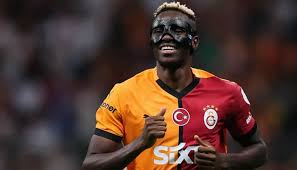

Osimhen, Fulham Trio Dazzle in Final Club Games before AFCON
ShareSuper Eagles stars Victor Osimhen, Calvin Bassey, Samuel Chukwueze, and Alex Iwobi all impressed in their final club appearances before...


AFCON 2025: Senegal Coach Names Injured Trio in Final Squad
ShareSenegal head coach Pape Thiaw has named three injured players Ismaila Sarr, Habib Diarra and Assane Diao in his final...


John Cena Retires from WWE after 24-year Career
ShareWWE legend John Cena has retired from professional wrestling, bringing the curtain down on a 24-year in-ring career after his...