
Foreign News
UN Envoy Condemns killings of Peaceful Protesters in Sudan


UN High Commissioner for Human Rights, Ms Michelle Bachelet, has condemned the killings of peaceful protesters against military rule in Sudan.
It is “utterly shameful” that live ammunition keeps being used against protesters, Bachelet said in a statement from the Office of the UN High Commissioner for Human Rights in Geneva.
According to reports, security forces killed at least 15 people and wounded thousands of Sudanese protesting on Wednesday against military rule.
The protesters, marching against an Oct. 25 coup across the capital Khartoum and in the cities of Bahri and Omdurman, demanded a full handover to civilian authorities and for the leaders of the Oct.
25 coup to be put on trial.Bachelet said at least 39 people had been killed by security forces in Sudan since the October 25 military coup, 15 of whom were reportedly shot dead on Wednesday.
“Shooting into large crowds of unarmed demonstrators, leaving dozens dead and many more injured, is deplorable, clearly aimed at stifling the expression of public dissent, and amounts to gross violations of international human rights law,” she said.
According to reliable medical sources, more than 100 people were wounded during protests on Wednesday in Khartoum, Khartoum-Bahri and Omdurman.
Of the injured, 80 sustained gunshot injuries to their upper bodies and heads.
Arrests were reported to have been made before, during and after the demonstrations. Police issued a statement saying that 89 police officers had also been injured.
On Wednesday, the military imposed a total shutdown of phone and mobile communications across the country, in addition to the continued shutdown of internet services, effectively cutting off Sudan from the world.
Only satellite links continued to function.
Bachelet explained that people were unable to call for ambulances to treat injured protesters.
She said families were unable to check on the safety of their loved ones, and hospitals were also unable to reach doctors as emergency rooms filled up, to name just a few very real and serious consequences.
For the High Commissioner, “blanket internet and telecommunications shutdowns violate core principles of necessity and proportionality and contravene international law.”
Since the military coup, journalists, particularly those perceived to be critical of the authorities, have been targeted.
Journalists have been arbitrarily arrested, attacked while reporting, and had their homes and offices raided by security forces.
There have also been disturbing reports of their attempted abduction by armed assailants in plain clothes.
“With the internet shutdowns, the role of journalists in getting essential information out on the current situation is particularly crucial, but I fear the increasingly hostile environment against them may lead to self-censorship, and further threaten media pluralism and independence,” the Commissioner said.
Bachelet also urged the authorities to immediately release all those who had been detained for exercising their rights to freedom of expression and peaceful assembly, as well as all detained political actors.
She upheld that all members of the security forces and political and military leaders responsible for unnecessary and disproportionate use of force against protesters must be held accountable in line with international human rights law.
The Commissioner also stressed the need to ensure that healthcare workers were not targeted for providing medical care to injured protesters, and that their essential work is not hampered. (NAN)







By Eze Okechukwu, Abuja
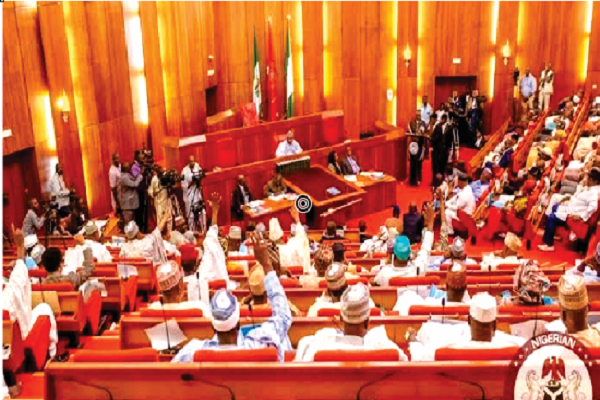
The Senate yesterday ordered mandatory health screening for every international passenger arriving Nigeria airports, seaports, land borders as Ebola resurfaces in the Democratic Republic of Congo with a scare case reported in the FCT.
The resolution followed an urgent motion by Senator Francis Fadahunsi, who warned that with Lassa fever already ravaging states, Nigeria cannot afford another outbreak.
“Protecting our entry points is far cheaper than managing Ebola,” Fadahunsi told the chamber.
Lawmakers insisted screening must be total and indiscriminate — no exemptions based on nationality or departure country because infected travellers can transit through safe-listed nations.
Senator Diket Plang raised the stakes further, demanding immediate funding for NCDC and Port Health Services, including release of withheld funds and emergency budget.
Senate President Godswill Akpabio said the Federal Government has started releasing Ebola response funds but ordered relevant committees to track every kobo.
“Ascertain whether the funds were released and judiciously utilised. Any outstanding debt must be released by the Finance Ministry without delay,” Akpabio directed.
At least 72 civilians who had been prospecting for gold in a border region of Sudan have been killed in air strikes, a regional rights group said.
Emergency Lawyers, based in the Sudanese capital, Khartoum, said jets targeted the so-called artisanal miners at a popular gold mining site on Saturday.
Neither the Egyptian government nor the de facto Sudanese authorities have so far commented.
Cairo has previously faced accusations of deadly strikes on gold prospectors as part of a crackdown on illicit activity along its southern border.
Emergency Lawyers noted the previous alleged attacks and said they represented not only a violation of Sudan’s sovereign territory but demonstrated the government’s lack of control over the region.
“The deliberate targeting of unarmed civilians violates international humanitarian law and the right to life,” it said in a statement on Sunday. “These acts may constitute war crimes.”
It noted that its death toll was provisional and could rise.
The Paris-based Sudan Tribune reported that the death toll could far exceed the number reported by Emergency Lawyers, citing a survivor of Saturday’s attack who said many more people had been injured.
Eyewitnesses said the attack began around 06:00 local time (04:00 GMT), with the aircraft firing more than five missiles directly at the miners’ camps, destroying them and excavation pits with people still inside, the newspaper wrote.
The Sudan Tribune reported claims in June that Egyptian forces had used drones and artillery to target artisanal mining sites in the same region, killing several, after sporadic incidents of Egyptian border guards of burning equipment, torching temporary shelters, and firing live ammunition to disperse mine workers.
Days later, Egypt’s border agency announced that it and the military had begun a sweeping security campaign along the border to foil illegal migration, drug smuggling and illegal mining.
At the same time, Sudan’s de facto leader announced an investigation into the alleged strikes, which were said to have killed dozens.
Gold lies at the core of the border tensions.
Sudan’s ongoing civil war has led to a surge in artisanal mining – and often risky practice conducted by civilians with rudimentary tools and without official permission – particularly in remote areas near its borders.
Gold-rich areas lie along porous borders in terrain historically associated with cross-border smuggling routes, with artisanally mined gold potentially feeding into those channels.
Egypt’s border force said in June that it had seized 86 tonnes of gold ore along with amateur prospecting equipment.
Artisanal mining has also reportedly continued in Sudan’s conflict zones and smuggled gold may be a source of income for armed insurgent groups.
This has raised concerns of illicit Sudanese gold undermining the legitimate Egyptian gold market.
Several German fighter jets will take part in the Northern Atlantic Treaty Organisation (NATO) annual nuclear defence exercise this week as troops from 17 countries take part in the Steadfast Noon drill.
The German Air Force said three Tornado jets will take part in the exercise hosted by Italy, which starts Tuesday and runs for about a week and a half.
The jets are normally stationed in Büchel in the German state of Rhineland-Palatinate.
NATO has not revealed the exercise scenario but said its scale would be comparable to last year’s drill, which involved around 2,000 personnel and more than 70 aircraft.
Last week, NATO’s head of nuclear policy, Nassima Barrows, said the exercise was designed to demonstrate the alliance’s readiness and ability to defend its territory.
No real nuclear weapons will be used, she added.
NATO said the exercise was not linked to current events or directed at any specific country.
Military experts say the drills, held regularly in October, include practising the safe transport of weapons from underground storage facilities to aircraft and mounting them on fighter jets.
Only practice bombs without real nuclear warheads are used during the drills.




Kohol tasks NUBESS Leaders on Service, Accountability, Legacy
ShareBy David Torough, Abuja The founder of Menroi Rural Priority Organisation, Professor Kohol Iornem has challenged leaders of the National...


Stakeholders Celebrate Zikism at 7th Nnamdi Azikiwe Annual Award Lecture in Abuja.
ShareBy Raphael Atuu, Abuja As Barrister Henry Okeke Says The gathering provided another opportunity for Nigerians to reflect on the...

2027 Elections: CHRICED Trains 36 Journalists To Combat Fake News, Promote Peaceful Polls
ShareBy Orjime Moses Abuja As Nigeria prepares for the 2027 general elections, the Resource Centre for Human Rights and Civic...

Livestock Ministry Defends Abuja Headquarters Acquisition, Insists Due Process Was Followed
ShareBy Raphael Atuu, Abuja The Federal Ministry of Livestock Development has defended the acquisition of its headquarters building located along...
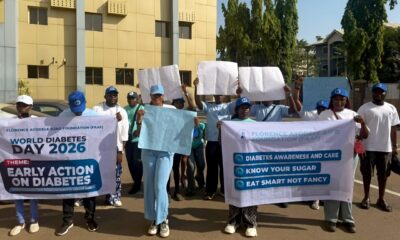

World Diabetes Day: FAAF Advocates Early Detection, Affordable Care
ShareBy David Torough, Abuja The Florence Ayodele Ajao Foundation (FAAF) has called for increased awareness and early detection of diabetes...


WHO Recommends Multiple Daily Insulin Injections to Manage Type 1 Diabetes
ShareThe World Health Organisation has recommended that people with type 1 diabetes receive insulin injections several times per day, with...
Benue Begs Newly Inducted Doctors to Return Home, Tackle Shortage of Medical Personnel
ShareFrom Attah Ede, Makurdi The Benue State Government has told the newly inducted medical doctors of Benue origin to return...
World Diabetes Day: Nigeria Must Fix Food Environment to Curb Diabetes Burden, Says CAPPA
ShareFrom Mike Tayese, Yenagoa As the world marks World Diabetes Day 2026 on November 14, under the theme “Early Action...

Pope Says Inca Heartland ‘Suffering’ as Villages Empty
SharePope Leo XIV warned Saturday that the heartland of the ancient Inca Empire was “suffering,” as the remote, poverty-stricken communities...
Pope Says Inca Heartland ‘Suffering’ as Villages Empty
SharePope Leo XIV warned Saturday that the heartland of the ancient Inca Empire was “suffering,” as the remote, poverty-stricken communities...