
Foreign News
Nigeria Begins to Issue Visas on Arrival to Africans January 2020

By Mathew Dadiya, Abuja
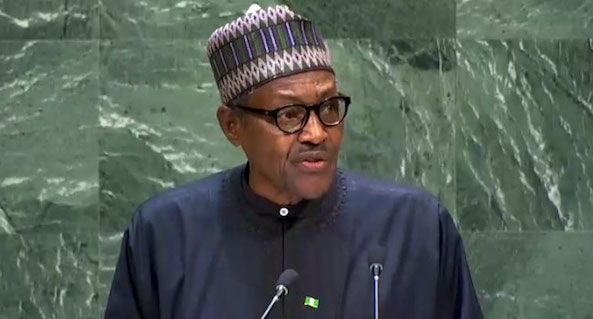
President Muhammadu Buhari Wednesday, in Egypt revealed that Nigeria would commence issuing visas on arrival in January 2020 to all holders of African passports as a way of promoting free movement and facilitating the full implementation of the African Continental Free Trade Agreement (AfCFTA).
The Nigerian leader said that Africa must take its destiny in its own hands by minimizing reliance on donor funding for the execution of its vital peace, security and development agenda.
Buhari disclosed this during the opening session of the ongoing Aswan Forum for Sustainable Peace and Development in Africa, taking place in the Egyptian town.
In order to realize its Pan-African vision of an integrated, prosperous and peaceful Africa driven by its own citizens and representing a dynamic force in the global arena, President Buhari declared: “We in Nigeria have already taken the strategic decision to bring down barriers that have hindered the free movement of our people within the continent by introducing the issuance of visa at the point of entry into Nigeria to all persons holding passports of African countries with effect from January, 2020.”
According to him, as Africans, it was important to focus on the issues of conflict prevention and resolution.
Buhari declared that the resolution of conflict situations in African countries remained a key component in the overall development of the continent.
According to him, “Nigeria is not only host to our sub regional body ECOWAS but has also been supporting substantially the ECOWAS budget up to about 60 percent.
“Nigeria has been funding by almost a 100 percent the operations of the Multinational Joint Task Force (MNJTF) fighting Boko Haram Terrorists in the Lake Chad Basin.”
Conflicts have devastating effects on our societies and they militate against our progress. In this regard, the need to silence the guns cannot be overemphasized.”
President Buhari equally emphasized that massive investment in transportation infrastructure was necessary for African economic resurgence as this would facilitate the African Free Trade Area Agreement recently signed on by the continental leaders.
“Africa should embark on the provision of transport connectivity by enhancing the development of roads, rail, and air links which will ease the free movement of persons, goods and services within the continent. In this regard, we in Nigeria have already commenced an aggressive drive to upgrade our rail transport system and road networks across the country.
“We should furthermore promote free trade within and amongst Africa and Africans especially now that we have launched the African Free Trade Area Agreement,” he said.
President Buhari also harped on the fight against corruption and inclusive growth: “The menace of corruption undermines our efforts to achieve sustainable development and realize the goals of the AU Agenda 2063. It is also important to attach great priority to the promotion of good and inclusive governance as we equally strive to empower our women and youth.”
The President once again used the opportunity to draw global attention to the recession of the Lake Chad and its attendant economic consequences for the region.
“The issue of climate change should be given the due attention that it deserves. The effects of Climate Change are at the root of some of the conflicts in parts of the continent. This is why we must focus on the issue of the recharging of the Lake Chad which used to provide livelihood to over forty million people in the region. It is difficult to expect durable stability in the region without restoration of the shrinking lake.”
He urged African leaders to see education as a key tool for the transformation and repositioning of our continent, saying, “Africa would need to heavily invest in education and capacity building. Education creates opportunities and holds the key for a better and prosperous future of our people.”
The President added that his administration was, “ pursuing the diversification of our economy through the development of agriculture and mineral resources, the promotion of manufacturing sector and the creation of job opportunities for our teeming youths. By so doing, we will also discourage the irregular migration of our youth out of the Continent through dangerous journeys.”




By Eze Okechukwu, Abuja
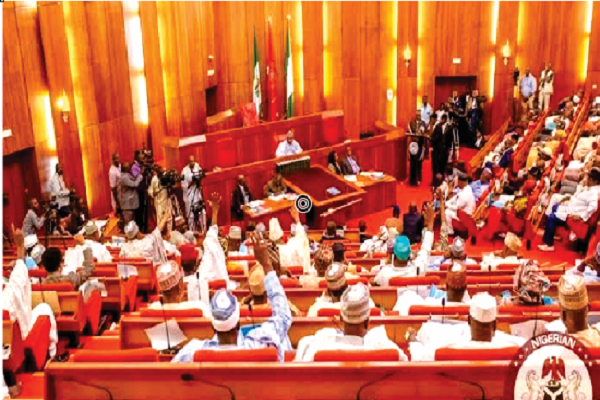
The Senate yesterday ordered mandatory health screening for every international passenger arriving Nigeria airports, seaports, land borders as Ebola resurfaces in the Democratic Republic of Congo with a scare case reported in the FCT.
The resolution followed an urgent motion by Senator Francis Fadahunsi, who warned that with Lassa fever already ravaging states, Nigeria cannot afford another outbreak.
“Protecting our entry points is far cheaper than managing Ebola,” Fadahunsi told the chamber.
Lawmakers insisted screening must be total and indiscriminate — no exemptions based on nationality or departure country because infected travellers can transit through safe-listed nations.
Senator Diket Plang raised the stakes further, demanding immediate funding for NCDC and Port Health Services, including release of withheld funds and emergency budget.
Senate President Godswill Akpabio said the Federal Government has started releasing Ebola response funds but ordered relevant committees to track every kobo.
“Ascertain whether the funds were released and judiciously utilised. Any outstanding debt must be released by the Finance Ministry without delay,” Akpabio directed.
At least 72 civilians who had been prospecting for gold in a border region of Sudan have been killed in air strikes, a regional rights group said.
Emergency Lawyers, based in the Sudanese capital, Khartoum, said jets targeted the so-called artisanal miners at a popular gold mining site on Saturday.
Neither the Egyptian government nor the de facto Sudanese authorities have so far commented.
Cairo has previously faced accusations of deadly strikes on gold prospectors as part of a crackdown on illicit activity along its southern border.
Emergency Lawyers noted the previous alleged attacks and said they represented not only a violation of Sudan’s sovereign territory but demonstrated the government’s lack of control over the region.
“The deliberate targeting of unarmed civilians violates international humanitarian law and the right to life,” it said in a statement on Sunday. “These acts may constitute war crimes.”
It noted that its death toll was provisional and could rise.
The Paris-based Sudan Tribune reported that the death toll could far exceed the number reported by Emergency Lawyers, citing a survivor of Saturday’s attack who said many more people had been injured.
Eyewitnesses said the attack began around 06:00 local time (04:00 GMT), with the aircraft firing more than five missiles directly at the miners’ camps, destroying them and excavation pits with people still inside, the newspaper wrote.
The Sudan Tribune reported claims in June that Egyptian forces had used drones and artillery to target artisanal mining sites in the same region, killing several, after sporadic incidents of Egyptian border guards of burning equipment, torching temporary shelters, and firing live ammunition to disperse mine workers.
Days later, Egypt’s border agency announced that it and the military had begun a sweeping security campaign along the border to foil illegal migration, drug smuggling and illegal mining.
At the same time, Sudan’s de facto leader announced an investigation into the alleged strikes, which were said to have killed dozens.
Gold lies at the core of the border tensions.
Sudan’s ongoing civil war has led to a surge in artisanal mining – and often risky practice conducted by civilians with rudimentary tools and without official permission – particularly in remote areas near its borders.
Gold-rich areas lie along porous borders in terrain historically associated with cross-border smuggling routes, with artisanally mined gold potentially feeding into those channels.
Egypt’s border force said in June that it had seized 86 tonnes of gold ore along with amateur prospecting equipment.
Artisanal mining has also reportedly continued in Sudan’s conflict zones and smuggled gold may be a source of income for armed insurgent groups.
This has raised concerns of illicit Sudanese gold undermining the legitimate Egyptian gold market.
Several German fighter jets will take part in the Northern Atlantic Treaty Organisation (NATO) annual nuclear defence exercise this week as troops from 17 countries take part in the Steadfast Noon drill.
The German Air Force said three Tornado jets will take part in the exercise hosted by Italy, which starts Tuesday and runs for about a week and a half.
The jets are normally stationed in Büchel in the German state of Rhineland-Palatinate.
NATO has not revealed the exercise scenario but said its scale would be comparable to last year’s drill, which involved around 2,000 personnel and more than 70 aircraft.
Last week, NATO’s head of nuclear policy, Nassima Barrows, said the exercise was designed to demonstrate the alliance’s readiness and ability to defend its territory.
No real nuclear weapons will be used, she added.
NATO said the exercise was not linked to current events or directed at any specific country.
Military experts say the drills, held regularly in October, include practising the safe transport of weapons from underground storage facilities to aircraft and mounting them on fighter jets.
Only practice bombs without real nuclear warheads are used during the drills.



Court Nullifies Omo-Agege’s NDC Senatorial Candidacy
ShareFrom Francis Sadhere, Delta The Federal High Court sitting in Warri, Delta State, has nullified the nomination of former Deputy...


APC Mourns 15 Supporters Killed In Zamfara Road Accident
ShareBy Orjime Moses, Abuja The All Progressives Congress (APC) has mourned 15 of its members and supporters reportedly killed in...
Ortom ‘Ranched’ Benue People in IDP Camps Instead of Cattle – Tondo
ShareFrom Attah Ede, Makurdi Former Benue State Commissioner for Lands and Survey, John Tondo, has criticised former Governor Samuel Ortom...


2027: INEC Chairman Seeks Stronger Security Cooperation Ahead Of Elections
ShareBy Orjime Moses, Abuja The Chairman of the Independent National Electoral Commission (INEC), Prof. Joash Ojo Amupitan, SAN, has called...


CBN Retains Interest Rate at 23 Per Cent
ShareBy Tony Obiechina, Abuja The Monetary Policy Committee (MPC) of the Central Bank of Nigeria (CBN) has retained the benchmark...


2027: Emovworho Warns Delta Politicians Against Exploiting Youths
ShareBy Orjime Moses, Abuja A concerned son of the Urhobo Nation, Austin Obule Emovworho, has warned political leaders in Delta...

Katsina Suspends Daura Emir, Orders Probe into Sexual Assault Allegation
ShareBy David Torough, Abuja The Katsina State Government has suspended all official engagements and travels of the Emir of Daura,...

Makarfi Chairs DAILY ASSET 10th Anniversary, Awards
ShareBy David Torough, Abuja Former Kaduna State Governor, Senator Ahmed Mohammed Makarfi, has accepted the invitation to chair the 10th...

Customs Unveils Novara to Spotlight Officers’ Challenges
ShareBy Tambaya Julius, Abuja The Nigeria Customs Service (NCS) has unveiled a 79-episode television drama series, Novara, to showcase the...

FCT Upgrades 20 PHCs Under World Bank-supported IMPACT Project
ShareBy Laide Akinboade, Abuja The Federal Capital Territory Administration (FCTA) has upgraded 20 Primary Health Centres (PHCs) across the territory...