
BUSINESS
SERAP Drags Buhari, others to Court over Alleged Missing N3.1bn in Finance Ministry

Socio-Economic Rights and Accountability Project (SERAP), has sued President Muhammadu Buhari over his failure to probe alleged N3.1 billion of public funds missing from the Federal Ministry of Finance and prosecution of suspects.
Joined in the suit as Respondents are: Abubakar Malami, SAN, Minister of Justice and Attorney General of the Federation; and Mrs.
Zainab Ahmed, Minister of Finance, Budget and National Planning. The suit followed the grim allegations by the Office of the Auditor-General of the Federation in the 2018 and 2019 annual audited reports that N3.1bn of public funds were missing, misappropriated or unaccounted for.In the suit filed last Friday at the Federal High Court in Lagos, on behalf of SERAP by its lawyers, Kolawole Oluwadare and Ms Adelanke Aremo, the organization is seeking: “an order of mandamus to direct and compel President Buhari to ensure the investigation of the alleged missing N3.1bn of public funds, the prosecution of anyone suspected to be responsible, and the recovery of any missing public money.”
According to SERAP, “Investigating and prosecuting the allegations, and recovering any missing public funds would serve the public interest, and end the impunity of perpetrators.” SERAP is also arguing that, “The consequences of corruption are felt by citizens on a daily basis. Corruption exposes them to additional costs, and undermines economic development of the country, trapping the majority of Nigerians in poverty and depriving them of opportunities.
“It is in the interest of justice to grant this application. The suit is in keeping with the Nigerian Constitution of 1999 [as amended], particularly the provisions on oath of office by public officers, and section 15[5] which requires the authorities to abolish all corrupt practices and abuse of power.”
SERAP is also arguing that, “Complying with constitutional requirements and international standards on transparency and accountability would ensure effective and efficient management of public resources, and put the country’s wealth and resources to work for the common good of all Nigerians.”
The suit read in part: “The failure to investigate the allegations of grand corruption in the Ministry of Finance constitutes a grave violation of the duty placed on the authorities to take appropriate measures to promote transparency and accountability in the management of public finances.”
“President Buhari’s constitutional responsibility to ensure the investigation and prosecution of allegations of corruption, as well as recovery of any missing public funds is contained in Section 15[5] of the Nigerian Constitution, which provides that ‘the State shall abolish all corrupt practices and abuse of power’, and in the Oath of Office in the Seventh Schedule of the Constitution. “According to the report of the Auditor-General for 2018, the Ministry of Finance spent N24,708,090.00 on pre-retirement training but without any document. The consultant hired also failed to quote any price as cost of the training but the Ministry paid N5,670,060.00 to the consultant.
“The Ministry also reportedly failed to account for N2,885,772,493.27 released to the ministry from the Service Wide Vote to take care of estacodes and other allowances for representing the Federal Government in meetings, and contribution to Organization for Petroleum Exporting Countries (OPEC).“According to the 2019 report of the Auditor-General, the Ministry paid N20,466,744.00 as cash advances to staff of ‘You-Win’ between 8 February and 18 December, 2018 but the Ministry has failed to retire the money.
“The advances were granted for the purchase of store items, repairs and other services that would have been made through the award of contract. Government lost N2,046,674.40 which would have accrued as taxes had these jobs been undertaken through award of contracts. The Auditor-General wants the money recovered.
“The Ministry also reportedly paid N15,471,850.00 to two consultants for capacity building in Kano and Adamawa States but without any supporting document, contrary to paragraph 603 (1) of the Financial Regulations. The Auditor-General is concerned that the money may have been diverted, and wants it recovered.” Meanwhile, no date has been fixed for the hearing of the suit.



By Tambaya Julius, Abuja
The Nigeria Customs Service volleyball team is targeting victory in the final phase of the 2026 CGC Volleyball Premier League following its impressive performance in the competition.
The team’s head coach, Abdullahi Salisu, stated this after his side defeated the Fire Service team 3-0 in the women’s category at the Indoor Sports Hall of the MKO Abiola National Stadium, Abuja.
Salisu attributed the team’s progress to the support and encouragement of the Comptroller-General of Customs and the service’s sports secretary.
He said sponsorship secured through the Comptroller-General had also created opportunities for international exposure, contributing to the team’s development and improved performance.
According to him, the team remains determined to win the competition, although three matches are still left to play.
“Because of the sponsorship we are getting, we are improving. From all indications, it seems we are going to win. We still have three more matches. Every point and every match is important for us, but that is our target,” he said.
Meanwhile, the Fire Service head coach described the competition as an encouraging learning experience for his young and relatively inexperienced players.
He explained that the tournament marked the first league appearance for most members of his team, who were competing against opponents with several years of experience.
“My team is a young side, inexperienced and upcoming. This is our first league participation, eventually, for most of my players too.
“You can imagine somebody who is coming to meet veterans. We have been playing against persons who have two years, three years, five years and six years of experience.
“We hardly have six months of experience, and already we are becoming winners,” he said.
The coach commended the standard of officiating, describing it as fair despite what he called occasional human imperfections.
He, however, identified inadequate funding and limited institutional support as major challenges affecting the team’s development and its ability to recruit more experienced players.
According to him, the constraints have forced the coaching staff to focus on teaching players basic techniques and tactical approaches while building their overall understanding of the game.
He said the team was still developing its players’ skills in ball control, covering, spiking and responding effectively to opponents with different physical attributes and playing styles.
“We do not have these experienced players who could give in our attack to get what we are looking for, but with what we have, we are building.
“Even with that, I am impressed with their performance and their upcoming. That feeling, that spirit, is an encouraging one,” he said.
All matches on Day 11 of the competition were played at the Indoor Sports Hall of the MKO Abiola National Stadium, Abuja.
By Tambaya Julius, Abuja
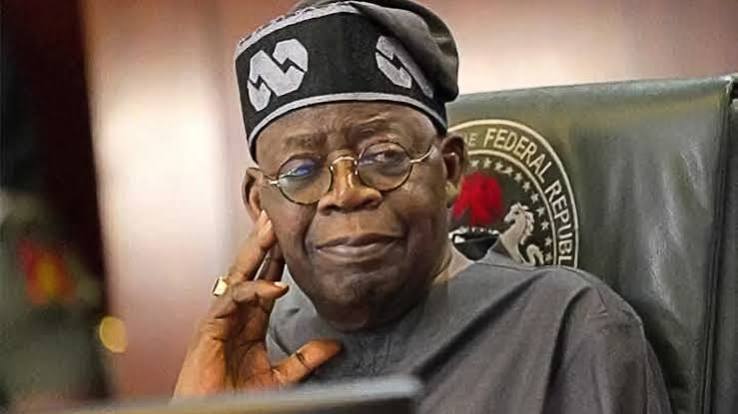
President Bola Tinubu has asked the National Assembly to approve a supplementary external borrowing plan of $20.52 billion and €1.045 billion to finance projects and programmes across critical sectors of the Nigerian economy.
The request was conveyed in a letter read by Senate President Godswill Akpabio during plenary on Tuesday.
Tinubu said the proposed loans would help address the country’s infrastructure deficit, accelerate economic growth, create employment opportunities and improve the living conditions of Nigerians.
He urged the National Assembly to approve the 2026–2027 Supplementary External Borrowing Plan to enable the Federal Government to implement its development projects and programmes without delay.
Hhowever, the opposition- African Democratic Congress( ADC) has querried the timing of the loan just as it said economic conditions in tje country did not justify any fresh borrowing.
The president said the proposed borrowing would cover infrastructure, agriculture, healthcare, education, water supply, security, employment generation and financial management reforms.
According to him, the need to sustain economic growth and accelerate national development following the implementation of his administration’s reforms had made additional external financing necessary.
Tinubu put the proposed facilities at $20,517,755,901 and €1,045,083,643, adding that the projects and programmes had undergone technical and economic assessments to determine their potential contributions to national development.
He said the proposed investments were expected to stimulate economic activities, create jobs, promote skills acquisition, encourage entrepreneurship, reduce poverty and strengthen food security.
The president added that most of the projects would be implemented across the 36 states of the federation and the Federal Capital Territory (FCT).
He explained that the scale of Nigeria’s infrastructure needs and the financial resources required to address them had made broader external borrowing necessary to bridge the funding gap.
Tinubu said the funds would be channelled primarily into critical infrastructure, particularly power, transportation and healthcare, while other sectors would also benefit from the proposed financing.
He called on the Senate and the House of Representatives to give the request urgent consideration, arguing that prompt approval would facilitate timely disbursement and effective implementation of the projects.
Following the presentation of the letter, Akpabio referred the request to the Senate Committee on Local and Foreign Debts for consideration and directed it to report back to the chamber within one week.
The committee is expected to conduct the initial legislative review, with possible collaboration with the Senate Committee on Appropriations and other relevant committees.
The proposed borrowing plan must undergo legislative scrutiny before the external financing can proceed.
However, the letter, as presented to the Senate, did not provide a project-by-project breakdown of the proposed facilities, their individual financing terms or the allocation of funds among the beneficiary sectors.
The request comes as the Federal Government seeks additional resources to finance infrastructure and development programmes amid competing demands on public finances.
The implementation of the borrowing plan will depend on the outcome of the National Assembly’s consideration and the details of the projects to be financed.
In a statement, the Director of Media and Publicity of the ADC-PCC, Kola Ologbondiyan, said the fresh borrowing request came amid rising living costs, increased taxation and growing economic hardship among Nigerians.
Ologbondiyan questioned the rationale for seeking additional foreign loans when, according to the council, millions of citizens were struggling to meet their basic needs.
“What exactly is President Tinubu borrowing all this money for? Where are the roads, the electricity, the hospitals, the jobs and the critical infrastructure that should justify this relentless accumulation of debt? Nigerians deserve answers,” he said.
He also demanded explanations on the utilisation of funds saved from fuel subsidy removal and the proceeds of previous borrowings.
The ADC-PCC expressed concern that continued dependence on foreign loans, without clear evidence of corresponding improvements in infrastructure, productivity, employment and citizens’ welfare, could push Nigeria deeper into a debt trap.
According to the council, mounting debt-servicing obligations could limit the ability of future administrations to make independent economic decisions and undermine the country’s fiscal flexibility.
“This is not a sustainable path to national development. It is a dangerous attempt to mortgage the future of Nigeria and generations yet unborn,” Ologbondiyan said.
He argued that the government should not continue to demand economic sacrifices from citizens while seeking additional loans without adequately explaining how existing resources had been spent.
The council further warned that excessive borrowing could expose the country to greater financial pressure and constrain its ability to fund critical public services.
It insisted that any new borrowing arrangement must be tied to clearly defined national priorities, productive investments and measurable benefits for Nigerians.
The ADC-PCC therefore called on the National Assembly to subject the proposed loans to rigorous scrutiny and reject the request unless the Federal Government demonstrates their necessity, sustainability and expected benefits.
It also demanded that Tinubu publish a comprehensive account of all domestic and foreign loans obtained since May 29, 2023, alongside a detailed breakdown of revenue generated from fuel subsidy removal and how the funds had been applied.
The council called for full disclosure of the proposed facilities’ purposes, interest rates, repayment schedules, associated fees, conditions and any collateral or guarantees attached to them.
It maintained that Nigerians had a right to know the financial obligations being incurred on their behalf and the implications for the country’s economic future.
“Nigeria cannot borrow its way out of poor economic management. Borrowing must be tied to clearly defined national priorities, transparent expenditure and measurable outcomes.
Anything less is an injustice to the Nigerian people,” the statement added.
The ADC-PCC also urged the National Assembly not to abdicate its oversight responsibilities, insisting that lawmakers must ensure that any borrowing arrangement does not expose the country to unacceptable financial risks.
It said the Federal Government must demonstrate how the proposed loans would stimulate economic growth, create jobs, improve infrastructure and raise living standards rather than impose additional liabilities on future generations.
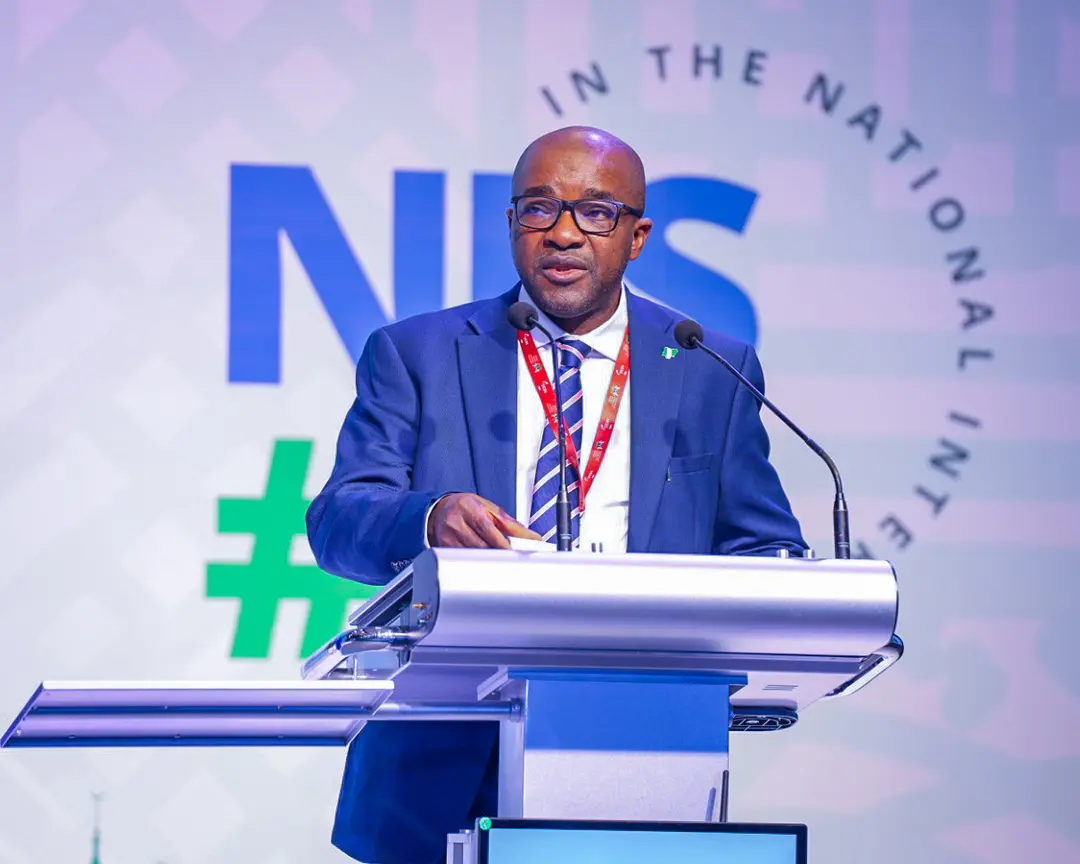
Chairman, Nigerian Economic Summit Group (NESG), Olaniyi Yusuf has urged the Federal Government to translate economic reforms into tangible results, including job creation, increased productivity and improved living standards.
Yusuf made the call on Monday in Abuja at the 32nd Nigerian Economic Summit (NES32), themed “Growth That Works: Delivering Jobs, Productivity and Shared Prosperity”.
He said Nigeria’s economic reforms had created an opportunity to strengthen the foundations for socio-economic development, in spite of the pressures on households and businesses.
“Our responsibility now is to ensure that reforms translate into stronger enterprises, better jobs, more productive workers, rising incomes, improved living standards and shared prosperity,” Yusuf said.
He said recent measures, including petroleum subsidy removal, foreign exchange reforms, fiscal restructuring and banking sector reforms, were necessary to address economic distortions.
However, he said macroeconomic stabilisation alone would not automatically translate into broad-based economic growth or improved citizens’ welfare.
Yusuf said households needed decent jobs, stronger purchasing power, and improved security and reduced poverty, while businesses required lower production costs, reliable electricity and affordable financing.
According to him, Nigeria must sustain economic stabilisation while prioritising practical measures to improve productivity and expand economic opportunities.
He said the summit’s theme reflected the need to measure economic success by the quality of jobs created, business competitiveness and the extent to which prosperity reached Nigerians.
Yusuf identified productivity, human capital development and resilience as key priorities for achieving sustainable and inclusive economic growth.
He said investments in education, healthcare, nutrition and relevant skills would improve workers’ productivity and prepare young Nigerians for employment.
The NESG chairman also called for improved infrastructure, predictable regulations, fair competition and an efficient legal system to encourage private investment and business expansion.
Yusuf said Nigeria’s economic performance presented a mixed picture, with improvements in some macroeconomic indicators alongside persistent challenges affecting businesses and households.
He noted that real Gross Domestic Product (GDP) grew by 4.43 per cent year-on-year in the second quarter of 2026, compared with 3.89 per cent in the first quarter.
Yusuf, however, expressed concern over persistent food inflation, high production costs, unreliable electricity, expensive financing and inadequate infrastructure.
According to him, a slowdown in inflation does not necessarily mean that goods have become affordable, as households continue to grapple with elevated prices.
Yusuf urged policymakers to prioritise productive investments, effective public expenditure and measures to address poverty, food insecurity and gaps in access to essential services.
He also called for stronger links between education and employment through technical and vocational training, digital skills and industry relevant learning.
The NESG chairman identified agriculture, agro-processing, manufacturing, construction, tourism and digital services as sectors with opportunities to expand productive employment.
He said the private sector remained central to Nigeria’s economic transformation but required an enabling environment to invest, produce and create jobs.
Yusuf urged businesses to invest in technology, workforce skills, local supply chains and export competitiveness, while calling on the government to improve infrastructure and ensure regulatory predictability.
He emphasised the need to assess the actual impact of reforms rather than merely documenting policies introduced or activities undertaken.
Yusuf said commitments arising from the summit should include clear institutional responsibilities, realistic timelines, measurable indicators and periodic reviews to ensure accountability.
He called on the government, businesses, development partners and other stakeholders to work together to translate economic stability into investment, productivity, employment and shared prosperity.
Yusuf said the ultimate test of the summit would be whether its deliberations produced tangible improvements in the lives of farmers, manufacturers, entrepreneurs and young people seeking decent jobs.
He urged participants to develop practical solutions and measurable commitments that would continue to deliver results beyond the summit.




Aba Commercial Smart City Celebrates COO, Mazen Kalassina at 39
ShareBy David Torough, Abuja Aba Commercial Smart City has celebrated its Chief Operating Officer (COO), Engr. Mazen Kalassina, on his...

Rebuilding Public Trust in Government Borrowing: The Case for Scaling Up Sukuk Financing in Nigeria
ShareBy Uche Joe Uwaleke The recent request by President Bola Tinubu to the National Assembly for approval to raise $20.52...

2027: Buba Yakub Mobilises Adamawa Support for Tinubu, APC
ShareFrom Yagana Ali, Yola The Director-General of the Nigerian Technical Aid Corps (NTAC), Rt. Hon. Yusuf Buba Yakub, has called...

2027: FOOG Women Coordinator Urges Nigerians to Support Tinubu’s Re-election Bid
ShareBy Francis Sadhere, Warri Chief (Mrs) Esther Orighomisan Okotie-Eboh, Coordinator of Felix Omagbemi Ogbe Group (FOOG) Women Support Group for...

Troops Neutralise 217 Terrorists, Rescue 349 Kidnap Victims, Arrest 333 Suspects in Oct
ShareBy David Torough, Abuja The Armed Forces of Nigeria (AFN) say troops neutralised 217 terrorists and other criminals, rescued 349...


2027: Tompolo Mobilises Support for Tinubu in Ogun, says Economy Stabilising
ShareThe Grand Patron of the PBAT Door-to-Door Movement, Government Ekpemupolo, has called on the people of Ogun State to massively...

Henry Okeke Commends Mbah for Clearing Pension Arrears in Enugu
ShareBy Raphael Atuu, Abuja Barrister Henry Nnanna Okeke, a member of the Governing Council of Enugu State Polytechnic, Iwollo, has...


2027: ADC Urges ECOWAS to Insist on Credible Elections in Nigeria
ShareThe National Chairman of the African Democratic Congress (ADC), Sen. David Mark, has urged the Economic Community of West African...

Obi Promises Emergency Measures on Security, Corruption, Poverty
SharePresidential candidate of the Nigeria Democratic Congress (NDC), Peter Obi, has promised emergency measures to tackle insecurity, corruption, hunger and...


Why I Chose Music over Football – Mr Eazi
ShareAfrobeats star Mr Eazi has claimed that English club Chelsea FC wanted to sign him before they signed former Super...