
BUSINESS
EU Urges FG to Strengthen Competition Framework, to Partner Nigeria on Investments

The European Union (EU) Commission has said it would continue to partner Nigeria on business opportunities, investments and other developmental issues.Executive Vice President of the European Union (EU), Ms Margrethe Vestager gave the assurance during a visit to the Minister of Industry, Trade and Investments, Adeniyi Adebayo at the Old Federal Secretariat Complex in Abuja.
Vestager who is completing her 5-day working visit to Nigeria reiterated EU’s commitment to intensify cooperation with Nigeria in the areas of agri-food, energy & infrastructure.According to Ms Vestager, “I have trust in agriculture as it has the capacity to create access to trade channels that would otherwise be difficult.
”She said the EU was open to holding high-level talks with Nigerian authorities with a view to knowing specific priorities that benefit the citizenry.“We are open to holding high level talks with Nigerian authorities to know specific areas of priority especially as it pertains the industrialization of the nation. In the coming days, we hope to intensify discussion that will lead to signing investment agreements with Nigeria, which will facilitate industrialization.“We have a lot of discussion going on in Europe that governments should produce in the areas that they think they have friends or next-door neighbours, and the consensus is that Nigeria qualifies because of its scope of investments and ease of doing business,” Vestager said.he EU Vice President tasked Nigerian authorities to strengthen its competition framework to encourage companies to offer consumer goods and services on the most favourable terms, in a manner that guarantees efficiency and innovation and reduced prices.Speaking during the meeting the Minister of Industry, Trade and Investments, Adeniyi Adebayo said the focus of his ministry was industrialization programme with an overarching goal of driving job-intensive growth of the Nigerian economy through industrialization.
Adebayo said the priority of the Trade and Investments Ministry is backward integration and domestication of key commodities like sugar, cassava starch, oil palm, automobile assembly and component manufacturing, cotton, textiles and garments.“Like I told you yesterday and like you have heard everywhere you have been, President Muhammadu Buhari has the goal of taking a 100million Nigerians out of poverty over the next 10 years and we believe that that can be done through industrialization.“So, we have this backward integration policy and the whole idea is to domesticate our key commodities such as sugar, cassava starch, oil palm, automobile assembly and component manufacturing, cotton, textiles and garments. The whole idea is to be self-sufficient in these areas,” Adebayo said.
Speaking on the problems militating the growth of Small and Medium Enterprise (SMEs), the Minister of State for Industry, Trade and Investments, Ambassador Mariam Yelwaji Katagum listed multiple taxation, high interest rates, inadequate working capital, stiff competition from larger companies as some of the challenges confronting small businesses. Katagun said the federal government was dealing with the challenges vide business reforms, superintended by the Presidential Enabling Business Environment Council (PEBEC) chaired by Vice President Yemi Osinbajo. Katagum explained that areas of collaboration existed with multilateral and private sector financing of Special Economic Zones through public-private-partnerships and greenfield development.








From Ayinde Akintade, Osogbo
The National President of Association of Mobile Phone and Allied Products Traders of Nigeria (AMPAT), Hon. Musa Mamsa, has attributed the mobile phone and allied products sector as one of the strongest pillars of modern commerce, driving communication, digital trade, financial inclusion, and security.
Mamsa, who described the group as a crucial link to the sustainability of the digital economy, disclosed this in Osogbo during the inauguration of the Osun State Chapter executives of the association.
According to him, the group is not just contributing to the gross domestic product of the country but also a major employer of youths across the country.
He described the traders, technicians, distributors, and innovators in the sector as the major contributors to society.
“The mobile phone and allied products sector has become one of the strongest pillars of commerce in modern society. From communication to digital trade, from financial inclusion to security, mobile technology drives the engine of today’s world,” he said.
Mamsa commended the Osun Chapter for its resilience and unity despite past challenges, including the global pandemic.
He urged the newly inaugurated executives to uphold the association’s constitution, protect members’ welfare, work in harmony with government agencies, security institutions, and community leaders, and promote peace among traders.
Mamsa also appreciated the Osun State Government for supporting business communities and expressed readiness to partner with authorities to promote peace, economic development, and technological empowerment.
In his address, the newly inaugurated chairman, Oseni Taofeek, promised to place members’ welfare at the centre of his administration while strengthening unity and promoting growth within the association.
While thanking members of AMPAT for the opportunity to serve, Taofeek said, “We will tackle challenges, seize opportunities, and work tirelessly to promote trade and commerce.”
 | ReplyReply allForwardAdd reaction |

By Tony Obiechina, Abuja
Nigeria’s total merchandise trade increased to N38.9 trillion in the third quarter of 2025, reflecting positive momentum in the nation’s import-export performance even in the face of global economic uncertainties.
The latest ‘Foreign Trade in Goods Statistics Q3 2025’ report by the National Bureau of Statistics (NBS) released on Thursday indicated that the Q3 merchandize trade value grew by 8.
71% year-on-year from the N35. 8 trillion recorded in the corresponding quarter of 2024 but 2.36% rise compared to the N38.04 trillion value recorded in Q2, 2025.In the quarter under review, the trade data showed that exports accounted for 58.
59% of total trade with a value of N22.8 trillion, showing an increase of 11.08% over the N20.54 trillion value recorded in the corresponding quarter of 2024, and by 0.28% compared to the N22.75 trillion value recorded in Q2, this yearAccording to the NBS, crude oil remained Nigeria’s dominant export commodity in Q3 2025, with a value of N12.81 trillion, representing 56.14% of total exports for Q3 2025.
The import-export trade reflected that non-crude oil exports totalled N10.01 trillion, accounting for 43.86% of total exports, and in this category, non-oil products contributed N2.9 trillion, or 13.14% of total exports.
A further analysis of the merchandize trade data in the quarter under review revealed that agricultural produce exports amounted to N786.62 billion, reflecting an 11.69% decline from N890.72 billion in Q3 2024 and a 37.39% drop compared to N1.26 trillion in Q2 2025, while Raw material exports were valued at N1.04 trillion, representing a 136.38% increase from N439.82 billion in Q3 2024 and a 26.83% rise compared to N819.72 billion recorded in the preceding quarter.
Also, Solid mineral exports amounted to N100.81 billion, showing a 29.75% increase from N77.70 billion in Q3 2024 and an additional 30.41% growth from N77.31 billion reported in the preceding quarter.
The data further showed that the value of manufactured goods exports stood at N978.53 billion, reflecting a 6.03% decline from N1.04 trillion in Q3 2024. However, compared to Q2 2025, the Q3 2025 value represented a 21.74% increase over the N803.81 billion recorded in the previous quarter.
The statistics agency reported that Exports of other oil products in Q3 2025 totalled N7.01 trillion, showing 51.72% rise from N4.62 trillion in Q3 2024, but dipping by 9.42% from the N7.74 trillion recorded in Q2 2025.
Overall, the exports data for Q3 2025 reflected a mixed performance across sectors, with strong gains in raw materials and solid minerals contrasting declines in agricultural exports and some oil-related categories.
On the import side, the data showed that Imports accounted for 41.41% of Nigeria’s total trade in the quarter under review, peaking at N16.12 trillion and representing 5.51% increase from the N15.28 trillion recorded in Q3 2024, and 5.47% rise compared to N15.29 trillion in the preceding quarter.
Despite the growth in imports, Nigeria maintained a positive merchandise trade balance in Q3 2025.
Specifically, the NBS reported that the nation’s trade surplus stood at N6.69 trillion, but represented 10.36% decline from the N7.46 trillion recorded in Q2 2025, due to the faster pace of import growth relative to exports.
On the merchandise trade based on the countries traded with, the NBS data showed that on the import side, China remained Nigeria’s leading trading partner in Q3 2025, followed by the United States, India, the United Arab Emirates, and Belgium.
According to the data, the most imported commodities during the quarter included petroleum oils and oils obtained from bituminous minerals (crude), gas oil, premium motor spirit (petrol), durum wheat, and cane sugar intended for sugar refining.
On the export side, Nigeria’s top five trading partners were India, Spain, France, the Netherlands, and Italy. The major commodities exported to the countries during the quarter under review comprised crude oil, natural gas, other petroleum gases in a gaseous state, kerosene-type jet fuel, and urea, whether or not in aqueous solution.
Analysts believe that the trade surplus recorded by Nigeria during the quarter was reflective of the improving performance of the economy as the government continued to consolidate on the modest achievements of the nation’s monetary and fiscal policy reforms.
For instance, they maintained that the higher trade volumes pointed to improved production levels, stronger demand for Nigerian commodities, and greater activity at the ports while the increase in total exports demonstrated the resilience in the country’s main revenue-generating sectors.
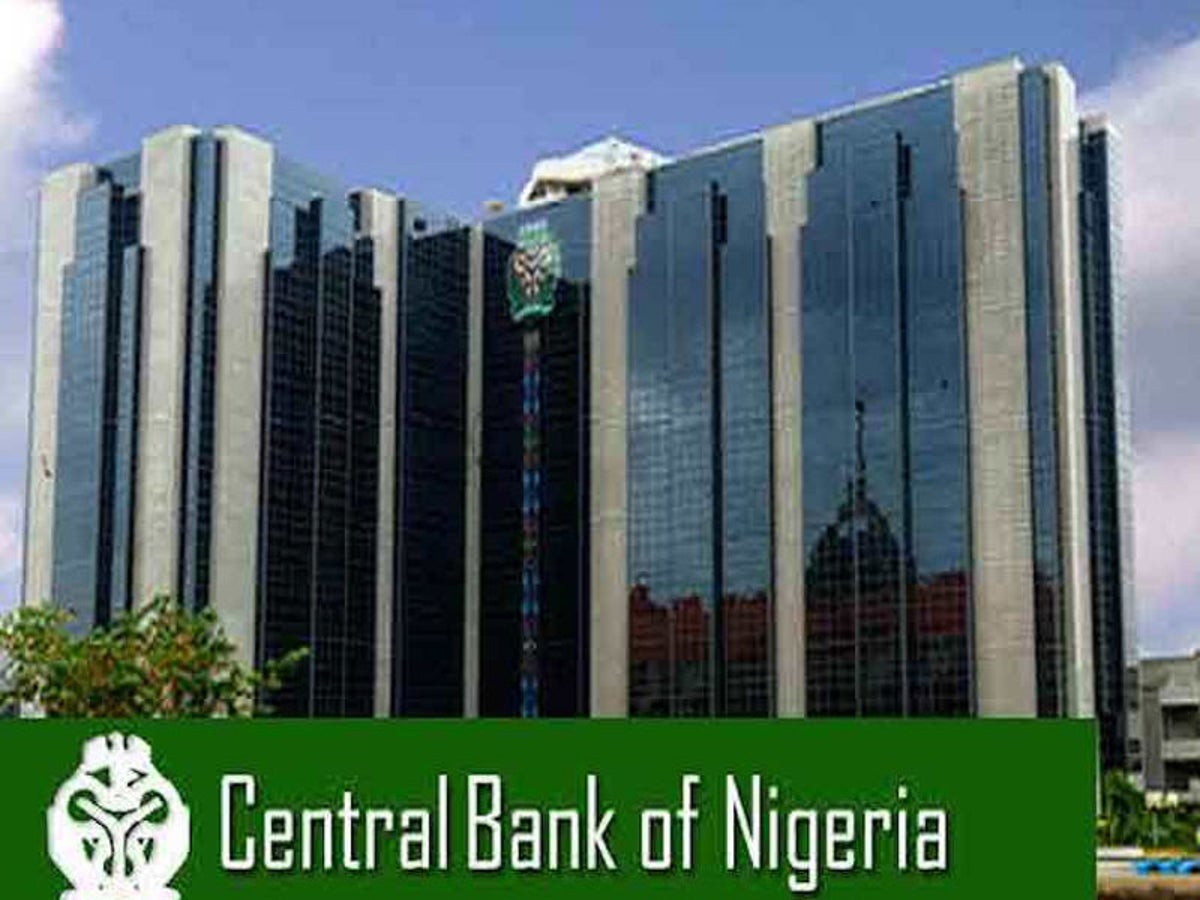
The Central Bank of Nigeria (CBN) has launched a major overhaul of the Agricultural Credit Guarantee Scheme Fund (ACGSF), unveiling a new strategic direction aimed at expanding credit access to smallholder farmers and accelerating national food security efforts.
Speaking in Abuja at the inauguration of the reconstituted ACGSF Board, CBN Governor, Olayemi Cardoso, described the revamp as “a new dawn” for agricultural financing.
He said the initiative reflects the Federal Government’s renewed commitment to reposition agriculture as a driver of inclusive growth, rural development, and economic diversification.Cardoso noted that the ACGSF-established in 1977-remains one of the country’s most impactful development finance tools.
Yet, despite employing nearly two-thirds of Nigeria’s labour force and contributing over 20 per cent to GDP, the agric sector continues to receive less than five per cent of total bank credit. This structural mismatch, he said, has stunted the potential of millions of farmers for decades.The CBN governor stressed that the agricultural landscape has evolved far beyond subsistence farming, now governed by integrated value chains, technology, climate risks and a growing agritech ecosystem. In line with these realities, he said the Scheme must transform into a dynamic, data-driven institution capable of supporting modern agriculture.
He highlighted the 2019 amendment that expanded the Scheme’s share capital from N3 billion to N50 billion and broadened its operational scope. One of the notable enhancements, he added, is the inclusion of farmers’ representatives on the new Board-an “inclusive and strategic” move to ensure policies are grounded in real sector needs.
Cardoso emphasised that the central objective of the revamp is to unlock affordable credit for smallholders who account for 90 per cent of the nation’s agricultural output but remain underserved due to limited collateral, poor credit history and weak access to financial services.
He urged the Board, chaired by Dr. Olusegun Oshin, to design products tailored to women, youth and other underserved groups while leveraging fintechs, microfinance banks and cooperatives to deliver innovative lending models. He also called for the deployment of technology-from satellite imagery to digital dashboards-to track loan utilisation and ensure measurable impact.
Dr. Oshin welcomed the reforms and advocated further expansion of the Fund to meet the scale of investment required for meaningful sectoral transformation.
| ReplyReply allForwardAdd reaction |


UNIZIK: Students Urge FG to Implement Industrial Court Judgment, Reinstate Odoh as VC
ShareSome students of Nnamdi Azikiwe University (UNIZIK), Awka, have called on the Federal Government to fully implement the judgment of...

NUC Opens Nigeria’s University Space to Foreign Institutions
ShareThe National Universities Commission (NUC) has lifted the embargo on the establishment and operation of foreign universities in Nigeria, a...


RMAFC Convenes Stakeholders Confab to Boost Effective Tax Act Implementation
ShareBy Tony Obiechina, Abuja The Revenue Mobilisation Allocation and Fiscal Commission (RMAFC) on Monday organised a 2-Day National Stakeholders’ Discourse...


Bandits Attack Kogi Communities, Kill Three Persons
ShareFrom Joseph Amedu, Lokoja Oke-Agi and Ilai communities in Mopa-Amuro local government area of Kogi State were attacked by some...


Palmer out for Chelsea’s Carabao Cup Quarter-final, Says Maresca
ShareChelsea attacker Cole Palmer will not feature in the Blues’ Carabao Cup quarter-final against Cardiff City, head coach Enzo Maresca...


Road Accident Claims Four Persons in Kogi
ShareFrom Joseph Amedu, Lokoja The Federal Road Safety Corps (FRSC), has confirmed the death of four persons in a motor...

Tinubu Happy with PAP’s Scholarship Scheme, Says Otuaro
ShareFrom Mike Tayese, Yenagoa The Administrator of the Presidential Amnesty Programme (PAP), Dr. Dennis Otuaro, has said that President Bola...


Enugu Police Bust Armed Robbery Operation, Arrest Suspect, Recover Arms
ShareFrom Sylvia Udegbunam, Enugu The Enugu State Police Command has sustained its onslaught against criminal activities during the Yuletide season...


NDLEA Busts Drug Suspect, Seizes 457kg Skunk Marijuana in Edo
ShareThe National Drug Law Enforcement Agency (NDLEA) on Monday, said it intercepted 457kg of skunk marijuana, during an intelligence-led raid...

Tinubu Urges Nigerians to Uphold Buhari’s Discipline, Integrity
SharePresident Bola Tinubu on Monday, urged Nigerians to embrace the discipline, integrity and service ethos of former President Muhammadu Buhari,...