
Featured
Harnessing Road Corridor Towards Boosting the Economy


With a network of about 204,000km and 33,000km of federal roads, experts are of the opinion that road corridor development in Nigeria will provide direction through which the Federal Government can approve a National Policy on Road Development. Also that a national policy on road corridor development is critical in transforming Nigerian roads into economy zones for sustainability.
Ikenna Uwadileke writes.
On March 24, 2022, stakeholders in the transport sector, converged on the premises of Abuja Chamber of Commerce and Industry (ACCI) for a roundtable on Road Corridor Development and the impact on trade in Nigeria.
The programme, organised by the National Chamber Policy Centre of the ACCI provided a platform for the stakeholders to brainstorm in order to produce a draft policy framework on Road Corridor Development in Nigeria.
They expect that it will provide direction through which the Federal Government can approve a National Policy on Road Development.
With a network of about 204,000km and 33,000km being federal roads, Nigeria ranks 131 out of 141, while occupying 31st out of 38 in Africa, on quality of road infrastructure.
To improve this, they emphasised the need for President Muhammadu Buhari to urgently sign into law the National Transport Commission Bill.
According to Mr Emmanuel John, a sustainable transport and road safety expert, approving a national policy on road corridor development is critical in transforming Nigerian roads into economy zones for sustainability.
He said that the current status does not present hope of converting Nigerian roads into viable economic sector.
John said that some key national plans with vital components for road transport sector development are limited to road construction.
“Although government is not resting, but it is just that movement does not necessarily mean progress, and being busy does not really equal business,’’ he said.
He noted that over 90 per cent of goods and passengers’ movements in Nigeria are carried out on the roads, with comparatively lesser attention to road transportation in terms of policies and investments.
“This would mean that efforts to get Nigeria out of poverty may never achieve its goals.
“The different national development plans, strategies and initiatives on road transport cannot reach their maximum potential as long as they are centered on just infrastructure,’’ John said.
While appreciating the huge investments in the railway sector, John called for more to serve as a huge relief to the roads.
According to him, there is also a huge potential for inland waterways to provide complementary, if not alternative, to road systems, but this is largely unharnessed.
He added that pipelines which exist across Nigeria have largely failed, thereby transferring all bulk liquids to the roads.
“The air transport, is for now, expensive for the size of local businesses in Nigeria,’’ John said.
No doubt, the opportunity provided by the African Continental Free Trade Agreement (AfCFTA) is another reason why Nigerian roads should be developed as economic zones.
“Under-developing the roads, simply means movement from a beautiful plane, through a beautiful airport, to an exotic car, through a supper sweet window dressed access road from the airport, only to drop into a jungle traffic in the city.
“It is the same with freight, from a beautiful high sea experience, through supper clean terminal and then drop suddenly into a jungle traffic in the city,’’ John added.
Stakeholders stressed that initiatives on transport should not centre on aviation and maritime alone.
They say that turning Nigerian roads to economic zones cannot be successfully achieved without good policies and regulations.
Mr Gboyega Onadiran, a public affairs analyst, said there was near absence of clear concise road transport policy at national and states levels.
“The road transport subsector of the transportation industry has the poorest regulations of all the modes. This results in multiple, inappropriate and illegal taxation.
“Also there is a dominance of informal operators that have become somewhat monstrous with nearly everyone scared to call it what it is,’’ he said.
Onadiran said that implications of the problems can be felt in astronomical increase in cost of transport and by implication businesses as well as delay in goods and services delivery.
According to him, poor policy and regulation contributed in exposing commuters to crime and criminality along the roads, intimidation, and corruption by some security agencies.
“Unfortunately, we are far from finding solution as everybody seems to blame everybody and those statutorily in charge are lamenting more,’’ Onadiran said.
While calling for institutional reforms, he stressed the need to address the issue of unhealthy vehicle fleet plying the roads.
According to the Federal Road Safety Commission (FRSC), 90 per cent of trucks are 30 years old and above and one of the worst fleet age in the world.
Records also show that Nigeria is among the countries of Africa with the oldest vehicle import age limit of 15 years.
“70 per cent of all vehicle imports are used vehicles,’’ says a report from the National Automotive Design and Development Council.
According to UN Habitat, 80 per cent and 70 per cent of used vehicles imported to Benin Republic and Togo respectively end up in Nigeria.
Consequently, the rising motorisation that narrows road capacity, leading to congestions and delays is also a huge concern.
The Nigerian Export Promotion Council (NEPC), says the annual trade loss due to bad road is valued at N80 billion, while additional vehicle operating and maintenance cost resulting from bad roads is valued at N53.8 billion, bringing the total loss per annum to N133.8 billion.
In view of all these, the stakeholders are advocating the merging and creation of a new ministry of Highway and Transportation.
They urge the Federal Government to create National Highways Authority, Nigeria Urban Roads and Transport Authority, as well as develop sustainable funding models to fund road sector development.
A motorist, Mr Paulicarp Udom, also appealed to the Federal Government to pay attention to the extremely inadequate and poor road networks and facilities.
According to Udom, motorists are suffering from overage and largely unmaintained roads.
He said that poor quality of road construction makes some roads fail even when the construction is still ongoing.
“Unfortunately, there are huge budgets for road maintenance that has not given the desired outcome,’’ Udom said.
The Board Chairman of FRSC, Malam Bukhari Bello, said that discussions on infrastructural development in Nigeria, especially road corridor development initiatives would continue to take the centre stage.
He expressed dismay that lack of adequate maintenance led to the complete failure of most of the roads.
Bello holds the strong view that road network is one of the critical infrastructural gaps that need serious intervention.
According to him, road transport infrastructure is a critical factor and driver for economic growth and prosperity, with direct and indirect impact on socio-economic life.
Bello called for the establishment of dedicated corridor development and management funds.
“There is however need to incorporate safety component into every road corridor development initiative in order to ensure safer highways,’’ he added.
On his part, Acting Director General, Infrastructure Concession Regulatory Commission (ICRC), Michael Ohiani, said that the sustenance of expansion and maintenance of the road networks is increasingly becoming difficult.
He blamed it on dwindling revenue fortunes of the Federal Government and other competing public service obligations.
“On the average, it is estimated that road projects expansion, repair and rehabilitation would require an estimated N900 billion annually.
“This is against an average annual budgetary allocation of N120 billion, leaving a very significant shortfall of about N780 billion,’’ Ohiani said.
He said that as a result of these challenges, the Federal Government through the Ministry of Works and Housing is exploring Public Private Partnership (PPP) options for the development and maintenance of the road networks.
According to him, the option is debuting with 12 road corridors as a pilot scheme.
“The primary objectives of the Higher Development and Management Initiative (HDMI) pilot road project is to leverage private sector investment to improve facilities and operations on the roads among others.
“The immediate economic benefit is that the projects will create job opportunities for construction industry cluster professionals, technicians, artisans and unskilled workforce operating in the nation’s labour market.
“The pilot road PPP scheme will lead to the reduction of travel time and improve commuter travel experiences as a result of new improvements and significantly reduce traffic congestion in urban areas.
“More so, the scheme is expected to result in significant improvement in security and monitoring on the route, while in the long-term, it will impart new knowledge and skills on Nigerians with respect to highway development, operations and maintenance for continued sustenance of road assets,’’ he said.
Alhaji Adamu Jalaludeen, the Chairman, Kaduna Sate Chapter of Road Transport Employers Association of Nigeria (RTEAN), said that dilapidated roads due to poor maintenance practices had contributed to the challenges being faced by road transportation in Nigeria.
Jalaludeen said that individuals and governments were shying away from doing transport business due to bad roads and high cost of motor parts.
“The construction of more rail lines will reduce the pressure on the roads.
“Golf car is now sold at N2 million and Sharon car N3 million, and apart from the fuel challenges, pot holes damage the car, especially the tyres.
“Apart from that, some of the parts are substandard, so let the relevant authorities step up efforts at ensuring that they check substandard parts.
“This will not only save money but will save lives,” he said.(NANFeatures)

TOP10 MAGAZINE NAMES DANU AS 2025 MAN OF THE YEAR
Nasiru Danu, OFR, Chairman of Casiva Limited and founder of NHD Foundation, has been named as
The Top10 Magazine’s Man of the Year 2025. He emerged from among many other distinguished personalities in a multi-stage rigorous selection and screening process.
In a letter conveying Alhaji Danu’s selection as the Man of the Year 2025, the Board of Editors of the Magazine said it was in recognition of his milestone accomplishments in the business world as well as his philanthropic gestures of touching lives in different ways. These, the givers of the award said, clearly stand him out not only as a father of compassion, but Nigeria’s philanthropic leader of the year 2025.
“We consider your successful journey in the business world and your record of service to humanity as a clear demonstration of your ranking as a great leader of excellence worthy of commendation, hence the decision of our management to accord you this special recognition as the Top10 Magazine’s Man of the Year 2025,” the letter said.
In his latest demonstration of philanthropy, Danu, the Sardaunan Dutse, in May 2025, extended his good deeds to the Jama’atu Izalatil Bid’ah Wa’iqamatis Sunnah (JIBWIS) Islamic Centre as he commissioned a N150 million project at the Centre in Abuja. The project is a furnished 11-room building that will serve as the Imam’s residence at the Islamic Centre in the Guzape area of Abuja. It was named in memory of his late father, Haladu Danu.
The Top10 Magazine is a monthly publication established in 2016 as a platform to celebrate excellence and people of excellence from all human endeavours.
The Top10 Man of the Year Award was also instituted the same year as an annual award by the magazine to recognize and honour one outstanding personality in a given year that has recorded landmark accomplishments in the Nigerian society.
This year’s recipient, Alhaji Danu, a man of untainted character and impeccable reputation, is renowned for his unwavering commitment to success. The Chairman and CEO of Casiva Limited consistently strikes gold in every venture he undertakes and has since solidified his status as a true titan of the oil and gas industry who navigates its complexities with the expertise derived from years of experience. Apart from his involvement in philanthropy and Casiva Limited, Alh. Danu is also involved in other organizations. This includes NHD Interbiz Projects Limited, a construction and civil engineering company, Chairman, Yenagoa Polo Club, Chairman, Nigerian Army Polo Resort, reflecting his diverse interests, member Board of Trustee Nigerian Army Polo, Chairman, NHD Farms Ltd, Chairman, Lubrik Construction Company.
Mr. Tony Iji, Publisher/Editor-In-Chief of The Top10 Magazine, said the award will be presented to Alhaji Danu at The Top10 Magazine’s Annual Excellence Awards night slated for December 7, 2025 which will be graced by crème de la crème of the society.
To mark this high-profile event, the magazine is putting together a special award edition to celebrate him and other awardees. The edition will chronicle in detail all his milestone accomplishments as an industry leader, philanthropist as well as his career and personal antecedents.
By Prosper Okoye, Abuja
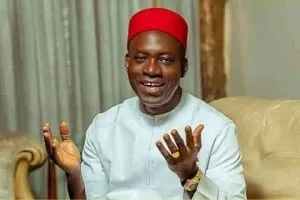
The Anambra State Governor, Prof. Chukwuma Soludo, has said that the governors in the South Eastern states are collaborating to put an end to the proscribed Indigenous People of Biafra’s Sit-at-home order.
“Once we put in place the vigilante in the community, we are going to focus on opening up Anambra and ending the sit-at-home once and for all.
Because what had happened is that there are seven people pursuing a cow, but there are eight people chasing after those pursuing the cow, but now I think the reverse is becoming the case,” Soludo added in an Igbo proverb during a recent town hall meeting in Abuja.The Sit-at-home order is enforced throughout the southeastern states on Mondays, the 30th of May every year, and every other day that the leader of the IPOB, Nnamdi Kanu, is taken to court.
“Even though there are no killings in my area in Anambra, the news of the killings in other parts of the east makes people comply with the Monday sit-at-home order. People don’t open their shops in the big markets, and on the express, people don’t move freely. But in the inside areas, shops open, and people move about watching their backs,” a resident in Anambra, Ada, told DAILY ASSET.
Although the leader of the outlawed group, Emma Powerful, has denied IPOB’s role in enforcing the Monday’s sit-at-home order, and other violence in a recent media statement, the unknown gunmen still enforcing the order are tied to the group’s fighting arm, the Eastern Security Network.
However, DAILY ASSET learned that the “Unknown gunmen” are allegedly led by Asari Dokubo.
“Under former President Muhammadu Buhari, Nigeria’s Southeast region, once the most peaceful, suddenly exploded in a wave of inexplicable violence. Prisons, police stations, court houses, electoral commission offices, and random public establishments were attacked and razed by armed gangs. Individuals were kidnapped, hacked to death, or gunned down in broad daylight by hooded men who escaped without a trace. Dr. Chike Akunyili, husband of Late Prof Dora Akunyili, one-time Minister of Information and DG of NAFDAC, was gruesomely murdered by these men in an attack with no obvious aim other than to instill public fear. Many went missing and were never found, and gloom descended on the peoples of five states best known for their industry and enterprise.
“For years, not a single one of those crimes was solved, and not a single culprit was successfully apprehended and prosecuted by law enforcement operatives. Officially, fingers were promptly pointed at IPOB, the Biafra separatist organization, for every incident – sometimes even before investigations formally opened. IPOB vehemently denied these accusations, but government propaganda was too strong. Many soon believed the government and joined in demonizing IPOB for mindlessly turning the region into a war front. Gradually, though, everyone began to realize that there was something fishy in the official position.
“Federal and state authorities had all the means to nab the gangsters but preferred to issue increasingly sterile press statements instead. It soon became clear that the armed forces, police, and other official security agencies were either in cahoots with the criminals or consciously turning a blind eye to their activities. In villages across the Southeast and North Central regions, locals began to notice that whenever the Army and Police showed up for patrols, Unknown Gunmen or armed “herdsmen” followed shortly afterwards. It was as if the patrols were surveillance missions for the bad guys. So, villagers took the hint and scampered for safety whenever those who were supposed to protect them reported for duty. It was even law enforcement officials who coined the moniker, “Unknown Gunmen” (UGM) to describe criminal elements they were paid to hunt down.
“People with experience in security matters soon concluded that Nigeria was dealing with “false flag operations” – crimes deliberately committed (in this instance by secret agents of the state) to incriminate an innocent party to achieve some dark political objectives. The problem was: There was no concrete evidence or proof to show the world. Those who were supposed to gather evidence were busy covering the tracks of the criminals.
“Well, that mystery lasted until Asari Dokubo, the voluptuous and loquacious Niger Delta warlord, visited the Presidential Villa in Abuja as a guest of the new Nigerian leader, Bola Tinubu, only two weeks after the latter’s inauguration. At the end of his visit, Dokubo addressed a press conference from one of the chambers of the villa, a rare privilege accorded only to close allies of an administration.
“Unable to control his impulses whenever in front of cameras and microphones, Asari said several things that have since become subjects of controversy. One of the few which almost evaded public scrutiny holds the key to the mystery of the Unknown Gunmen. He said he was “in charge of security in six states of the federation,” and his boys were responsible for some of the successes in the security situation of the country for which the Armed forces often get credit.
“To add color to this sketchy claim, he recounted an actual operational experience in these words: “… my men and I discovered a camp in Imo with hundreds of vehicles. Where are the owners? If you want me to show you pictures, I will show you. We discovered their camp, kicked their asses, and sent them to where they belong.”
“For the avoidance of doubt, Dokubo boasted: “I am a participant in this war. I fight on the side of the government of the Nigerian state; in Plateau, in Niger, in Anambra, in Imo, in Abia, and in Rivers state and in Abuja. Today you’re traveling to Kaduna on this road, it’s not the army that makes it possible for you to travel to Abuja, or travel to Kaduna, vice versa. It is my men, employed by the government of the Nigerian state, stationed in Niger.”
“In those words, Asari Dokubo blew his own cover. He owned up to working in an undercover capacity or as a non-state actor in a sector which belongs exclusively to the Federal Government. He owned up to extra-judicial killings. He mentioned specific theaters of operation – Imo State and the Abuja-Kaduna highway. He named those who hired and paid him – “the government of the Nigerian state.” It was like a painter framing his masterpiece.
“Three of those states named by Asari Dokubo (Anambra, Imo & Abia) are in the Southeast. Two others and the Federal Capital Territory (Niger, Plateau, and Abuja) are in the Middle Belt. Another state (Rivers) is in the South-South. All named territories have one thing in common in the last few years – random, unsolved killings and attacks on members of the opposition, rural farming communities, and government facilities. Anambra, Imo, and Abia were the epicenter of unknown gunmen activities in the period leading up to the last elections. Niger and Plateau were the main theaters of operation for the so-called “Fulani herdsmen.” Kuje Prison within the FCT was attacked, and inmates set free.
“So, what exactly was Asari Dokubo’s “security brief” in a region (the Southeast) where Army and Police checkpoints adorn nearly every hundred meters of the highway? What was he doing in a state (Imo) where a special military task force was assigned to “crush” separatist agitations? What was he paid to do for a country that boasts about a dozen security agencies with hefty yearly federal appropriations? More still, what “contract” is Asari desperately lobbying to retain with the new administration of President Bola Tinubu, for which reason he broke all protocols of civility to support the Tinubu candidacy and gain his attention before and during the last elections? Why has he been so vociferous with his anti-Igbo rhetoric in courting the Tinubu camp – knowing that Igbophobia is one of the favorite weapons of the APC in its struggle to retain power after the failed Buhari years?
“If you read between the lines and fill in the blank spaces, all the fingers point in one direction – Asari Dokubo is the man behind the mask of Unknown Gunmen. He was recruited and paid by the Buhari Administration, working closely with the Imo State Governor (Hope Uzodimma), to help deal with the threat of Biafra in Southeast Nigeria by unconventional means. Asari Dokubo, in turn, recruited, coordinated, and paid the men who carried out all those killings and criminal activities to blackmail IPOB and ESN. Plus, at least some of the mysterious attacks on villagers and facilities in the Middle Belt region.
“That’s what he meant when he boldly said, “I am a participant in this war.”
The trouble with people who talk too much is that they ultimately talk themselves into trouble. Asari Dokubo has now talked himself into deep trouble – beyond being broke. Not only has he antagonized the armed forces, which he was recruited to “help,” he has also given away the identity of the evil masquerade terrorizing the neighborhood.
“In trying so hard to corner the next “security contract” after squandering what he was earlier paid for hatchet jobs under President Buhari, Melford Asari Dokubo Goodhead has given away his own secret position. He is like a drunken and unprofessional sniper who uses his weapon indiscriminately. His enemies can see clearly where the deadly shots are coming from. His position in the bushes is no longer a mystery. The sniper himself is now a sitting duck. It’s only a matter of time before he too is sniped. That’s the way the cookie crumbles,” the source noted.
Meanwhile, the Enugu State governor, Peter Mbah, has been making efforts to stop the sit-at-home order enforced in the state. This includes the threat to sanction business owners that comply with the order by closing down their businesses and calls to arrest Emma powerful.
Military Victories:
Furthermore, the military has recently announced that some IPOB fighters were killed in Delta state, while others were arrested, and arms were recovered. This announcement sparked numerous comments on social media, with most questioning the truthfulness of the report, including a tweet by Emma Powerful dismissing the report as mere propaganda against the IPOB.

The growing global demand for Information Communication and Technology (ICT) services has emboldened tech-savvy entrepreneurs to grab the opportunities inherent in the multi billion dollar sector to propel the world to new heights in various areas of human endeavours.
The global demand for ICT was heightened during the COVID-19 pandemic as people relied on technology to stay connected, work remotely and access essential goods and services.
When Nigeria set up the Ministry of Communication and Digital Economy in 2019, the aim is to fully exploit the opportunities in the sector, create new businesses and jobs, enhance security and transparency and diversify the country’s economy.
The country also launched the Digital Nigeria Programme on March 19, 2020, a key initiative to empower innovators and entrepreneurs with skills required to thrive in the emerging digital economy.
This was followed by digital training for Nigerians at a time the world stayed home to combat the spread of COVID-19.
The Federal Ministry of Communications and Digital Economy partnered a number of institutions to enable Nigerians acquire cutting edge digital skills within the comfort of their homes.
Within the period, the Ministry provided Nigerians with over 280+ hours of free learning and 85+ courses on key emerging technologies like Blockchain, Artificial Intelligence, Big Data, Cloud Computing.
This is in line with the Ministry’s commitment to developing the capacity of Nigerians to use technology to solve problems. Thus, the Digital Nigeria programme helped to empower Nigerians to develop skills and build innovative solutions to tackle challenges affecting communities.
This aim is being largely achieved, because as at the second quarter of 2022, ICT had contributed 18.44 per cent to Nigeria’s GDP, making it the fastest revenue generator in the Nigerian economy
Digital and high tech savvy Nigerians had grabbed the opportunity and delved into the multi billion dollar industry, setting up businesses to drive the sector. Today, out of the seven Unicorns from Africa valued at 11.45 billion dollars , four of the unicorns, valued over 1 billion dollars each, originated from Nigeria.
According to the Minister of Communication and Digital Economy, Prof. Isa Pantami, the revolution in Nigeria’s digital economy, which began under President Muhammadu Buhari, has been remarkable.
‘‘All these unicorns in Nigeria attained this position during this administration. The first was in 2019, while the second, third and fourth attained this position in 2021.
‘‘57.14 per cent of the entire African unicorns originated from Nigeria while the market value of seven of them combined as at February 2023 is $11.45 billion, with the four from Nigeria contributing $7.5 billion,’’ Pantami said.
For clarity, Unicorn companies are those that reach a valuation of $1 billion without being listed on the stock market. It is the dream of any tech startup.
To push the boundaries of inclusiveness in the tech ecosystem, the Nigeria Startup Act was signed into law by President Buhari in October 2022. It is a bold step to institutionalise funding support for tech-savvy Nigerians.
“Today in the Act, there is a provision of supporting them financially. The government will set aside a minimum of N10 billion yearly in addition to other sources of funding that have been captured in the law,” Pantami said.
The law has also made clear provisions for tax breaks for Startups, ease of doing business, intellectual property protection and participation in public procurement, among others.
Nigeria has also raised broadband penetration now to 100 per cent following the deployment of SpaceX’s Starlink satellite Internet service. This will invariably spur more investment in ICT and its generative residue in the tech ecosystem.
However, in spite of these interventions towards making Nigeria a global talent factory in the digital space, the country’s startup ecosystem still faces significant challenges, such as access to funding, appropriate support infrastructure and skilled manpower.
‘‘These remain major barriers to the growth of the ecosystem, particularly for early-stage startups,” President Buhari acknowledged when he inaugurated a council to drive the implementation of the Startup Act.
He however said ‘‘the provisions of the Nigeria Startup Act 2022 represent an important step towards addressing these challenges and promoting the growth of a more vibrant and inclusive startup ecosystem in Nigeria.
‘‘Furthermore, implementation of the Act will lead to consolidation and further development of the gains recorded by Nigeria’s digital economy in the last four years, in the areas of contribution to GDP and increased revenue generation, among others.’’
To ensure the implementation of the Act, Buhari on April 5, 2023, inaugurated a 14-member National Council for Digital Innovation and Entrepreneurship to be chaired by the President, while the Vice President will serve as the council’s vice chairman.
The Minister of Communications and Digital Economy, will however preside over the Council in the absence of the President and Vice President.
Other members of the council are Ministers of Finance, Budget and National Planning; Industry, Trade and Investment; Science, Technology and Innovation, and the Governor, Central Bank of Nigeria.
Also on the council are four representatives of the Startup Consultative Forum, one representative each of Nigeria Computer Society and the Computer Professionals, as well as Director-General, NITDA, as Secretary.
The inauguration of the council is significant to Nigeria’s determination to remain in the forefront of the remarkable growth of startups in Africa, having already raised up to over 4 billion dollars in Startups between 2019 and 2022.
Buhari said at the inauguration that Nigeria was enticed to join the race for a slice in the sector by the remarkable growth of startups worldwide, where over 400 billion dollars of venture funding was accessed in 2022.
‘‘This growth was fuelled by a surge in demand for digital services as people worldwide turned to technology to stay connected, work remotely, and access essential goods and services largely due to the COVID-19 pandemic.
‘‘In Africa, the startup ecosystem has also been growing at a remarkable pace. In 2022, African startups raised a record of 5.4 billion dollars in funding,’’ he noted.
In this respect, Nigeria’s target has been to fully harness its youth talents, lift the country’s economy to new heights, and propel its vision and commitment towards ramping the potential of its young and innovative population in the tech ecosystem.
According to the President, the Council will also serve as a critical governance structure in the implementation of the Startup Act.
It will ensure that government agencies, entrepreneurs, investors and support organisations collaborate with the startup ecosystem to achieve the goals of promoting the growth of a vibrant and sustainable startup ecosystem in the country.
‘‘I had earlier directed the Secretariat, the National Information Technology Development Agency (NITDA) to commence the execution of the implementation plan it developed.
‘‘One of the important aspects of the implementation plan is the development of the Startup Portal, which will serve as a platform that will drive the implementation of the NSA 2022 and collaboration between all stakeholders,’’ Buhari said.
No doubt, digital innovation and entrepreneurship are prerequisites to building an indigenous digital economy, as such the Council should consolidate the gains and achievements recorded in the Nigerian digital economy sector.
According to Pantami, the Buhari administration has set three unprecedented records of ICT contributions to GDP which should be surpassed.
“For example in the first quarter of 2020, ICT alone contributed 14.07 per cent to the country’s GDP. In the second quarter of 2021, ICT alone, without digital services, contributed 17.92 per cent to GDP while in the second quarter of 2022, ICT contributed 18.44 per cent.
‘‘Annually, this administration has been setting new records when it comes to ICT contributions to GDP,’’ the minister said.
Mr Gbenga Adebayo, Chairman of the Association of Licensed Telecommunication Companies in Nigeria, said the digital economy sector has done very well.
“Today we are one of the largest contributors to the GDP, we are also one of the largest in terms of employment generation. The industry has become a driver of many other sectors of the economy.
“From the number of policies formulated by the Buhari administration, we have quantum leap in the development of the sector. We have seen rapid development of the industry,” Adebayo said.
He advised that the incoming administration should maintain and sustain the achievements in the sector, while also addressing local problems such as high energy cost, to further propel the gains in the ICT and digital economy. (NAN)



Tinubu Congratulates UNIJOS Graduands, Pledges Support for Education
ShareFrom Jude Dangwam, Jos President Bola Tinubu has congratulated graduands of the University of Jos (UNIJOS) at the institution’s 35th...


2027 Election: Igbo’s Community Promises Votes for Eno
ShareFrom Christopher Tom, Uyo Non-indigence in Akwa Ibom State especially the Igbo’s community has promised to give the highest number...

Zamfara Reaffirms Commitment to Address Gender-based Violence
ShareBy Ifeanyichukwu Nwannah, Gusau The Zamfara State Government has reaffirmed its commitment to addressing gender-based violence (GBV) and other forms...

Nentawe, Alia, Suswam, Others Bag Chieftaincy Titles from Tiv Kingdom
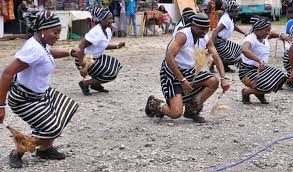
ShareFrom Attah Ede, Makurdi The Tiv Kingdom has conferred honorific chieftaincy titles on prominent sons, daughters and friends of the...


World Human Rights Day: NGO Takes Medical Outreach to Okaka Correctional Center
ShareFrom Mike Tayese, Yenagoa The 8th edition of Prof. Seiyefa Brisibe Outreach has celebrated the 2025 World Human Rights Day...

Coup in Guinea-Bissau and the Dilemma of ECOWAS
ShareBy Hakeem Jamiu In his seminal work, Political Order in Changing Societies (1968), Professor Samuel P Huntington argues that political...

Chelsea End Winless Run with Comfortable Brighton Victory
ShareChelsea ended their four-game winless streak in the Women’s Super League with a comfortable 3-0 away victory against Brighton. A...

Liverpool ‘United as One’ after Salah Return – Van Dijk
ShareCaptain Virgil van Dijk said Liverpool “are absolutely united and go forward as one” after Mohamed Salah returned to the...
Mikaelian Beats Jack to Regain WBC Title
ShareNoel Mikaelian beat Badou Jack by a unanimous points decision in Los Angeles to regain the WBC cruiserweight title. Mikaelian...

Mobile Phone Association Pillar of Modern Commerce, Driving communication, Says Mamas
ShareFrom Ayinde Akintade, Osogbo The National President of Association of Mobile Phone and Allied Products Traders of Nigeria (AMPAT), Hon....