
POLITICS
Elections and their Anxieties

By MacDonald Ebere
Over the years, I have come to realise that many Nigerians are often traumatised by elections. These elections come with their pressures. The stakes are usually very high – both emotionally and financially.
They are often winner-takes-all kind of scenarios, and are not helped by ethnic and religious tensions. If you add the slipperiness of some politicians and the gullibility of some voters, then you have a perfect recipe for collective anxieties. But should elections and our democracy be such humongous psychological burdens? What can be done to save us from the angst and anguish of our politics?Politics in a “true” democracy is like a market exchange where the bargain is about good governance.
In this bargain, vote is the currency of the exchange. Whoever has more votes carries the day. Politicians are the bidders, while voters are offering the vote. The politicians try to win over the voters through the electoral promises of good governance. The voters cast their votes on the basis of their judgments of who among the politicians holds better promise for them. Election then is the marketplace and the platform of this contestation and exchange. It’s a fascinating scenario because in this analogy we see clearly what the stakes are and what the role of each player is.Each player needs the other because in this political marketplace none of the actors can do without the other. The politicians need the voters; the voters in turn need good leaders that will emerge at the conclusion of the political exercise. That is what it is, no matter what some people might say. The bidders know too well that their wishes only come through when voters as critical stakeholders support them and vote for them. It is a common narrative in Nigeria that politicians can do without the voters. That is not correct. Those who are active politicians know that attracting votes is not easy at all. They work very hard to get it.
In fact in Nigeria today, the politicians work harder than the electorates in this marketplace of politics. Now, we are in another cycle of elections. We see the politicians travelling to every part of the country or states, engaging in wide consultations, having long meetings, building alliances and bridges, wooing stakeholders and seeking support from constituencies. The politicians are busy day and night to realise their dreams. The ongoing party primaries, in view of the 2023 elections, is a litmus test of the amount of work politicians are doing to become party flag-bearers for the different elective positions. If it were easy, if they have a shortcut, they wouldn’t put themselves through such stress.
The electorates also have their own responsibilities in this electoral equation, as described already. For this marketplace to be maximally beneficial to everybody, we all must play our respective roles. For the political marketplace to be able to deliver not just governance but good governance, we all have our roles to play, whether as bidders for or as sellers. It is important that we all understand this to help us make a decision to get involved in seeing that our political processes are successful by delivering good governance.
Voters elect those who occupy political offices to deliver good governance, protect installed facilities in communities and continue their participation as watchdogs. Voters have to critically examine the promises of all contesting politicians in the light of good governance and the expected dividends of democracy. Unfortunately, the dominant narrative in our country is where the bidders are projected as having the sole responsibility to deliver good governance, while the people, the voters, just sit back and do nothing.
I think that the politician and the voter must remain mindful of this contractual relationship. It is not right for the voter as seller to simply sit back and relax; s/he must continue to play an active part in the political process by doing all he/she should as a voter to see that his interests are represented well through good governance. Even if a politician fails the voter by not redeeming his pledges during the first time, should the voter allow himself to be deceived a second time when the politician comes back to bid for votes for a possible second term? Such a time is a good payback time, I suppose. As the Igbo people say, only a fool lets the same stick poke him oIn the same eye twice. The voter has enormous power.
When a state government, for instance, fulfils its electoral promises by installing some facilities in communities, the communities should look after the facilities against vandalisation. The protection of installed facilities or infrastructure is the responsibility of the community or the neighbourhood where the installation has been made. It is painful to see that electrical installations or hospital equipment or even roofs and windows of school blocks put in place by governments, which are dividends of democracy to a community, are neglected and sometimes left to be stolen under the watch of the community. This is not a good development at all; and communities are worse off for it. In order to prevent such backwardness, communities should protect their own dividends of democracy.
How many voters ever listen to budget announcements? In the budget, the government outlines the capital projects that are to be executed in communities or locations. But many voters are not interested in the activities of government. They just vote and turn their back on the system. The contracts are awarded to companies belonging to members of the communities. The people should show greater commitments and ensure that these awarded contracts are executed, since they are the ones to enjoy it. It doesn’t help anybody if these contractors receive money and refuse to carry out contracts as expected. Unfortunately, vandals are protected by the same community members who are supposed to be beneficiaries of projects.
The people should rise up and play their active roles in order for democracy to work. Voting is one of such important responsibility. But it doesn’t end there. They must continue to actively participate in the political process. This way the politicians and voters will, respectively, do their bits so that the political space as a market place will be beneficial to both voters and politicians who solicit for votes. It is this mutually beneficial and reinforcing relationship that can save us from the onslaught of election anxieties.
MacDonald Ebere holds a PhD in political philosophy and writes from Owerri, Imo State, Nigeria.
By David Torough, Abuja
Suspected political thugs on Thursday disrupted a town hall meeting organised by the Nigeria Democratic Congress (NDC) in the Oregun area of Ikeja, Lagos State, attacking party supporters, vandalising vehicles and triggering violent confrontations shortly before the scheduled arrival of the party’s presidential candidate, Peter Obi, and his running mate, Rabiu Kwankwaso.
The incident, which occurred around 11 a.
m. at the Classique Event Centre along Kudirat Abiola Way, caused panic among attendees and residents of the area, forcing participants to flee for safety and motorists to make abrupt U-turns to avoid the violence.A supporter who sustained a head injury alleged that the attackers invaded the premises in an attempt to prevent the political gathering from holding. He said some NDC members mobilised to resist the assailants, resulting in a confrontation that forced the attackers to retreat.
The violence reportedly escalated as some supporters pursued the fleeing assailants, with one suspected attacker apprehended at a car park and subsequently beaten by a group of young men. A video of the incident showed several individuals surrounding the suspect and assaulting him with sticks.
The confrontation later spilled onto Kudirat Abiola Way, disrupting traffic along the busy commercial corridor, while police officers reportedly fired shots into the air to disperse the crowd.
Armed policemen and security patrol vehicles were subsequently deployed to the event centre to restore order and prevent further escalation.
Reacting to the attack, the NDC accused the ruling All Progressives Congress (APC) of promoting political violence and attempting to undermine democratic participation ahead of the 2027 general elections.
The party’s National Publicity Secretary, Osa Director, described the incident as unfortunate and unwarranted, accusing the APC of resorting to what he called barbaric political tactics.
Director said the attacks on NDC members reflected a dangerous pattern of political hostility that could undermine Nigeria’s democratic process.
Similarly, the NDC Campaign Council spokesperson, Dr Constance Ikokwu, condemned the incident, describing it as an assault on democracy, citizens’ fundamental rights and freedom of political association.
She demanded an immediate investigation, the arrest and prosecution of those responsible, insisting that no political party had the right to use violence or intimidation to silence opposition voices.
Ikokwu urged Nigerians not to be discouraged by the incident, calling on citizens to exercise their democratic rights during the 2027 elections.
She maintained that the NDC and its supporters would not be intimidated or prevented from participating in the political process.
According to him, the party’s leaders, elected officials, candidates and other stakeholders were engaged in the campaign activities, which he said were taking place far from Ikeja.
Oladejo categorically denied that the APC sponsored, encouraged or participated in any attempt to disrupt the NDC gathering.
He challenged the opposition party to submit any evidence linking the attackers to the APC to relevant security agencies rather than making allegations through public statements and social media.
The APC spokesman also called on the Lagos State Police Command, the Department of State Services (DSS) and other security agencies to investigate the incident and strengthen security ahead of the 2027 elections.
He further urged the NDC to address what he described as internal challenges rather than continually blaming the ruling party for developments within its political environment.
The presidential and National Assembly elections are scheduled for January 16, 2027, while governorship and state assembly elections are slated for February 6, 2027.
Lagos is expected to remain a major political battleground, given its strategic importance and electoral history. In the 2023 presidential election, the Independent National Electoral Commission (INEC) declared Obi the winner in the state, where he defeated President Bola Tinubu, a former Lagos governor.
As of the time of filing this report, the identities of the attackers, their alleged sponsors and the circumstances surrounding the violence had not been independently established.
The Lagos State Police Command was yet to issue an official statement detailing the incident or announcing arrests.
The attack has once again brought the issue of political security to the fore, with growing calls for security agencies to investigate the incident, identify those responsible and ensure that political parties and their supporters can freely exercise their democratic rights without fear of intimidation or violence.
By David Torough, Abuja
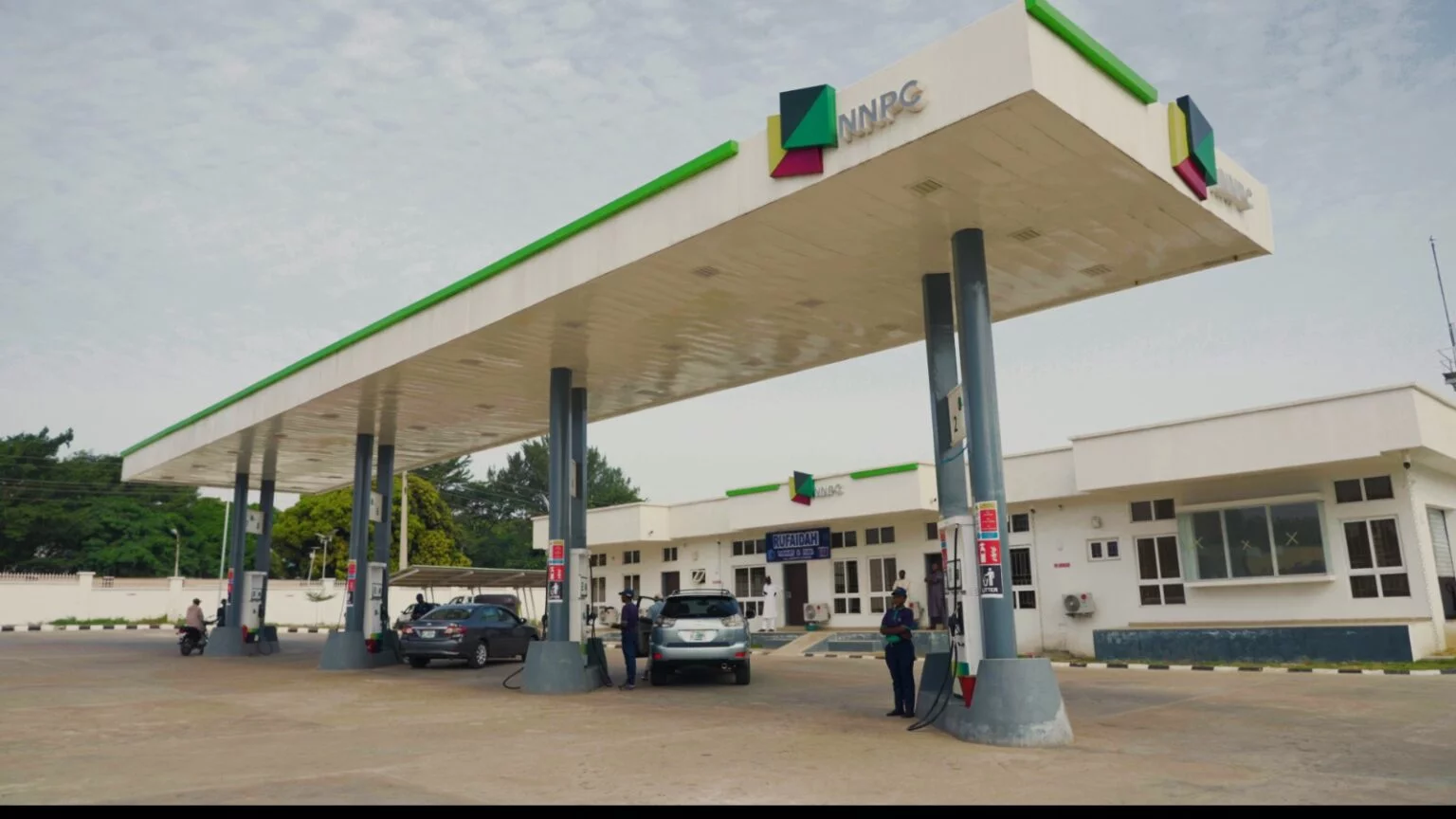
Former Group Chief Executive Officer of the Nigerian National Petroleum Company Limited (NNPCL), Mele Kyari, has denied allegations that ₦210 trillion was missing from the company’s financial records, insisting that the disputed figures represent accounting entries and not evidence of stolen or diverted funds.
Kyari made the clarification on Tuesday when he appeared before the Senate Committee on Public Accounts, chaired by Senator Ibrahim Dankwambo (PDP, Gombe North), to respond to audit queries raised over NNPC’s financial statements covering 2017 to 2023.
The former NNPC chief, who led the company from 2019 to 2025, maintained that no money was lost under his leadership, describing the controversy surrounding the ₦210 trillion as a misunderstanding of standard accounting procedures.
“I wish to confirm that nothing was lost. It is simply not possible that such an amount could have been lost under my care and leadership. The matter relates to accounting entries, which have nothing to do with any financial loss. They are bookkeeping issues, and I believe the appropriate explanations have been provided in my report,” he told the lawmakers.
The ₦210 trillion figure under investigation comprises approximately ₦103 trillion in accrued expenses and ₦107 trillion in sundry receivables, both flagged by the Office of the Auditor-General of the Federation.
Explaining the discrepancies, Kyari said accrued expenses represent obligations owed by NNPC to other parties, while receivables are funds owed to the company by third parties. He argued that the two categories are separate accounting items that must be treated independently and should not be added together and interpreted as missing public funds.
He insisted that the explanations contained in his written submission addressed the issues raised by the auditors, urging the committee to consider the entries within their proper accounting context.
Kyari also dismissed allegations that NNPC spent ₦5 billion on changing its name from the Nigerian National Petroleum Corporation to the Nigerian National Petroleum Company Limited following the enactment of the Petroleum Industry Act, 2021.
He explained that the incorporation process cost approximately ₦2.99 billion, representing statutory payments made to government institutions, including the Corporate Affairs Commission and the Federal Inland Revenue Service.
According to him, NNPC initially made the payment on behalf of the Federation and subsequently charged the amount to the government’s revenue account through what was formerly referred to as the NAPIMS account.
He maintained that the transaction was a legitimate accounting entry and not expenditure incurred for merely changing the company’s name.
The former GCEO also apologised for failing to honour previous invitations by the Senate committee, including an earlier sitting scheduled for June 10, attributing his absence to ill health and family-related circumstances.
He told the lawmakers that he had been in and out of hospital on medical grounds, explaining that his failure to appear was not intended to undermine the authority of the National Assembly.
Defending his stewardship of the national oil company, Kyari said his administration inherited an organisation that had struggled with financial losses but subsequently transformed it into a profitable enterprise.
He recalled that NNPC recorded a loss of about $803 billion in 2018, a year before he assumed office as Group Managing Director in 2019. He said his administration embarked on restructuring and operational reforms that resulted in sustained profitability for the first time in the company’s history.
Kyari also highlighted the publication of NNPC’s financial records as one of the major milestones of his administration, describing the move as a significant departure from the company’s previous practice.
However, the committee chairman, Dankwambo, said the lawmakers would subject Kyari’s explanations and supporting documents to further scrutiny before reaching any conclusion.
He explained that the former GCEO’s submission would be circulated among committee members for detailed examination, adding that Kyari and other relevant officials could be invited again if further clarification became necessary.
“We shall interrogate the figures submitted by the former GMD to know whether to invite him again. For now, he has responded to the two issues relating to his leadership of NNPC during the period under review,” Dankwambo said.
Kyari’s appearance followed months of controversy over the Senate’s investigation into unresolved audit queries involving NNPC’s financial records between 2017 and 2023.
The investigation had generated tensions between the former oil company chief and lawmakers after he allegedly failed to honour several invitations to appear before the committee.
The committee’s demand for his appearance followed a motion by Senator Victor Umeh, representing Anambra Central, amid growing frustration over his repeated absence.
Senator Adams Oshiomhole had also insisted that Kyari must personally account for his stewardship, urging the committee to consider issuing an arrest warrant to compel his appearance.
The Senate, however, subsequently clarified that no committee could issue, authorise or execute an arrest warrant outside the provisions of the Legislative Houses (Powers and Privileges) Act and without the express approval of the Senate President.
The Red Chamber also distanced itself from Oshiomhole’s description of NNPC as “a bunch of criminals and thieves”, stressing that the remarks did not represent the official position of the Senate.
With Kyari having presented his defence, attention has now shifted to the committee’s examination of the documents and explanations submitted by the former GCEO.
The outcome of that review is expected to determine whether the disputed ₦210 trillion entries have been adequately explained or whether further investigations and invitations will be necessary.
By Eddy Ochigbo, Abuja
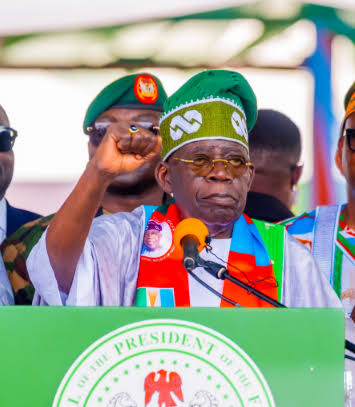
The All Progressives Congress (APC) has unveiled an ambitious four-pillar manifesto for President Bola Tinubu’s proposed second term, promising to consolidate ongoing economic reforms, tackle insecurity, expand infrastructure and translate policy gains into improved living conditions for Nigerians between 2027 and 2031.
The 109-page document, titled Renewed Hope Agenda 2.
0, was unveiled on Tuesday at the Shehu Musa Yar’Adua Centre, Abuja, under the theme, “Translating Reforms to Shared Prosperity.”The manifesto outlines a policy roadmap built around four strategic pillars: Secure and Resilient Nation; Better Quality and More Affordable Life for Every Nigerian; Energy, Infrastructure and Economic Growth; and Effective and Accountable Governance.
The party said the framework represents a consolidation of the administration’s original eight-point Renewed Hope Agenda, with emphasis on making the benefits of its economic reforms more tangible to households, businesses and communities.
Speaking at the unveiling, the APC Presidential Campaign Council spokesperson and Minister of Solid Minerals Development, Dr. Dele Alake, described the manifesto as a strategic blueprint for transforming Nigeria’s economy and improving citizens’ welfare.
Alake commended Tinubu for what he described as the courage to implement far-reaching economic reforms despite the difficulties associated with them, expressing confidence that the long-term benefits would outweigh the immediate challenges.
“Kudos to President Bola Ahmed Tinubu for courageously implementing the reforms against all odds. The resultant benefits would be gargantuan,” he said.
The Minister of Industry, Trade and Investment and Deputy Director of the Directorate of Manifesto Development, Dr. Jumoke Oduwole, said the central objective was to ensure that Nigerians began experiencing measurable benefits from the ongoing reforms between now and 2031.
She explained that the policy framework was designed to translate economic adjustments into improved livelihoods, increased productivity and inclusive opportunities.
In his message contained in the manifesto, Tinubu said his administration had taken difficult decisions since assuming office in 2023, including the removal of petrol subsidy, foreign exchange reforms and tax adjustments, describing them as necessary steps towards strengthening the country’s economic foundations.
He, however, acknowledged that the next phase must focus on delivering practical improvements in the daily lives of Nigerians.
“The coming years must focus on tangible improvements: the food on our tables, the power in our homes, the security of our families, and the dignity of meaningful work,” the President said.
Under the first pillar, Secure and Resilient Nation, the APC pledged to recruit an additional 78,000 security personnel, comprising 28,000 military personnel and 50,000 police officers, to strengthen the country’s security architecture.
The party also promised to establish and equip four additional Army divisions in Makurdi, Ilorin, Jalingo and Benin City, expand police recruitment towards a ratio of one officer to 400 citizens, introduce body cameras and digital policing systems, complete electronic surveillance of mapped borders and strengthen community policing.
The second pillar focuses on improving the quality of life through affordable housing, healthcare, education, employment and social protection.
The manifesto targets the construction of 200,000 affordable housing units through the Tinubu Mass Social Housing Scheme, mortgage financing and private-sector partnerships across the country’s 774 local government areas.
It also promises to recruit 20,000 additional trained teachers, halve the number of out-of-school children by 2031 and expand access to quality education, particularly in rural communities.
In healthcare, the APC pledged to increase health insurance coverage to 40 per cent of Nigerians, reduce out-of-pocket healthcare expenditure from 71 per cent to below 50 per cent and expand functional primary healthcare centres to cover 90 per cent of the target.
On employment, the party promised to halve youth unemployment by 2031, provide skills training for two million young people and expand digital literacy programmes to reach 30 million Nigerians.
The third pillar, Energy, Infrastructure and Economic Growth, places electricity supply, industrialisation, agriculture and transportation at the centre of the proposed second-term economic programme.
The APC projected an annual economic growth rate of six per cent and promised to scale available electricity generation towards 10,000 megawatts, accelerate electricity metering and strengthen transmission and distribution networks.
It also pledged to expand clean energy access to underserved communities, establish at least one flagship industrial hub in each of the six geopolitical zones, more than double non-oil export earnings and create one million export-linked jobs for young Nigerians through talent and services exports by 2030.
The party further promised to complete priority road, rail, port and airport projects to improve trade, reduce transportation costs and stimulate economic activities.
In agriculture, it proposed reducing post-harvest losses by 50 per cent through improved storage, processing and distribution infrastructure, while lowering the cost of transporting food across states.
The manifesto also prioritises investment in irrigation, agricultural research and mechanised farming as part of efforts to boost food production and reduce food prices.
Under the fourth pillar, Effective and Accountable Governance, the APC promised to strengthen the justice system, fight corruption, improve public service delivery and deepen local government autonomy.
The party pledged to extend digital case management to magistrate courts and complete the digitalisation of court processes nationwide by 2029.
It also promised to publish allocations to all 774 local government councils, establish clear performance standards and move federal ministries and agencies towards end-to-end digital public services.
To ensure accountability, the manifesto proposed that every commitment should have a baseline, target, cost, responsible official and reporting date, with progress made available through a public delivery tracker.
“A manifesto is only as strong as the promises a citizen can check,” the document stated, promising annual progress reports and independent verification of implementation.
The APC also identified four measures for delivering its commitments, including recovering public resources, completing existing projects before commencing new ones, attaching measurable targets to promises and enabling citizens to monitor performance.
Meanwhile, Tinubu has reinforced his campaign promises on electricity, employment and the cost of living, declaring that his administration would provide reliable power and strengthen the industrial base if returned to office in 2027.
The President made the pledge on Tuesday while addressing supporters at the APC presidential campaign rally in Dutse, the Jigawa State capital.
He promised to prioritise support for nano, micro, small and medium-sized enterprises, expand employment opportunities and introduce policies to reduce the financial burden on households.
“We will lower the cost of living. We will provide reliable power, not the whole privatisation that is not working. We will provide you with reliable power in Nigeria,” Tinubu said.
He also pledged to sustain the removal of petrol subsidy while continuing government intervention programmes, including the Nigerian Education Loan Fund.
The President further promised that funds recovered by the Economic and Financial Crimes Commission from financial irregularities would be channelled into NELFUND to support students seeking access to higher education.
In agriculture, he promised to establish six mechanised farming service centres across the country’s six geopolitical zones and increase investment in irrigation and agricultural research to boost productivity and food supply.
The promises broadly align with the manifesto’s emphasis on electricity, industrial growth, employment, food security and improved living standards.
At the Abuja unveiling, the Minister of Information and National Orientation, Mohammed Idris, urged Nigerians to acknowledge the administration’s efforts in addressing the country’s economic and security challenges.
Citing improvements along the Abuja-Kaduna Expressway, Idris said the security situation on the corridor had improved significantly compared with previous years when commuters faced persistent threats from kidnappers and terrorists.
He argued that such developments deserved recognition, despite criticisms of the administration’s handling of insecurity.
The manifesto also presented economic indicators as evidence of progress since 2023, including foreign reserves of $55.3bn as of September 2026, gross domestic product growth of 4.43 per cent in the second quarter of 2026 and inflation of 14.63 per cent in September 2026.
It further claimed that N18.72tn was shared among the three tiers of government through the Federation Account Allocation Committee in the first half of 2026, compared with N6.76tn in the corresponding period of 2023.
Tinubu acknowledged that the administration’s work remained unfinished and appealed to Nigerians to support the proposed next phase of its programme.
“The work is far from complete, and I ask once more for your partnership. Let us turn these hard-won reforms into lasting prosperity and build the Nigeria of our highest aspirations,” he said.
The APC maintained that its 2027–2031 agenda would focus on converting economic stabilisation into measurable improvements in household welfare, national security, infrastructure, employment and inclusive development.
The proposed second-term programme, however, will ultimately be judged by the extent to which its ambitious targets translate into tangible results for Nigerians.



Obi to Publish Anambra Achievements in 10-day Series
ShareThe 2027 presidential candidate of the Nigeria Democratic Congress, Peter Obi, has announced plans to publish a 10-day account of...


NiMet Predicts Dust Haze, Thunderstorms Nationwide
ShareThe Nigerian Meteorological Agency (NiMet) has predicted dust haze and thunderstorms across the country from Monday to Wednesday. NiMet’s weather...

INEC Debunks Claims of Remote BVAS Log-Out, Lost Election Results
ShareBy Orjime Moses, Abuja The Independent National Electoral Commission (INEC) has dismissed claims that presiding officers can be remotely logged...
Needless Diplomatic Brawl
ShareNigeria and South Africa do not need another quarrel. They have had too many already — xenophobic attacks, trade disputes,...

Governor Hyacinth Alia and the Case for Continuity: Consolidating the Gains of Development, Institutional Renewal and Workers’ Welfare in Benue State
ShareBy Elijah Terdoo Ikpanor The question of continuity in governance is ultimately a question of performance, direction, accountability and the...

Tinubu Orders Release of 78 Suspects over Abuja Convoy Attack
ShareBy Laide Akinboade, Abuja The Federal Capital Territory (FCT) Police Command has commenced the release of 78 suspects arrested in...

Daily Asset at 10: Adeniyi, Alia, Bala Mohammed Top Awards List
ShareBy David Torough, Abuja DAILY ASSET Newspaper has unveiled an impressive list of distinguished Nigerians and institutions selected for its...

Kohol tasks NUBESS Leaders on Service, Accountability, Legacy
ShareBy David Torough, Abuja The founder of Menroi Rural Priority Organisation, Professor Kohol Iornem has challenged leaders of the National...

Stakeholders Celebrate Zikism at 7th Nnamdi Azikiwe Annual Award Lecture in Abuja.
ShareBy Raphael Atuu, Abuja As Barrister Henry Okeke Says The gathering provided another opportunity for Nigerians to reflect on the...


2027 Elections: CHRICED Trains 36 Journalists To Combat Fake News, Promote Peaceful Polls
ShareBy Orjime Moses Abuja As Nigeria prepares for the 2027 general elections, the Resource Centre for Human Rights and Civic...